
Clinically reviewed by Dr. Ponlawat Pitsuwan, Physician, Doctor Bangkok.
Last reviewed: September 2026
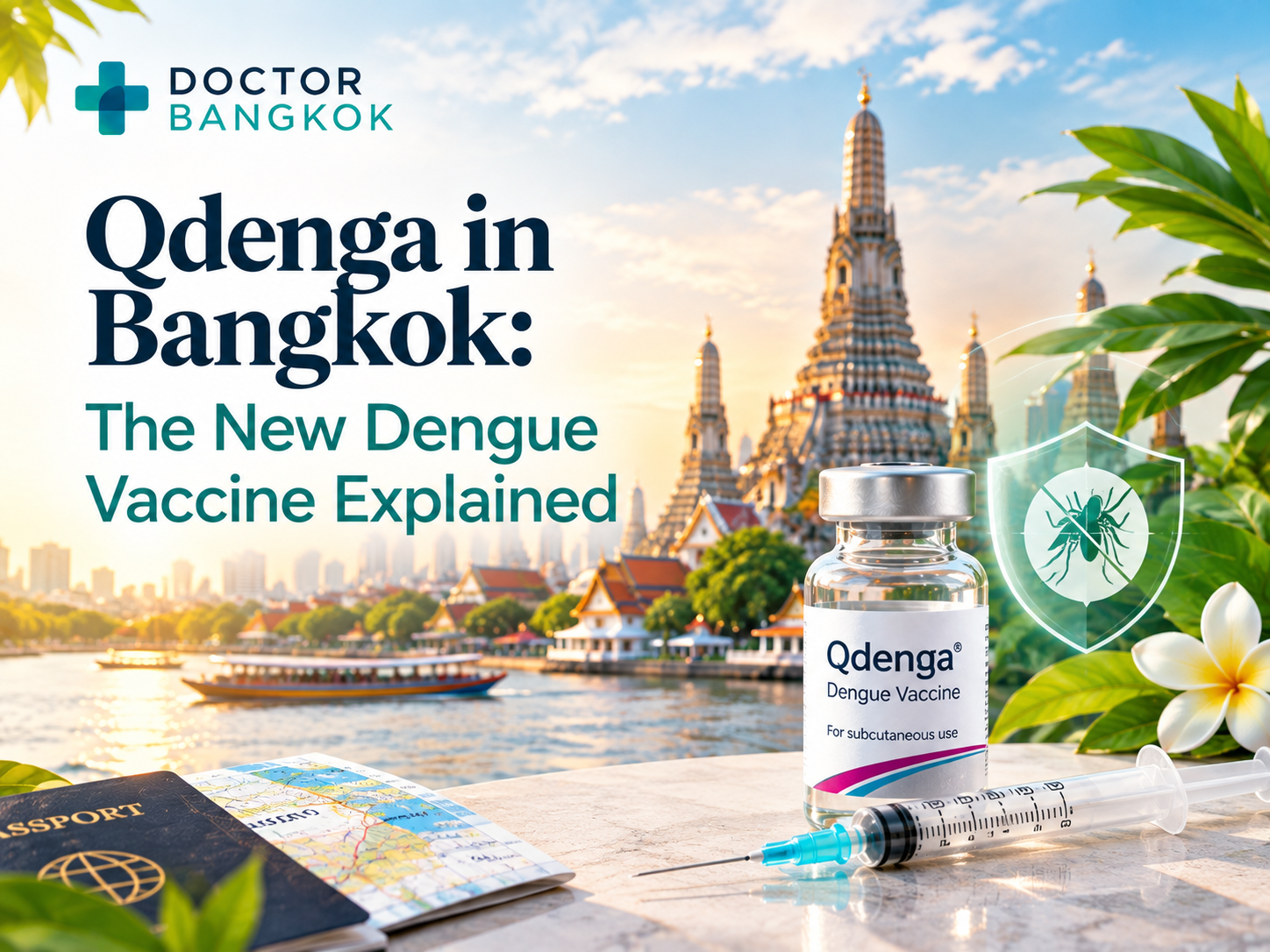
Qdenga is a two-dose dengue vaccine approved in Thailand and available without a prior blood test. It protects against all four dengue serotypes and can be given to adults and children aged four and above, including those who have never had dengue before. Two doses are given three months apart. If you live or work in Bangkok, this vaccine is worth a conversation with your doctor.
Most patients who ask me about Qdenga have just watched a colleague spend a week flat in bed with dengue, or they have made it through their first Bangkok rainy season and decided mosquito spray alone is not a plan. That is usually what brings them in.
The short answer is: for most people living in Bangkok, yes, it is probably worth getting. Qdenga is the newer of the two approved dengue vaccines, it does not require a blood test before you get it, and the protection data is real. This article covers who should get it, what to expect, and how we handle it at Doctor Bangkok.
Bangkok’s Dengue Risk Is Not Seasonal — It Is Year-Round
I see dengue cases in every month of the year, not just during the rainy season. The mosquito that carries dengue, Aedes aegypti, breeds in standing water and bites during the day. It is in the plant pots on apartment balconies, the drains near markets, the pooled water around construction sites. There is no neighbourhood in central Bangkok that is genuinely low-risk.
Cases do spike between June and October, but April and November are not safe either. There are four dengue strains, known as DENV-1 through DENV-4. Getting one does not protect you from the others. A second infection with a different strain is often worse than the first.
What the Qdenga Vaccine Is and How It Differs from the Older Option
Qdenga, developed by Takeda and approved in Thailand following European Medicines Agency clearance in 2022, targets all four dengue serotypes. It is a live attenuated vaccine, meaning it uses a weakened form of the virus to build immunity.
The practical difference from the older dengue vaccine, Dengvaxia, matters for expats. Dengvaxia required a blood test first to confirm prior dengue infection. In people who had never had dengue, it carried a risk of making a future infection more severe. Qdenga does not carry that same risk profile. You can receive it without prior serology. For most expats in Bangkok with no dengue history, that is a significant practical advantage.
How Effective Is the Qdenga Vaccine
The main phase-three trial behind Qdenga enrolled participants in dengue-endemic countries including several in Southeast Asia. Against lab-confirmed dengue, efficacy was approximately 80% in year one. By year three, that figure had dropped to around 45%.
Protection is stronger against DENV-1 and DENV-2 than against DENV-3 and DENV-4, particularly in people who had never had dengue before. If you have had dengue previously, protection is stronger and more durable across all four strains. If you have not, the vaccine still provides meaningful cover, especially in the first two years.
Trial data also showed a substantial reduction in hospitalisation. For an expat managing a serious illness in Bangkok without family nearby, that reduction matters.
Who Should Get Qdenga and Who Should Wait
Qdenga is approved from age four upward. Most healthy adults living in Bangkok are candidates, and if you have been here for at least one rainy season or plan to stay, the conversation is worth having.
There are clear situations where we wait or reconsider. Pregnancy rules it out. If you are immunocompromised, whether from HIV, active cancer treatment, or long-term use of immunosuppressant drugs, speak to a doctor before proceeding. The live nature of the vaccine means it is not right for everyone in that group. For patients over 60, the trial data is more limited, so the decision needs a proper clinical review, not a quick yes.
If you are under 60, not pregnant, and not immunosuppressed, the benefit generally outweighs the risk. That said, this should be a real conversation, not a box-ticking exercise.
Timing the Two-Dose Qdenga Schedule in Bangkok
Two doses, three months apart, given as a subcutaneous injection, usually in the upper arm. The first dose alone does not give you full protection. You need both.
For Bangkok residents, I generally advise starting in April or May so both doses land before the dengue peak intensifies. If you miss that window, start anyway. Late protection is still protection. If you miss the second dose timing, do not restart the series. Come in, take the second dose, and finish the course.
If you are in Bangkok for less than three months, completing the schedule before you leave is not realistic. In that case, we focus on other preventive measures and come back to Qdenga if you return or relocate.
Side Effects: What Is Normal and What Needs Attention
Injection site soreness, mild redness, and some swelling are the most common reactions and usually settle within a day or two. Headache, low-grade fever, and tiredness in the 24 to 48 hours after vaccination are also normal.
More significant reactions are uncommon. If you develop a high fever, a spreading rash, or any difficulty breathing within 48 hours of vaccination, come in or contact us directly. At Doctor Bangkok we always tell patients: call us if something feels off. Do not wait to see if it settles on its own.
One thing worth knowing: do not confuse a mild post-vaccine reaction with dengue itself. Post-vaccine fever clears within 48 hours. Dengue fever does not.
The Qdenga Vaccine Does Not Replace Mosquito Protection
The vaccine is one layer of a prevention strategy, not the whole thing. Repellent with DEET or picaridin still matters. Aedes aegypti bites during the day, so daytime protection is just as important as evening cover. Removing standing water around your home matters.
Think of Qdenga the way you think of a seatbelt. Wearing it does not mean you stop paying attention to the road. Dengue prevention works in layers, and the vaccine makes those layers more effective together.
Getting the Qdenga Vaccine at Doctor Bangkok
At Doctor Bangkok on Sukhumvit Soi 13, close to the BTS, we stock Qdenga under proper cold chain conditions. Every patient sees a physician before any live vaccine is given. The consultation takes around 15 minutes. We go through your health history, confirm you are a suitable candidate, and give the first dose the same visit if everything checks out.
The second dose is booked three months later. We keep your records so there is no confusion about timing, which matters for expats managing appointments around travel. We are open seven days a week and can typically see walk-ins, though contacting us ahead of time ensures both a physician and the vaccine are ready for your visit.
We also offer dengue NS1 antigen testing at the clinic. Even vaccinated patients can develop dengue, particularly if immunity has waned or the infecting strain is one Qdenga covers less strongly. If you develop a fever with rash, joint pain, or pain behind the eyes after vaccination, come in and get tested. Do not assume the vaccine means you are clear.
Qdenga is available at Doctor Bangkok on Sukhumvit Soi 13, seven days a week, with English-speaking physicians. Whether you are starting the vaccine series, due for your second dose, or you have a fever and want same-day dengue testing, we can see you today. Contact Doctor Bangkok to book your consultation or walk in during clinic hours.
Frequently Asked Questions
Dr. Ponlawat Pitsuwan
Physician, Doctor Bangkok
a private medical clinic in central Bangkok. He sees expats, residents, and medical tourists for travel medicine, vaccinations including Qdenga, dengue assessment and testing, and general medical consultations. He focuses on clear, evidence-based care delivered in plain language.
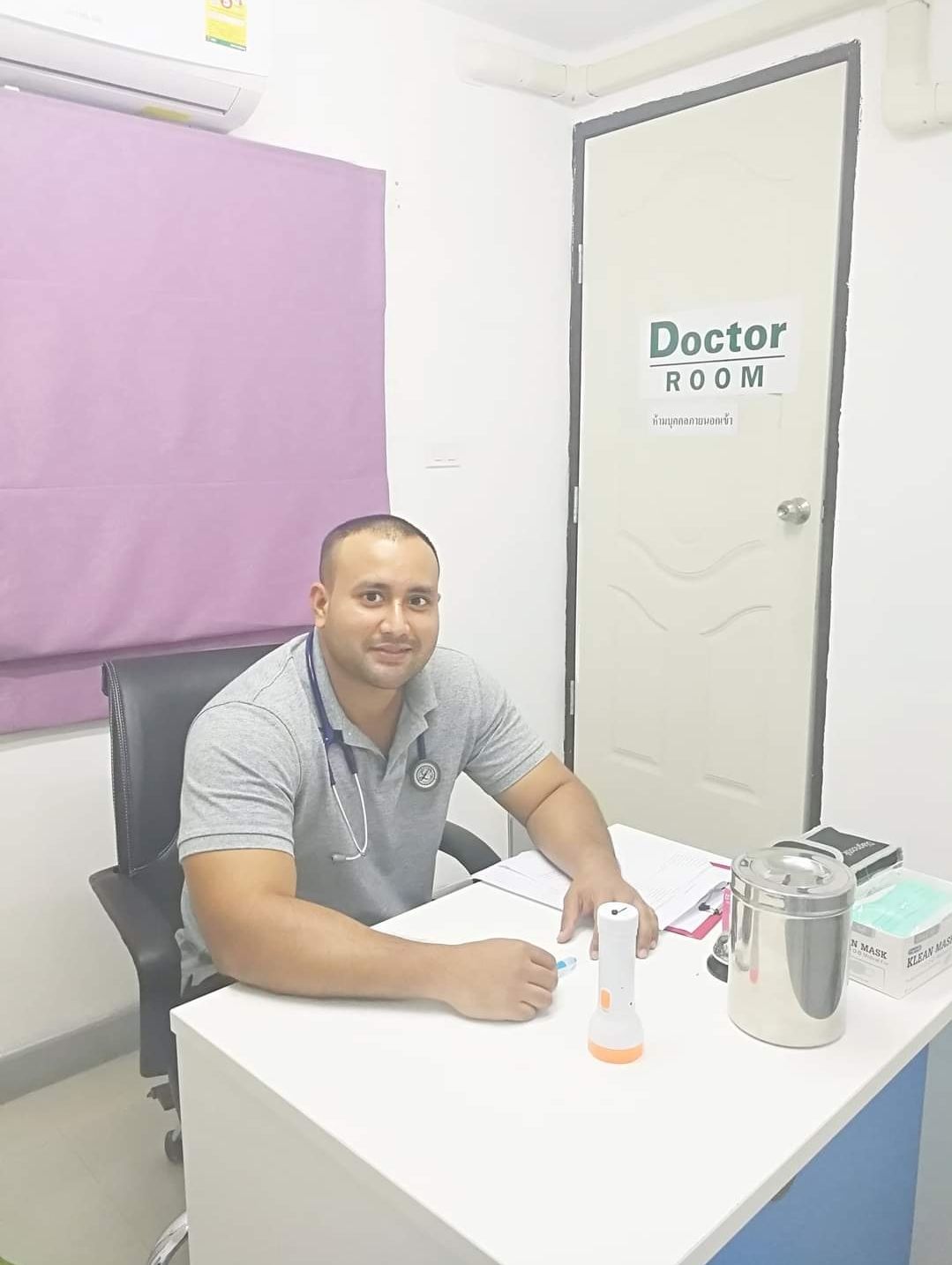
Dr. Ponlawat Pitsuwan is a physician at Doctor Bangkok, a private clinic in central Bangkok. He sees expats, residents, and medical tourists for general medicine, wellness consultations, and IV therapy. His focus is straightforward, evidence-based care delivered in plain language.