
Clinically reviewed by Dr. Ponlawat Pitsuwan, Physician, Doctor Bangkok. Last reviewed: September 2026
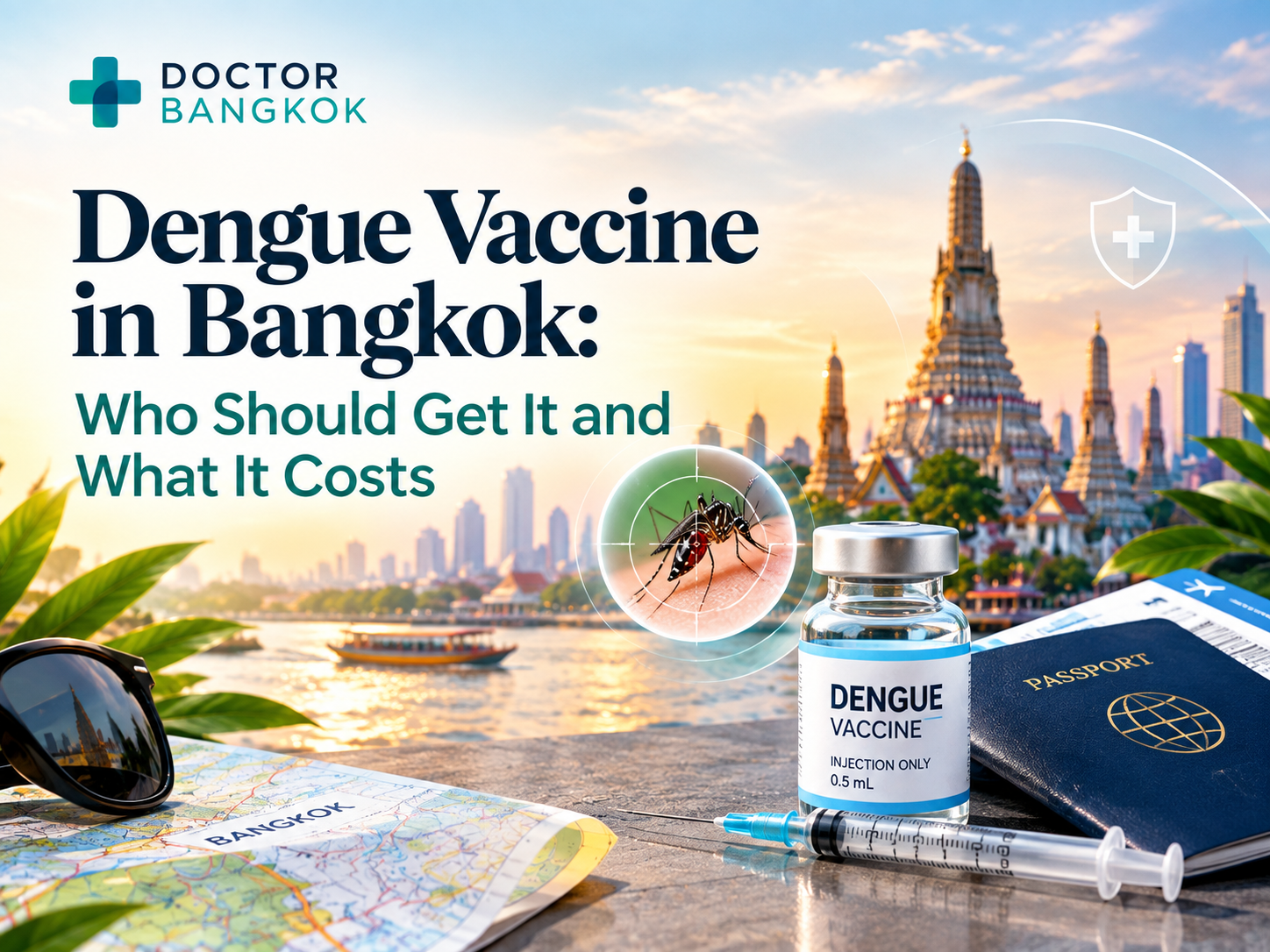
Qdenga is the dengue vaccine available in Bangkok and is suitable for most people aged 4 and above, including those who have never had dengue before. It requires two doses given three months apart. If you are living in Bangkok long-term, the vaccine is worth a serious conversation with your doctor. Short-term visitors are generally better served by strong mosquito repellent and awareness of symptoms.
I see this question a lot from expats who have been here six months or a year: "Should I just get the dengue vaccine and stop worrying about it?" It is a reasonable question. The honest answer is: probably yes, if you are staying long-term, but the timing and eligibility matter more than most people realise.
Dengue is not a rural problem in Thailand. It circulates in Bangkok year-round, and the mosquitoes that carry it bite during the day, not at night. Standard bed nets do nothing. If you commute by BTS, eat at outdoor stalls, or spend time in any of the city’s green spaces, you have real exposure. The vaccine does not replace repellent, but for long-term residents, it adds a layer of protection that no amount of DEET can fully replicate.

Dengue Risk in Bangkok: What You Actually Need to Know
Thailand recorded over 84,000 dengue cases in 2024, with around 70 deaths. Bangkok is not a low-risk pocket within that number. The city’s warm climate, standing water in dense urban areas, and high population density keep transmission active across all twelve months.
The mosquito responsible bites from early morning through late afternoon. Your risk window is during the working day, not after dark. Expats who assume mosquito risk only applies at night, or only outside the city, consistently underestimate their actual exposure.
Previous infection does not mean you are safe either. There are four dengue serotypes. Getting infected with one gives you lasting immunity to that type only. A second infection with a different serotype carries a higher risk of severe disease. This is exactly what makes the vaccine conversation more involved than most.
Two Vaccines Exist — Here Is the Critical Difference
Two dengue vaccines have been developed: Dengvaxia, made by Sanofi, and Qdenga, made by Takeda. For anyone in Bangkok today, Qdenga is the relevant vaccine. Dengvaxia is being discontinued by its manufacturer and carries a serious restriction.
Dengvaxia cannot safely be given to someone who has never had dengue before. In a dengue-naive person, it can prime the immune system in a way that makes a future natural infection more severe. Many countries banned or restricted its use after post-approval data emerged.
Qdenga does not carry that same restriction. It is approved regardless of prior dengue infection history. That makes it the practical and safer option for expats in Bangkok, many of whom do not know whether they have had dengue before.

Why the Dengue Vaccine Decision Is More Nuanced Than Most
Most vaccines are straightforward: you get the shot, you are protected. Dengue is different.
Having some dengue antibodies, but not full immunity, can actually help the virus replicate more efficiently during a second infection. This is why a partial immune response is sometimes worse than none at all, and why the wrong vaccine given to the wrong person could increase rather than decrease the risk of severe dengue.
Qdenga performs well in both dengue-naive and dengue-experienced individuals based on trial data. But this is also why you should not simply walk into a pharmacy and ask for the dengue vaccine without a clinical assessment first. Your age, pregnancy status, immune health, and medical history all affect the decision.
How Effective Is the Dengue Vaccine?
The European Medicines Agency reviewed Qdenga’s trial data and found it reduced dengue cases by around 80% and dengue hospitalisation by around 90%. Those are strong numbers.
No vaccine offers total protection. You can still get dengue after vaccination, though the evidence strongly suggests the illness will be milder. The hospitalisation reduction figure matters most for long-term expats: it substantially lowers the chance that dengue becomes the kind of illness that puts you in a Thai hospital for a week.
Qdenga performs best against the serotypes most commonly circulating in Bangkok. Protection across all four serotypes is present, though it varies slightly by type based on available data.
Who Should — and Should Not — Get the Dengue Vaccine in Bangkok
Long-term residents and expats who have been here a year or more are the clearest candidates. The risk-benefit calculation favours vaccination when you are consistently exposed over time.
Children living in Bangkok and attending school here also sit clearly in the yes column. Kids are outdoors during the day, and dengue in children can escalate quickly.
Frequent return visitors who spend several months a year in Thailand across multiple trips are worth an individual consultation. Cumulative exposure over years can make the full course worthwhile even without permanent residency.
Pregnancy is a contraindication. Qdenga contains a weakened live virus, and live vaccines are not given during pregnancy as standard practice. If you are immunocompromised or on immunosuppressive medication, this needs to be discussed with your doctor before any vaccination. A pre-vaccination consultation at Doctor Bangkok will cover all of this before any decision is made.
Short-stay tourists spending a few weeks in Bangkok should not delay a trip to get this vaccine. The two-dose schedule simply does not fit that timeline. DEET-based repellent applied during daytime hours remains your most practical tool for short visits.
The Qdenga Schedule: Doses, Timing, and What to Expect
Qdenga is two doses, given three months apart. You are not fully protected until after the second dose, so plan accordingly.
The injection is given under the skin, usually in the upper arm. Side effects are generally mild: soreness at the injection site, low-grade fever, and fatigue for a day or two. Serious reactions are rare. Most patients are back to their normal routine the next day.
You do not need a blood test before receiving Qdenga as a clinical requirement, since it is approved regardless of prior infection status. At Doctor Bangkok, we review your full medical history at the consultation before giving the first dose. If there are reasons to check your serology first, we will recommend that.
When to Time Your Dengue Vaccination in Bangkok
Bangkok’s peak dengue season runs from May through October, tracking the rainy season. Cases spike during these months but do not disappear in the dry season.
If you want full protection before the peak, start Qdenga by February or March at the latest. That gives you three months between doses plus time for immunity to consolidate before mosquito activity climbs in May.
If you have missed that window, do not skip the vaccine. Start now. Dengue circulates year-round, and the sooner your second dose is done, the sooner you carry meaningful protection. Waiting for next February is not a sound strategy when you live here full-time.
Vaccine or No Vaccine — Protecting Yourself From Dengue in Bangkok
The vaccine does not mean you can ignore mosquitoes. Vaccine plus repellent, not vaccine instead of repellent.
Use a DEET-based repellent at 20 to 30 percent concentration, applied in the morning and reapplied after heavy sweating or a few hours outdoors. Dengue mosquitoes are daytime biters, so evening repellent alone misses the main exposure window. Light-coloured, long-sleeved clothing during outdoor activities helps too.
Air-conditioned rooms with closed windows reduce exposure significantly. If you sleep with windows open or spend time in areas with standing water, your baseline exposure is higher regardless of vaccination status.
What to Do If You Think You Have Dengue Right Now
If you have a sudden high fever, headache behind the eyes, and bone or muscle pain, dengue is on the list. An NS1 antigen test can detect infection from the first day of fever, which is an important window to act in.
Do not take ibuprofen or aspirin if you suspect dengue. Both thin the blood, which can worsen the bleeding complications dengue can carry. Paracetamol for fever only, and come in to be assessed.
Doctor Bangkok offers same-day NS1 antigen testing and fever assessment at our central Bangkok clinic. If the test is positive, we will manage your case, monitor your blood counts, and advise you on warning signs that need urgent attention.
Getting the Dengue Vaccine at Doctor Bangkok
The process is straightforward. You book a consultation, we take a short medical history, go through your contraindications and exposure history, and if Qdenga is appropriate, the first dose can often be given the same day.
The second dose is scheduled three months later. We will send a reminder. Cost will be confirmed at the time of booking, as pricing can vary with supply. The consultation is included in the visit, not charged separately.
Doctor Bangkok is BTS accessible and sees patients for dengue vaccination on both a walk-in and appointment basis. If you have been putting this off since you arrived in Bangkok, it is a practical and low-friction thing to get done.
Thinking about the dengue vaccine in Bangkok? Doctor Bangkok offers Qdenga vaccination with a same-day clinical consultation at our central Bangkok clinic. We also provide NS1 antigen testing and fever assessment if you are currently unwell. English-speaking physicians. BTS accessible. Book your dengue vaccination consultation at doctorbangkok.co.th.
Frequently Asked Questions
Dr. Ponlawat Pitsuwan
Physician, Doctor Bangkok
a private medical clinic in central Bangkok. He sees expats, residents, and medical tourists for dengue vaccination, travel medicine, fever assessment, and general health consultations. His focus is straightforward, evidence-based care delivered in plain language.
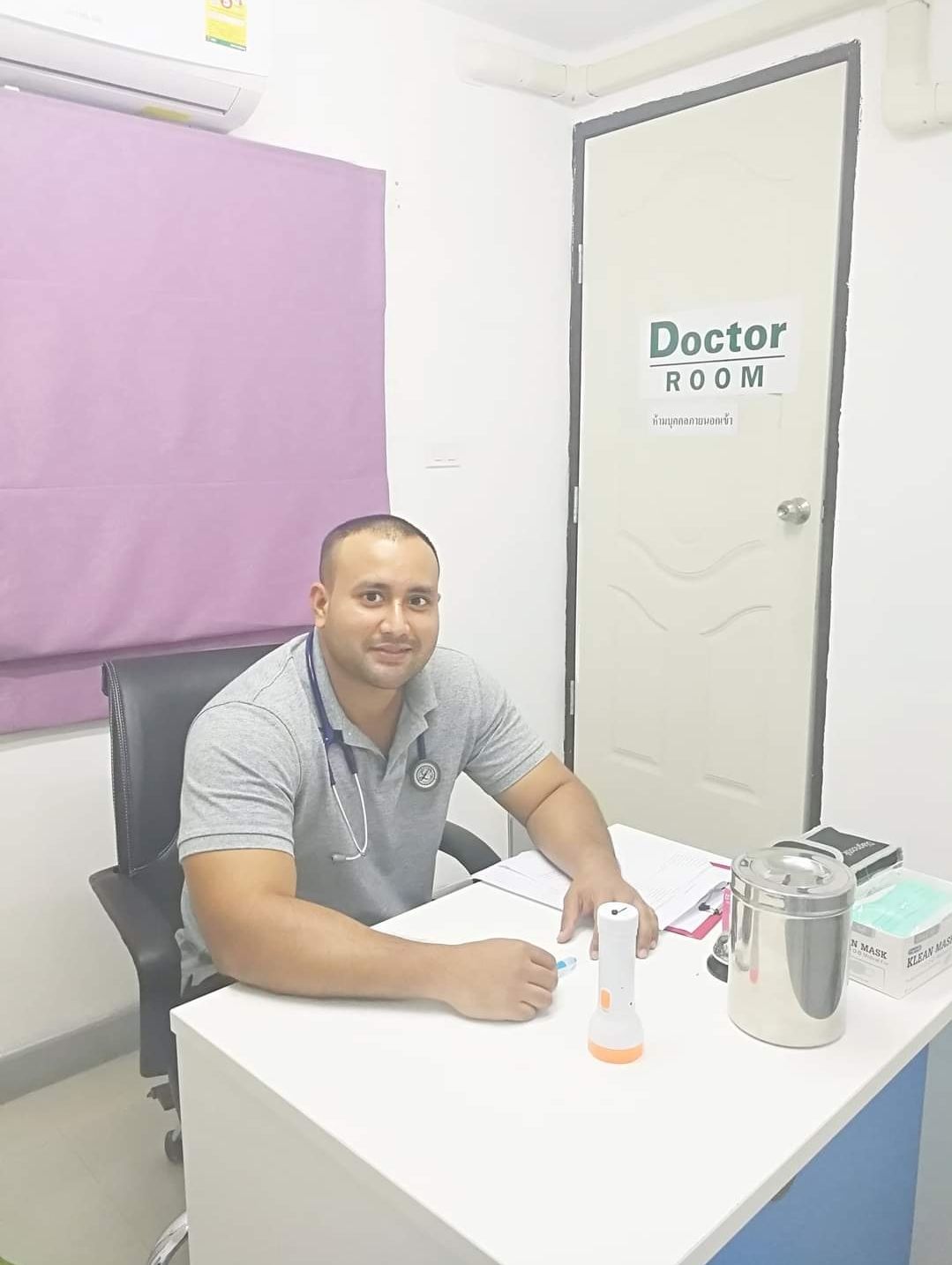
Dr. Ponlawat Pitsuwan is a physician at Doctor Bangkok, a private clinic in central Bangkok. He sees expats, residents, and medical tourists for general medicine, wellness consultations, and IV therapy. His focus is straightforward, evidence-based care delivered in plain language.