
Clinically reviewed by Dr. Ponlawat Pitsuwan, Physician, Doctor Bangkok. Last reviewed: September 2026
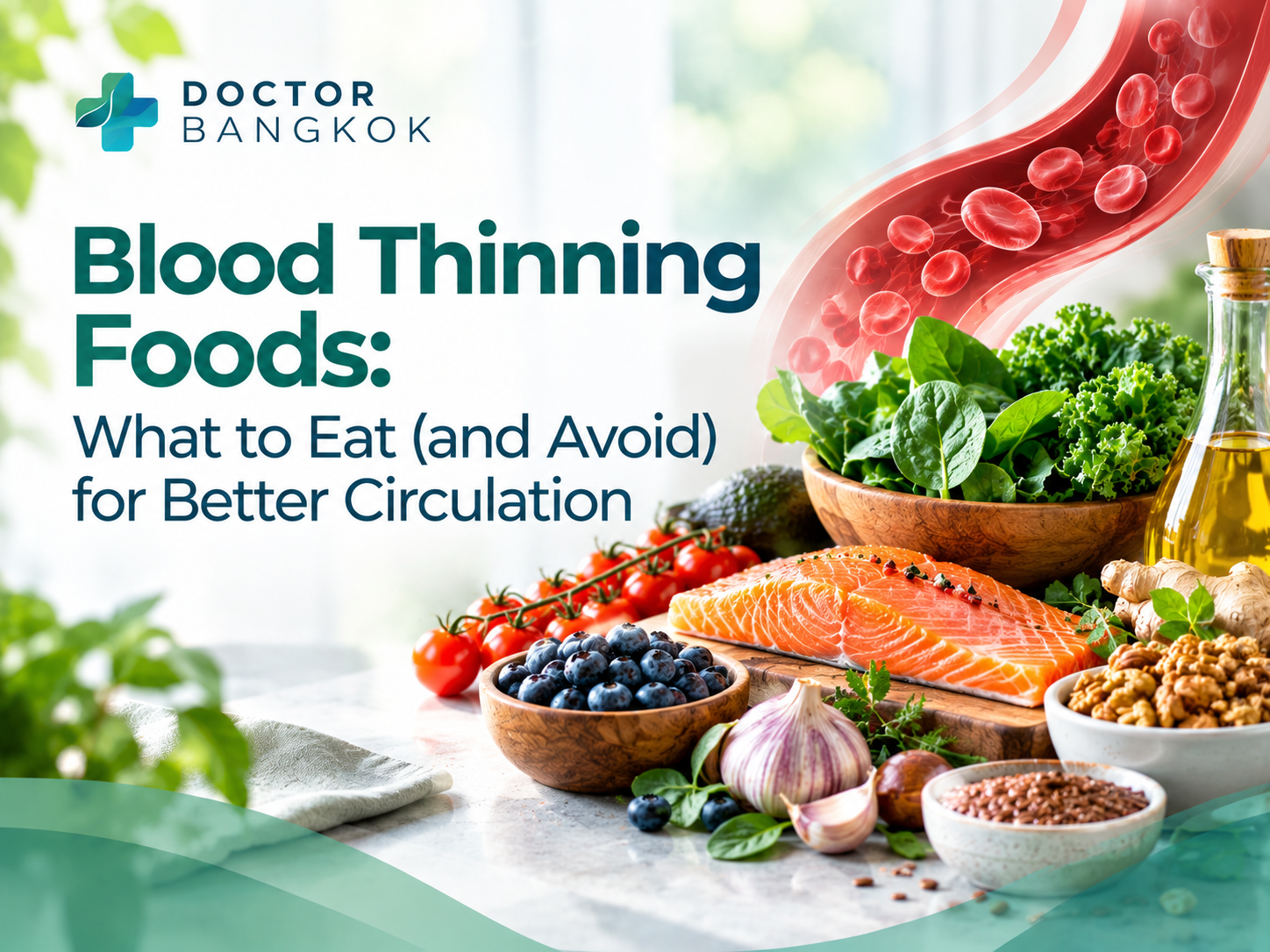
Certain fruits and vegetables mildly reduce blood stickiness and support circulation. Blood thinning fruits and vegetables common in Bangkok include garlic, ginger, turmeric, berries, and several tropical fruits. These are not substitutes for prescribed anticoagulants. If you take warfarin or a newer blood thinner, some of these foods can interact with your medication and need monitoring.
A lot of my patients ask about this after starting a blood thinner, or after a friend tells them to eat more garlic. The question is usually the same: can food actually make a difference, and is any of it risky? The honest answer is yes to both, and in Bangkok the details matter more than most online articles suggest.
Eating here daily means regular exposure to garlic, turmeric, ginger, and fruits like pomelo that rarely appear on Western food lists. For expats managing a cardiovascular condition or taking anticoagulant medication, that changes the conversation. Here is what you actually need to know.

What "Blood Thinning" Actually Means
This is not a precise medical term, but it describes two real things. Some foods slow down platelet clumping, which is how your body starts forming a clot. Others affect proteins your liver makes to drive clotting further along. Pharmaceutical blood thinners like warfarin work on those proteins. Most foods work on platelets, and far more weakly.
A handful of blueberries will not do what a daily warfarin tablet does. But if you are already on warfarin and your diet shifts significantly, your clotting balance can change enough to show up on a blood test.
Blood thickness is also affected by hydration. In Bangkok’s heat, many expats are mildly dehydrated without realising it. Thicker blood flows less easily. That part is simple to fix.
Fruits With Natural Blood-Thinning Properties
Several fruits contain salicylates, natural compounds related to aspirin, or polyphenols that reduce platelet stickiness. The evidence supporting their effect is moderate at typical serving sizes.
Berries are the most studied. Blueberries, strawberries, and raspberries all show antiplatelet activity in research. Dark grapes contain resveratrol, which has similar properties. Citrus fruits contribute flavonoids that support vascular health.
In Bangkok, you have daily access to fruits that most generic articles never mention. Guava is high in vitamin C and flavonoids and eaten widely here. Mangosteen contains compounds with mild anti-inflammatory and antiplatelet properties. Tamarind has some evidence for mild blood-pressure effects. None of these replace medication, but they are worth knowing about if you are already on anticoagulants.

Bangkok-Specific Caution: Pomelo and Grapefruit
This is the section most online articles miss entirely, and it is the one I most want Bangkok expats to read.
Pomelo is sold everywhere here, from Chatuchak to the supermarket near your condo. It is a Thai dietary staple. And it carries the same drug interaction risk as grapefruit. Both fruits block an enzyme in your gut that your body uses to process certain medications. When that enzyme is blocked, drug levels in your blood can rise higher than intended. For some anticoagulants, that means a higher bleeding risk.
Grapefruit juice is the version most people have heard warnings about. Pomelo is less discussed but behaves the same way. If you are on warfarin, apixaban, or rivaroxaban, speak to your prescribing doctor before eating pomelo regularly. At Doctor Bangkok, we can review your medication list and flag any interactions during a general consultation.
Vegetables That Have Blood-Thinning Properties
Garlic has the strongest evidence of any vegetable for antiplatelet effects. In Thailand, raw garlic goes into a lot of street food, which means a higher daily dose than most Western dietary studies account for.
Ginger and turmeric are in the same category. Both have shown antiplatelet effects in studies. In a Western diet, you might use these occasionally. In Bangkok, you eat them in curries, soups, and stir-fries daily. That cumulative exposure is clinically relevant if you are on blood thinners.
Thai morning glory, lemongrass, and galangal are regulars in Thai cooking too. Lemongrass has shown mild anticoagulant properties in limited studies. The evidence is less robust, but combined with the other dietary sources above, the overall picture matters for anyone on anticoagulant medication.
The Vitamin K Paradox
Here is where things get counterintuitive. Dark leafy greens like spinach, kale, and Chinese kale (kai-lan, a staple at Thai-Chinese restaurants) are excellent for cardiovascular health. They are also high in vitamin K, which helps your blood clot. Warfarin works by blocking vitamin K. So eating more of these vegetables reduces warfarin’s effect.
The key word is consistency. If you eat kai-lan three times a week every week, your warfarin dose gets calibrated to that level. The problem comes from sudden changes. Going from eating it daily to not at all, or the reverse, can shift your INR outside the safe range.
Green papaya, a common Thai salad base, is also vitamin K rich. So is morning glory. This is not a reason to avoid these foods. It is a reason to keep your intake steady and to tell your doctor what you eat regularly.
Herbs and Spices Common in Thai Cooking
Cloves and Thai basil contain a compound with demonstrated antiplatelet properties. Cinnamon, used in some Thai desserts and herbal drinks, has mild effects on platelet function. Fish sauce and fermented shrimp paste are sodium concerns rather than anticoagulant ones, but high sodium affects blood pressure, which connects to cardiovascular risk more broadly.
The pattern I see in my clinic is expats who eat Thai food every day and are surprised to find their INR has shifted. Their medication has not changed. Their diet has, often without them noticing.
What to Know If You Are Already on Prescription Blood Thinners
Warfarin and newer anticoagulants called DOACs, such as apixaban and rivaroxaban, have different food interaction profiles. Warfarin is heavily affected by vitamin K. DOACs are less affected by most foods, but are sensitive to the enzyme pathway that pomelo and grapefruit block.
If you are on warfarin, the goal is not to avoid all the foods above. It is to keep your diet consistent and to monitor your INR regularly. If you are on a DOAC and eating a lot of pomelo, that conversation is worth having with a doctor. Combining natural blood-thinning foods with anticoagulant medication can amplify the effect more than intended, which raises bleeding risk.
At Doctor Bangkok, we see expats managing these medications without a home doctor to call. We can do INR monitoring, review your medication list, and talk through your diet in a single appointment. You do not need to figure this out alone in a new country.
When to See a Doctor in Bangkok
Some symptoms need a clinical assessment, not a Google search. Easy bruising, bleeding gums, blood in your urine, or cuts that take much longer than usual to stop are signs your clotting may be off. If you are on a blood thinner and notice any of these, come in.
If you are not on medication but are concerned about circulation, a blood test can give a clearer picture. We can assess your blood count and relevant clotting markers on the same day. If you have cardiovascular risk factors such as high blood pressure, diabetes, or a family history of clots, a structured health check is a practical first step. Doctor Bangkok is centrally located and BTS accessible, so you can fit a visit into a lunch break or between meetings.
If you are on blood thinners and living or travelling in Bangkok, or if you want a blood test to check your circulation and clotting status, Doctor Bangkok can help. We offer same-day blood tests, INR monitoring, medication interaction reviews, and general medical consultations in English. Our clinic is centrally located and BTS accessible. Contact us to book an appointment.
Can I eat pomelo or grapefruit in Bangkok if I am on blood thinners?
Pomelo carries the same interaction risk as grapefruit because both block an enzyme your body uses to process certain anticoagulants, which can push drug levels higher than intended. This applies to some DOACs as well as warfarin. If you are on any blood thinner and eating pomelo regularly, bring this up with your doctor before your next INR check.
Does eating Thai food every day affect my blood thinning medication?
It can. Daily turmeric, garlic, and ginger in Thai cooking means you are getting more anticoagulant-active compounds than most Western dietary studies assume. The issue is not one meal but consistent high-volume intake combined with medication. If your INR has been shifting without a medication change, your diet is worth reviewing with a doctor.
What is the difference between foods that thin blood and prescription blood thinners?
Foods work through mild platelet effects and are far weaker and less predictable than pharmaceutical anticoagulants. They cannot replace medication. Combining them with prescribed blood thinners can amplify the effect more than intended, which is why monitoring matters if you are on both.
Which fruits and vegetables should I avoid on warfarin?
Most vitamin-K-rich vegetables do not need to be avoided. They need to be kept consistent in quantity from week to week. The genuinely problematic ones are grapefruit, pomelo, and cranberry, which interact through a different mechanism than vitamin K. Talk to your prescribing doctor about your specific diet, and Doctor Bangkok can help if you do not have easy access to one here.
Can blood-thinning foods help prevent heart disease or stroke?
Diets rich in fruits and vegetables support general cardiovascular health, and the evidence for this is moderate to strong. These foods cannot treat or prevent serious clotting disorders on their own. Anyone with cardiovascular risk factors should have a proper clinical assessment rather than relying on diet changes alone.
I bought fresh mangosteen from Chatuchak Market. Is it safe to eat on warfarin?
Mangosteen contains compounds with mild antiplatelet properties, but the evidence for a clinically significant drug interaction with warfarin is limited at typical serving sizes. Eating it occasionally is unlikely to be a problem. If you are eating it daily in large quantities, mention it to your doctor the next time your INR is checked.
Dr. Ponlawat Pitsuwan
Physician, Doctor Bangkok
a private medical clinic in central Bangkok. He sees expats, residents, and medical tourists for general medical consultations, blood testing, medication reviews, and cardiovascular health assessments. His focus is straightforward, evidence-based care delivered in plain language.

Dr. Ponlawat Pitsuwan is a physician at Doctor Bangkok, a private clinic in central Bangkok. He sees expats, residents, and medical tourists for general medicine, wellness consultations, and IV therapy. His focus is straightforward, evidence-based care delivered in plain language.