


Clinically reviewed by Dr. Ponlawat Pitsuwan, Physician, Doctor Bangkok. Last reviewed: September 2026
Blurry vision after vitreous detachment is common and usually not dangerous on its own. Most of the blur comes from floaters casting shadows across your vision, not damage to the retina. But blurry vision that gets worse suddenly, appears as a dark curtain, or comes with a red or grey haze needs urgent assessment the same day. If you are in Bangkok and unsure, get seen quickly.
You noticed it this morning. A smear across your vision, some floating shapes, maybe a flash of light at the edge of your sight. Now you are on your phone trying to work out whether this can wait until your schedule clears, or whether you need to stop everything and find a doctor today. I see this presentation regularly, especially among expats who have been in Bangkok a few months and have been putting off an eye check.
Posterior vitreous detachment, or PVD, is one of the most common reasons adults develop sudden floaters and blurry vision. Most cases are not dangerous. But a small number lead to complications that can permanently affect your sight if you wait too long. This article tells you what to watch for, what the red flags are, and how to get assessed quickly in Bangkok.

What Is PVD and Why Does It Make Your Vision Blurry
The inside of your eye is filled with a clear gel called the vitreous. As you age, this gel shrinks and slowly pulls away from the retina at the back of your eye. That separation is posterior vitreous detachment.
When the gel pulls away, it often clumps or forms strands. These cast shadows on your retina. Your brain reads those shadows as dark spots or cobweb shapes drifting across your visual field. This is what patients call floaters. The blur you notice is usually those shadows crowding your central vision, not damage to the retina itself.
Blurry Vision After Vitreous Detachment: Floaters and Flashes Explained
Patients often describe all three symptoms together, but they come from different things. Knowing which one to watch most carefully is useful.
Floaters are shadows from vitreous clumps or strands. They move when your eye moves and drift a moment after you stop. They are most visible against a pale background like a white ceiling or bright sky. A large ring-shaped floater sitting in your central field can make reading genuinely difficult.
Flashes happen when the separating vitreous tugs on the retina. You may see brief streaks or arcs, usually off to one side. They tend to reduce once the vitreous has fully separated.
True blurring, where detail is reduced even without floaters in the way, is a different signal. That kind of blur warrants more urgent attention. It can point to bleeding inside the eye, a macular hole, or early scar tissue forming on the retina surface.

When Blurry Vision After PVD Signals a Complication
This is the part I want you to read carefully. Most PVD is uncomplicated. But roughly one in eight cases involves a retinal tear at the moment of separation, and an untreated tear can lead to retinal detachment.
A retinal tear may bring a sudden increase in floaters, new flashes, or a grey shadow starting at the edge of your vision. That shadow growing toward the centre of your vision is a retinal detachment in progress. This is a time-critical emergency. Hours matter.
Vitreous hemorrhage happens when the detaching vitreous tears a small blood vessel. Vision goes hazy with a reddish or dark tint, sometimes described as looking through smoke. This also needs same-day assessment.
Vitreomacular traction occurs when the vitreous does not detach cleanly and stays partially attached at the macula, the central part of your retina. This can lead to a small dark spot directly in the centre of your vision. An epiretinal membrane, a thin layer of scar tissue on the retina surface, can also form after PVD and causes gradually worsening central blur. Both need an ophthalmologist, though they are less immediately urgent than a tear or detachment.
Who Is at Higher Risk in Bangkok
PVD is primarily age-related, most common after fifty. But it happens earlier in people who are highly short-sighted, have had cataract surgery, experienced eye trauma, or have certain inflammatory eye conditions.
Bangkok has a high number of expats and long-term residents who are heavily screen-dependent. Many digital nomads and office workers here are significantly short-sighted. High myopia means a longer eye with a thinner, more stretched retina. That retina is more vulnerable to tearing when the vitreous separates. If you are short-sighted and develop PVD symptoms, your retinal examination needs to cover the full peripheral retina, not just a quick central check.
Many expats living here have also deferred routine eye care for years, managing with the same glasses prescription since before they moved. If that is you, this is the moment to get checked.
How PVD Is Diagnosed
At Doctor Bangkok, we start with a clinical assessment, review your symptom timeline, and establish whether your presentation needs same-day ophthalmology referral or can be monitored over a short period.
The definitive examination is done by an ophthalmologist. They will dilate your pupils and examine the full retina, including the periphery. If there is concern about the macula, an optical coherence tomography scan gives a detailed image of the retinal layers and can detect early changes that a standard examination might miss. If you have new floaters and flashes right now, do not wait for a scheduled routine appointment. Book an urgent assessment today.
Treatment: When Watching and Waiting Is Not the Answer
For straightforward PVD with no tear or complication, the approach is observation. The brain adapts to floaters over time. Most patients notice them less after several months, not because the floaters disappear but because the brain learns to filter them. This is the standard approach globally and is supported by reasonable evidence.
If floaters remain bothersome after six months, laser treatment to break up vitreous opacities is an option for some patients. The evidence base is still developing and it is not suitable for all floater types, but it has helped patients with dense, persistent central floaters.
Retinal tears are treated with laser to seal the retina around the tear before it progresses. This is done quickly and avoids the more significant surgery needed if a detachment develops. Retinal detachment, vitreous hemorrhage, and macular holes typically require surgery where the vitreous is removed and the underlying problem addressed. That is specialist-level care performed at a full ophthalmology unit.
Monitoring Your Vision at Home After a PVD Diagnosis
Once you have been assessed and told the PVD is uncomplicated, there are practical things to do at home. The Amsler grid is a simple self-check tool: a printed grid of straight lines with a dot at the centre. Cover one eye, focus on the dot, and check whether any lines appear wavy or whether a section seems to disappear. Distortion or a missing area should prompt same-day contact with your doctor. You can find a printable version through the Royal National Institute of Blind People’s website.
Test each eye separately every few days in the first month after diagnosis. Keep it consistent, same lighting, same distance from the page.
Any of the following should bring you back immediately: a sudden shower of new floaters, new flashing lights, a shadow or curtain anywhere in your visual field, or central vision that worsens suddenly. Do not wait until morning if these happen at night.
Getting Your Eyes Assessed in Bangkok
Navigating eye care in Bangkok as an expat is not always straightforward. Large private hospitals have ophthalmology departments but walk-in waits can be long and the system is not always easy to manage without Thai language support.
At Doctor Bangkok, we can do your initial assessment, triage your symptoms, and connect you directly with an English-speaking ophthalmologist for same-day or next-day review if your presentation requires it. We are BTS accessible and available seven days a week. If you woke up with sudden blurry vision and floaters this morning, contact us first. We can work out how urgently you need specialist input and get you there without the usual confusion of navigating an unfamiliar hospital system alone.
We also support patients who have already been seen elsewhere and want help understanding what they were told or what to do next. Our general health consultation service covers exactly this kind of medical navigation for expats and visitors in Bangkok.
If you have developed sudden blurry vision, floaters, or flashes and you are in Bangkok, contact Doctor Bangkok today. We offer same-day clinical assessment and can fast-track referrals to English-speaking ophthalmologists when needed. We are centrally located, BTS accessible, and available seven days a week. Reach us through doctorbangkok.co.th or message us on WhatsApp.
How long does blurry vision last after a posterior vitreous detachment?
The PVD process can take several weeks to a few months to complete. During that time, floaters may crowd your central vision and cause real visual difficulty. Most patients notice gradual improvement as the brain adapts and floaters drift away from the central axis. If blur is not improving after three to six months, or worsens at any point, get reassessed to rule out epiretinal membrane or macular hole formation.
Is blurry vision after PVD dangerous, or is it normal?
Mild blur from floaters is common with uncomplicated PVD and is not dangerous. Dangerous blur looks different: a reddish or smoky haze suggests bleeding inside the eye, a moving shadow or curtain suggests retinal detachment, and distortion or a dark spot in central vision suggests macular involvement. Any of those symptoms need same-day assessment, not a wait-and-see approach.
Can PVD cause permanently blurry vision?
In uncomplicated PVD, permanent vision loss is not expected. Permanent reduction only happens when a complication goes untreated, such as a retinal detachment or macular hole that has been left too long. This is exactly why follow-up matters even when the initial diagnosis seems straightforward.
I am short-sighted. Does that make my blurry vision after PVD more worrying?
Yes, it warrants more thorough investigation. Highly short-sighted eyes have thinner retinas, which makes retinal tears more likely at the time of PVD. If you are significantly short-sighted and develop PVD symptoms, your ophthalmologist should examine the full peripheral retina, not just the central area. This is particularly relevant for the many myopic expats and digital nomads based in Bangkok.
I woke up with sudden blurry vision and floaters near Asok this morning. Where do I go?
Doctor Bangkok is BTS accessible from Asok and offers same-day clinical assessment. We can triage your symptoms, establish urgency, and refer you directly to an English-speaking ophthalmologist the same day if needed. Contact us through doctorbangkok.co.th or WhatsApp so we can move quickly based on what you are experiencing.
What is the Amsler grid and should I be using one after a PVD diagnosis?
The Amsler grid is a simple self-monitoring tool: a printed grid of straight lines with a central dot. You cover one eye, focus on the dot, and check whether the lines appear wavy or whether any section seems to disappear. Distortion or a missing area should prompt same-day contact with your doctor. Test each eye separately every few days in the first month after diagnosis.
Do I need surgery for posterior vitreous detachment?
Most people with PVD do not need surgery. Uncomplicated PVD is managed with monitoring and the brain adapts to floaters over time. Surgery becomes necessary only if a complication develops, specifically retinal detachment, vitreous hemorrhage, or a macular hole. A retinal tear can be treated with laser before it reaches that stage, which is why getting assessed early matters.
Dr. Ponlawat Pitsuwan
Physician, Doctor Bangkok
a private medical clinic in central Bangkok. He sees expats, residents, and medical tourists for urgent symptom assessment, general medical consultations, and clinical navigation including eye symptom triage and specialist referral. His focus is straightforward, evidence-based care delivered in plain language.
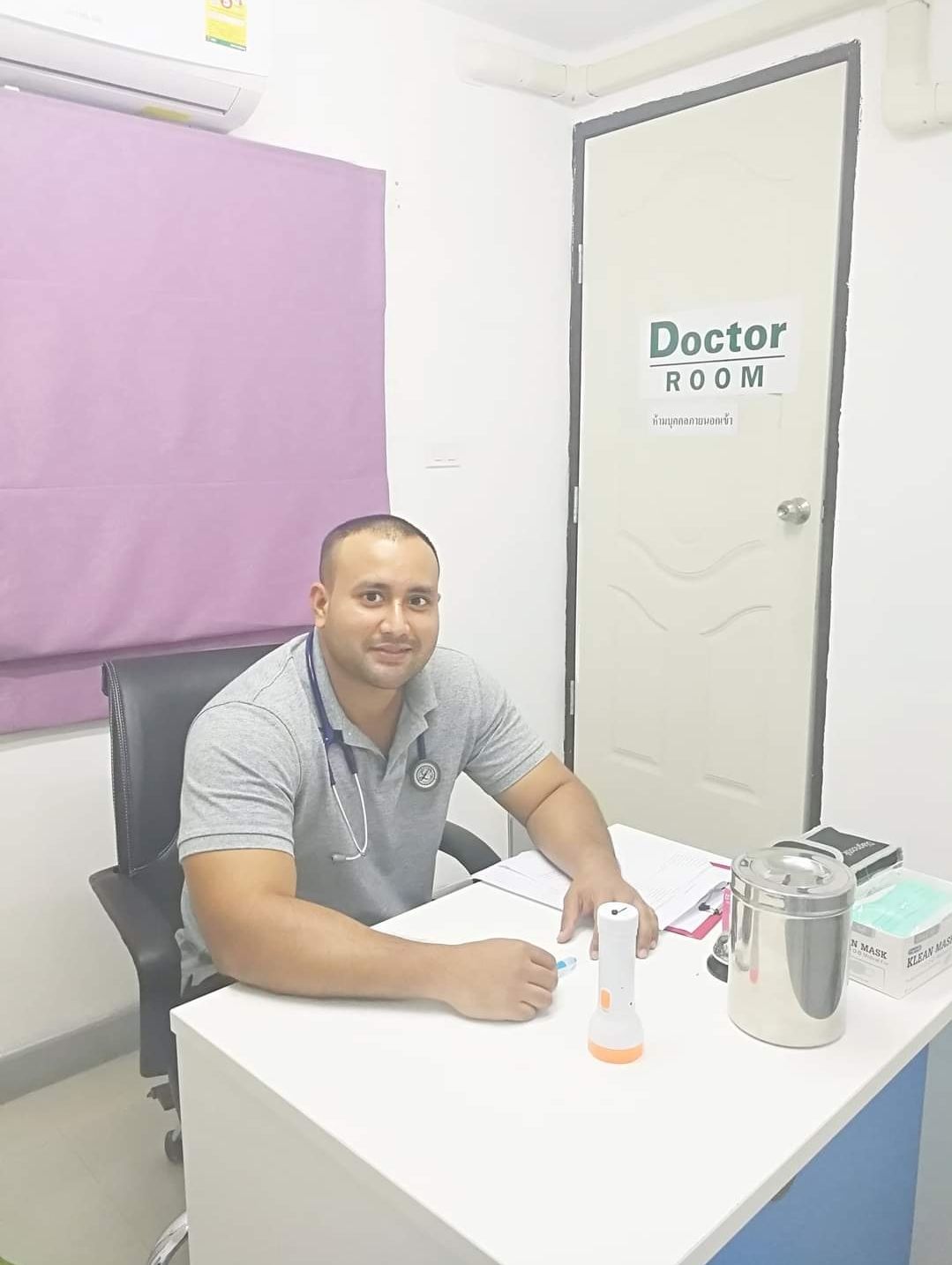
Dr. Ponlawat Pitsuwan is a physician at Doctor Bangkok, a private clinic in central Bangkok. He sees expats, residents, and medical tourists for general medicine, wellness consultations, and IV therapy. His focus is straightforward, evidence-based care delivered in plain language.