
Clinically reviewed by Dr. Ponlawat Pitsuwan, Physician, Doctor Bangkok. Last reviewed: September 2026
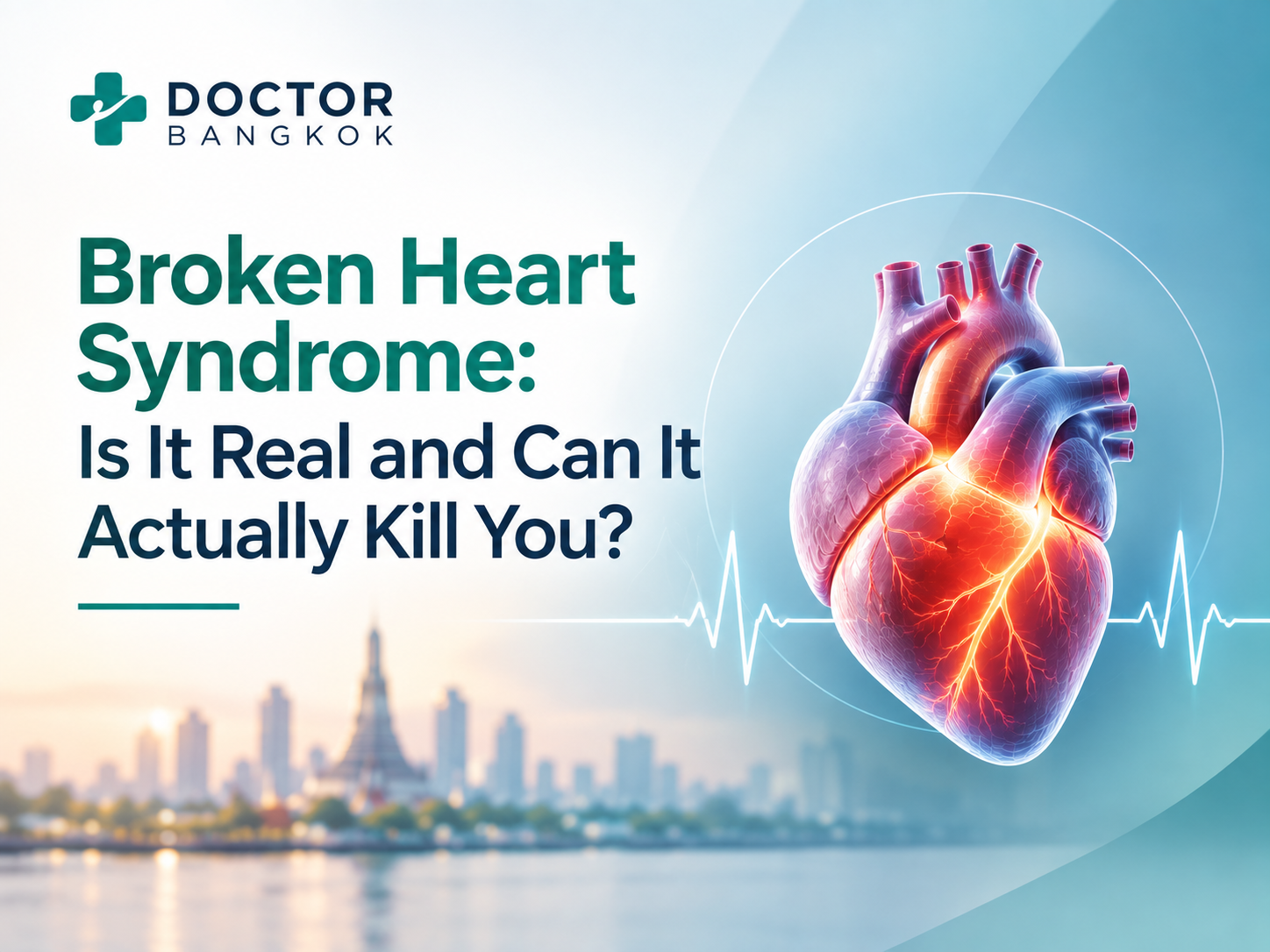
Broken heart syndrome, also called Takotsubo cardiomyopathy or stress cardiomyopathy, is a real cardiac condition where intense stress causes sudden, temporary heart muscle weakness. It mimics a heart attack almost perfectly. Most people recover fully within weeks, but it can be life-threatening without proper assessment. If you have chest pain or shortness of breath right now, get it checked before assuming it is stress.
Chest tightness, breathlessness, and a feeling of pressure that will not shift. I see this presentation regularly in Bangkok, and the patients are often convinced it is either a heart attack or pure anxiety. Last year a woman in her mid-fifties came in after receiving devastating news from home. Her ECG told a different story from both of those assumptions. It was broken heart syndrome, and she had never heard of it.
This condition gets missed constantly. Some patients panic and assume the worst. Others assume it is emotional and wait it out. Both responses carry real risk. If you have been through something sudden and shocking recently and your chest feels wrong, here is what you need to know.

Broken Heart Syndrome vs. Heart Attack: What Is Actually Different
The symptoms feel almost identical. Chest pain, shortness of breath, an abnormal ECG, and a raised troponin level, the blood marker for heart stress. In the moment, you cannot tell them apart without testing. Neither can I.
The core difference is cause. A heart attack happens when an artery supplying the heart becomes blocked. In broken heart syndrome, there is no blockage. Instead, a surge of stress hormones temporarily stuns the heart muscle. The arteries are clear, but the muscle stops working properly.
That distinction matters for treatment. But you cannot know which you are dealing with until we run the tests. Chest pain is always a reason to be assessed.
| Broken Heart Syndrome | Heart Attack | |
|---|---|---|
| Blocked artery | No | Yes |
| Heart muscle damage | Temporary | Often permanent |
| Typical trigger | Intense stress, physical or emotional | Plaque rupture, usually no clear trigger |
| Recovery timeline | Days to weeks | Weeks to months, varies |
| Who it affects most | Postmenopausal women | Broader demographic, including men |
| ECG abnormality | Yes, possible | Yes, possible |
| Troponin elevated | Often mildly | Often significantly |
What Actually Triggers It, and It Is Not Always Grief
Most people picture a devastating breakup or bereavement. That framing misses a large share of patients. Physical stressors are equally capable of producing the same hormonal surge.
Surgery, a severe asthma attack, extreme pain, a sudden high fever, or even a violent argument driven more by shock than sadness can all trigger it. The common thread is a sudden, intense activation of the body’s stress response, not a specific type of event.
This is worth knowing in Bangkok specifically. The physiological strain of long-haul travel, severe dehydration, and sustained extreme heat are all real physical stressors. An expat who develops chest pain after a brutal flight into 38-degree heat has not necessarily had a heart attack, but they still need an ECG.

Who Is Most at Risk of This Medical Condition
Postmenopausal women account for the majority of broken heart syndrome cases. Oestrogen appears to protect the heart against the effects of adrenaline surges. After menopause, oestrogen levels drop, and that protection reduces. The heart becomes more reactive to the stress hormones flooding through during an acute event.
Pre-existing anxiety disorders and certain neurological conditions also raise the risk. Expat women in the perimenopausal and postmenopausal age range who are managing relocation stress, family separation, and the physical demands of life in a hot climate are carrying a genuine physiological burden.
Men are not exempt. They represent a smaller proportion of cases, but broken heart syndrome happens in men too. If you are a woman over fifty with sudden chest symptoms after a stressful event, this condition belongs on your radar. If you are anyone with those same symptoms, so does a same-day assessment.
Symptoms to Watch For
The main symptoms are sudden chest pain and shortness of breath. They can appear within minutes of a stressful event or several hours later. Some patients develop an irregular heartbeat. Others feel faint or briefly lose consciousness.
Do not grade your symptoms against someone else’s account. Mild chest tightness still warrants assessment. Shortness of breath at rest is not something to monitor from your sofa. A pounding or skipping heartbeat after a major shock is not something to sleep on.
If this is happening now in Bangkok, do not spend time searching online. Come in or call for help.
How Broken Heart Syndrome Is Diagnosed
When a patient arrives with these symptoms at Doctor Bangkok, we start with an ECG immediately. The result can show changes that look similar to a heart attack. That alone does not confirm the diagnosis, but it tells us we need to keep going.
We draw blood to check troponin. In broken heart syndrome it tends to be mildly elevated. In a significant heart attack it is usually much higher, though there is overlap. Any cardiac enzyme elevation is taken seriously and referred appropriately.
If the picture suggests a cardiac event, the next step is an echocardiogram, an ultrasound of the heart, to assess how well the left ventricle is pumping. Confirming clear coronary arteries through angiography is what definitively separates broken heart syndrome from a heart attack. That procedure happens at a full cardiology facility, and we will arrange that referral when findings point to it.
Can It Kill You
This is the question I hear most often, usually from someone who has just been told what they had. The honest answer is: rarely, but yes.
Most patients recover completely. Heart muscle function normalises within weeks in the majority of cases. But in a small number of patients the temporary dysfunction is severe enough to cause cardiogenic shock, where the heart cannot pump enough blood to meet the body’s needs. Arrhythmias during the acute phase can also be life-threatening.
The risk of dying from broken heart syndrome is low. The risk of dying from an unassessed chest pain episode is meaningfully higher. Waiting to see if the tightness passes is not a plan.
Recovery and What Comes After
Full recovery is the norm. Most patients return to normal heart function within four to six weeks. A follow-up echocardiogram at around the one-month mark confirms that the ejection fraction, a measure of how efficiently the heart pumps, has normalised.
The part that gets underestimated is the stress management piece. If your body triggered this once, it can trigger it again. Recurrence is not the most common outcome, but it happens. Addressing the underlying source of stress is part of the medical management, not optional aftercare. Whether that means formal mental health support, structured lifestyle changes, or simply reducing what your nervous system is being asked to absorb, take it seriously.
Getting Assessed in Bangkok Right Now
If you are an expat or visitor in Bangkok with chest pain, shortness of breath, or an irregular heartbeat after a stressful event, do not manage this at home. The language barrier in Thai public emergency departments can slow things down at the worst possible moment. A private clinic with English-speaking physicians is often the faster, clearer first step.
At Doctor Bangkok we can run an ECG on the same visit, draw blood for cardiac markers, and give you a clear picture of whether you need immediate hospital transfer or further monitoring and testing. We are BTS accessible in central Bangkok, and you do not need an appointment for urgent concerns. If findings point to something requiring a cardiologist or cardiac imaging, we will refer you directly to the right facility.
Getting an initial assessment here first means that if a hospital visit is needed, you arrive knowing what is happening, which makes everything that follows faster and more efficient.
If you have had chest pain, shortness of breath, or a racing heartbeat after a sudden stressful event, come in for an assessment at Doctor Bangkok. We offer on-site ECG and cardiac blood tests reviewed by English-speaking physicians. BTS accessible, central Bangkok. Walk-ins accepted for urgent concerns. If your results indicate anything that needs specialist follow-up, we will arrange it.
Frequently Asked Questions
Dr. Ponlawat Pitsuwan
Physician, Doctor Bangkok
a private medical clinic in central Bangkok. He sees expats, residents, and medical tourists for urgent concerns including chest pain assessment, cardiac screening, and general internal medicine. His focus is straightforward, evidence-based care delivered in plain English.
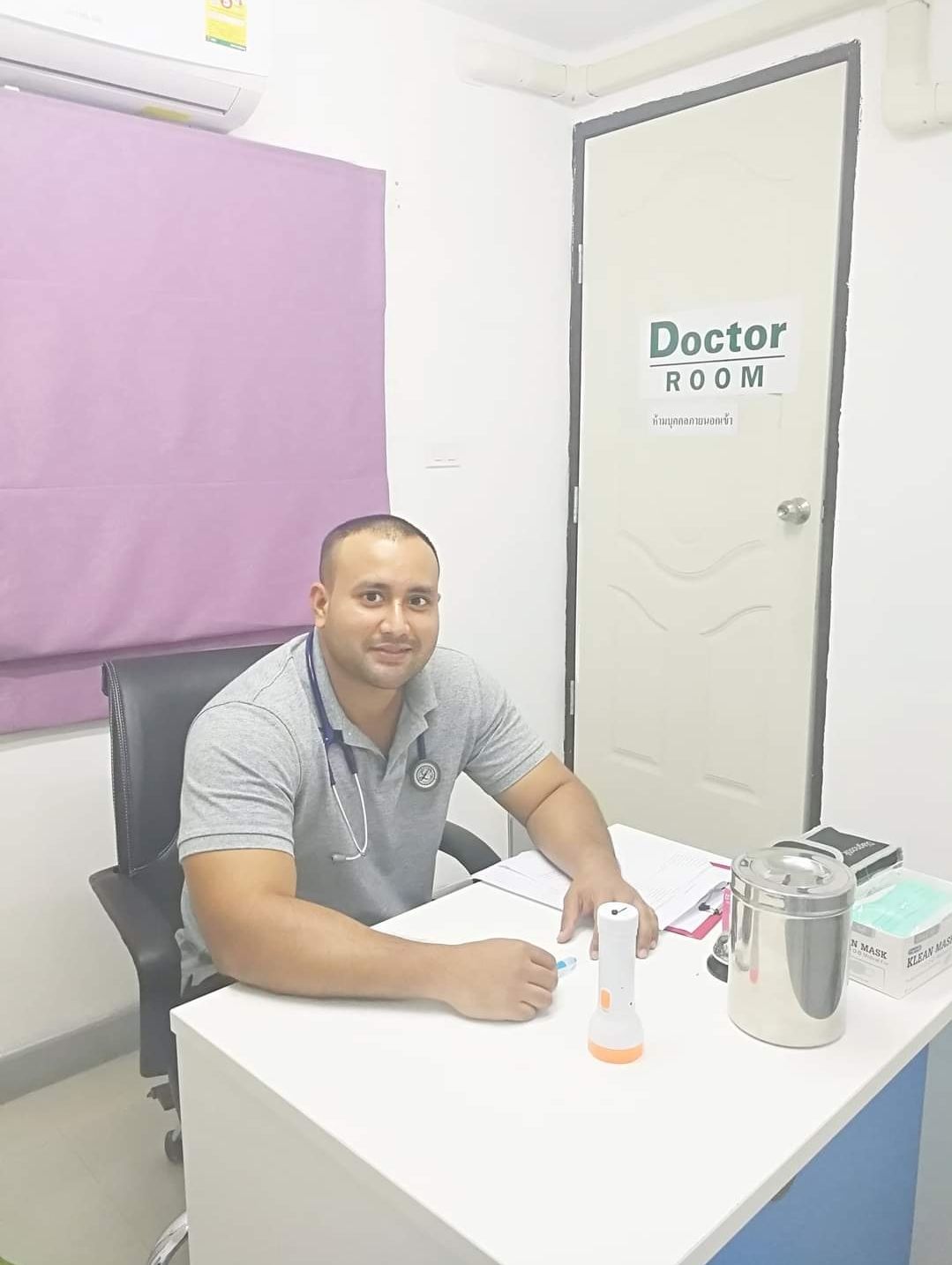
Dr. Ponlawat Pitsuwan is a physician at Doctor Bangkok, a private clinic in central Bangkok. He sees expats, residents, and medical tourists for general medicine, wellness consultations, and IV therapy. His focus is straightforward, evidence-based care delivered in plain language.