
Clinically reviewed by Dr. Ponlawat Pitsuwan, Physician, Doctor Bangkok. Last reviewed: September 2026
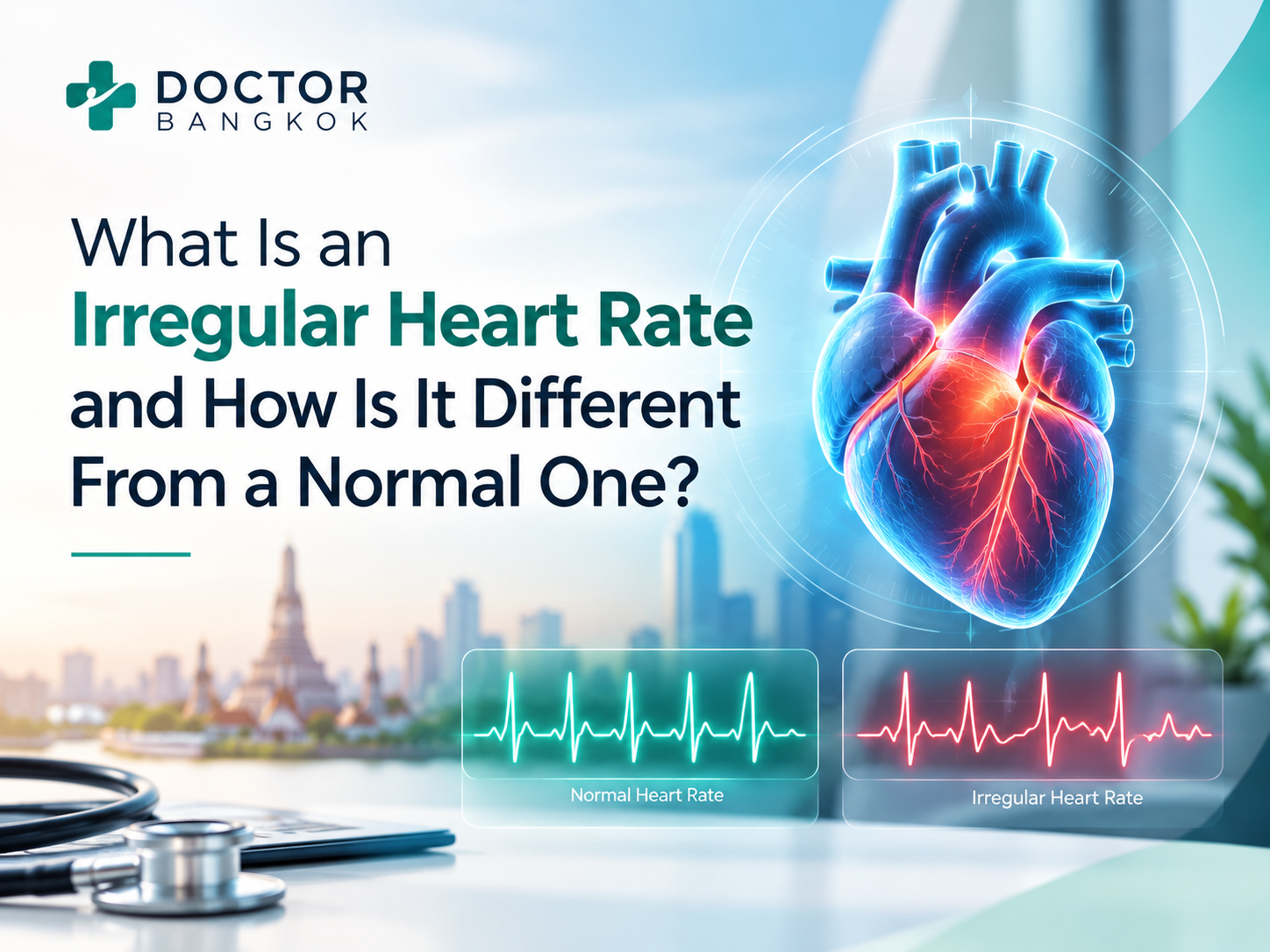
An irregular heart rate means your heart is beating too fast, too slow, or in an uneven rhythm. Some cases are harmless and triggered by heat, caffeine, or dehydration. Others, like atrial fibrillation (AFib), carry a real stroke risk and need proper assessment. The only way to know which one you have is an ECG, a painless test that takes about 30 seconds.
Your heart skipped a beat on the BTS. Or it started racing in the middle of a meeting and you are not sure why. Maybe it passed quickly. Maybe it keeps coming back and you are Googling at 11pm wondering how worried to be.
That is most of the people I see for this. The honest answer is: it depends entirely on what type of irregular rhythm you have. A normal resting heart rate sits between 60 and 100 beats per minute and follows a steady, even pattern. When that rhythm breaks, speeds up without reason, or drops too low, something in the heart’s electrical system has changed. Finding out what is the whole point of coming in.

What Actually Counts as an Irregular Heart Rate?
Your heart runs on its own electrical system. A small cluster of cells at the top, called the sinoatrial node, fires a signal with every beat to keep things coordinated and steady.
When that signal misfires, fires too often, fires too rarely, or travels the wrong path, the result is an arrhythmia. That just means an abnormal heart rhythm. The range goes from completely harmless to genuinely serious, which is why the type matters far more than the label.
Types of Irregular Heart Rate: From Harmless to Serious
Not all arrhythmias are equal. This is where most people get either unnecessarily frightened or, just as dangerously, too relaxed.
The ones that are usually harmless
Premature ventricular contractions, or PVCs, are the classic skipped-beat sensation. The heart fires an extra beat ahead of schedule, then pauses briefly to reset. Almost everyone gets these at some point. Caffeine, alcohol, stress, and dehydration are common triggers. In people with a structurally normal heart, PVCs are rarely dangerous.
Supraventricular tachycardia, or SVT, causes sudden bursts of fast heart rate, sometimes over 150 beats per minute. Episodes usually start and stop abruptly. Unpleasant, but in most cases not immediately dangerous. It still needs to be assessed and documented.
The ones that need proper attention
Atrial fibrillation, or AFib, is the most common serious arrhythmia I see at the clinic. The upper chambers of the heart quiver chaotically instead of beating in a coordinated way. The rhythm is irregular and often fast. AFib raises your stroke risk because blood can pool and clot inside the heart. Left unmanaged, that clot can travel to the brain.
Bradycardia means the heart rate is too slow, generally below 60 beats per minute at rest. In a well-trained athlete this is normal. In someone who is not athletic and feels dizzy or faint with it, it needs investigating.
Ventricular tachycardia is a fast rhythm starting in the lower chambers. This one can escalate quickly. When it is sustained, it is a medical emergency.

What Triggers an Irregular Heart Rate in Bangkok?
This is the part most health articles skip, and it is directly relevant to anyone living here or passing through.
Bangkok’s heat index regularly hits extreme levels, often feeling like 45°C or above. When your body overheats, your heart works harder to push blood to the skin to cool you down. That raises your heart rate. If you are also dehydrated, which is easy here without realising it, your blood volume drops and your heart compensates further.
Sweating in this climate depletes sodium and potassium. Those electrolytes are what your heart’s electrical signals run on. Lose enough of them and the rhythm can become unstable.
New arrivals are most at risk in the first two to four weeks. If you have just moved to Bangkok or arrived for a longer stay and you are noticing more palpitations than usual, heat and dehydration are the first things to look at. I also see this regularly after long nights out on Sukhumvit, where alcohol, heat, poor sleep, and dehydration all combine at once.
Bangkok’s air pollution, particularly during low-wind months, adds background cardiac stress over time. This matters most for patients who already have a pre-existing heart condition.
Warning Signs: When Should You Actually See a Doctor?
The internet will either tell you everything is fine or send you straight to emergency. Neither is usually right.
Come in for a same-day assessment if your irregular rhythm comes with chest pain, breathlessness, dizziness, or you faint or nearly faint. Those combinations need to be checked that day. At Doctor Bangkok, a walk-in ECG with physician review is available without an appointment.
A routine appointment within a few days is appropriate if you are getting occasional skipped beats with no other symptoms, your heart races briefly then settles, or you want a baseline check after arriving in Bangkok.
Do not rely on a smartwatch to make the call. Wearable devices are useful for flagging patterns over time, but they are not diagnostic. A proper 12-lead ECG gives a full picture of your heart’s electrical activity, not just a single-lead snapshot.
How an Irregular Heart Rate Is Diagnosed in Bangkok
An ECG is the first and most important test. Small adhesive pads go on your chest, wrists, and ankles. You lie still for about 30 seconds. Completely painless, completely non-invasive. The physician reviews the results with you in the same appointment.
If your symptoms are intermittent and did not appear during the ECG, a Holter monitor may be the next step. This is a small wearable device that records your heart rhythm over 24 to 48 hours while you go about your day. It catches rhythms that a standard ECG misses because the heart was behaving during the test.
Blood tests are usually part of the work-up. Thyroid function, electrolytes, and sometimes a full blood count. Several treatable conditions, including thyroid dysfunction and low potassium, can cause arrhythmias directly and are straightforward to identify.
How an Irregular Heart Rate Is Treated
It depends on the diagnosis. I know that is not the answer most patients want, but it is the accurate one.
For PVCs and mild SVT linked to lifestyle, the first step is often simple: cut the caffeine, rehydrate properly, reduce alcohol, sleep more. For many patients I see, that alone clears the symptoms.
For AFib, the priorities are controlling the heart rate and reducing stroke risk. Rate control is usually managed with medication such as beta-blockers. Stroke prevention typically involves anticoagulant therapy, blood thinners that reduce clotting risk. The specific approach depends on the patient’s overall risk profile.
For arrhythmias that do not respond to medication, cardiac ablation is an option at a specialist cardiology centre. Pacemakers are used when the heart rate is consistently too slow. Both require referral to a cardiologist, and we coordinate those referrals directly from Doctor Bangkok if needed.
For certain SVT episodes, specific techniques like bearing down or applying cold water to the face can stop an episode in the moment. I walk patients through these in a consultation so they know what to try if one starts outside the clinic.
Getting an ECG or Heart Check at Doctor Bangkok
Walk-in ECG is available daily at Doctor Bangkok on Sukhumvit Soi 13, a short walk from BTS Nana. No referral needed. You do not need to have symptoms on the day. Many patients come in for a baseline heart rhythm check after a recent illness, a period of heavy activity in the heat, or simply because they have never had one done.
Results are available the same visit. The physician reviews the ECG with you and explains what it shows in plain language. If a Holter monitor or a cardiology referral is needed, we tell you clearly and help arrange the next step.
If you cannot travel, a doctor can come to you. We carry portable assessment equipment for hotel and home visits. Getting checked should not require you to navigate a large Thai hospital on your own.
If you have noticed an irregular heartbeat, palpitations, or your heart racing in Bangkok’s heat, do not put it off. Doctor Bangkok offers walk-in ECG testing with same-day results, reviewed by an English-speaking physician. We are open daily on Sukhumvit Soi 13, close to BTS Nana. No appointment needed for most presentations. If you cannot come to us, a doctor can visit your hotel. Contact us to book or to ask a question before you come in.
Frequently Asked Questions
Dr. Ponlawat Pitsuwan
Physician, Doctor Bangkok
a private medical clinic in central Bangkok. He sees expats, residents, and medical tourists for cardiac concerns, heart rhythm assessment, general health checks, and walk-in ECG testing. His focus is straightforward, evidence-based care delivered in plain language.
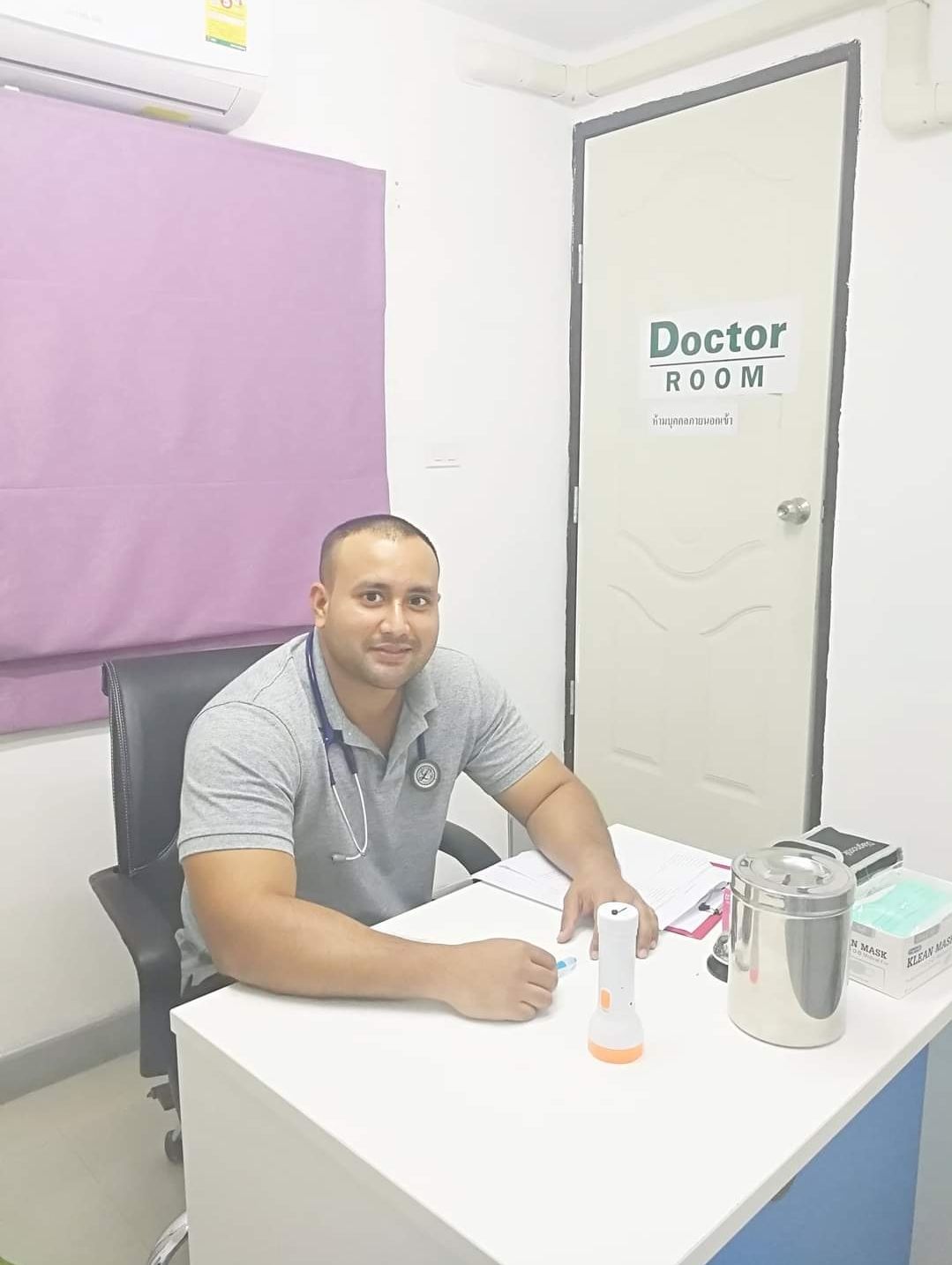
Dr. Ponlawat Pitsuwan is a physician at Doctor Bangkok, a private clinic in central Bangkok. He sees expats, residents, and medical tourists for general medicine, wellness consultations, and IV therapy. His focus is straightforward, evidence-based care delivered in plain language.