
Clinically reviewed by Dr. Ponlawat Pitsuwan, Physician, Doctor Bangkok. Last reviewed: August 2026
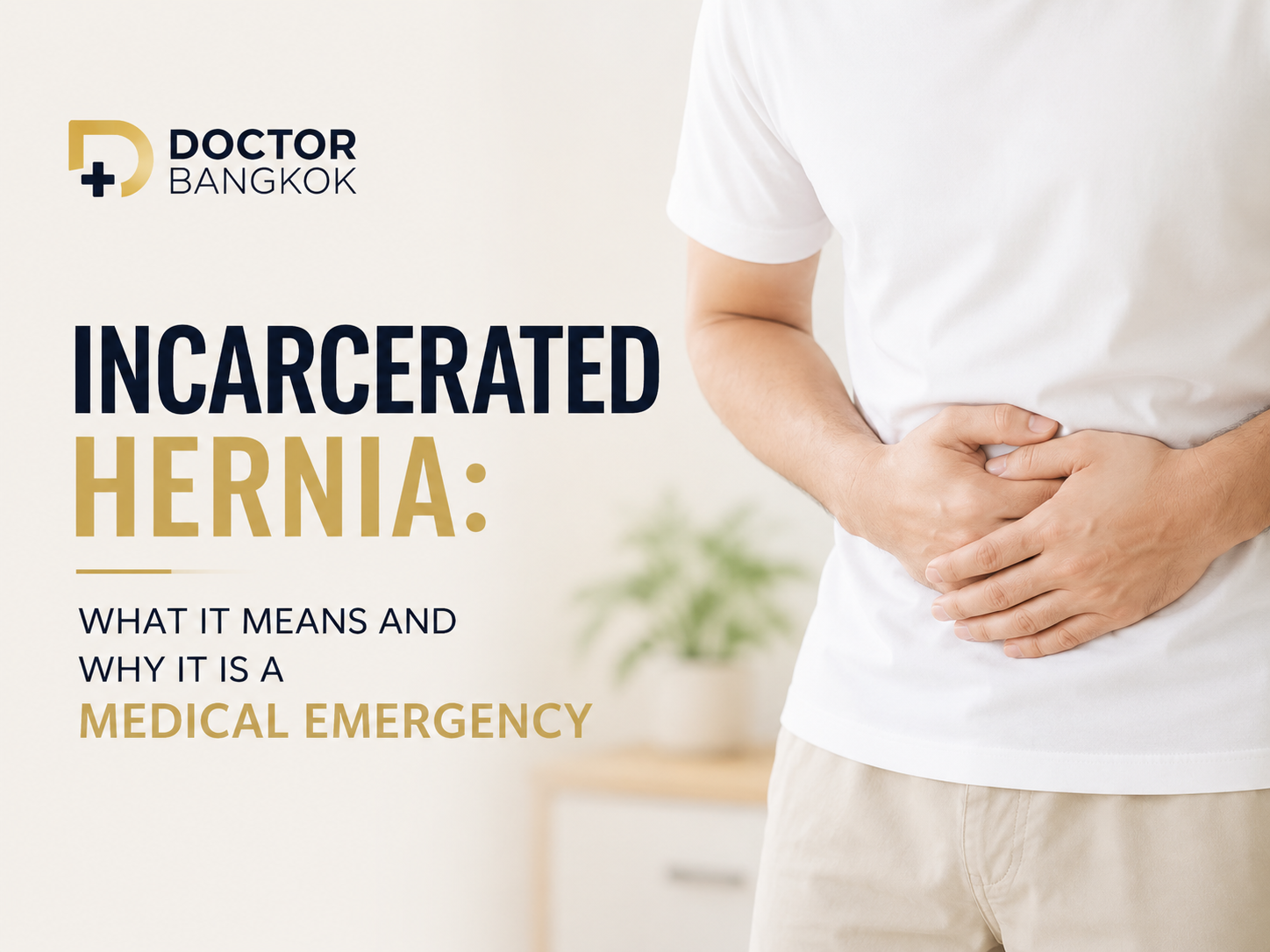
An incarcerated hernia is a hernia where the trapped tissue cannot be pushed back in. It does not resolve on its own. Without treatment, blood supply to the trapped tissue can be cut off within hours, leading to tissue death and a life-threatening situation. If your hernia bulge is hard, painful, and stuck, get assessed today.
Someone comes in having noticed their hernia felt different for a few hours. The lump is harder. It will not go back in when they lie down. They waited, hoping it would settle. By the time they reach me, the window for a simple fix has narrowed.
If that sounds familiar right now, here is the point: an incarcerated hernia is a surgical emergency until proven otherwise. It will not go away on its own. The risk of serious complications rises with every hour you wait.

Incarcerated vs Strangulated Hernia: What the Terms Mean
These two terms are often used together, but they are not the same, and the difference matters for how fast you need to move.
An incarcerated hernia means tissue, usually a loop of bowel or fatty tissue, has become trapped and cannot be pushed back through the gap in the abdominal wall. Blood supply may still be intact at this stage.
A strangulated hernia means blood supply to that trapped tissue has been cut off. The tissue starts to die. This is the point where bowel necrosis and sepsis become real and immediate risks. Emergency surgery is the only option.
An incarcerated hernia can become strangulated within hours. There is no clear warning before it tips over. You cannot feel it happening from the outside.
How Quickly Can an Incarcerated Hernia Become Dangerous
This is the question I get asked most when someone comes in with a hernia that will not go back in.
There is no fixed timeline. What we know is that the risk of strangulation rises significantly within the first few hours and keeps rising. Femoral hernias, which sit in the upper inner thigh area, are particularly prone to cutting off blood supply quickly because of the narrow passageway involved.
Do not try to calculate how much time you have. Treat it as urgent from the moment you notice the lump will not go back in.

Symptoms That Tell You Something Has Changed
Most people with a hernia know their lump. They know it comes and goes. An incarcerated hernia feels different, and your body will usually tell you.
The bulge becomes firm or hard and will not move when you lie down or press gently on it. There is constant pain at the site rather than the usual intermittent ache. Nausea, vomiting, or an inability to pass gas or have a bowel movement are signs that trapped bowel is blocked.
If the skin over the bulge turns red, purple, or dark, do not call a clinic. Go directly to a hospital emergency department. That colour change suggests strangulation has already begun.
Types of Hernia That Can Become Incarcerated
Any hernia can incarcerate, but some types do so more often than others.
Inguinal hernias appear as a bulge in the groin and are more common in men. Femoral hernias sit just below the groin crease, are more common in women, and have a disproportionately high incarceration rate despite being less common overall. A groin lump in a woman always gets my attention for this reason.
Umbilical hernias appear at the belly button and can incarcerate, particularly in adults. Incisional hernias develop at a previous surgical scar and carry the same risk. All of these can trap tissue and hold it.
What to Expect When You Come In for Assessment
When you come to Doctor Bangkok, the assessment starts with a physical examination. I check whether the hernia can be pushed back in, how tender it is, and whether there are any signs of strangulation.
Depending on what I find, we may arrange a bedside ultrasound or an abdominal X-ray. If I am concerned about bowel obstruction, a CT scan gives a clearer picture.
If you have arrived early and there are no signs of strangulation, a carefully performed manual reduction may be attempted. This is a controlled procedure done in a clinical setting, not something to try at home. If reduction is not safe, or if there are any signs of strangulation, you will be referred immediately to a surgical team at a partner hospital.
Getting Help as an Expat in Bangkok
You are in Bangkok, possibly far from home, and your hernia has changed. You may not speak Thai. You may not know which hospital to trust. You may be worried about costs. These concerns are real and I hear them often.
Doctor Bangkok sees English-speaking patients every day. If this happens during the day, come in for an assessment. If it is late and your symptoms include high fever, skin discolouration over the bulge, or severe abdominal pain, go to the nearest hospital emergency department and contact us for guidance. We can help you communicate with Thai-speaking staff and provide documentation for your insurer.
Do not let the logistics of being abroad slow your decision. Getting assessed quickly is always the right call.
Insurance, Costs, and Practical Steps
Emergency hernia surgery is covered under most international health insurance policies and the majority of travel insurance plans, as it qualifies as an acute surgical emergency.
Call your insurer’s emergency line before or on the way to hospital where possible. Ask for a guarantee of payment so the hospital bills the insurer directly. If you cannot reach your insurer immediately, do not let that delay your care.
Keep all receipts, consultation notes, and referral letters. Doctor Bangkok provides itemised documentation from your first visit that is suitable for insurance claims. Bring your passport and insurance card. That is all you need to get started.
Treatment: What Hernia Surgery Involves
If surgery is needed, the goal is to return the trapped tissue to the abdomen and close the gap in the abdominal wall permanently.
For emergency cases, open repair is more common because it gives the surgeon direct access and allows assessment of the bowel. If the trapped bowel cannot be saved, a section may need to be removed. This makes recovery more complex and the hospital stay longer.
Emergency hernia repair takes longer to recover from than planned surgery. If you are a medical tourist, flying home within a week of emergency abdominal surgery is not realistic. Plan for two to four weeks minimum before a long-haul flight, and get surgical clearance before booking anything.
If your hernia feels different today, harder, more painful, or stuck in a way it has not been before, do not wait to see if it settles. Doctor Bangkok offers same-day consultations with English-speaking physicians in central Bangkok, BTS accessible and open to expats, residents, and visitors. We can assess your hernia, arrange imaging if needed, and refer you immediately to a surgical team if the situation requires it. Contact us now to book your assessment.
Frequently Asked Questions
Dr. Ponlawat Pitsuwan
Physician, Doctor Bangkok
a private medical clinic in central Bangkok. He sees expats, residents, and medical tourists for urgent medical assessments, general consultations, and pre-surgical evaluations. His approach is direct, evidence-based, and in plain language.
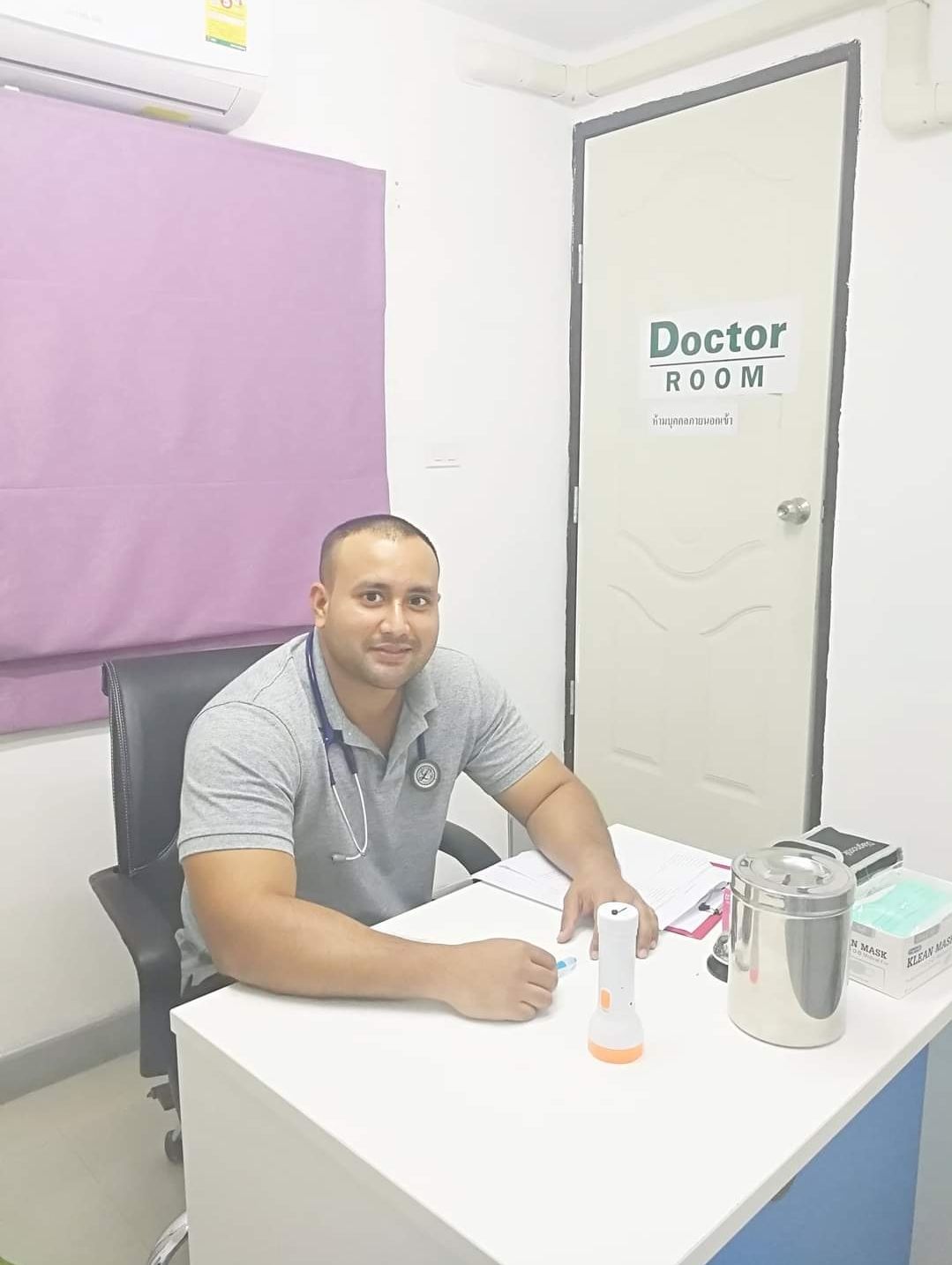
Dr. Ponlawat Pitsuwan is a physician at Doctor Bangkok, a private clinic in central Bangkok. He sees expats, residents, and medical tourists for general medicine, wellness consultations, and IV therapy. His focus is straightforward, evidence-based care delivered in plain language.