
Clinically reviewed by Dr. Ponlawat Pitsuwan, Physician, Doctor Bangkok. Last reviewed: August 2026
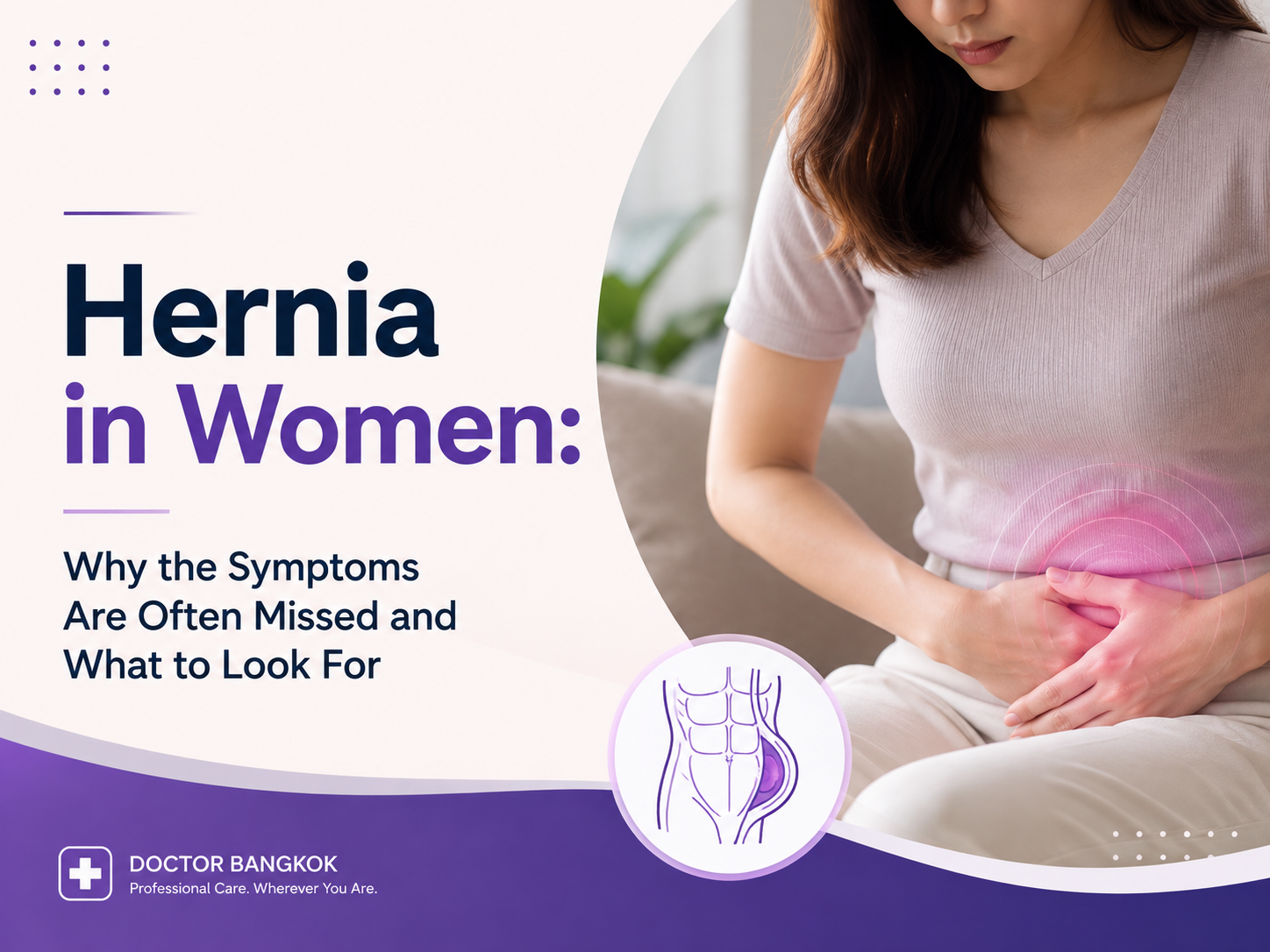
Hernia in women rarely causes a visible lump. The most common symptoms are a deep aching pain in the groin or lower abdomen that gets worse when you stand, lift, or cough, and eases when you lie down. Because there is often no bulge to find, hernias in women are frequently mistaken for endometriosis, ovarian cysts, or a pulled muscle. Early assessment with imaging is usually needed to confirm the diagnosis.
Groin pain that does not go away is one of the more common things I see in women at the clinic, especially those who have already been told it is probably gynaecological. Sometimes it is. But a hernia is missed far more often in women than most people realise, and the longer it goes undiagnosed, the higher the risk of a complication that needs emergency surgery.
The tricky part is that hernia symptoms in women look nothing like the textbook picture most people have in their heads. No obvious bulge. No dramatic moment of injury. Just a persistent ache that gets worse through the day and eases off when you rest. If that sounds familiar, keep reading.

Why Hernia Symptoms Present Differently in Women
A hernia happens when tissue or part of an organ pushes through a weak spot in the abdominal or pelvic wall. In men, this usually creates a visible bulge in the groin. In women, it often does not.
The female pelvis is wider and the anatomy around the groin is different, so hernias tend to sit deeper and stay hidden. Hormonal changes during pregnancy soften connective tissue throughout the body, which reduces the strength of the abdominal wall and increases hernia risk. After menopause, the drop in oestrogen affects collagen quality further, which is why hernia risk rises again in older women.
The result is that many women with a hernia have no lump at all. The main clue is pain, and that pain can look a lot like several other conditions.
Types of Hernia Most Common in Women
Not all hernias are the same, and some types are far more common in women.
Femoral hernia is the one I think about first when a woman comes in with unexplained groin pain. It sits just below the groin crease in the upper inner thigh, almost never causes a visible bulge, and carries one of the highest rates of emergency complication of any hernia type.
Inguinal hernia is more associated with men, but women get them too. The hernia may track along the round ligament, a cord of tissue running through the inguinal canal toward the labia, which is why some women feel the pain radiate toward the vulva or inner thigh rather than the groin itself.
Umbilical hernia, a weakness around the navel, is more common in women, particularly those who have been pregnant. It often appears as a small soft lump near the belly button that bulges when you cough or strain. Incisional hernia develops through a previous surgical scar, such as a caesarean section wound. Obturator hernia is rare but tends to affect older, thinner women, causing pain down the inner thigh with no visible sign at all.

Key Symptoms of Hernia in Women to Know
The symptom I hear most often is a dull ache in the groin or lower abdomen that has been there for weeks or months. It tends to get worse after a long day on your feet, after exercise, after lifting, or when you cough or sneeze. It usually eases when you lie down.
Some women notice a feeling of pressure or heaviness in the pelvic area. Others describe a pulling sensation that comes and goes. Pain during sex can also occur, particularly with inguinal hernias that involve the round ligament.
The absence of a lump does not mean the pain is not real or that nothing is wrong. In women, many hernias cannot be felt from the outside at all.
Conditions Often Confused With Hernia in Women
This is where the real diagnostic challenge sits. Hernia pain in women overlaps with several common gynaecological and musculoskeletal conditions, and getting the right answer usually requires a proper examination plus imaging.
| Condition | Typical Pain Pattern | Key Difference from Hernia |
|---|---|---|
| Hernia | Worsens with activity, standing, lifting, coughing; eases lying down | Pain is positional and activity-related |
| Endometriosis | Cyclical, tied to menstrual cycle; pelvic and lower back pain | Pain follows periods, not physical exertion |
| Ovarian cyst | Often sharp or sudden; may include bloating or nausea | Not typically worsened by coughing or lifting |
| Uterine fibroids | Pelvic heaviness, pressure, heavy periods | Not position-dependent; often tied to menstruation |
| Pulled groin or hip flexor | History of sudden injury or overexertion | Onset linked to specific activity; no deep pelvic involvement |
| Femoral lymphadenopathy | Lump in groin that does not change with position | Lump is firm, non-tender, not reducible |
Hernia misdiagnosis is genuinely common in women. I have seen patients who spent a year being investigated for endometriosis before imaging confirmed a femoral hernia. These conditions can also coexist, which makes sorting it out without imaging very difficult.
Risk Factors for Hernia in Women
Pregnancy is the single biggest risk factor. Each pregnancy stretches and weakens the abdominal wall, and the risk increases with multiple pregnancies. Previous abdominal or pelvic surgery, including caesarean sections, creates weak points in tissue that can develop into incisional hernias over time.
Hormonal changes during and after pregnancy affect collagen and connective tissue strength. Women with a family history of hernia, or those with connective tissue conditions, are at higher risk. Chronic straining from constipation, a persistent cough, or heavy manual work also increases risk over time.
How Is a Hernia Diagnosed in Women?
A physical examination is where assessment starts, but for women it is often inconclusive on its own. There is frequently no obvious bulge to feel. A good clinician will examine the groin, abdomen, and pelvic wall and ask about when and where the pain occurs and what makes it better or worse.
Imaging is almost always needed for a definitive diagnosis. Ultrasound is usually the first step. It is quick, accessible, and can check for ovarian or uterine causes of pelvic pain at the same time. If ultrasound is inconclusive, CT or MRI gives a more detailed view of deeper structures, and MRI is particularly useful for detecting obturator hernias or small hernias that ultrasound misses.
At Doctor Bangkok, we carry out the initial clinical assessment and coordinate referral for imaging where needed, with full documentation for travel or international health insurance if you are visiting Thailand.
When to Seek Urgent Medical Care
Most hernias are not emergencies. But when they become one, they move fast.
If a hernia becomes incarcerated, the tissue is stuck and cannot be pushed back. If blood supply is cut off, it becomes strangulated. Both are surgical emergencies. Women face a much higher rate of emergency hernia complications than men, particularly with femoral hernias.
Seek urgent care immediately if you have sudden severe pain at the hernia site, a lump that becomes hard or turns red or dark, nausea and vomiting, or an inability to pass gas or open your bowels. Do not wait to see if it settles. This is one situation where acting quickly matters.
Do Hernias in Women Always Need Surgery?
For most women, watchful waiting is not the right approach. Women, and those with femoral hernias in particular, have a significantly higher risk of incarceration and strangulation compared to men. Even a hernia that feels mild can become an emergency without much warning.
Laparoscopic repair with mesh is the preferred approach for most hernias in women. It is minimally invasive, has a good recovery profile, and is associated with lower recurrence rates than open repair. Your surgeon will advise based on hernia type, size, and your overall health.
If a hernia is confirmed, a surgical consultation is the right next step. That conversation starts with getting the diagnosis right, not with waiting to see whether things get worse.
Getting a Hernia Assessment in Bangkok as an Expat or Visitor
I get asked fairly often whether it is worth getting assessed in Bangkok rather than waiting until you are back home. My honest answer is that if your symptoms have been going on for more than a few weeks, waiting is not the right call.
At Doctor Bangkok, we see a lot of expats and visitors in exactly this situation: pain that has been building, a GP appointment that is weeks away at home, and real uncertainty about whether this needs attention now. We offer English-speaking consultations, clinical examination, and referral coordination for ultrasound or CT imaging. We also provide itemised receipts and documentation for travel insurance and international health insurance claims.
You do not need a referral to book. We are centrally located in Bangkok and BTS accessible, with same-day appointments usually available. If imaging confirms a hernia that needs surgical evaluation, we will connect you with the right specialist.
If you have unexplained groin or pelvic pain that gets worse when you move and eases when you rest, it is worth having it assessed. Hernia in women is often missed for months, and the sooner it is confirmed or ruled out, the better your options. Doctor Bangkok offers English-speaking general medical consultations in central Bangkok, with same-day availability. We can assess your symptoms, arrange imaging referrals, and provide documentation for insurance. Contact us to book.
Can you have a hernia with no visible lump or bulge?
Yes, and in women this is the norm rather than the exception. Female hernias tend to be smaller and sit deeper, so there is often nothing to see or feel from the outside. The main symptom is usually a deep aching pain in the groin or lower abdomen that changes with activity and position. Ultrasound or CT imaging is frequently needed to confirm the diagnosis when there is no palpable lump.
How do I know if my pelvic pain is a hernia or something gynaecological?
The clearest clue with hernia is that the pain is activity-related. It gets worse when you lift, cough, stand for long periods, or exercise, and eases when you lie down. Endometriosis pain tends to follow your menstrual cycle, and ovarian cyst pain is often more sudden and may come with bloating. That said, these conditions can coexist, and only a clinical examination with imaging can give you a reliable answer.
Do hernias in women always need surgery?
For most women, yes. Watchful waiting is generally not recommended because women, particularly those with femoral hernias, have a substantially higher risk of emergency complications compared to men. Even hernias that feel mild can become incarcerated or strangulated without much warning. If a hernia is confirmed, a surgical consultation is the right next step.
What are the signs that a hernia has become a medical emergency?
Sudden severe pain at the hernia site, a lump that hardens or cannot be pushed back, skin turning red or dark over the area, nausea, vomiting, or inability to pass gas or open your bowels all suggest a serious complication. These are signs of possible strangulation or incarceration and require immediate medical attention.
Can I get a hernia assessed in Bangkok as a tourist or expat?
Yes. Doctor Bangkok offers English-speaking consultations with same-day availability in central Bangkok, and we can arrange referrals for ultrasound or CT imaging where needed. We also provide itemised receipts for travel and international health insurance claims. It is better to get assessed now than to manage worsening symptoms until you are back home.
What is a femoral hernia and why does it matter more in women?
A femoral hernia develops just below the groin crease in the upper inner thigh. It is much more common in women than men and almost never causes a visible bulge, which is why it is so often missed. It also carries one of the highest risks of strangulation of any hernia type, making prompt diagnosis and surgical evaluation particularly important.
Can pregnancy cause a hernia?
Yes, pregnancy is one of the most significant risk factors. The growing uterus puts sustained pressure on the abdominal wall, and hormonal changes during pregnancy soften connective tissue throughout the body. Women who have had multiple pregnancies or caesarean sections are at higher risk.
Dr. Ponlawat Pitsuwan
Physician, Doctor Bangkok
a private medical clinic in central Bangkok. He sees expats, residents, and medical tourists for general medical consultations, including assessment of abdominal and pelvic pain, hernia evaluation, and referral coordination for diagnostic imaging and specialist care. His focus is straightforward, evidence-based care delivered in plain language.
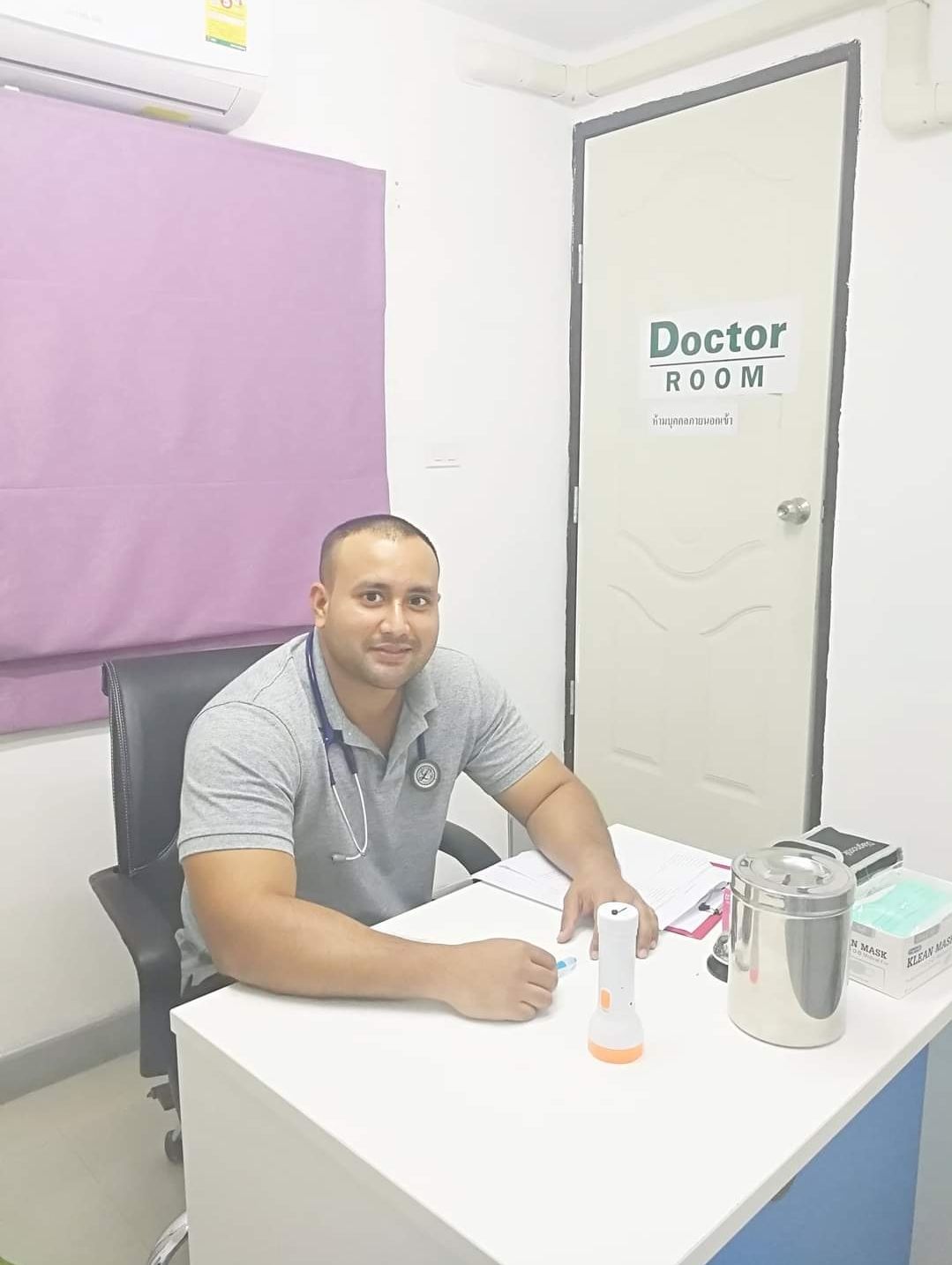
Dr. Ponlawat Pitsuwan is a physician at Doctor Bangkok, a private clinic in central Bangkok. He sees expats, residents, and medical tourists for general medicine, wellness consultations, and IV therapy. His focus is straightforward, evidence-based care delivered in plain language.