
Clinically reviewed by Dr. Ponlawat Pitsuwan, Physician, Doctor Bangkok.
Last reviewed: August 2026
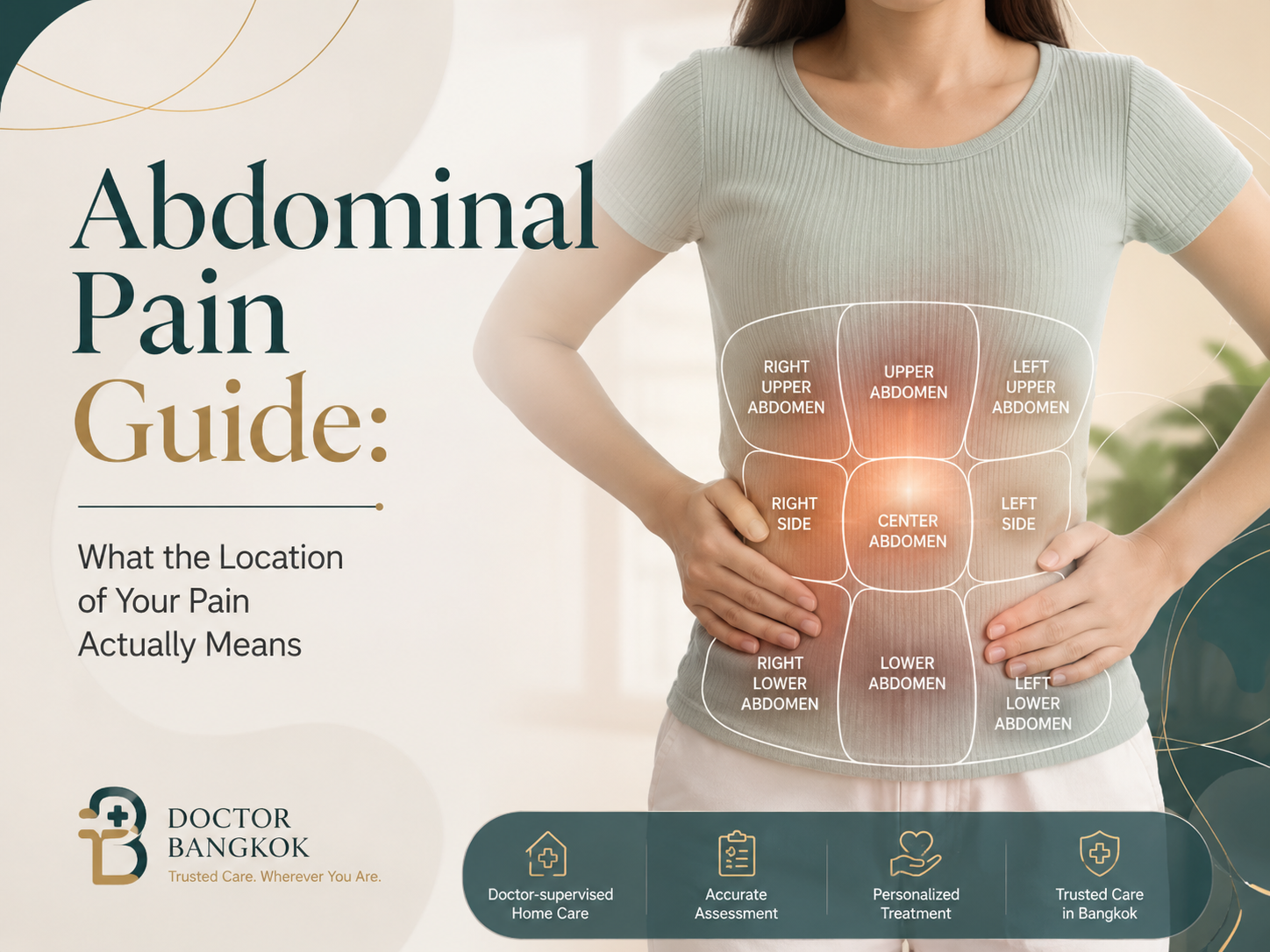
Where your stomach pain is located tells us a lot about what is causing it. Upper right pain often points to the liver or gallbladder. Lower right pain can mean appendicitis. Central cramping with loose stools is usually gastroenteritis or food poisoning. Location alone does not confirm a diagnosis, but it gives us a strong starting point. If your pain is severe, worsening, or comes with fever, get assessed the same day.
I see at least five or six patients a week with stomach pain. Some have been waiting it out for days. Some come in the morning after a street food dinner that went wrong. Most want the same thing: someone to tell them whether this is manageable at home or needs attention now.
Stomach pain in Bangkok is not the same as stomach pain back home. The food environment is different. The heat speeds up dehydration. Tropical infections that most Western doctors rarely see are genuinely common here. And you probably do not have a regular GP to call. This guide covers what your pain location likely means, when to come in, and when you need an emergency room.

Abdominal Pain Location Guide: What Each Area May Mean
Pain location is not perfect, but it narrows things down fast.
| Pain Location | Likely Causes |
|---|---|
| Upper right | Gallstones, gallbladder inflammation, liver problem |
| Upper left | Gastritis, stomach ulcer, spleen issue, pancreatitis |
| Upper centre (epigastric) | Acid reflux, gastritis, H. pylori infection, peptic ulcer |
| Lower right | Appendicitis, ovarian cyst or ectopic pregnancy in women, groin hernia |
| Lower left | Constipation, diverticulitis, ovarian issue in women, colon problem |
| Lower centre | Bladder infection, uterine pain, bowel issue |
| Central (around navel) | Early appendicitis, IBS, gastroenteritis, small bowel problem |
| Generalised (all over) | Gastroenteritis, food poisoning, peritonitis if severe |
Pain does not always stay where the problem is. Gallbladder pain sometimes spreads to the right shoulder. Pancreatitis can radiate straight through to the back. If your pain feels like it is moving, tell your doctor exactly where it started and where it went.
Types of Abdominal Pain and What They Tell Us
Pain that comes in waves, cramping and then easing, is usually colicky. This pattern fits trapped gas, early food poisoning, gallstone attacks, or kidney stones.
Pain that builds steadily and does not let up tends to be more concerning. Appendicitis often starts this way, and so does pancreatitis. If your pain started mild and has been getting worse over several hours, do not keep waiting.
Burning pain in the upper centre of your abdomen, especially after eating or on an empty stomach, usually points to acid, gastritis, or an ulcer. Recurring stomach pain with no clear structural cause is also real. It often links to stress, diet changes, or gut changes after an infection, and it is worth investigating properly rather than dismissing.

Bangkok-Specific Causes Expats and Tourists Often Miss
This is the section most health websites skip, because they are not based here.
Bangkok belly is the common term for traveller’s gastroenteritis in Thailand: loose stools, stomach cramps, nausea, sometimes vomiting. It usually hits within the first few weeks of arrival or after eating from a new vendor. Most cases resolve within 24 to 72 hours with fluids and rest.
What people miss is that not every persistent stomach problem is Bangkok belly. H. pylori is far more prevalent in Southeast Asia than in Western countries. It causes a gnawing, burning upper abdominal pain that keeps coming back, especially before meals or at night, and it does not clear without specific treatment.
Parasitic infections are another category that gets missed entirely. Giardia spreads through contaminated water and raw salads. Liver fluke, known medically as Opisthorchis viverrini, is endemic in Thailand and linked to raw or undercooked freshwater fish. Amoebic dysentery is less common but real. These infections can look like stubborn Bangkok belly for weeks and will not clear without a stool test and the right treatment.
Bangkok’s heat matters more than people realise. Dehydration sets in faster here, causes cramping on its own, and worsens any underlying gut problem. Dark urine and low fluid intake are part of the clinical picture.
Red Flag Symptoms: When Abdominal Pain Needs Same-Day Assessment
Go to a Bangkok hospital emergency room if your pain is sudden and severe, rated eight out of ten or above. Go if your abdomen feels rigid or board-like when you press on it, which can signal peritonitis. Go if pain started centrally and moved to the lower right with fever. Go if you have passed black or bloody stools, feel faint, or are vomiting blood. Women with sharp one-sided pelvic pain and a missed period need emergency assessment.
Come to Doctor Bangkok for same-day assessment if your pain has lasted more than 24 to 48 hours without improving. Come in if you have diarrhoea with cramping and a fever above 38°C, or if your stomach pain keeps returning over weeks. Come in if you want to rule out H. pylori or parasites before things get worse.
Rebound tenderness is a specific sign worth knowing. If pressing your abdomen and releasing sharply hurts more than the press itself, that needs to be seen today, not tomorrow.
Self-Care at Home Versus a Same-Day Clinic Visit
For mild cramping, loose stools, and nausea after eating, start with oral rehydration salts. They are available at every 7-Eleven and pharmacy in Bangkok. Plain rice porridge, khao tom, is easy to find and gentle on the stomach. Avoid dairy, alcohol, and spicy food for 24 hours.
Paracetamol is safe for pain. Ibuprofen and aspirin are not, especially if your pain is upper abdominal. Both irritate the stomach lining and can make gastritis or ulcer pain significantly worse. If you are not sure which you have, skip the NSAIDs.
Do not manage yourself at home for more than 48 hours if things are not clearly improving. I see patients who spent three or four days treating what they assumed was Bangkok belly, then came in and tested positive for Giardia or H. pylori. Earlier testing means earlier treatment.
How Abdominal Pain and Stomach Aches Are Assessed at Doctor Bangkok
When you come in, we start with a proper history: where exactly is the pain, when did it start, what makes it better or worse, what have you eaten, and have you had any fever or change in bowel habits. That alone usually gives us a working picture.
We then do a physical examination, checking for tenderness, guarding, and referred pain patterns. Depending on what we find, we may run a blood panel checking for infection and inflammation, a stool test for bacteria or parasites, or an H. pylori stool antigen test. If we suspect gallstones, a liver problem, or appendicitis, we will refer you for an ultrasound scan, which can usually be arranged the same day or next day in Bangkok.
If you are dehydrated from vomiting or diarrhoea, IV hydration is available at the clinic. It works faster than drinking fluids and makes a real difference when you are feeling wiped out.
When Stomach Pain Does Not Fully Resolve
Some patients come in weeks after an acute illness that never quite cleared. They still have bloating, loose stools on and off, or cramping after meals. This is sometimes post-infectious IBS, where the gut stays sensitised after gastroenteritis even though the original infection has gone. It is manageable with dietary changes and, in some cases, medication.
It can also mean the original infection was never fully cleared. Parasites especially tend to linger. A stool test at this stage is usually the most useful first step.
Do not assume it will eventually settle on its own. Some things do. Some things do not, and the longer they go unaddressed, the harder they are to manage.
Stomach pain that has lasted more than 48 hours, keeps coming back, or comes with fever deserves a proper look. Doctor Bangkok offers same-day consultations with English-speaking physicians, stool and blood testing on-site, H. pylori testing, and IV hydration for dehydration. We are centrally located in Bangkok, BTS accessible, and open to expats, residents, and medical tourists. No referral needed. Walk in or book online at doctorbangkok.co.th.
Frequently Asked Questions
Dr. Ponlawat Pitsuwan
Physician, Doctor Bangkok
a private medical clinic in central Bangkok. He sees expats, residents, and medical tourists for abdominal pain, gastrointestinal complaints, tropical infections, and general medical consultations. His focus is straightforward, evidence-based care delivered in plain language.
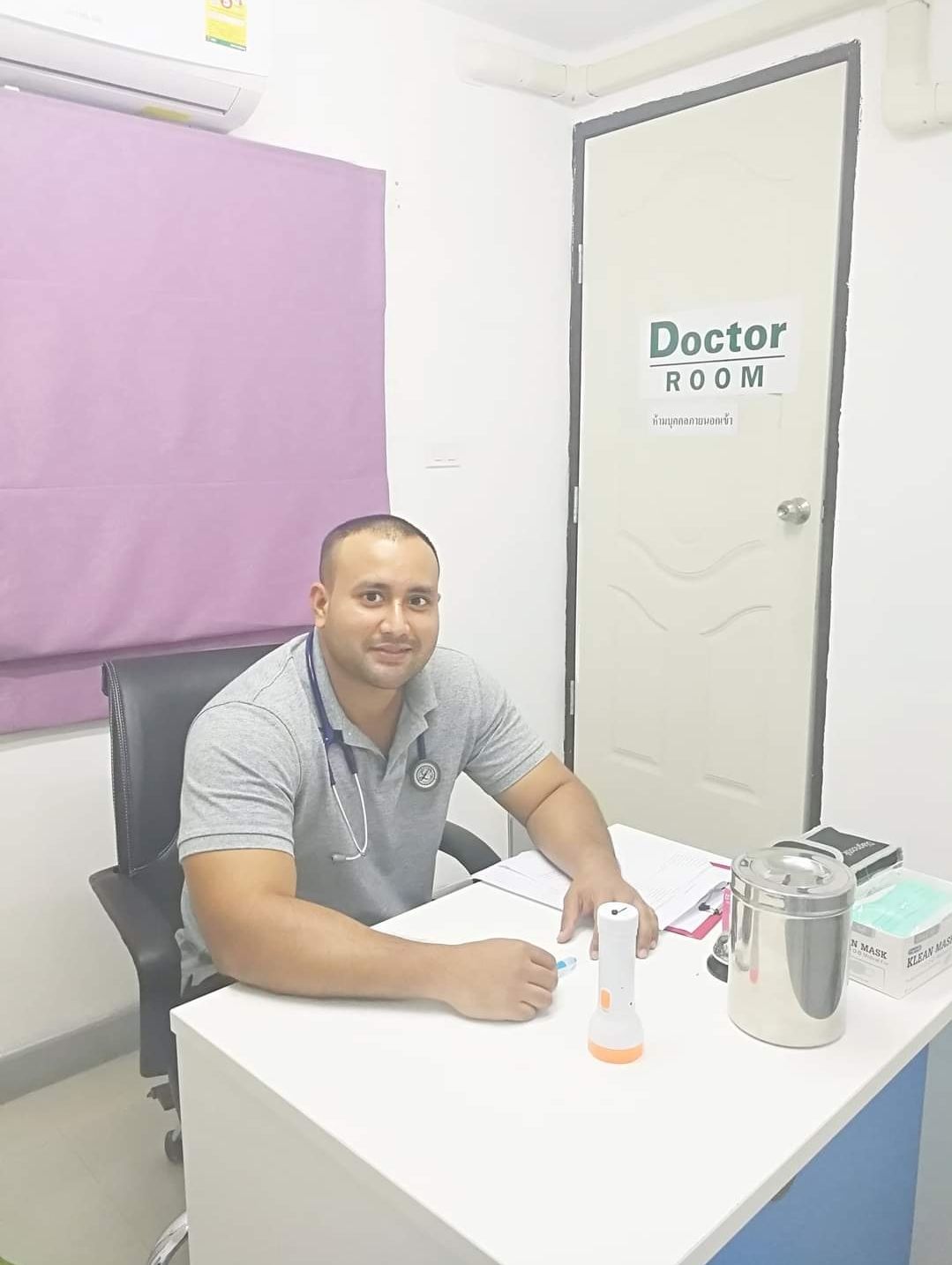
Dr. Ponlawat Pitsuwan is a physician at Doctor Bangkok, a private clinic in central Bangkok. He sees expats, residents, and medical tourists for general medicine, wellness consultations, and IV therapy. His focus is straightforward, evidence-based care delivered in plain language.