


Clinically reviewed by Dr. Ponlawat Pitsuwan, Physician, Doctor Bangkok.
[REVIEWED_DATE] Last reviewed: August 2026
Most cases of laryngitis caused by a viral infection clear up within 3 to 7 days with voice rest and fluids. If your voice is still hoarse after 2 weeks, you need a clinical assessment. Anything beyond 3 weeks is classified as chronic laryngitis and has to be properly investigated.
Your voice has been gone for four days and you have a meeting tomorrow. Or you flew into Bangkok last week, the hotel air conditioning has been running non-stop, and now you can barely speak above a whisper. I hear this at least a few times a week. The good news is that most laryngitis, the inflammation of your voice box that causes that hoarse, scratchy, or absent voice, settles on its own. Some cases do not, and knowing the difference matters.
The key question is not just how long laryngitis lasts in general. It is how long your case should last, given what caused it and what is happening around you. Bangkok adds a few layers to this that most online articles do not cover. This piece gives you a straight answer and tells you when it is time to stop waiting and get assessed.

Acute vs Chronic Laryngitis: What the Timeline Actually Means
The 3-week mark is the clinical dividing line. Under 3 weeks is acute laryngitis. Over 3 weeks is chronic. That distinction matters because the causes, and what you do about them, are completely different.
| Duration | Classification | Most Likely Cause | What to Do |
|---|---|---|---|
| 3 to 7 days | Acute | Viral upper respiratory infection | Voice rest, hydration, monitor |
| 1 to 3 weeks | Acute, prolonged | Bacterial infection, vocal strain, early GERD | Reassess if not improving by day 10 |
| 3 weeks to 3 months | Chronic | GERD, postnasal drip, chronic irritant exposure | See a doctor for assessment |
| Over 3 months | Chronic, persistent | Vocal cord lesions, fungal infection, structural cause | Prompt clinical investigation needed |
Most people reading this fall into the first two rows. If you are in week three or beyond, do not keep waiting.
Common Causes and How Long Each One Takes to Heal
Not all laryngitis is the same, and the cause directly determines how fast you recover.
Viral laryngitis is the most common type. It follows a cold or upper respiratory infection and usually clears within 3 to 7 days. Antibiotics will not help here. Voice rest and fluids are genuinely the right treatment.
Bacterial laryngitis, sometimes linked to strep throat, tends to be more severe. Recovery with the right antibiotic is usually within a week. We can run a rapid antigen test in clinic to confirm whether bacteria are involved, so you are not guessing.
Vocal strain from overuse or a night out in a loud venue can take 1 to 2 weeks to settle, sometimes longer if you keep pushing through without rest. Teachers and trainers are the patients I see most often in this group.
GERD-related laryngitis, where stomach acid irritates the vocal cords, is the slowest to heal. Symptoms often improve within 2 to 3 months with proper treatment, but vocal cord inflammation can take up to 6 months to fully resolve. Many patients have no classic heartburn at all, which is why it goes undiagnosed.
Fungal laryngitis is less common but worth knowing about if you use a steroid inhaler for asthma. Steroid residue in the throat can allow a fungal infection to take hold. This does not respond to voice rest. It requires antifungal treatment.

Bangkok-Specific Triggers That Make Laryngitis Last Longer
This is what most articles miss entirely. Bangkok creates conditions that can turn a 5-day case into a 3-week one.
PM2.5 air pollution is a real problem here. Particulate matter from traffic and construction directly irritates the lining of your voice box. On high-pollution days, even a few hours outside without a well-fitting mask will slow your recovery.
The air conditioning in this city is aggressive. Hotel rooms, offices, and shopping malls run their AC hard, and the air is dry. Dry air dries out your vocal cords and keeps the irritation cycle running. The temperature shock between Bangkok’s outdoor heat and heavily cooled indoor spaces makes this worse.
Spicy food and alcohol are both laryngeal irritants. Bangkok’s food culture is excellent, but if you are in the middle of a laryngitis episode, alcohol in particular relaxes the valve between your stomach and oesophagus, worsens acid reflux, and keeps your throat inflamed. It is a loop worth breaking.
Why Is My Laryngitis Lasting More Than 2 Weeks?
If you are at the two-week mark and your voice has not returned, something is sustaining the inflammation. Voice rest and fluids alone will not fix it at this point.
The most common finding in clinic is undiagnosed GERD. Patients come in thinking they had a bad cold, but there is no heartburn, just a persistent hoarse voice and sometimes a globus sensation, that feeling of something stuck in the throat. Acid reaching the vocal cords overnight, even silently, is enough to keep them inflamed.
Chronic postnasal drip is another frequent cause. Mucus from your sinuses drips onto your vocal cords through the night, acting as a constant irritant. Bangkok’s pollution and allergens drive a lot of this.
Beyond 3 weeks, I also think about less common but important causes: vocal cord nodules or polyps from repeated strain. In patients with a long history of smoking or heavy alcohol use, I do not delay in recommending a laryngoscopy, where a specialist looks directly at the vocal cords to rule out anything structural.
Symptoms That Go Beyond a Hoarse Voice
Hoarseness after a cold is usually straightforward. But certain symptoms alongside it change the picture.
Difficulty swallowing, or pain when swallowing, is a red flag. So is stridor, the high-pitched sound when breathing in, which suggests significant airway narrowing and needs urgent assessment. Coughing up blood is never something to monitor at home.
A fever that does not settle within a few days, or one that returns after improving, suggests a bacterial infection that may need treatment. A globus sensation lasting more than 2 weeks warrants investigation. If you have lost weight unexpectedly alongside a persistent hoarse voice, that combination needs prompt medical attention, not another week of waiting.
How to Help Laryngitis Heal Faster
Voice rest is the most important step, and most people do it wrong. Whispering is not rest. It puts more strain on your vocal cords than speaking softly in a normal voice. Speak quietly when you have to. Avoid extended talking, yelling, singing, and phone calls where you are straining to be heard.
Stay well hydrated. Warm water with honey has reasonable evidence behind it for soothing the throat lining. Steam inhalation can help with comfort. Avoid caffeine and alcohol, both of which dehydrate your tissues.
In Bangkok specifically, run a humidifier in your hotel room or bedroom. It makes a real difference against the dry AC air. On poor air quality days, stay indoors where possible and wear a well-fitting mask if you go out. If you use a steroid inhaler, rinse your mouth and gargle with water immediately after every dose.
For most acute cases, this is enough. If you are not improving within 10 days or you have any of the red-flag symptoms above, that is when you need a clinical assessment.
When to See a Doctor for Laryngitis in Bangkok
The short version: come in if your voice has not improved after 2 weeks, if you have any red-flag symptoms, or if you are about to catch a flight and you are not sure what is happening.
At Doctor Bangkok, we can assess you the same day. If bacterial infection is a possibility, we test for it in clinic rather than guessing. If GERD is suspected, we discuss treatment and can refer you for scoping if needed. If the picture suggests something requiring a specialist to look at your vocal cords directly, we arrange that referral quickly.
If you are not well enough to travel, we also offer hotel and home visits across central Bangkok. There is no need to spend a day navigating a Thai public hospital when you can be seen by an English-speaking physician directly.
The biggest mistake I see is people waiting until week four or five. By that point, some causes have had weeks to entrench themselves. Earlier is always better.
If your voice has been hoarse for more than a week and is not improving, or if you have symptoms that concern you, Doctor Bangkok offers same-day general medical consultations with English-speaking physicians in central Bangkok. We are BTS accessible and available for hotel visits across the Sukhumvit area. Book online or contact us directly for a same-day appointment.
FAQ
Dr. Ponlawat Pitsuwan
Physician, Doctor Bangkok
a private medical clinic in central Bangkok. He sees expats, residents, and medical tourists for general illness assessment, respiratory complaints, throat and voice concerns, and a range of acute and chronic conditions. His focus is straightforward, evidence-based care delivered in plain language.
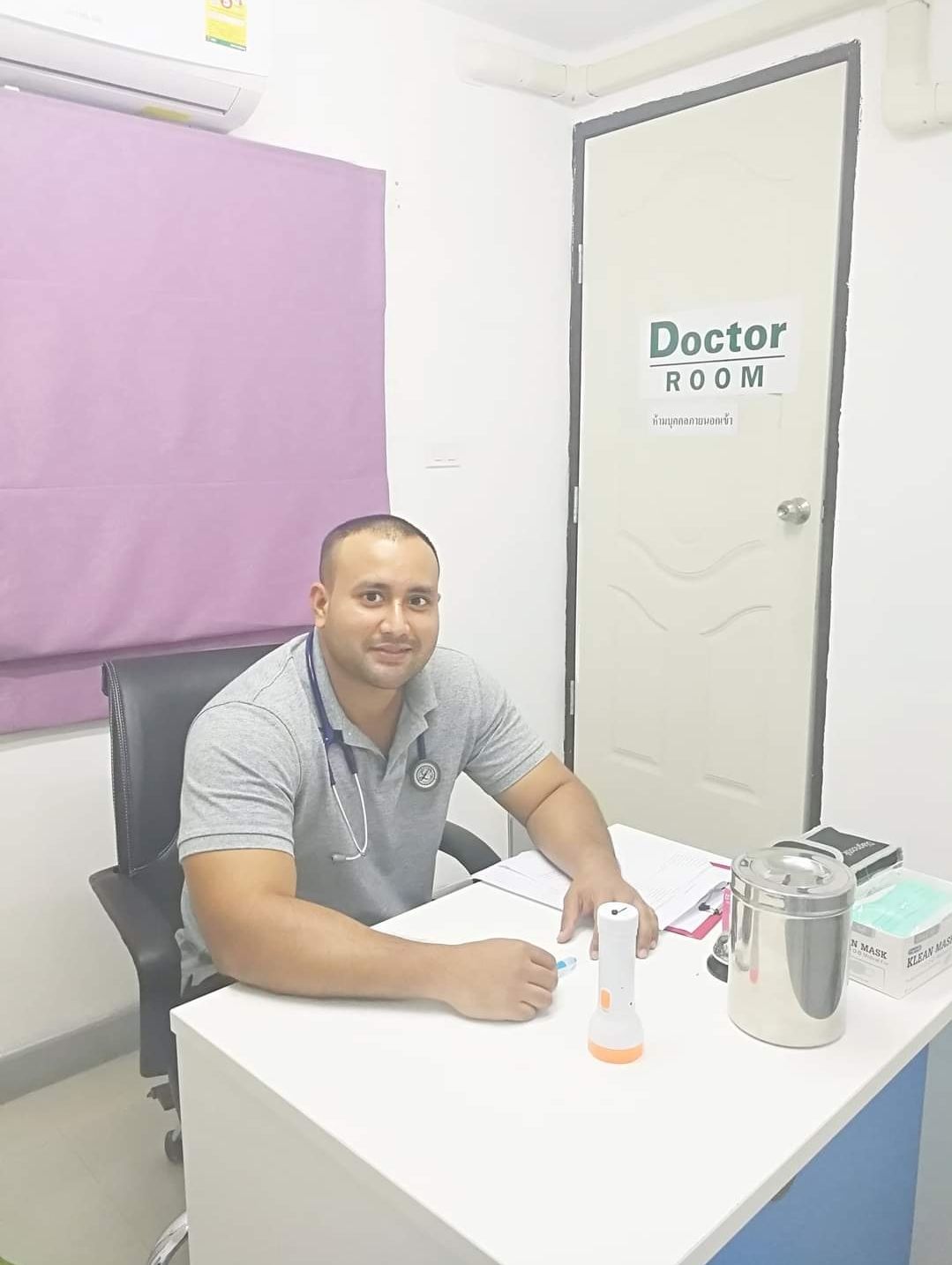
Dr. Ponlawat Pitsuwan is a physician at Doctor Bangkok, a private clinic in central Bangkok. He sees expats, residents, and medical tourists for general medicine, wellness consultations, and IV therapy. His focus is straightforward, evidence-based care delivered in plain language.