

Clinically reviewed by Dr. Ponlawat Pitsuwan, Physician, Doctor Bangkok.
Last reviewed: August 2026
H. pylori spreads through contaminated food, water, and close contact with an infected person. In Bangkok, daily exposure risks include street food prepared with unclean water, shared utensils, and tap water that is not safe to drink. You can carry the bacteria for years without symptoms and still pass it on. Testing is simple, and if you test positive, treatment is a short course of antibiotics combined with a stomach acid reducer.
Most patients I see have been managing recurring stomach pain with pharmacy antacids for months. The pain comes and goes. They blame the spicy food, the stress, the late nights out. Then they get tested, and the result comes back positive for H. pylori.
This bacteria is far more common in Southeast Asia than most expats expect. If you have been eating out regularly, drinking anything other than bottled water, or sharing meals with local colleagues, your exposure risk is real. Here is how you actually get H. pylori, what the signs look like, and what happens when you come in to get it sorted.

How H. Pylori Actually Spreads
The bacteria enters your body through your mouth. The routes are more varied than most people realise.
The most common path is through contaminated food or water. This happens when food is prepared without proper handwashing, or when produce is rinsed in water that is not clean. The second route is person to person, through saliva. Kissing, sharing drinks, and sharing utensils can all transmit it.
What surprises many patients is that you do not need to feel unwell to pass H. pylori on. Asymptomatic carriers have no symptoms at all but can still transmit the bacteria. If your partner or a household member tests positive, it is worth getting yourself checked too.
How Do You Get H. Pylori in Bangkok Specifically
Bangkok raises your daily exposure risk in ways that a city with treated tap water and different food culture simply does not.
Tap water in Bangkok is not safe to drink straight. If food at a hawker stall is washed or prepared with that water, you absorb that risk. Shared chopsticks and communal dishes are a realistic transmission route at local restaurants. Ice is another one that often gets overlooked. Ice from unknown sources at street stalls may not come from treated water.
H. pylori prevalence in Thailand is higher than in most Western countries. Living here long-term, eating out regularly, and never having been screened is exactly the profile I see in expats who test positive in their first or second year. The bacteria does not care how clean the restaurant looks.

Signs That Suggest You Should Get Tested
A burning or gnawing pain in your upper abdomen, especially when your stomach is empty, is the most common sign. Bloating, nausea, feeling full quickly after eating, and frequent burping are also typical. Some patients describe a discomfort that wakes them at night.
Here is the thing though: most people with H. pylori have no symptoms at all. The bacteria can sit in the lining of your stomach for years, quietly causing inflammation, without triggering pain. By the time symptoms appear, the damage can already be significant.
Persistent indigestion that keeps coming back is one of the clearest reasons to test. If antacids give temporary relief but the problem returns within days, that pattern deserves proper investigation, not just another pharmacy run.
Why Untreated H. Pylori Is More Serious Than Most People Realise
The World Health Organization classifies H. pylori as a Group 1 carcinogen. That means there is strong evidence it can cause certain types of stomach cancer and gastric lymphoma. Untreated infection also causes peptic ulcers, which are open sores in the stomach lining. These can bleed, and a bleeding ulcer is an emergency.
Less dramatically but still worth knowing: long-term infection is linked to iron-deficiency anaemia and B12 deficiency. I see both in expats who have been unwell for a while without a clear diagnosis.
None of this means you should panic if you test positive. It means treat it promptly, confirm it is gone with a follow-up test, and do not leave it.
Testing Options Available at Doctor Bangkok
There are three main ways to test for H. pylori without a camera going into your stomach.
The C-13 urea breath test is the most accurate for confirming active infection. You swallow a small amount of a labelled compound, then breathe into a collection device. It is non-invasive and the preferred option when the goal is confirming active infection. One important point: stop proton pump inhibitors at least two weeks before this test, and antibiotics at least four weeks before. Taking them too recently causes a false negative.
The stool antigen test is an accurate alternative and a good option if the breath test is not accessible. A blood antibody test is less useful on its own because it cannot confirm whether infection is current or past.
If your symptoms suggest ulcer complications, or there is another clinical reason to look directly at the stomach lining, a gastroscopy with biopsy gives the most complete picture. Doctor Bangkok can assess which test is right for your situation and arrange it.
H. Pylori Treatment and Antibiotic Resistance in Thailand
If you test positive, treatment is a combination of two antibiotics and a proton pump inhibitor, taken together for ten to fourteen days. This is called triple therapy. In some cases a fourth drug is added to improve eradication rates.
Resistance to clarithromycin and metronidazole is a documented problem in Thailand. This matters because resistance reduces first-line treatment success. Your doctor may adjust the regimen based on this. Completing every dose of the full course gives you the best chance of clearing it on the first attempt.
Four to six weeks after finishing antibiotics, a follow-up breath test or stool antigen test confirms the bacteria is actually gone. Skipping that confirmation is one of the most common mistakes I see.
Do not self-treat with antibiotics bought over the counter. Partial courses drive resistance further and can leave you with an infection that is harder to clear on the second attempt.
If you have recurring stomach pain, bloating, or have been in Bangkok long enough to warrant a check, come in. Doctor Bangkok offers H. pylori testing and treatment at our central Bangkok clinic, with English-speaking physicians and results explained clearly. Walk in or book an appointment to speak with one of our doctors about the right test for your situation.
FAQ
Dr. Ponlawat Pitsuwan
Physician, Doctor Bangkok
a private medical clinic in central Bangkok. He sees expats, residents, and medical tourists for gastrointestinal complaints, general medical consultations, health screening, and travel medicine. His focus is straightforward, evidence-based care delivered in plain language.
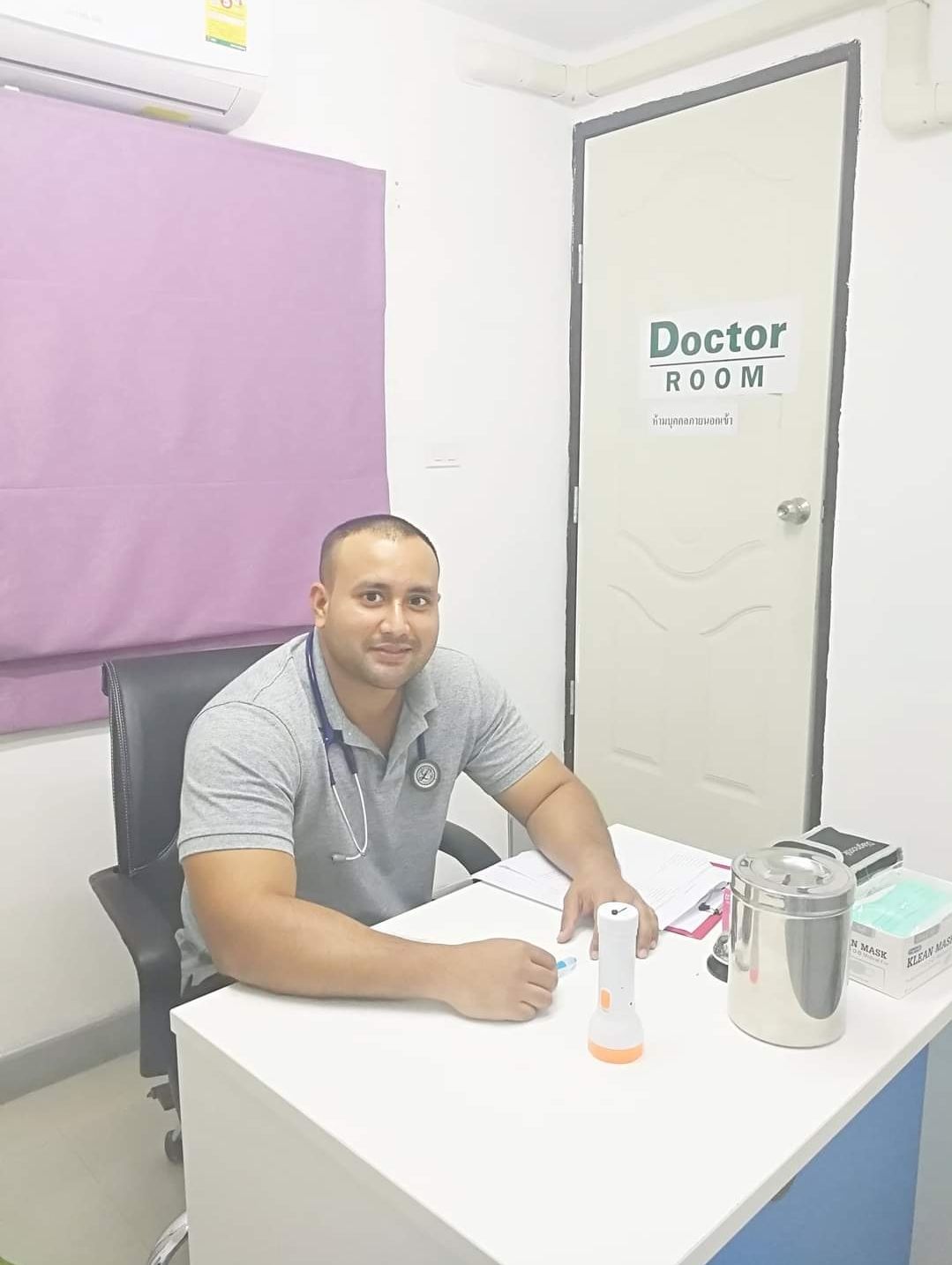
Dr. Ponlawat Pitsuwan is a physician at Doctor Bangkok, a private clinic in central Bangkok. He sees expats, residents, and medical tourists for general medicine, wellness consultations, and IV therapy. His focus is straightforward, evidence-based care delivered in plain language.