
Clinically reviewed by Dr. Ponlawat Pitsuwan, Physician, Doctor Bangkok. Last reviewed: August 2026
H. pylori spreads mainly through contaminated food, water, and close contact with an infected person. Most people who carry it never feel sick. In Thailand and across Southeast Asia, infection rates are high, and expats living in Bangkok face the same exposure risks as the local population. Testing is simple, non-invasive, and available at Doctor Bangkok.
A lot of patients who come in for a general health check are surprised when the results show H. pylori. No stomach pain, no nausea, nothing. That is the thing about this infection: most people carrying it have no idea. You can live with it for years while it quietly damages your stomach lining.
If you have been in Bangkok for a few months, eating local food, drinking anything other than sealed bottled water, or sharing meals with people, your exposure risk is real. Here is exactly how you catch H. pylori, who is most at risk, and what to do about it.

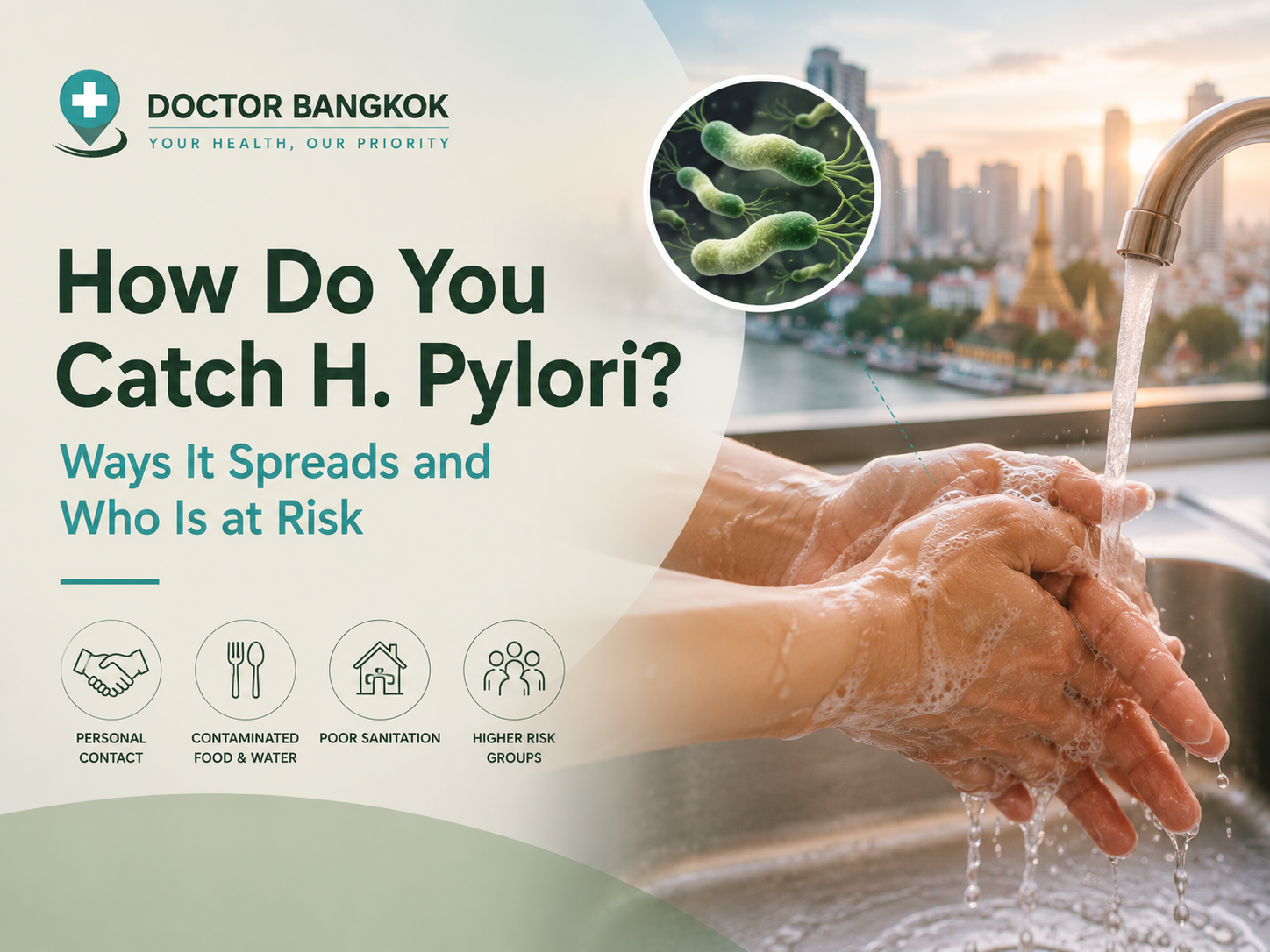
How Do You Catch H. Pylori? The Main Transmission Routes
The short answer: through contaminated food and water, and through close contact with someone who is infected.
The most established route is fecal-oral. This means swallowing traces of faecal matter carrying the bacteria, usually through food handled with poor hygiene, contaminated water, or unwashed hands. In places where water sanitation is inconsistent, this is the dominant route.
Oral-oral transmission is also well documented. Saliva from an infected person can carry H. pylori. Kissing, sharing utensils, or sharing a water bottle can pass it on. If one partner tests positive, the other has a meaningful chance of being infected too. Transmission within a household follows this pattern closely.
The contaminated water route deserves specific attention in Bangkok. Research has linked unboiled water consumption to significantly higher infection rates in Thailand. Tap water here is not safe to drink untreated. This matters for expats who use tap water for brushing teeth, make ice at home, or eat at places where hygiene standards vary.
Who Is Most at Risk in Bangkok
Newly arrived expats are in an interesting position. You may have had little prior exposure to H. pylori before coming to Thailand, where prevalence in the general population is high. You are eating in new environments and potentially living in close contact with people who carry the bacteria without knowing it.
Shared communal dining is a cultural norm here. Serving from the same dishes with shared utensils is warm and social. It is also an efficient way to pass H. pylori around a table if one person is infected.
Children are at higher risk, and most infections actually begin in childhood. Adults who grew up in lower-prevalence countries are catching up to a lifetime of local exposure in a compressed timeframe. Household staff, shared accommodation, and co-living arrangements all increase your risk more than most patients expect.

Symptoms: How Do You Know If You Have H. Pylori
Most people do not get symptoms. Roughly eight in ten infected people feel nothing unusual. The infection is often only found during testing for something else, or when a patient specifically asks to be checked.
When symptoms do appear, the most common is a dull, burning discomfort in the upper abdomen. Bloating, feeling full quickly, and burping are another pattern. Some people notice nausea, especially in the morning. Black, tarry stools or unintentional weight loss are more serious signs and need urgent assessment.
Feeling fine means nothing reassuring here. Chronic inflammation and ulcers can develop without pain, particularly in people who take anti-inflammatory medications regularly, since those can mask the discomfort.
What Happens If H. Pylori Is Left Untreated
Most people do not develop serious complications. But the risk is not zero, and it builds over time.
A significant proportion of untreated infections lead to peptic ulcers, open sores in the stomach or upper small intestine. Ulcers can bleed, which becomes a medical emergency. The World Health Organization classifies H. pylori as a Group 1 carcinogen, with strong evidence linking it to stomach cancer. Chronic untreated infection roughly doubles the risk of gastric cancer.
None of this is inevitable. Treating H. pylori removes these risks. Waiting and watching is not a safe strategy when the fix is straightforward.
How Is H. Pylori Diagnosed in Bangkok
There are a few ways to test, and the right one depends on your situation.
The urea breath test is non-invasive and accurate. You swallow a capsule or liquid, breathe into a bag, and the result shows whether H. pylori is actively present. You need to stop certain medications beforehand, particularly proton pump inhibitors and antibiotics, so timing matters.
The stool antigen test is equally accurate and just as straightforward. A stool sample is checked for H. pylori proteins. Both options are available at Doctor Bangkok during a routine consultation.
Endoscopy with biopsy allows direct inspection of the stomach lining. If you have alarm symptoms, a family history of stomach cancer, or a previous treatment course that may not have worked, endoscopy is the appropriate next step. Blood serology is generally not recommended for diagnosing a current infection: it cannot confirm whether the infection is still active or has already cleared.
H. Pylori Treatment: What to Expect
H. pylori can be cleared with antibiotics. Standard treatment involves two antibiotics taken alongside a stomach acid-reducing medication for 14 days. Completing the full course is critical. Most people feel better quickly and stop early. That is the wrong call, and it increases the chance of resistance.
One thing worth knowing in Bangkok specifically: clarithromycin resistance has been documented in Thai studies. This is one of the antibiotics used in standard first-line treatment. Your doctor should factor in local resistance patterns when choosing a regimen, particularly if you have taken antibiotics recently or a previous course did not work.
After treatment, a follow-up test done at least four weeks after finishing antibiotics is the only way to confirm the infection is gone. Many clinics skip this step. A test-of-cure is not optional if you want to know the treatment actually worked.
Reducing Your Risk of H. Pylori in Bangkok
Drink sealed bottled water only, for drinking, brushing teeth, and making ice at home. This is standard advice for a reason, not overcaution.
Street food in Bangkok is generally cooked at high heat, which kills H. pylori. The higher-risk scenarios are raw garnishes, shared dipping sauces, and places where handwashing is not part of the kitchen routine. You do not need to avoid street food entirely. Pay attention to where you eat.
Wash your hands before eating and after using the bathroom. It is the single most effective barrier against fecal-oral transmission, which is the dominant route in this part of the world. If a partner or family member has been diagnosed, get tested yourself. Do not assume you are clear just because you feel fine.
H. pylori is common in Bangkok, often symptom-free, and straightforward to diagnose and treat. If you have been living in Thailand for a while, have upper abdominal discomfort, or simply want to know where you stand, come in for a consultation. Doctor Bangkok offers H. pylori testing including stool antigen and urea breath test options, with English-speaking physicians and results you can act on. Walk-in and same-day appointments are available at our central Bangkok clinic, a short walk from the BTS.
Frequently Asked Questions
Dr. Ponlawat Pitsuwan
Physician, Doctor Bangkok
a private medical clinic in central Bangkok. He sees expats, residents, and medical tourists for gastrointestinal complaints, general health assessments, H. pylori testing and treatment, and a broad range of primary care concerns. His focus is straightforward, evidence-based care delivered in plain language.
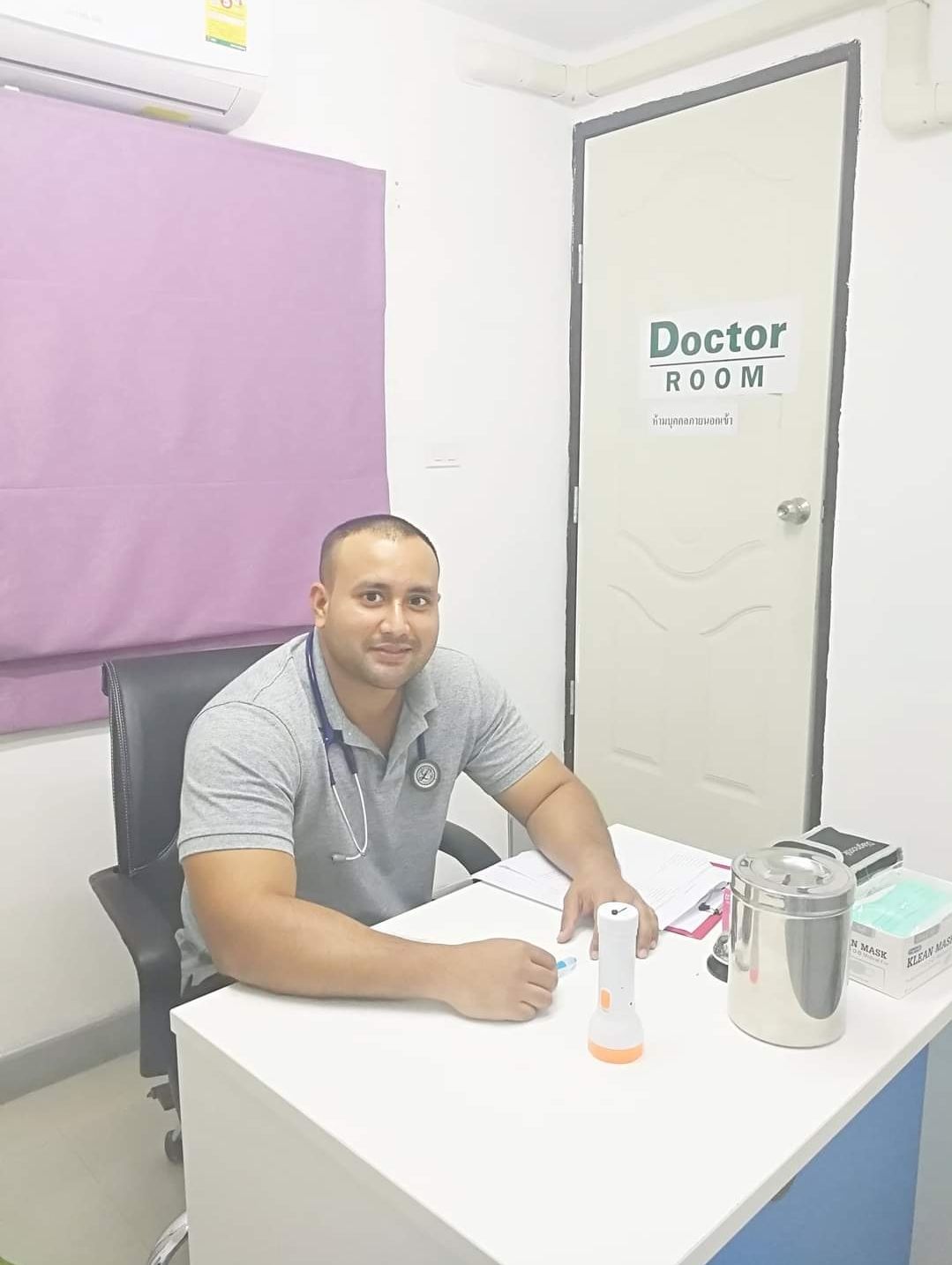
Dr. Ponlawat Pitsuwan is a physician at Doctor Bangkok, a private clinic in central Bangkok. He sees expats, residents, and medical tourists for general medicine, wellness consultations, and IV therapy. His focus is straightforward, evidence-based care delivered in plain language.