
Clinically reviewed by Dr. Ponlawat Pitsuwan, Physician, Doctor Bangkok. Last reviewed: August 2026
Yes, piles can bleed. Most hemorrhoid bleeding is bright red, appears on toilet paper or in the bowl after a bowel movement, and stops on its own. But not all rectal bleeding comes from piles, and bleeding that is heavy, repeated, or comes with other symptoms needs a doctor to rule out something more serious.
I see two or three patients a week who have been quietly bleeding for weeks and mention it almost as an afterthought at the end of the consultation. If that is you, this article is worth three minutes of your time.
Piles, the common word for hemorrhoids, are swollen veins inside or around the back passage. They are extremely common, especially in Bangkok, where heat, spicy food, and long hours at a desk create the right conditions for them. The question most people are really asking is not just "can piles bleed" but "should I be worried about this blood?" Here is what you need to know.

Why Piles Bleed
Piles are swollen blood vessels. When you strain, those vessels go under pressure. The lining around them, especially inside the back passage, is thin and fragile. A hard bowel movement or too much pushing can cause one to rupture and bleed.
The bleeding usually stops quickly once the pressure drops. But if your stools are consistently hard, or you are straining every day, that repeated trauma adds up. Over weeks or months, it can lead to more frequent and heavier bleeding than most people expect from something they consider minor.
Internal vs External Piles — Which Type Bleeds More?
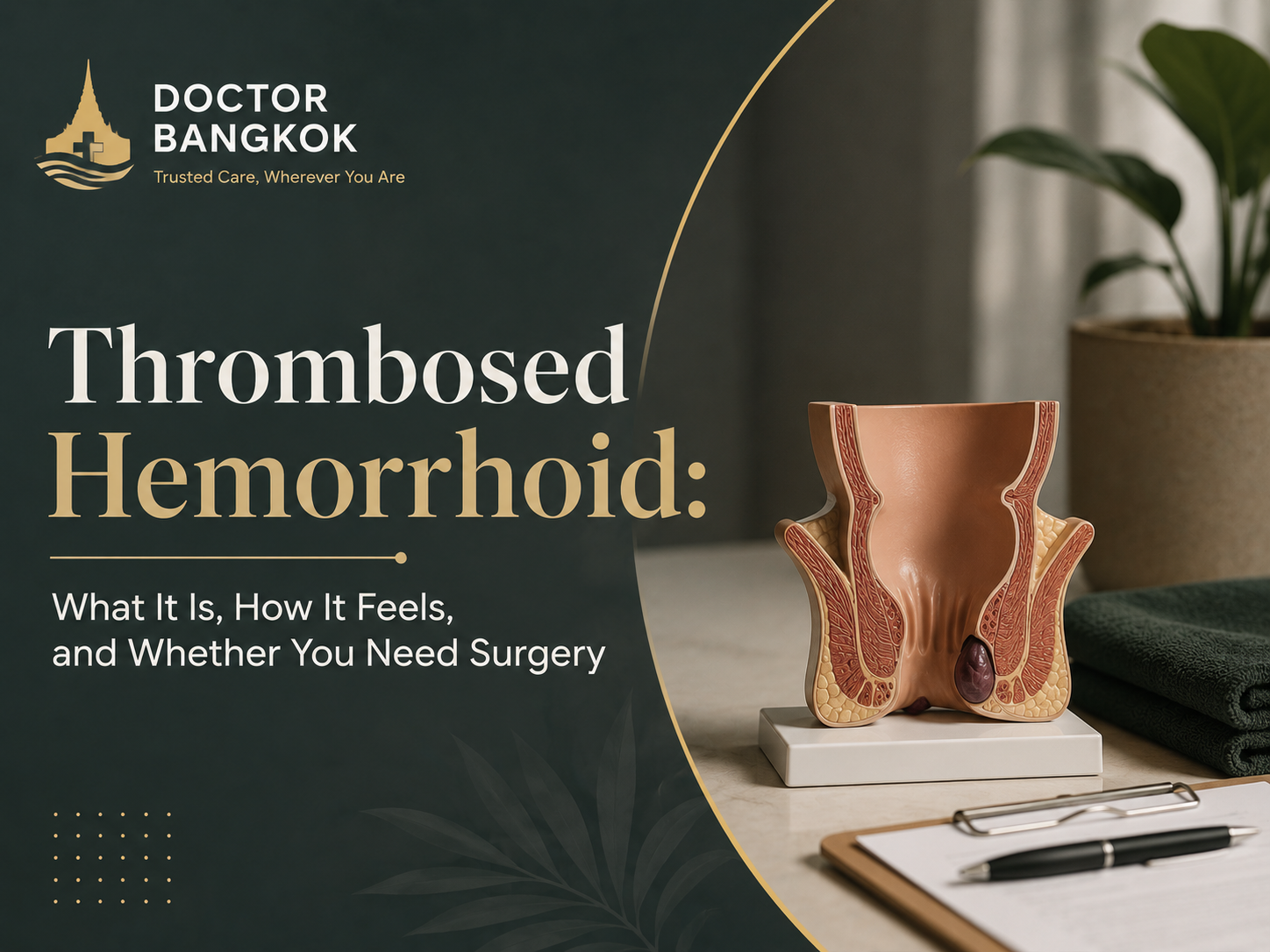
Internal hemorrhoids sit inside the back passage where the lining is thinner. They bleed more easily and often without any pain, which is why patients are sometimes surprised to find blood with no discomfort at all. They are graded one to four based on size and whether they stay inside or drop outside.
External hemorrhoids sit outside, under skin with more nerve endings. They are more painful but tend to bleed less, unless they become thrombosed. A thrombosed hemorrhoid is one where a clot forms inside it. That clot can rupture and bleed quite suddenly, sometimes without a bowel movement at all.

What Does Hemorrhoid Bleeding Look Like?
Hemorrhoid blood is almost always bright red. You see it on toilet paper, on the surface of the stool, or dripping into the bowl. It does not mix through the stool.
Blood that is dark red, maroon, or mixed into the stool tells a different story. That pattern suggests the source may be higher up in the bowel and warrants prompt assessment. Colour alone cannot confirm the source, but it is a useful first clue.
| Blood appearance | What it may suggest |
|---|---|
| Bright red, on paper or bowl surface | Likely lower rectal source, consistent with hemorrhoids |
| Bright red, heavy flow | Hemorrhoid or anal fissure, but needs assessment |
| Dark red or maroon, mixed into stool | Possible source higher in the bowel, see a doctor promptly |
| Black or tarry stool | Upper gastrointestinal source, seek urgent care |
Is It Piles or Something More Serious?
This is the question I get the most, and it deserves a direct answer. You cannot reliably tell the difference between hemorrhoid bleeding and colorectal cancer bleeding based on symptoms alone. Both can produce bright red blood. Both can cause discomfort. And hemorrhoids can exist alongside colorectal cancer at the same time.
See a doctor without delay if you notice unexplained weight loss, a persistent change in bowel habits, blood mixed through your stool rather than on the surface, or a lump that does not reduce. The same applies if you are over 40 and have never had a rectal examination.
Rectal bleeding has many possible causes beyond piles. Anal fissures, polyps, inflammatory bowel disease, and bowel cancer are all possibilities. A doctor cannot tell what is causing your bleeding without examining you.
When Bleeding Becomes a Bigger Problem
Most hemorrhoid bleeding is light and stops quickly. But some patients bleed a little every single day for months. That adds up. Chronic low-grade hemorrhoid bleeding is one of the more common causes of iron-deficiency anaemia I see in expat patients, many of whom never connected their fatigue and low energy to the blood they had been quietly losing.
If you feel unusually tired, short of breath, or dizzy alongside rectal bleeding, a full blood count is worth doing. Anaemia from hemorrhoids is entirely treatable, but only once someone checks for it.
Heavy sudden bleeding from a ruptured thrombosed hemorrhoid can also be alarming. It usually stops on its own, but the volume can be frightening and the pain significant. This warrants same-day assessment.
Bangkok-Specific Triggers That Make Piles Worse
Bangkok is not easy on your gut. I mention this to nearly every expat who comes in with hemorrhoid symptoms for the first time.
The heat alone causes dehydration if you are not drinking enough water, and dehydrated people pass harder stools. Harder stools mean more straining. Spicy Thai food does not directly cause piles, but it can irritate existing hemorrhoids and cause loose stools that lead to repeated wiping and inflammation. Add alcohol, which is dehydrating and often consumed more heavily in the first months of expat life, and you have a consistent cycle working against you.
Long hours sitting at a desk or in Bangkok traffic increases pressure on the rectal veins. If your diet has changed significantly since arriving, your fibre intake may be much lower than it was at home. A high-fibre diet is one of the most effective ways to reduce straining and cut down on bleeding episodes.
Home Management — and When It Is Enough
If you have a known history of hemorrhoids, the bleeding is light, it stops within a few minutes, and you have no other symptoms, home management is a reasonable starting point. Drink more water, particularly in Bangkok’s heat. Add fibre through fruit, vegetables, or a supplement. A sitz bath, sitting in warm shallow water for ten to fifteen minutes after a bowel movement, reduces inflammation and discomfort.
What I would not recommend is buying hemorrhoid creams from a Thai pharmacy without a diagnosis first. Self-treating rectal bleeding before anyone has examined you means you might be masking something that needs proper assessment.
When to See a Doctor in Bangkok for Bleeding Piles
Here is my honest threshold. Come in if the bleeding has happened more than twice, if it has not resolved within a week, if the volume is anything more than light spotting, or if there is pain alongside the bleeding. Also come in if you feel dizzy or unusually tired, or if you are over 40 and have never been examined.
At Doctor Bangkok, an English-speaking physician can assess rectal bleeding at our Sukhumvit clinic, often on the same day. We do a physical examination, discuss your symptoms properly, and if needed we can arrange a proctoscopy, a short examination of the back passage, to look directly at what is happening. We can also run a full blood count to check whether the bleeding has affected your iron levels.
This is not the kind of thing you want to keep Googling. Get it checked properly.
How Piles Are Treated Once Diagnosed
For most mild hemorrhoids, the treatment is conservative. Dietary changes, stool softeners, and topical medication handle the majority of cases well. The bleeding usually settles within a few weeks.
For more persistent hemorrhoids, rubber band ligation is effective. A small elastic band is placed around the base of the hemorrhoid to cut off its blood supply, and it shrinks away over a week or two. This is done by a specialist and is well-tolerated by most patients.
More advanced or acutely painful hemorrhoids may need surgical referral. Doctor Bangkok can assess your situation and refer you directly to the right specialist, so you are not navigating the Thai hospital system on your own.
Rectal bleeding should not be self-diagnosed. At Doctor Bangkok, our English-speaking physicians assess hemorrhoid symptoms and rectal bleeding at our central Sukhumvit clinic, with same-day appointments available. We can examine you, run blood tests to check for anaemia, and refer you to the right specialist if your symptoms need further investigation. Book online at doctorbangkok.co.th or call the clinic directly.
Frequently Asked Questions
Dr. Ponlawat Pitsuwan
Physician, Doctor Bangkok
a private medical clinic in central Bangkok. He sees expats, residents, and medical tourists for general medical concerns including rectal bleeding, gastrointestinal symptoms, and hemorrhoid assessment. His focus is straightforward, evidence-based care delivered in plain language.
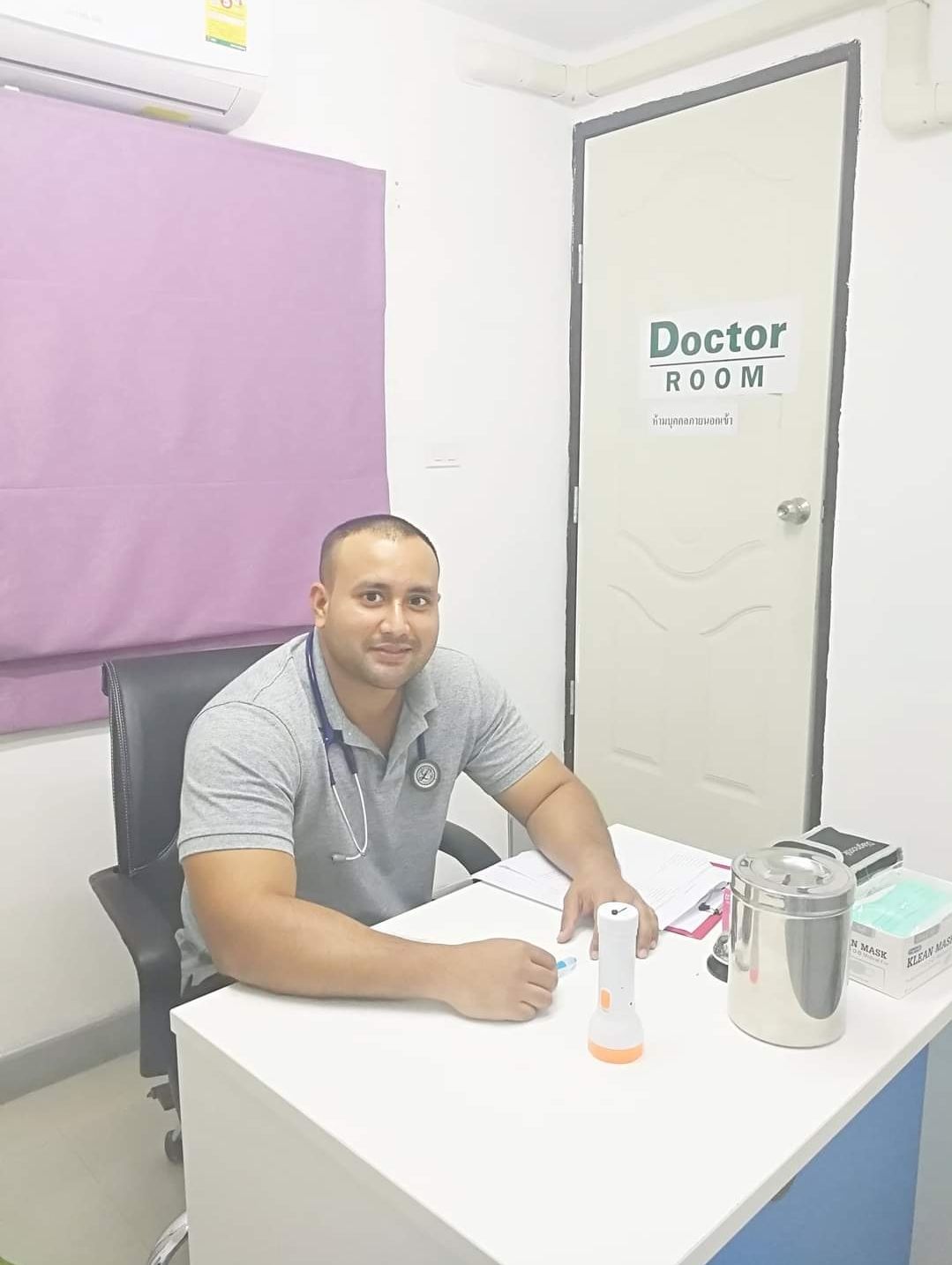
Dr. Ponlawat Pitsuwan is a physician at Doctor Bangkok, a private clinic in central Bangkok. He sees expats, residents, and medical tourists for general medicine, wellness consultations, and IV therapy. His focus is straightforward, evidence-based care delivered in plain language.