
Clinically reviewed by Dr. Ponlawat Pitsuwan, Physician, Doctor Bangkok. Last reviewed: August 2026
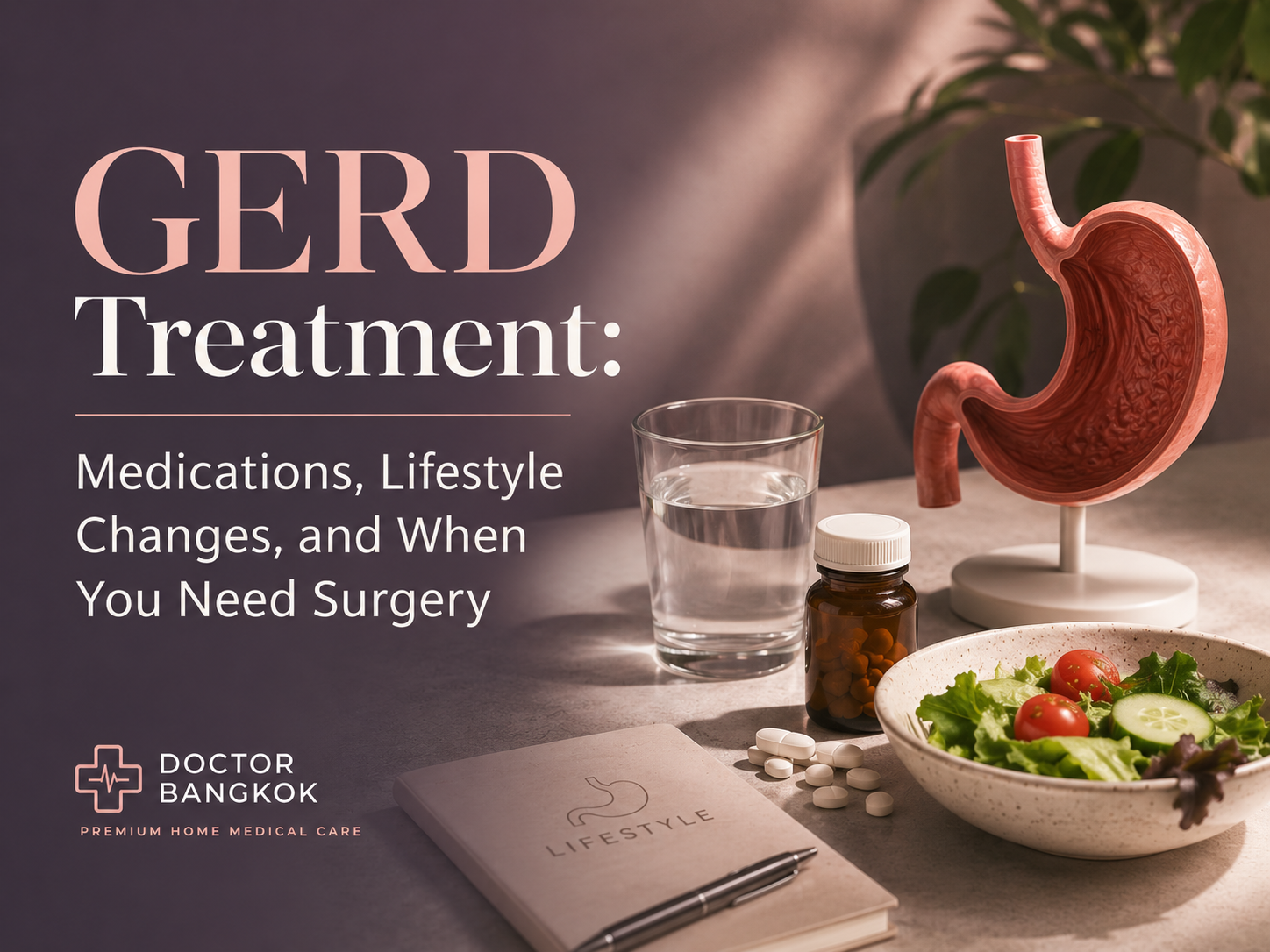
GERD is treated in steps. Most people start with lifestyle changes and antacids. If those do not help, a doctor will prescribe a proton pump inhibitor or H2 blocker. Surgery is only needed in a small number of cases where medications fail or a structural problem is causing the reflux.
If you are living in Bangkok and heartburn has become your daily companion, you are not alone. I see this in the clinic every week. A good chunk of those patients have been managing with pharmacy omeprazole for months without really knowing why it keeps coming back. That is what this article is for.
GERD, or gastroesophageal reflux disease, means acid from your stomach is regularly pushing back up into your food pipe. Occasionally, that is normal. Constantly, it damages the lining and can lead to real problems if left untreated. The good news is that most cases respond well to treatment. Getting the right treatment, though, depends on getting the right diagnosis first.

What Is GERD and Why Does It Need Proper Treatment?
The valve at the bottom of your food pipe is supposed to stay closed after you swallow. In GERD, it does not stay shut. Acid leaks upward. You feel burning in your chest, a sour taste at the back of your throat, or both.
Left untreated, GERD causes ongoing irritation in the food pipe. Over time, this can lead to erosive esophagitis, where the lining actually breaks down, or Barrett’s esophagus, a cell change that raises cancer risk. These are not common outcomes for mild, well-managed GERD. They are real reasons not to ignore symptoms that keep coming back.
How GERD Is Diagnosed Before Treatment Begins
Most people assume they have GERD because they read their symptoms online. Sometimes that is right. But chest pain, difficulty swallowing, and upper stomach pain can all come from different causes, including stomach ulcers and cardiac problems.
When you come in with reflux symptoms, the first step is a proper clinical assessment. I ask about your symptoms, your diet, your medications, and how long this has been going on. From there, I may order a basic blood panel and, depending on what I find, refer you for an upper GI endoscopy. That is a camera procedure that lets us look directly at your food pipe and stomach lining. It rules out erosive damage, Barrett’s esophagus, hiatal hernia, and ulcers.
H. pylori is a bacterial infection very common in Southeast Asia. It can mimic or worsen GERD. I always recommend testing for it before putting someone on long-term acid medication. If H. pylori is driving your symptoms and we treat it, your reflux may improve significantly.
Step 1 — Lifestyle Changes That Actually Help
I will be honest with you: lifestyle advice gets eye-rolls in my clinic. People have heard it before. But some of these changes genuinely work, and a few are more relevant here in Bangkok than anywhere else.
Eating late at night is one of the biggest triggers I see. Bangkok’s food culture makes this hard to avoid. Night markets, late dinners after work, eating on the go at 10pm all put food in your stomach right before you lie down. Stopping food at least two to three hours before bed makes a measurable difference.
Spicy Thai food does not cause GERD, but it is a well-known trigger that irritates an already inflamed food pipe. The same goes for fatty food, coffee, alcohol, and fizzy drinks. What I tell patients is to keep a food diary for two weeks. You will likely find two or three specific triggers that account for most of your symptoms.
Elevating the head of your bed helps because gravity keeps acid down while you sleep. An extra pillow is not the same thing and actually makes reflux worse by bending your stomach. A wedge pillow under the mattress is a better option and easy to find online in Bangkok. Diaphragmatic breathing exercises have moderate evidence behind them for reducing reflux frequency and are worth adding if you are motivated.
Step 2 — Medications for GERD
Antacids
Antacids are available at every Boots, Watsons, and 7-Eleven in Bangkok. They neutralise acid already in the stomach and give fast relief. They are fine for occasional heartburn. For GERD that happens regularly, they do not do enough on their own.
H2 Blockers
H2 blockers, like famotidine, reduce how much acid your stomach makes. They work well for mild to moderate GERD and are available over the counter in most Bangkok pharmacies. They kick in within an hour and last several hours.
Proton Pump Inhibitors (PPIs)
PPIs are the most commonly prescribed medication for GERD. Omeprazole, pantoprazole, and esomeprazole all belong to this group. They significantly reduce acid production when taken correctly, which means thirty to sixty minutes before your first meal of the day.
PPIs are technically prescription-only in Thailand. In practice, many pharmacies sell them without one. That concerns me, not because PPIs are dangerous short-term, but because long-term unsupervised use carries real risks. Strong evidence links long-term PPI use to reduced bone density, kidney injury, and increased risk of certain gut infections. If you have been on omeprazole for more than eight weeks without a doctor review, that conversation is overdue.
Vonoprazan and Newer Acid Blockers
Vonoprazan is a newer type of acid blocker that works faster than standard PPIs and stays active regardless of meals. It is already available in Thai hospital formularies. Ask about it specifically if you have had poor results with omeprazole.
Prokinetic Agents
Prokinetics help the stomach empty faster and strengthen the valve at the bottom of your food pipe. They are not first-line treatment, but for patients whose reflux is partly driven by slow gastric emptying, a doctor may add one. These are prescription-only.
When Medications Are Not Enough — Refractory GERD
If you have taken a PPI correctly for eight weeks or more and your symptoms are still there, that is called refractory GERD. It is more common than people realise, especially in patients who have been self-medicating without a formal diagnosis.
The most common reasons it fails: taking the PPI at the wrong time, having non-acid reflux where bile rather than stomach acid is the problem, an undiagnosed hiatal hernia, or simply the wrong diagnosis from the start. If you are in this situation, an upper GI endoscopy and a proper clinical reassessment are the next steps. Self-adjusting your dose without guidance is not.
Endoscopic and Surgical Options for GERD
Surgery for GERD is not common, but it is very effective for the right patient. If you have confirmed GERD, a hiatal hernia contributing to your symptoms, and medication is either not working or causing side effects you cannot tolerate, surgical options are worth discussing.
The most established procedure is fundoplication, where the upper part of the stomach is wrapped around the lower food pipe to reinforce the valve. Done laparoscopically, recovery is generally fast and results are strong for well-selected patients.
Transoral incisionless fundoplication, or TIF, is an endoscopic version of the same concept with no external incisions. It suits patients with mild to moderate GERD without a large hiatal hernia. The LINX system uses a small ring of magnetic beads placed around the valve to keep it closed between swallows. It is reversible, which is a real advantage over traditional fundoplication. Availability in Bangkok varies by centre, so ask your specialist directly.
GERD Triggers in Bangkok — What Expats and Visitors Need to Know
Bangkok is not a GERD-friendly city in terms of lifestyle. The combination of spicy food, alcohol, late-night eating, heat, and the stress of relocating creates near-perfect conditions for reflux.
I see a lot of expats whose symptoms got worse after they arrived, not because something is wrong with Bangkok food specifically, but because their eating and sleeping patterns shifted completely. If you are eating street food at 11pm after drinks on Sukhumvit and sleeping flat in a hotel room, you are stacking triggers.
If you are also dealing with stomach issues like diarrhoea or nausea alongside your reflux, a general consultation to assess your overall gut health is a good idea. Doctor Bangkok sees expats in exactly this situation regularly and can assess everything in one visit.
When Should You See a Doctor for Acid Reflux?
Some symptoms mean come in today. Any new or severe chest pain should be evaluated to rule out a cardiac cause before anything else. GERD-related chest pain and cardiac chest pain feel very similar, and that is not a distinction you want to get wrong.
Other symptoms that need same-day assessment: difficulty swallowing solid food, vomiting blood, black or tarry stools, or unexplained weight loss. These are red flags that require urgent evaluation.
For non-urgent but still important symptoms: reflux more than twice a week for several weeks, symptoms waking you from sleep, a chronic cough or hoarse voice with no other explanation, or over-the-counter medication that stopped working. These all warrant a proper clinic assessment. Do not keep increasing your omeprazole dose on your own.
Getting GERD Treatment at Doctor Bangkok
Doctor Bangkok offers same-day consultations with English-speaking physicians, seven days a week. The clinic is centrally located and BTS accessible, which matters when you are not feeling well and do not want to deal with Bangkok traffic.
At your first visit, I assess your symptoms properly, review any medications you are already taking, and explain what tests make sense for your situation. If you need an endoscopy referral, I handle that. If you need a prescription, I can provide it the same day. You will not be handed a leaflet and told to come back in two weeks.
If you have been managing acid reflux on your own and it is not fully under control, this is the visit to book.
Struggling with acid reflux in Bangkok? Doctor Bangkok offers same-day GERD consultations with English-speaking physicians in central Bangkok. We assess your symptoms properly, explain your options clearly, and get you on the right treatment the same day. Visit doctorbangkok.co.th to book your appointment.
Frequently Asked Questions
Can I buy GERD medication over the counter in Bangkok without a prescription?
Antacids and H2 blockers like famotidine are freely available at Boots, Watsons, and most pharmacies here. PPIs like omeprazole are prescription-only in Thailand but are often sold without one. For short-term relief that is generally fine, but if you are taking them regularly beyond two weeks, see a doctor. Long-term PPI use without supervision carries documented risks that are worth knowing about.
How do I know if my chest pain is GERD or something heart-related?
You cannot know for certain without a clinical assessment, and that is exactly the problem. Both feel like chest pressure or burning and both can occur after eating. Any new or severe chest pain should be evaluated to rule out a cardiac cause first, then we can work back to digestive causes from there.
Why does my reflux keep coming back even on omeprazole?
A few things cause this. Taking omeprazole with food rather than thirty to sixty minutes before meals significantly reduces how well it works. It could also be non-acid reflux, an undetected hiatal hernia, or H. pylori infection. If symptoms persist after eight weeks of correct PPI use, an endoscopy and proper clinical review is the right next step.
Does spicy Thai food actually cause GERD?
Spicy food does not cause GERD structurally, but it is a reliable trigger for people who already have it. It irritates the food pipe lining and can increase acid production. In Bangkok, the combination of spicy food, late eating, and alcohol tends to hit all at once, which is why symptoms can feel worse here than they did back home.
When should I stop self-managing and see a doctor for acid reflux?
See a doctor if symptoms happen more than twice a week for several weeks, if over-the-counter medication stops helping, or if you have difficulty swallowing or unexplained weight loss. Chest pain, blood in vomit, or black stools mean same-day care. Do not keep adjusting your own dose without a proper assessment.
Is GERD surgery available in Bangkok, and who needs it?
Yes, surgical options including laparoscopic fundoplication and newer procedures like LINX and TIF are available in Bangkok through specialist referral. Surgery is usually considered when medications have failed after a proper trial, or when there is a confirmed structural problem like a significant hiatal hernia. Your first step is a consultation and endoscopy, not a surgical referral.
Dr. Ponlawat Pitsuwan
Physician, Doctor Bangkok
a private medical clinic in central Bangkok. He consults with expats, residents, and medical tourists on general medical concerns including digestive health, acid reflux, and GERD assessment. His focus is straightforward, evidence-based care delivered in plain language.
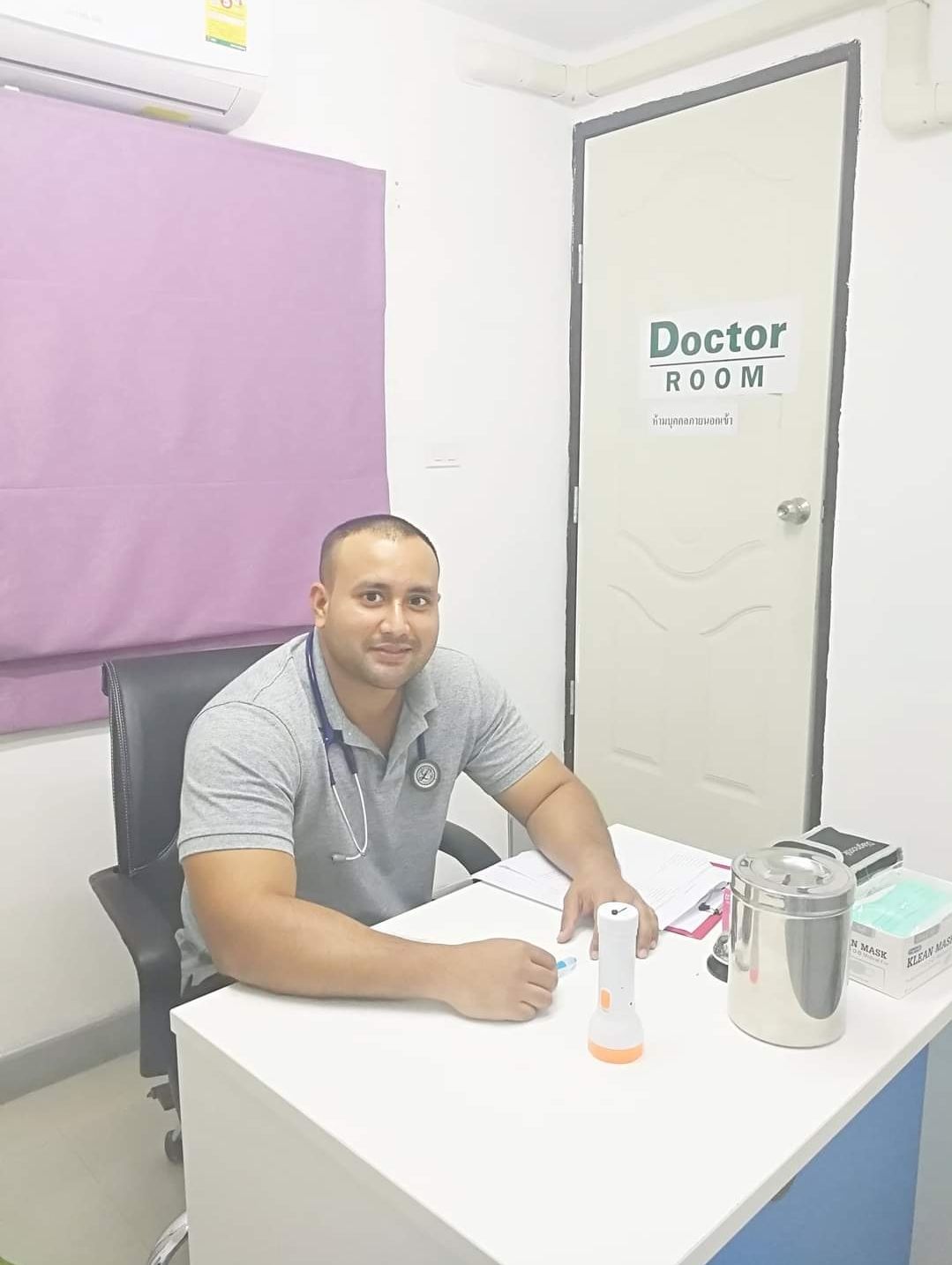
Dr. Ponlawat Pitsuwan is a physician at Doctor Bangkok, a private clinic in central Bangkok. He sees expats, residents, and medical tourists for general medicine, wellness consultations, and IV therapy. His focus is straightforward, evidence-based care delivered in plain language.