

Clinically reviewed by Dr. Ponlawat Pitsuwan, Physician, Doctor Bangkok.
Last reviewed: July 2026
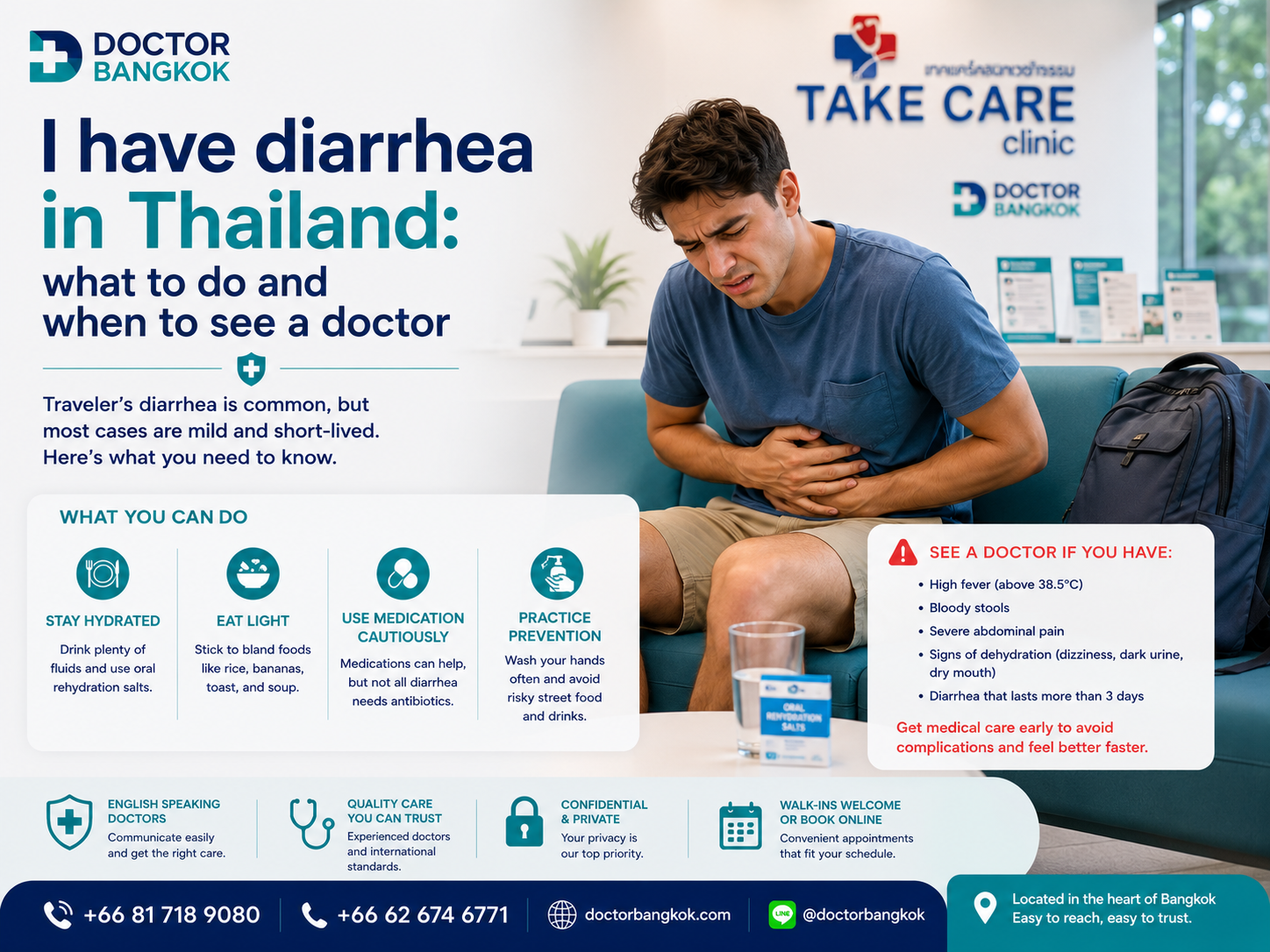
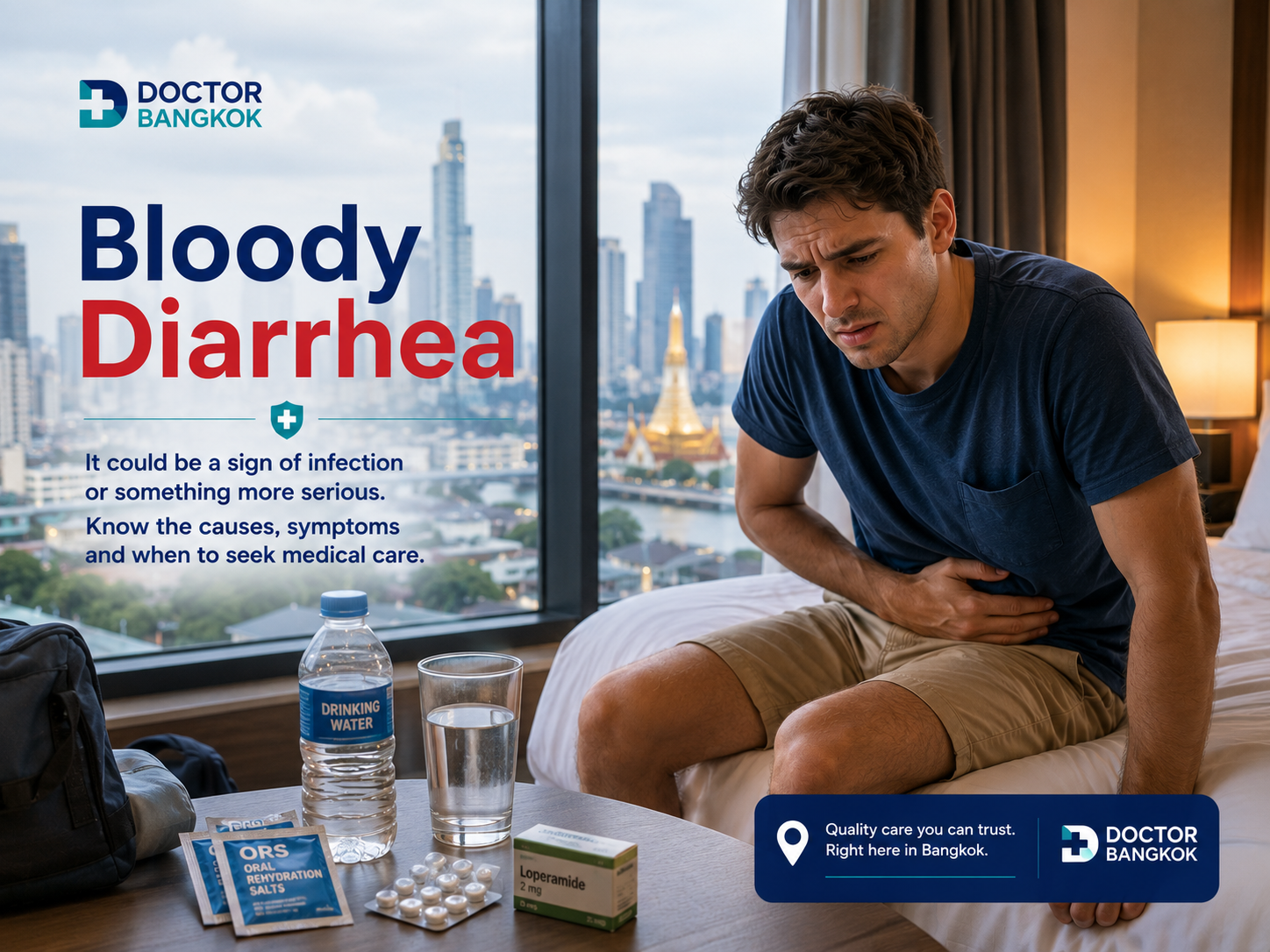
Traveller’s diarrhea in Thailand usually clears up in three to five days with rest, oral rehydration salts, and careful eating. Bangkok’s heat speeds up dehydration, some infections need antibiotics, and a few causes, like Giardia, can drag on for weeks without treatment. If you have bloody stools, a high fever, or symptoms lasting more than three days, see a doctor the same day.
If you are reading this from a Bangkok hotel bathroom at midnight, you are not alone. Traveller’s diarrhea is one of the most common things I see at Doctor Bangkok, and it affects a large number of visitors and new expats every year. Most cases are unpleasant but manageable. A smaller number need proper treatment before they get better.
The good news is that most people recover fully with the right approach. The part that trips people up is knowing when to rest and rehydrate, and when something more serious is going on. This article will help you work that out and tell you exactly what to do next.

What Is Actually Causing Your Symptoms
Most cases in Bangkok are bacterial. The most common cause is a type of E. coli called ETEC, which is behind a large share of traveller’s diarrhea worldwide. I also regularly see Campylobacter, Salmonella, and Shigella in patients who come in after eating contaminated food. These are all bacterial, which matters because some may respond to antibiotics when the infection is confirmed and significant.
Viral diarrhea, including norovirus, does circulate in Bangkok, especially in hotel buffet settings. Antibiotics do not help viral infections. Rest and fluids are the treatment, and it usually resolves on its own.
Parasitic infections are a different story. Giardia can persist for weeks and will not clear without specific treatment. If your symptoms came on slowly, you have a lot of gas and bloating alongside loose stools, and you have been sick for more than a week, Giardia is worth considering.
Why Bangkok’s Heat Makes This Worse
This is something most articles skip over, and it matters. Bangkok’s heat and humidity mean your body is already losing fluid through sweat before diarrhea adds to the problem. In a cooler climate you might feel rough but manage fine. Here, dehydration sets in faster and hits harder.
I have seen patients who felt fine in the morning but were dizzy and barely urinating by afternoon, simply because they underestimated how much fluid they were losing. If your urine is dark, you feel thirsty constantly, or you feel lightheaded when you stand up, you are already behind on fluids. Start replacing them now.

How to Tell Mild Bangkok Belly from Something More Serious
Most mild cases look like this: three to eight loose stools a day, some cramping, maybe a low-grade temperature, no blood, and you can still drink fluids. That is uncomfortable but usually manageable with oral rehydration salts and rest.
Moderate cases mean more frequent stools, more cramping, and nausea that makes it hard to keep fluids down. This is when I usually want to see a patient, even if the symptoms are not yet alarming.
Seek medical attention the same day if you have blood or mucus in your stool, a fever above 38.5 degrees Celsius, dizziness or no urination, vomiting that stops you keeping fluids down, or symptoms that are getting worse after 48 hours. These are the cases where waiting makes things worse.
Treatment, and Why Antibiotics Are Not Always the Answer
Start with oral rehydration salts. You can buy ORS sachets at any Boots, Watsons, or pharmacy in Bangkok. Mix one sachet with a full bottle of water and keep drinking through the day. Plain bottled water alone is not enough in moderate cases; you need the electrolytes too.
Loperamide, sold as Imodium, can slow down diarrhea and is fine for mild cases when you need to travel or function. Do not use it if you have a fever or blood in your stool. In those situations, slowing gut movement can make things worse.
On antibiotics: not every case of traveller’s diarrhea needs them. For mild infections, antibiotics offer little benefit and carry real risks. Antibiotic-resistant bacteria are well-documented across Southeast Asia, including Thailand. Taking the wrong antibiotic, or taking one when it is not needed, can make future infections much harder to treat. When a doctor decides antibiotic treatment is needed, azithromycin is generally preferred over ciprofloxacin in this region. That decision should be made by a clinician who has assessed you, not by you picking something up from a pharmacy shelf.
What to Eat and Drink While You Recover
Start with clear fluids and ORS. Once you can tolerate food, go slowly. Plain rice, boiled chicken, banana, and plain toast are all easy on a recovering gut. Any hotel kitchen in Bangkok can provide plain congee or boiled rice, and convenience stores carry bananas and plain crackers.
Avoid dairy, anything spicy, alcohol, and street food until your stools are fully normal again. Eating too soon can set your recovery back by a day or two. Probiotics containing Saccharomyces boulardii have moderate evidence behind them for supporting gut recovery after diarrhea. You can find them at Boots pharmacies across Bangkok.
Getting Diagnosed, and What a Clinic Visit Involves
If you come to Doctor Bangkok with diarrhea that has lasted more than two or three days, we will ask about your symptoms, check your hydration, and in most cases run a stool test. The stool test identifies whether the cause is bacterial, viral, or parasitic, which directly changes the treatment. If you have blood in your stool or a significant fever, we may also check a blood count.
For patients who cannot keep fluids down, IV rehydration is available at the clinic and works much faster than oral fluids alone. We provide itemised receipts and documentation for travel insurance claims, which most insurers require for reimbursement.
If you are too unwell to travel, our team can come to you. Doctor Bangkok provides hotel visits across central Bangkok, usually within 45 to 75 minutes. The doctor arrives with examination equipment and medications, and can administer IV rehydration at your hotel if needed. You can find more detail about causes and treatment options on our diarrhea treatment page.
When Symptoms Do Not Fully Clear Up
Most people recover completely. But a small number of patients, particularly those who had a more severe infection, develop post-infectious IBS after traveller’s diarrhea. This means ongoing bloating, irregular stools, and gut discomfort for weeks or months after the acute illness has cleared.
If you are an expat staying in Thailand long-term and your gut has not returned to normal within two to three weeks of your acute illness, come in for a review. Persistent symptoms after a diarrheal illness need proper assessment, not continued waiting.
Sick in Bangkok and not sure what to do next? Doctor Bangkok treats traveller’s diarrhea at our central Bangkok clinic with same-day appointments for acute illness. If you cannot travel, we come to your hotel across central Bangkok with full examination, treatment, and IV rehydration if needed. We also provide travel insurance documentation. Visit doctorbangkok.co.th or contact us directly to book.
Frequently Asked Questions
How long does traveller’s diarrhea last in Thailand?
Mild bacterial cases typically settle within three to five days with oral rehydration and rest. Some bacterial infections can persist beyond a week without antibiotics. Parasitic causes like Giardia can last several weeks if untreated, which is why a stool test matters when symptoms drag on.
Should I take antibiotics for traveller’s diarrhea in Thailand?
Not automatically. Antibiotics are not needed for mild cases and should not be self-prescribed in a region where resistant bacteria are common. If a doctor assesses you and confirms a bacterial infection needs treatment, azithromycin is currently preferred in Southeast Asia. The decision should be made clinically, not based on what is available over the counter.
Can I get a doctor to come to my hotel for diarrhea in Bangkok?
Yes. Doctor Bangkok provides hotel visits across central Bangkok, usually arriving within 45 to 75 minutes. The doctor can examine you, prescribe medication, and administer IV rehydration at your hotel if you cannot keep fluids down. Itemised documentation for travel insurance claims is provided.
What is the difference between Bangkok belly, food poisoning, and traveller’s diarrhea?
Bangkok belly is a local name for traveller’s diarrhea picked up here, usually bacterial. Food poisoning from toxins tends to hit within hours, with vomiting as the main symptom. Parasitic infections come on more slowly and last longer. A stool test can confirm which you are dealing with, which matters because the treatment differs.
What should I eat and drink when I have diarrhea in Bangkok?
Start with oral rehydration salts mixed in bottled water, available at any Boots, Watsons, or pharmacy. Once you can manage food, stick to plain rice, boiled chicken, banana, and plain toast. Avoid dairy, spicy food, alcohol, and street food until you are fully better. Bangkok’s heat means you need to replace fluids more aggressively than you might expect.
When should I go to a clinic rather than waiting it out?
Come in if you have blood or mucus in your stool, a fever above 38.5 degrees Celsius, dizziness, very dark urine, or vomiting that stops you keeping fluids down. You should also come in if symptoms are getting worse after 48 hours or have not improved after three days. Do not wait when any of those apply.
Can traveller’s diarrhea cause long-term gut problems?
For most people, no. A smaller proportion, particularly those who had a severe infection, develop post-infectious IBS, meaning ongoing bloating and gut irregularity for weeks or months after recovery. If your gut has not returned to normal within two to three weeks of the acute illness, see a doctor rather than continuing to wait.
Dr. Ponlawat Pitsuwan
Physician, Doctor Bangkok
a private medical clinic in central Bangkok. He sees expats, residents, and medical tourists for acute illness including traveller’s diarrhea, fever, and gastrointestinal infections. His focus is straightforward, evidence-based care delivered in plain language.
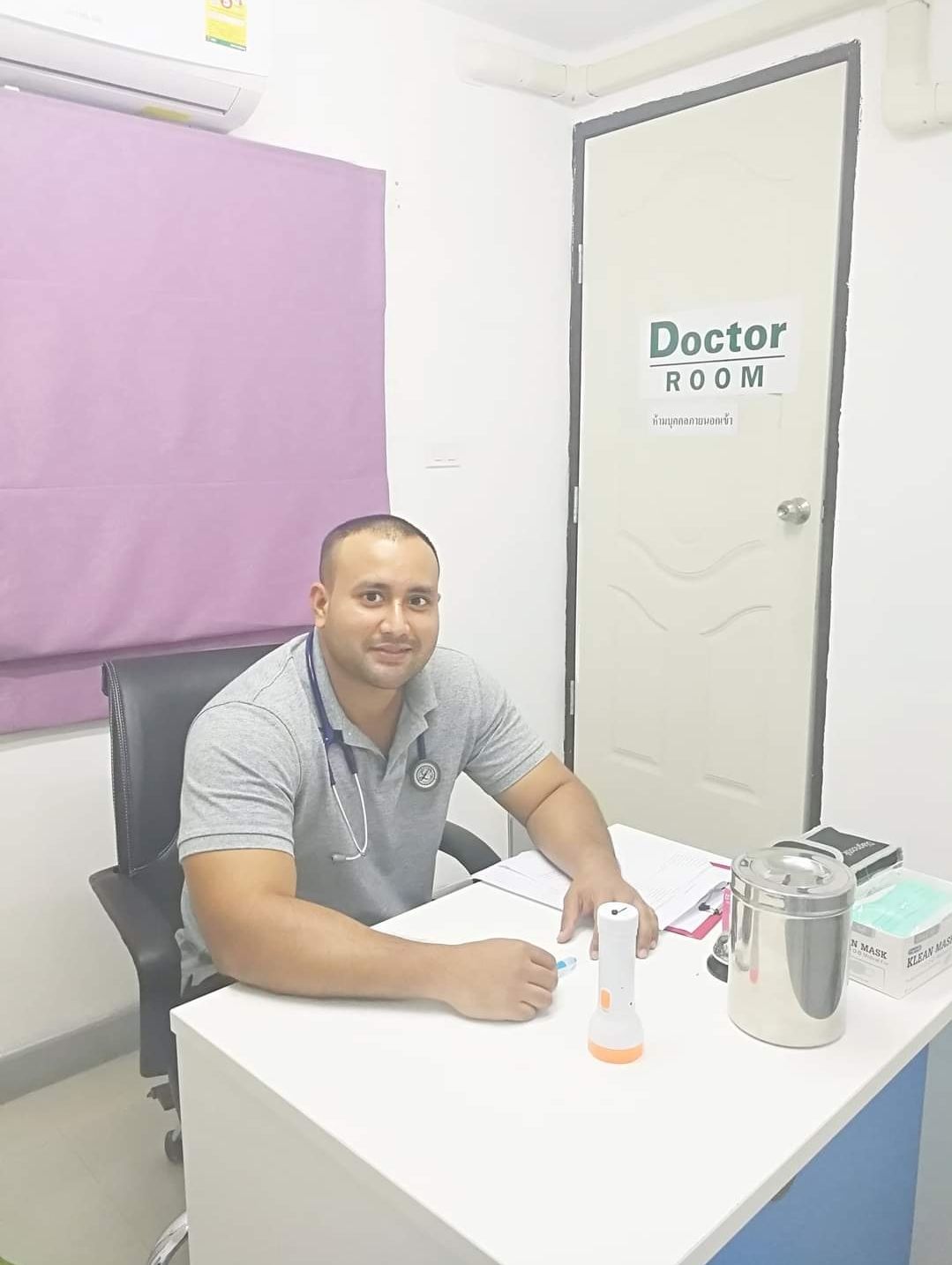
Dr. Ponlawat Pitsuwan is a physician at Doctor Bangkok, a private clinic in central Bangkok. He sees expats, residents, and medical tourists for general medicine, wellness consultations, and IV therapy. His focus is straightforward, evidence-based care delivered in plain language.