

Clinically reviewed by Dr. Ponlawat Pitsuwan, Physician, Doctor Bangkok. Last reviewed: July 2026
Autism and ADHD are two different conditions, but they share many of the same symptoms and often occur together in the same person. If you are unsure whether what you or your child are experiencing is one, the other, or both, a structured clinical assessment is the only reliable way to find out. Doctor Bangkok offers English-language assessments for expats and residents in central Bangkok.
You have probably been reading about this for a while. Maybe you noticed your child struggling in ways school could not explain. Maybe you are an adult who has spent years feeling out of sync, or quietly wondering why everything takes more effort than it seems to for other people. Either way, you are not alone, and you are not imagining it.
Autism and ADHD are two of the most common neurodevelopmental conditions in the world. They also look alike on the surface, often exist together, and are routinely missed. In Bangkok, especially as an expat navigating an unfamiliar healthcare system, getting a clear and honest answer can feel harder than it should be. This article explains what each condition actually involves, where they overlap, and what getting properly assessed in Bangkok looks like in practice.

What Autism and ADHD Actually Are
Autism spectrum disorder, or ASD, affects how a person processes social information, communicates, and relates to the world. It also involves differences in sensory processing, meaning how sounds, textures, light, or touch feel. Many autistic people have strong focused interests and a preference for routine and predictability.
ADHD, attention deficit hyperactivity disorder, is primarily a condition of attention regulation and impulse control. The brain has difficulty filtering what deserves focus, holding onto tasks, managing time, and braking impulsive responses. It can look like restlessness, distractibility, forgetfulness, or emotional intensity.
Both are developmental, meaning they are present from birth even when not diagnosed until later in life. Neither is the result of bad parenting, laziness, or a lack of intelligence.
Shared Symptoms — Where Autism and ADHD Overlap
This is where most people get stuck. The two conditions share a surprisingly long list of traits, and seeing several of them in yourself or your child does not tell you which one you are dealing with.
Both autism and ADHD can involve difficulty with focus and sustained attention. Both can cause emotional dysregulation, meaning feelings that arrive fast, hit hard, and are difficult to manage. Both can affect social interactions, though for different reasons. Both also involve difficulty with planning, starting tasks, staying organised, and managing transitions.
Sensory sensitivity shows up in both too. Some people with ADHD find certain sounds or environments overwhelming. Many autistic people experience this more consistently and intensely. The overlap is real, and it is why even experienced clinicians take time to untangle the picture.

How They Differ at the Root
The surface can look similar. The underlying picture is different.
In autism, the core difficulty is in social communication and connection. Autistic people may find it hard to read social cues naturally, prefer explicit and direct communication, feel genuinely confused by unwritten social rules, and find unexpected change genuinely distressing. Sensory experiences are often more intense and consistent.
In ADHD, the core difficulty is attention regulation. A person with ADHD is not necessarily confused by social situations. They may read them well but lose track of the conversation, speak impulsively, or struggle to filter what matters. Social difficulties tend to come from inattention or impulsivity rather than from differences in how they read people.
One useful shorthand: autism is more about how a person processes the world. ADHD is more about regulating attention and impulse within it.
AuDHD — When Both Conditions Occur Together
Until 2013, clinicians were not permitted to diagnose both conditions in the same person. The rules at the time said you had to choose one. That changed when DSM-5, the current clinical manual, removed that restriction.
Research since then has made the overlap clear. A significant proportion of autistic individuals also meet criteria for ADHD. The community term for this is AuDHD. It is not an official medical diagnosis, but many people find it accurately reflects their experience.
AuDHD can be harder to identify because the two conditions sometimes mask each other. An autistic person’s preference for routine can look like it compensates for ADHD-driven disorganisation. Getting the full picture matters because support and treatment planning differs depending on what is actually driving which symptoms.
Why Autism and ADHD Are So Often Missed in Adults
Most content about autism and ADHD is written for parents of young children. But a large number of the patients I see at Doctor Bangkok are adults. Many are expats in their 30s, 40s, or older who have spent their entire lives adapting and wondering why things feel harder than they should.
One reason diagnoses get missed is masking. Masking is when a person, consciously or not, hides neurodivergent traits to fit in socially. It takes enormous energy, and it works well enough to fool most people, including teachers, employers, and sometimes clinicians. By the time many adults reach a clinic, they present as anxious or burnt out rather than autistic or ADHD.
Another reason is that anxiety or depression gets identified first, and the underlying neurodevelopmental picture is never explored. Many adults have had years of therapy for anxiety that helped somewhat but never quite got to the root cause. Anxiety and depression are genuinely common alongside both autism and ADHD, but when they are the only labels applied, the person often keeps struggling without understanding why.
How Autism and ADHD Present Differently in Women
This is one of the most important gaps in how these conditions have been understood. Diagnostic criteria for both autism and ADHD were developed largely from research on boys and men. The result is that subtler presentations, far more common in women and girls, were routinely missed for decades.
Women with ADHD are more likely to internalise their symptoms: excessive daydreaming, chronic self-criticism, anxiety about disorganisation, emotional sensitivity. The external restlessness that gets a boy referred for assessment is often absent. Autistic women are more likely to mask intensely, mirroring social behaviour and studying social rules in ways that make their autism invisible in a classroom or workplace.
Many women receive their first autism or ADHD diagnosis in their 30s or 40s, sometimes triggered by burnout, a major life change, or a child’s diagnosis that makes their own traits suddenly recognisable. Changing hormone levels, particularly around perimenopause, are increasingly recognised as a point at which previously managed symptoms become significantly harder to compensate for. A clinician who understands female presentation is not optional. It is essential for an accurate outcome.
What a Proper Assessment Should Include
A quick online quiz or a ten-minute questionnaire is not a diagnosis. I want to be honest about that.
A proper assessment starts with a detailed personal and developmental history. This includes early childhood, school experience, relationships, and how you have adapted over time. Standardised screening tools are used as one input, not the whole picture. A thorough clinical interview explores how symptoms actually show up in your life, not just whether you can tick boxes.
For a dual autism and ADHD assessment, a good clinician will also screen for co-occurring conditions: anxiety, depression, learning difficulties, sleep disorders, and in women, hormonal factors. These are part of the full picture, not separate from it.
At the end of a proper assessment, you should receive a written clinical report. This matters practically, for schools, employers, insurance, and accessing further support. At Doctor Bangkok, assessments are conducted in English and are structured to give you a clear, documented outcome that you can actually use.
Getting an Autism or ADHD Assessment in Bangkok
Bangkok has public hospitals with neurodevelopmental services, but waiting times for this type of assessment can stretch to months. Language is also a genuine barrier at most public facilities, even when English-speaking staff are available. For expat families, that combination is often prohibitive.
Private clinics offer faster access and English-language care. The practical questions to ask any provider are: Do they have experience with adult diagnoses? Do they understand female presentations? Can they assess for both autism and ADHD in the same consultation? And will they produce a written report usable for schools, employers, or insurance? Overlapping symptoms of autism and ADHD are common, so a provider who can assess both together saves you significant time.
Doctor Bangkok is centrally located and BTS accessible. Our physicians speak English and have experience with the specific concerns that expats and long-term residents face, including documentation for international schools and the emotional weight of seeking answers later in life. If you are reading this and recognising yourself or your child in it, that recognition is worth following up. Getting assessed is not about getting a label. It is about getting an accurate picture of how your brain works, so support can actually fit.
Thinking about an autism or ADHD assessment in Bangkok? Doctor Bangkok offers English-language neurodevelopmental consultations for adults and children in central Bangkok, with written clinical reports suitable for schools, employers, and insurance. We are BTS accessible and available to book online. Visit doctorbangkok.co.th to make an appointment or ask us a question directly.
Frequently Asked Questions
Can you be diagnosed with both autism and ADHD at the same time?
Yes, and it is more common than most people realise. Since DSM-5 removed the rule preventing dual diagnosis in 2013, research has consistently shown that ADHD occurs in a large proportion of autistic individuals. A proper assessment identifies which condition is driving which symptoms, which matters because support and treatment approaches differ.
How do I know if it is autism, ADHD, or both?
Many surface symptoms overlap: difficulty focusing, social friction, emotional intensity, disorganisation. The underlying reasons differ, and a clinical assessment is the only reliable way to distinguish them. Online quizzes can point you in a direction, but they are not a substitute for evaluation by a qualified clinician.
Is it too late to get diagnosed as an adult?
It is never too late. Many adults receive their first diagnosis in their 40s, 50s, and beyond, often after years of being told they have anxiety or simply need to try harder. Late diagnosis frequently brings significant relief and opens access to support that was not previously available.
How is autism or ADHD diagnosed in Bangkok — what should I expect?
A thorough assessment includes a detailed developmental and personal history, standardised screening tools, and a clinical interview exploring how symptoms show up in your actual life. It should also screen for co-occurring conditions like anxiety or depression, and end with a written report. Private clinics in Bangkok, including Doctor Bangkok, offer English-language assessments with shorter waiting times than public hospitals.
Why are autism and ADHD so often missed in women?
Diagnostic criteria were historically built on research conducted in boys and men, so subtler presentations common in women were routinely missed. Women are more likely to internalise symptoms, mask social difficulties, and present first with anxiety or depression. A clinician with experience in female presentations makes a real difference to whether the assessment gets it right.
What is AuDHD?
AuDHD is a community term, not an official diagnosis, used by people who have both autism and ADHD. It reflects the clinically recognised reality that the two conditions frequently co-occur and can interact in ways that make each harder to identify on its own. It is increasingly used in clinical conversations as a useful shorthand for a genuinely common experience.
Will I get a written report after my assessment?
You should. A written clinical report is essential if you need documentation for a school, employer, or insurance provider. Before booking with any clinic, confirm that a formal report is included. At Doctor Bangkok, written documentation is part of the assessment process.
Dr. Ponlawat Pitsuwan
Physician, Doctor Bangkok
a private medical clinic in central Bangkok. He sees expats, residents, and medical tourists for neurodevelopmental assessments, general health concerns, and complex diagnostic questions. His focus is straightforward, evidence-based care delivered in plain language.
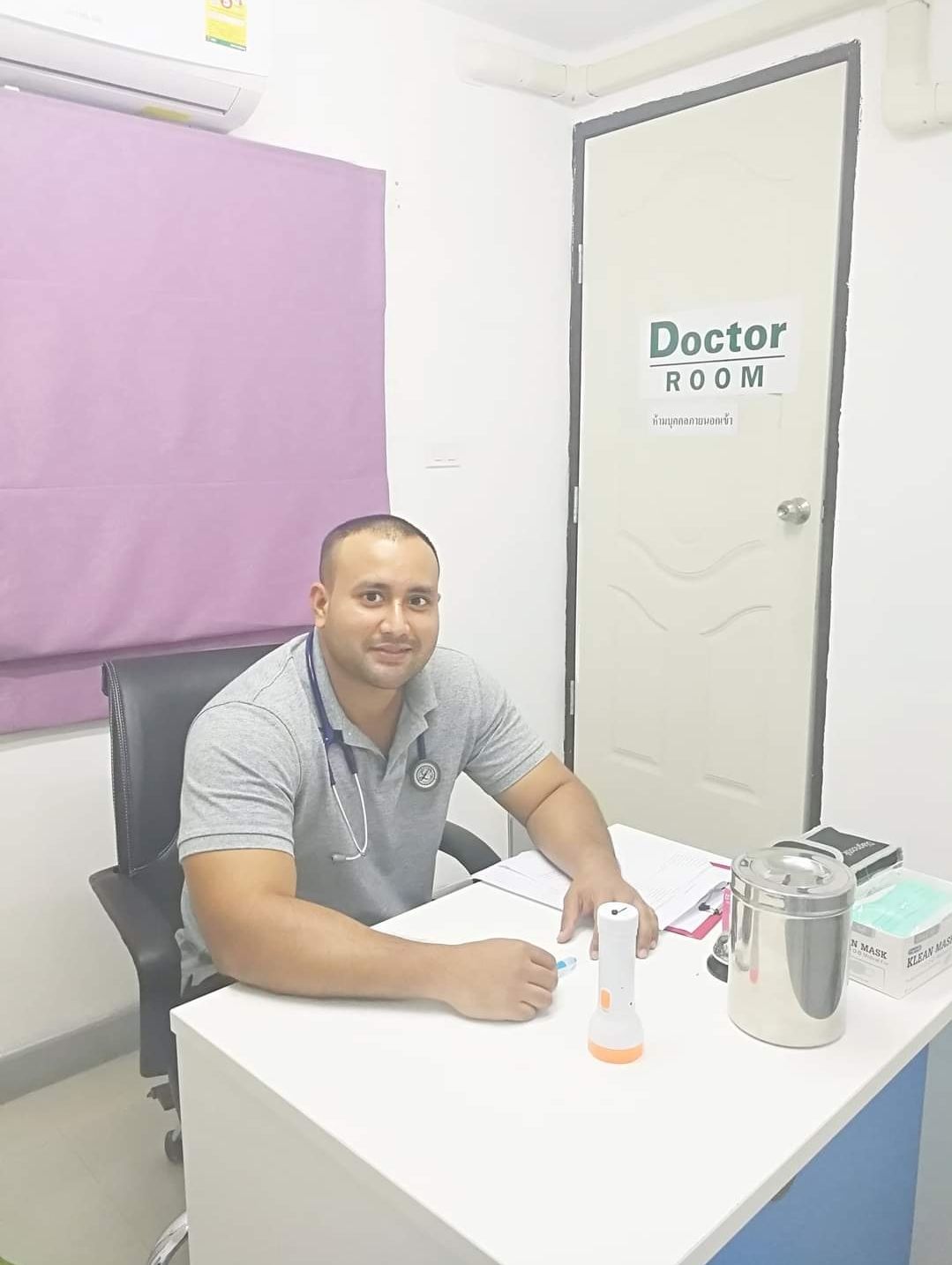
Dr. Ponlawat Pitsuwan is a physician at Doctor Bangkok, a private clinic in central Bangkok. He sees expats, residents, and medical tourists for general medicine, wellness consultations, and IV therapy. His focus is straightforward, evidence-based care delivered in plain language.