
Clinically reviewed by Dr. Ponlawat Pitsuwan, Physician, Doctor Bangkok.
Last reviewed: July 2026
Insomnia means you have trouble falling asleep, staying asleep, or you wake up feeling like you never slept at all. It can last a few days or drag on for months. Most cases respond well to treatment, and the first step is understanding what is actually driving it.
If you are lying awake at 2am in Bangkok staring at the ceiling, you are not alone. I see this constantly, especially with expats who have just arrived, travellers dealing with jet lag, and long-term residents who cannot figure out why they stopped sleeping well. Sometimes there is an obvious reason. Often there is not, and that is the frustrating part.
Insomnia is not a character flaw, and it is not something you just push through. If it has been going on for more than a few weeks, it deserves proper attention. This article covers what is actually happening, what works, and when to stop Googling and see a doctor.

Acute vs Chronic Insomnia — Why the Difference Matters
Not all insomnia is the same, and the distinction changes what you should do about it.
Acute insomnia lasts days to a few weeks. It usually has a clear trigger: a long-haul flight, a stressful work situation, or landing in a new city. This type tends to resolve once the trigger passes. Most jet lag insomnia falls here.
Chronic insomnia is different. It means trouble sleeping at least three nights per week for three months or longer. At that point, it stops being a reaction to something and becomes its own problem. It needs proper clinical assessment, not just sleep hygiene tips from the internet.
There is also something I see frequently called psychophysiologic insomnia. You sleep fine on the sofa, fine in a hotel, but the moment you get into your own bed your brain switches on. The bed becomes linked with wakefulness, and that pattern keeps feeding itself. It is common and treatable, but it rarely fixes itself without structured help.
Why Bangkok Makes Sleep Harder Than Almost Anywhere
This matters more here than in most cities, and most expats underestimate it.
The ideal sleep temperature is around 18 to 20 degrees Celsius. Bangkok averages 28 to 35 degrees outside, and even with air conditioning, many apartments cycle between too warm and too cold through the night. Your body needs to lower its core temperature to reach deep sleep. When the environment fights that, your sleep suffers.
Noise is the other major factor. Bangkok does not quiet down. Traffic, tuk-tuks, street vendors, and construction all continue well past midnight. You may not consciously hear it after a while, but your brain does, and it keeps pulling you out of the deeper sleep your body needs most.
Then there is adjustment stress, which most expats underestimate. A new country, a new culture, a different time zone: all of this raises cortisol in the evening, exactly when it should be falling. That is why so many people here describe lying awake with their mind racing even when they feel physically exhausted. The causes of poor sleep in Bangkok are often environmental and situational, not just personal, and understanding that changes how we approach treatment.

What Insomnia Actually Does to Your Body
People often treat insomnia as an inconvenience. Left untreated, particularly when it is chronic, it has real consequences.
Sleep is when your brain clears metabolic waste, consolidates memory, and regulates hormone output. When that process is repeatedly disrupted, you see effects on concentration, mood, and immune function. Chronic insomnia is also linked to higher cardiovascular risk and impaired blood sugar regulation, based on data reviewed by the WHO and major sleep research bodies.
One thing many patients do not realise: waking up completely unrefreshed, even after eight hours in bed, is still a form of insomnia. It is called non-restorative sleep. Your sleep cycles have been disrupted even if the clock-hours look fine. This often shows up after prolonged stress, heavy alcohol use, or certain medications.
What Actually Helps — Evidence Ranked by Strength
CBT-I: The Treatment That Outperforms Pills
Cognitive behavioural therapy for insomnia, or CBT-I, is the first-line treatment recommended by international sleep guidelines. It consistently outperforms sleeping medication for long-term outcomes and does not carry dependency risk.
CBT-I works by changing the thoughts and habits that keep insomnia going. One part involves retraining your brain to link the bed with sleep rather than wakefulness. Another part involves temporarily reducing time in bed to strengthen your sleep drive. It also targets the anxiety loop that keeps your brain alert at bedtime.
Full CBT-I programmes require a trained therapist and are not widely available in Bangkok yet. A GP consultation is the practical starting point. A good doctor can assess what is driving your insomnia, walk you through the core principles, and decide whether a referral or further support is needed.
Sleep Hygiene — Useful, But Not Enough Alone
You have heard this before: consistent wake times, no screens before bed, a cool dark room, no caffeine after 2pm. These things help, but only as part of a broader approach. Sleep hygiene alone does not fix chronic insomnia. Patients who try to push through with hygiene tips alone often feel like they are failing when the problem continues.
Melatonin
Melatonin helps with circadian rhythm disruption, particularly jet lag. It is useful for resetting your body clock after a long flight. The evidence for using it as a long-term insomnia treatment is more limited. It is available in Thailand but not always easy to find. Keep the dose low and use it at the right time, which is something a doctor can advise on.
A Note on Sleeping Pills in Bangkok
This is something I need to address directly because I see expats get into trouble with it.
Some sedating antihistamines are available from pharmacies without a prescription. Stronger medications, including benzodiazepines and Z-drugs, require one under Thai law. These can be appropriate for short-term use under medical supervision. The problem is that many people use them unsupervised, for too long, without understanding the risks.
Benzodiazepines carry a real risk of dependency. They also cause rebound insomnia: when you stop, your sleep can be significantly worse than before you started. That is not alarmism. It is a reason to have a doctor involved if you think you need medication. At Doctor Bangkok, we can assess your situation on the same day, discuss whether short-term medication makes sense, and prescribe appropriately if it does. We can also help if you are already dependent and want to taper safely.
When to See a Doctor and What to Expect
Come in if your sleep trouble has lasted more than three weeks, if it is affecting your work or mood, or if you genuinely cannot identify a cause. Do not wait until you are exhausted and desperate.
A consultation for insomnia at Doctor Bangkok is a standard GP visit. We take a history: how long this has been happening, what your sleep looks like night to night, your stress levels, and any medications or supplements you are taking. We screen for conditions that commonly drive insomnia and are often missed. Anxiety and depression are the most frequent. Thyroid problems and sleep apnea are others.
Insomnia is frequently a symptom of something else. If we treat the sleep problem without finding the underlying cause, you get partial relief at best. A proper assessment changes that. You can read more about how we approach ongoing sleep and health concerns on our chronic conditions page.
Expats going through relocation are particularly vulnerable. The stress is real, the sleep disruption is real, and the body does not care that you chose to move here. If you are struggling and you have been in Bangkok less than three months, the adjustment itself may be the biggest factor.
Struggling to sleep in Bangkok? Doctor Bangkok’s English-speaking GPs see patients for insomnia consultations seven days a week at our central clinic, a short walk from BTS. We assess what is driving your sleeplessness, rule out underlying causes, and give you a practical plan the same day. No referral needed. Walk in or book online at doctorbangkok.co.th.
Frequently Asked Questions
Is it normal to struggle to sleep after arriving in Bangkok?
Yes, and it is not just jet lag. The combination of time-zone crossing, Bangkok’s heat, the noise level, and the pressure of adjusting to a new place all hit your sleep at the same time. Acute insomnia in the first two to three weeks after arrival is very common and usually settles. If it is still going on after a month, come and get assessed.
Can I buy sleeping pills over the counter at a pharmacy in Bangkok?
Some sedating antihistamines are available without a prescription. Stronger medications, including benzodiazepines and Z-drugs, require one under Thai law. I would not recommend using either unsupervised for more than a few nights. If you feel like you need medication to sleep, that is a reason to see a doctor rather than keep buying things off the shelf.
What is the difference between acute and chronic insomnia?
Acute insomnia lasts days to a few weeks and usually has a clear cause. Chronic insomnia means at least three bad nights per week for three months or more, and it needs proper assessment because it rarely fixes itself. You can read more about managing ongoing health concerns on our chronic conditions page.
Is CBT-I available in Bangkok, and is it better than sleeping pills?
CBT-I consistently outperforms sleep medication for long-term results and does not carry dependency risk. Full programmes require a trained therapist and are not yet widely available in Bangkok. A GP consultation is your practical starting point to get assessed and begin working through the key principles.
Could my insomnia be a sign of something else?
Yes, frequently. Anxiety, depression, thyroid problems, and sleep apnea are all common causes that can look like simple insomnia on the surface. This is exactly why I do not recommend self-treating sleep problems for months. A proper assessment rules these out before we settle on a treatment plan.
I sleep eight hours but wake up exhausted. Is that insomnia?
It can be. Waking unrefreshed despite a full night in bed is called non-restorative sleep, and it is a recognised form of insomnia. Your sleep cycles may be disrupted even if the hours look fine. Stress, alcohol, and certain medications are common causes. It is worth discussing with a doctor rather than assuming you just need more time in bed.
Dr. Ponlawat Pitsuwan
Physician, Doctor Bangkok
a private medical clinic in central Bangkok. He sees expats, residents, and medical tourists for general medical concerns including insomnia, sleep difficulties, and stress-related health problems. His focus is straightforward, evidence-based care delivered in plain language.
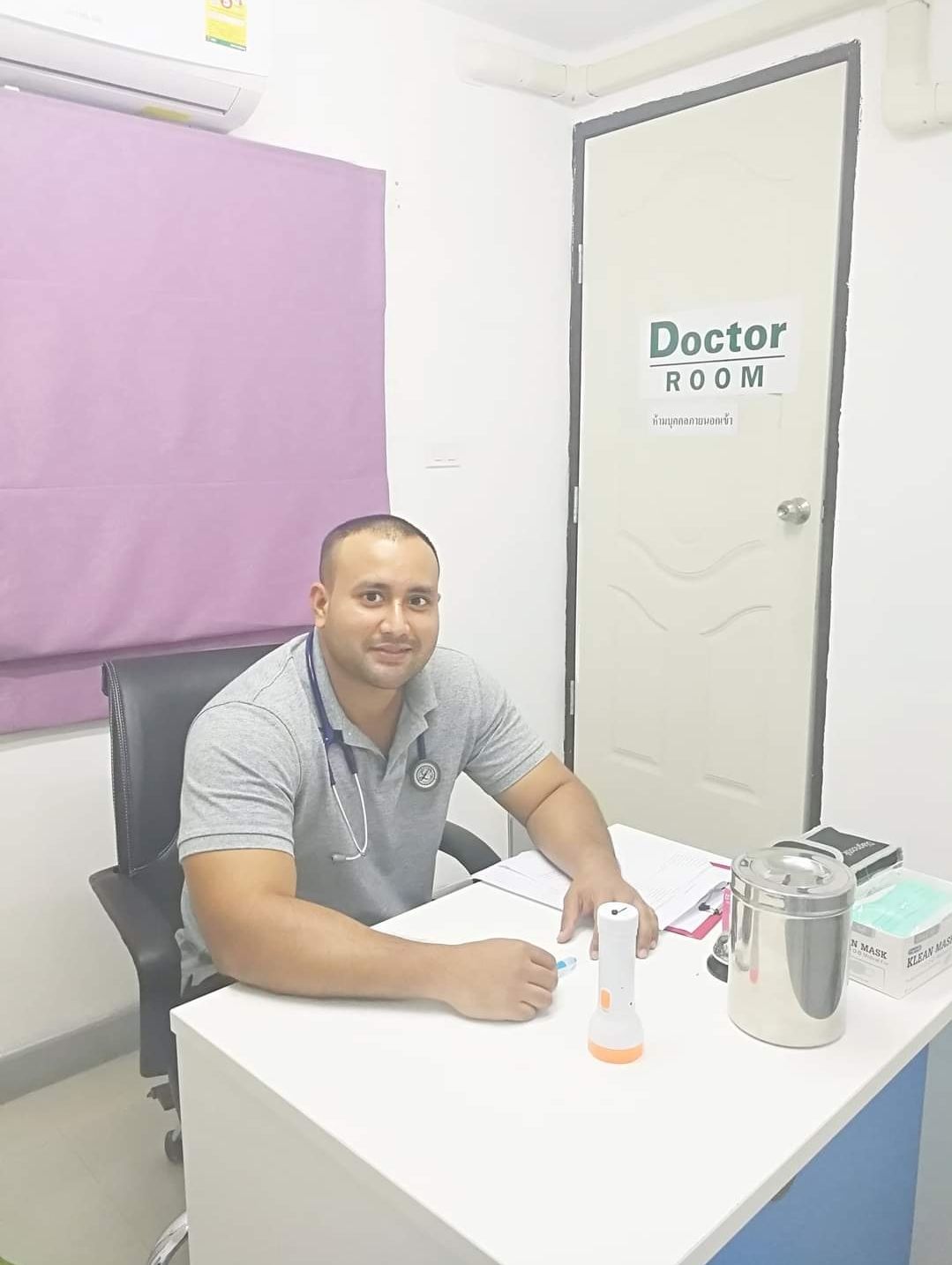
Dr. Ponlawat Pitsuwan is a physician at Doctor Bangkok, a private clinic in central Bangkok. He sees expats, residents, and medical tourists for general medicine, wellness consultations, and IV therapy. His focus is straightforward, evidence-based care delivered in plain language.