


Clinically reviewed by Dr. Ponlawat Pitsuwan, Physician, Doctor Bangkok. Last reviewed: July 2026
Fever of unknown origin means a temperature of 38.3°C or higher that keeps coming back over at least three weeks, with no clear cause found after initial testing. In Bangkok, tropical infections like dengue, scrub typhus, and typhoid are common culprits that get missed elsewhere. Do not take ibuprofen until dengue is ruled out. See a doctor if your fever has not responded to paracetamol within 24 hours.
You have had a fever for over a week. Maybe it dips in the morning and spikes again at night. You tried paracetamol, you rested, you drank water. It keeps coming back. If you are an expat or visitor in Bangkok, that pattern should get your attention faster than it would back home.
Fever of unknown origin, or FUO, is the clinical term for a fever above 38.3°C that keeps occurring over at least three weeks with no explanation after a basic workup. Most fevers are not this. Most resolve in a few days. But Bangkok is not a low-risk environment for prolonged fever, and waiting too long to get tested is the most common mistake I see.

What Does "Fever of Unknown Origin" Actually Mean?
Most fevers make sense quickly. You have a sore throat, a runny nose, or you ate something bad. A doctor checks you over, maybe runs one test, and there is your answer.
FUO is different. The fever keeps showing up. Investigations come back normal. Weeks pass. That is when we start thinking about this diagnosis more seriously.
The threshold matters: 38.3°C or higher, on more than one occasion, over at least three weeks, with no diagnosis despite a proper initial evaluation. FUO is not just a fever that lasts a while. It means a doctor has already looked and cannot explain it.
There are four broad categories. Infections account for the largest share. Non-infectious inflammatory conditions, such as certain autoimmune diseases, are another. Cancers, particularly blood cancers, are a less common but important cause. And then there is a group that simply resolves on its own without ever getting a label. That last group is more common than most patients expect.
Fever of Unknown Origin in Bangkok: Tropical Causes That Get Missed
This is where Bangkok changes everything. If you search for FUO causes online, you will find lists built for Western clinics: endocarditis, lymphoma, lupus, tuberculosis. These matter here too. But they are not the whole picture.
Research from regional institutions including Mahidol University shows that dengue, scrub typhus, leptospirosis, and typhoid are leading causes of unexplained fever in Thailand. None of these appear on standard FUO lists written for European or North American readers.
Dengue is probably the one I think about first with any acute fever in Bangkok. The early stage looks like almost anything: fever, aches, fatigue. A rash may appear later. Pain behind the eyes is a clue. Do not take ibuprofen or any anti-inflammatory until dengue has been ruled out. These drugs affect platelet function and can cause dangerous bleeding in dengue patients. Paracetamol only, until you have a blood test result.
Scrub typhus comes from a mite bite, usually in rural or green areas. Most patients have no idea they were bitten. The telltale sign is a small dark scab called an eschar, but it is easy to miss and not always present. Leptospirosis comes from contact with contaminated water or soil, which happens more than people realise during Bangkok’s flood season. Typhoid causes a sustained, climbing fever that continues for weeks if untreated.
The practical point: if your fever has lasted more than a few days and you are in Bangkok, you need tropical infection testing, not just a standard blood panel. Doctor Bangkok runs these panels as routine for any unexplained fever without an obvious cause.

How Long Should a Fever Last Before You See a Doctor?
At home in a temperate country, a mild fever lasting two to three days with no other symptoms can often be watched. That rule does not apply in Bangkok.
Here, I tell patients: if your fever is above 38.5°C and has not come down with paracetamol within 24 hours, come in. Do not wait for a full week. Do not experiment with antibiotics from a pharmacy. Antibiotics taken without a diagnosis can mask what is actually wrong and make it much harder to identify later.
Come in sooner if you have any of these alongside the fever: a rash anywhere on your body, pain behind your eyes, severe muscle aches or joint pain, yellowing of your skin or eyes, a worsening headache, or difficulty breathing. These are not symptoms to monitor from your hotel room.
When you come in, a doctor will take a history and do a physical examination first. From there, blood tests guide everything. A full blood count, C-reactive protein, ESR, and liver function tests are the starting point. In Bangkok, dengue NS1 antigen, scrub typhus serology, and typhoid serology are added as routine for any fever without an obvious cause. Blood cultures may follow if a serious bacterial infection is suspected.
The goal of a first visit is not necessarily a diagnosis that afternoon. It is to start narrowing things down safely and make sure nothing dangerous is being missed.
Fever After Surgery: When Is It Normal and When Is It a Problem?
I see this regularly, especially with medical tourists who had a procedure in Bangkok and are now worried about a post-operative fever.
A low-grade fever in the first 48 hours after surgery is common and usually not a sign of infection. Your body’s response to tissue repair naturally includes some inflammation, and inflammation raises your temperature. This is expected.
The concern starts after 48 to 72 hours. If fever persists beyond that window, reaches above 38.3°C, or comes with new symptoms, something needs investigating. Possible sources include a lung complication from anaesthesia, a urinary tract infection after catheterisation, a wound infection around day four or five, a blood clot in the legs, or a drug reaction.
If you are running a fever after surgery and have left the hospital, do not assume it is normal. Redness, warmth, or discharge at the wound site, painful urination, leg swelling, or a fever above 38.3°C that is not settling are all reasons to be seen the same day.
For patients who had surgery elsewhere in Thailand and are back in the city, Doctor Bangkok can assess post-operative fever, arrange wound review, and order relevant tests without you needing to return to your original hospital.
One more consideration: if you were in Thailand for a while before surgery, an underlying tropical infection that was not yet obvious could surface under the stress of a procedure. This is not common, but it is a real scenario worth raising with your doctor.
The signs that mean go to emergency now: confusion, very fast breathing, mottled or pale skin, a fever above 39.5°C that is not coming down, or a feeling that something is seriously wrong. These can indicate sepsis and need immediate care.
Fever that keeps coming back, fever after surgery, or a fever you cannot explain: Doctor Bangkok offers same-day fever consultations with English-speaking physicians in central Bangkok. We run full tropical infection panels including dengue, scrub typhus, leptospirosis, and typhoid serology. BTS accessible, walk-ins welcome. Book or find out more at doctorbangkok.co.th/fever-treatment/
How long should a fever last before I see a doctor in Bangkok?
In Bangkok, the threshold is lower than back home. A fever above 38.5°C that has not responded to paracetamol within 24 hours, or any fever with a rash, pain behind the eyes, or severe muscle aches, warrants same-day assessment. Dengue and other tropical infections look like ordinary fevers in the early stages, and waiting is the main risk.
What is the difference between a regular fever and a fever of unknown origin?
A regular fever has an identifiable cause, such as a cold or throat infection, and resolves within a few days. Fever of unknown origin means a temperature of 38.3°C or higher that keeps recurring over at least three weeks with no explanation found after proper testing. The key is not letting the investigation stall by self-treating.
Can I take ibuprofen for a fever in Bangkok?
Not until dengue has been ruled out. Ibuprofen and other anti-inflammatory drugs affect platelet function and can cause serious internal bleeding in dengue patients. Use paracetamol only until you have a blood test result. Doctor Bangkok can run a same-day dengue NS1 antigen test from day one of illness.
What blood tests will a doctor run for an unexplained fever?
A standard first-line panel includes a full blood count, C-reactive protein, ESR, liver function tests, blood cultures, and urinalysis. In Bangkok, dengue NS1 antigen, scrub typhus serology, and typhoid serology are added as routine for any fever without an obvious cause. If fever continues beyond three weeks with no answer, further imaging or specialist testing is the next step.
Is a fever after surgery in Bangkok something to worry about?
A low-grade fever in the first 48 hours is expected and usually reflects normal healing. It becomes a concern if it persists beyond 48 to 72 hours, exceeds 38.3°C, or comes with wound changes, urinary symptoms, leg swelling, or breathing difficulty. Contact a doctor the same day if any of those are present.
Why should I not take antibiotics from a pharmacy for a persistent fever?
Taking antibiotics without a diagnosis can suppress the fever temporarily and mask the real cause, making it much harder to identify later. Some conditions, like dengue, are not treated with antibiotics at all. Others, like scrub typhus, require a specific antibiotic that a pharmacist is unlikely to select correctly.
What tropical infections cause prolonged fever in Bangkok?
Dengue, scrub typhus, leptospirosis, and typhoid are all well-documented causes of sustained or unexplained fever in Bangkok. They often look identical in the early stages, which is why testing matters more than waiting to see how symptoms develop. Any fever lasting more than a few days here deserves a tropical infection panel.
Dr. Ponlawat Pitsuwan
Physician, Doctor Bangkok
a private medical clinic in central Bangkok. He sees expats, residents, and medical tourists for fever assessment, tropical infection testing, and general medical consultations. His focus is straightforward, evidence-based care delivered in plain language.
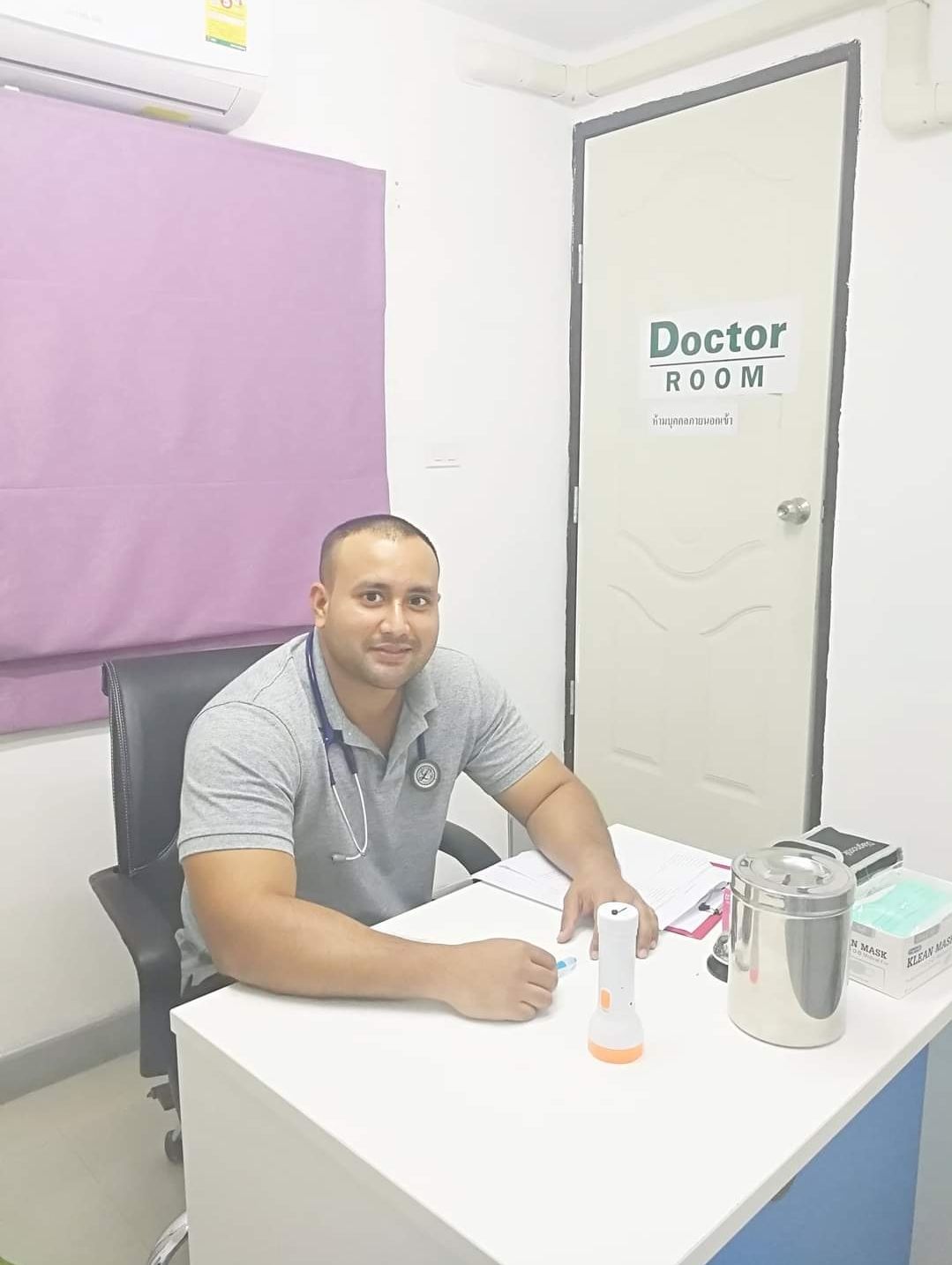
Dr. Ponlawat Pitsuwan is a physician at Doctor Bangkok, a private clinic in central Bangkok. He sees expats, residents, and medical tourists for general medicine, wellness consultations, and IV therapy. His focus is straightforward, evidence-based care delivered in plain language.