
Clinically reviewed by Dr. Ponlawat Pitsuwan, Physician, Doctor Bangkok. Last reviewed: July 2026
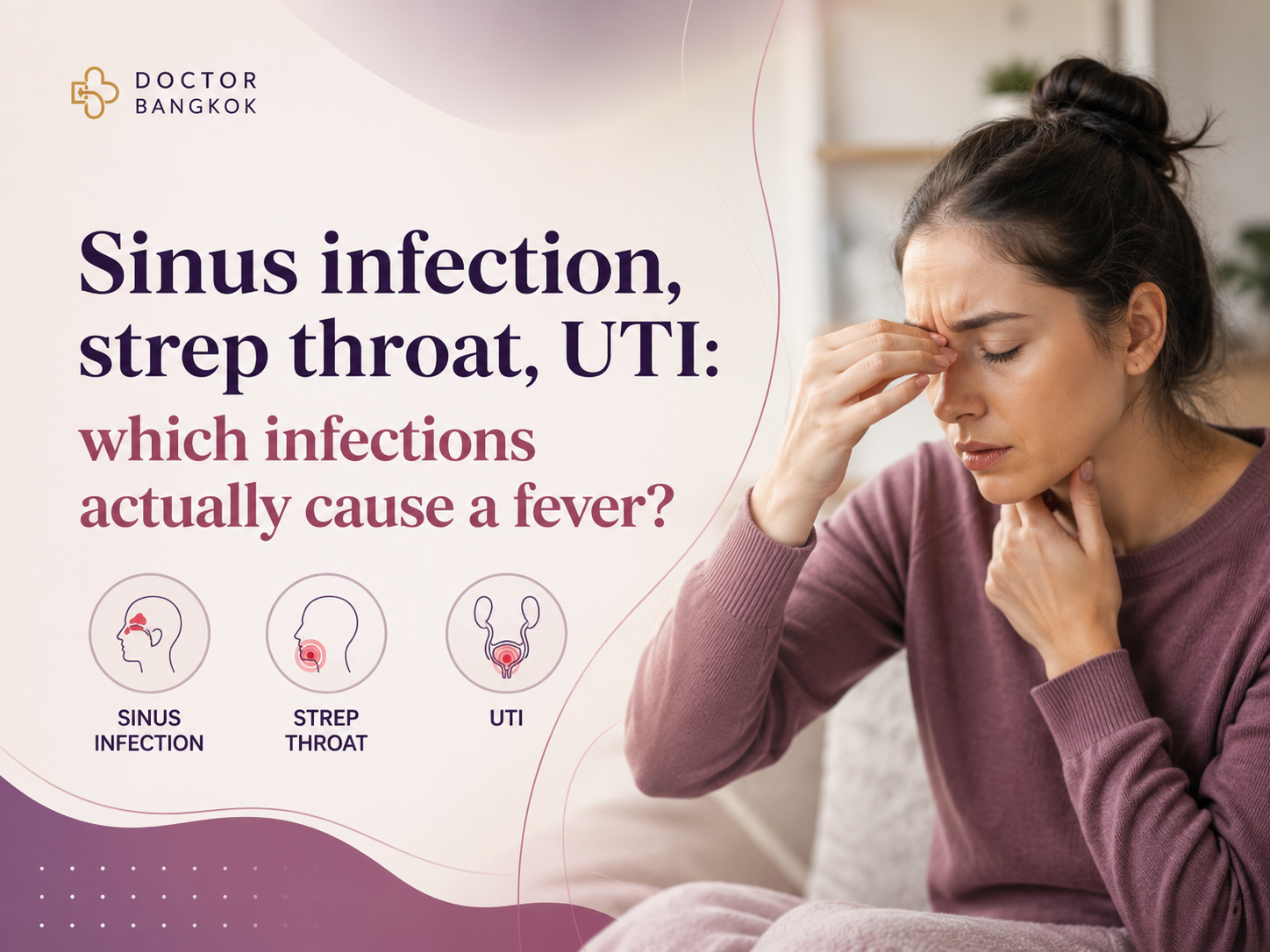
Yes, a sinus infection can cause a fever, but it depends on whether the infection is viral or bacterial. Viral sinusitis often produces a mild, short-lived fever in the first few days. Bacterial sinusitis tends to cause a higher fever that persists beyond four days. Strep throat, UTIs that have reached the kidneys, pneumonia, and bacterial food poisoning can all cause significant fevers too. Knowing which infection you are dealing with determines whether you need antibiotics and how quickly you need to be seen.
You are in Bangkok. You have a fever, a blocked nose, a sore throat, or you have been running to the bathroom all night. You are Googling your symptoms at midnight and you are not sure whether to wait it out or find a clinic in the morning. I see this situation every day, and the question I hear most often is: is my fever actually from this infection, or is something else going on?
The honest answer is that fever means different things depending on which infection is behind it. A sinus infection, strep throat, a urinary tract infection, pneumonia, and food poisoning all behave differently. Some almost always cause a fever. Others often do not. And in Bangkok, there is one more possibility that most people do not think of until it is pointed out. I will get to that shortly.

Can a sinus infection cause a fever?
Yes, it can. Whether it does, and how high, tells you a lot about what kind of sinus infection you are dealing with.
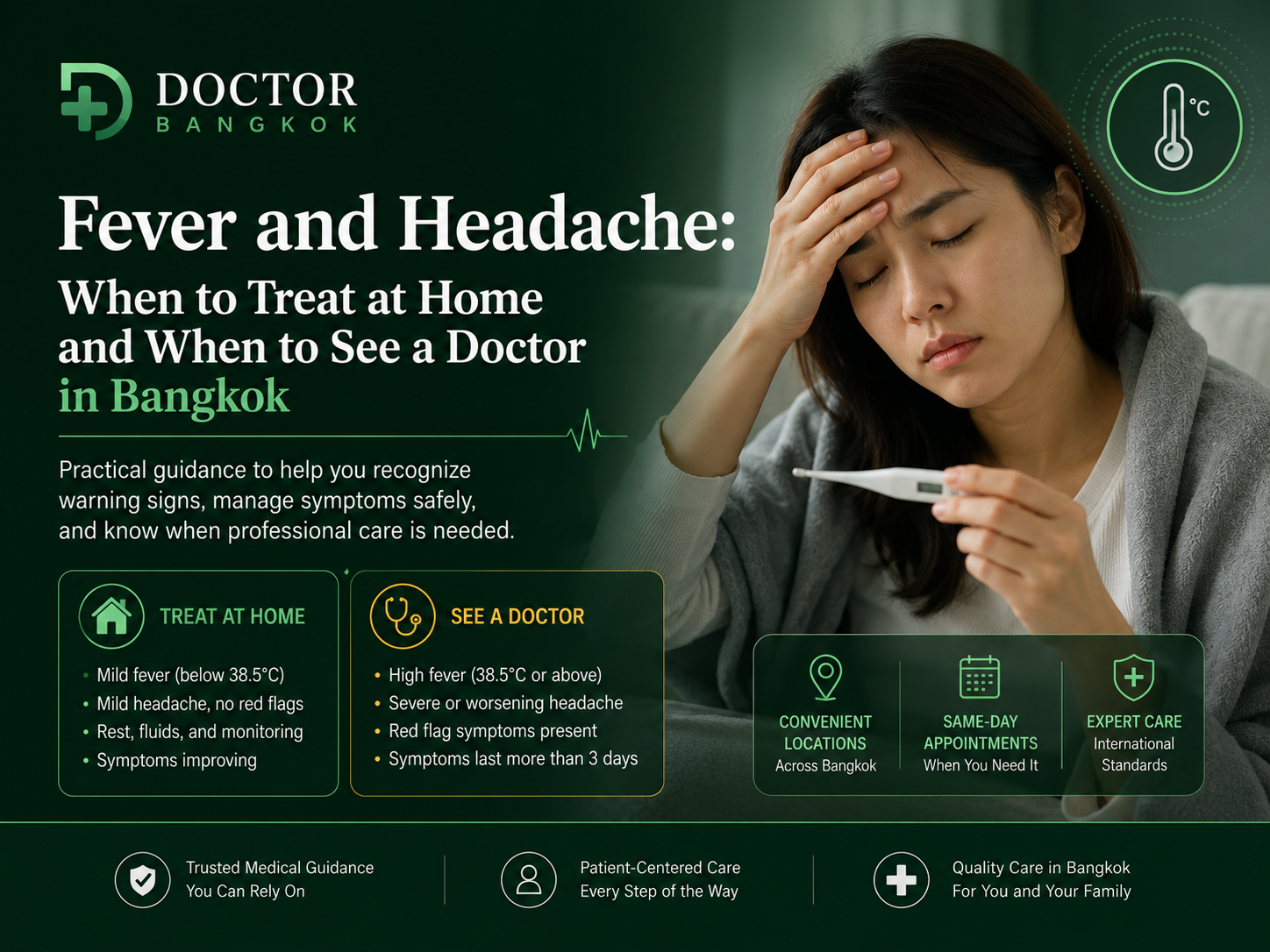
Most sinus infections start viral. A cold triggers inflammation in the sinuses, and in the first two or three days you might have a low-grade fever below 38°C (100.4°F), alongside congestion, facial pressure, and thick nasal discharge. That kind of fever is normal and usually passes quickly.
What concerns me more is when fever comes back after you felt like you were improving, or when it climbs above 38.5°C (101.3°F) and stays past day four. That pattern suggests a bacterial infection has set in. Bacterial sinusitis does not clear on its own, and leaving it untreated makes it worse.
Fever temperature reference for Bangkok
| Temperature | What it likely means |
|---|---|
| Below 38°C (100.4°F) | Low-grade, often viral, monitor at home |
| 38°C to 38.9°C (100.4 to 102°F) | Moderate fever, watch for red flags |
| 39°C to 39.9°C (102.2 to 103.8°F) | High fever, seek medical assessment today |
| 40°C or above (104°F+) | Urgent, same-day medical care needed |
Bangkok’s heat and humidity are worth factoring in here. Dehydration happens faster in a tropical climate, which makes a moderate fever feel worse and turn serious more quickly than it might back home.
One thing I always ask patients with sinus symptoms and a high fever: have you been in Bangkok long enough to have been exposed to dengue? Dengue can present with fever, headache, and facial pain that mimics a bad sinus infection. It is one of the most common misdiagnoses I see in expats and visitors. If there is any doubt, a dengue blood test is fast, affordable, and changes the entire management plan. You can read more about when to seek help on our fever treatment page.
Does strep throat always cause a fever?
Not always, and this surprises most people. Group A Streptococcus, the bacteria behind strep throat, causes fever in many cases, but not all. Adults in particular can have a very sore throat, swollen tonsils, and difficulty swallowing with a completely normal temperature.
The problem with assuming you do not have strep because you have no fever is that untreated strep carries real risks. Rheumatic fever, a serious condition that can affect the heart, joints, and kidneys, can follow an untreated strep infection even in someone who felt only mildly unwell.
Can you have strep throat without a fever?
Yes. Around a third of confirmed strep cases in adults present without fever. A rapid strep test, which takes about ten minutes, is the only reliable way to know. If it comes back positive, you need antibiotics. If it comes back negative, antibiotics will not help and we look at other causes.
At Doctor Bangkok, we can run a rapid strep test at the clinic or during a hotel visit. If you are stuck in your room with a severe sore throat and a schedule to keep, you do not have to go out to get an answer.

UTI with a high fever: is it a kidney infection?
A simple urinary tract infection, confined to the bladder, rarely causes a significant fever. Some patients have a very low-grade temperature, but a high fever alongside UTI symptoms is a warning sign that the infection has moved up into the kidneys.
Kidney infection, known medically as pyelonephritis, is a different situation entirely. The fever is typically above 38.5°C, often with chills, one-sided back or flank pain, and nausea or vomiting. You may or may not have the usual UTI symptoms of burning and frequency. Some patients come in convinced they have food poisoning or a muscle strain, and the urine test tells a very different story.
This infection needs prompt antibiotic treatment. If you are vomiting and cannot keep anything down, or if the fever is above 39°C and not settling, you may need IV antibiotics at a hospital. Sepsis from an untreated kidney infection is rare but real. Do not sit on this one.
At Doctor Bangkok, we can assess your symptoms, run a urinalysis on the same visit, and start treatment the same day. If your situation needs hospital-level care, we will tell you clearly and point you in the right direction.
Does pneumonia always cause a fever?
Most cases of pneumonia do cause fever, often above 38.5°C. But there is a form called atypical pneumonia, sometimes called walking pneumonia, where the fever is mild or comes and goes. People with walking pneumonia often keep functioning for days before realising something is wrong. The cough is usually persistent and dry, and fatigue is significant even when the fever is not.
The combination that should make you think pneumonia rather than a bad cold: fever alongside a productive cough, shortness of breath at rest, chest pain when breathing deeply, and fatigue that seems out of proportion to your other symptoms. A doctor can often detect pneumonia through a stethoscope before any scan is needed.
Pneumonia always needs medical review. Whether it needs antibiotics, which type, and whether you can be managed as an outpatient are questions a physical exam and sometimes a chest X-ray will answer.
Can you get a fever from food poisoning?
Yes, and whether you do depends on what caused it. Bacterial food poisoning from Salmonella or Campylobacter often causes a fever. Toxin-related food poisoning, from Staphylococcus aureus for example, typically does not, because your immune system is reacting to a chemical rather than fighting a live infection.
In Bangkok, traveller’s diarrhoea is common, particularly in the first few weeks after arrival. Street food, raw seafood, and ice from unfamiliar vendors are the usual culprits. Most cases settle within 24 to 48 hours with rest and fluids.
If you have a fever above 38.5°C alongside food poisoning symptoms, or if you see blood in your stool, that changes the picture. Those features point toward a bacterial cause that may need antibiotics.
Diarrhoea and fever at the same time: what is causing it?
When diarrhoea and fever arrive together, your body is usually fighting a bacterial gut infection. The most common causes in Bangkok are Salmonella, E. coli, and Campylobacter from contaminated food or water. Viral gastroenteritis is also possible, and in that case antibiotics will not help.
Here is what I want every expat and visitor to know. If you have diarrhoea and fever in Bangkok and you also have muscle aches, pain behind the eyes, or a rash anywhere on your body, do not assume it is food poisoning. That combination can point to dengue. Dengue often causes gut symptoms alongside the fever, and it is easy to mistake for a bad case of traveller’s stomach. Our team at Doctor Bangkok can run a dengue test quickly to rule it in or out.
For most straightforward cases, oral rehydration salts are your first priority. Fluid loss is fast in Bangkok’s heat. Come in, or call us, if the fever is above 39°C, you cannot keep fluids down, your urine is dark, or symptoms have not improved after 48 hours. We can also arrange IV rehydration at your hotel if leaving the room is genuinely not possible. Our sinusitis symptoms and fever assessment page has more on when to seek help.
Fever from a sinus infection, sore throat, UTI, or food poisoning in Bangkok? Doctor Bangkok’s English-speaking physicians offer same-day appointments at our central Bangkok clinic, BTS accessible, and hotel visits for patients who cannot travel. We can test, diagnose, and start treatment on the same visit. Book at doctorbangkok.co.th or call us directly. For fever assessment, visit our fever treatment page.
Can a sinus infection cause a high fever, or is it always low-grade?
Viral sinusitis usually produces a low fever below 38°C in the first few days and settles on its own. Bacterial sinusitis can push the fever above 38.5°C and keep it there past day four. Any fever above 39°C, or one that returns after you started feeling better, warrants same-day medical review. In Bangkok, dengue should also be ruled out when fever is high.
How do I know if my UTI has turned into a kidney infection?
The warning signs are a high fever above 38.5°C with chills, pain in your side or lower back on one side, and nausea or vomiting alongside your urinary symptoms. A simple bladder UTI rarely causes a significant fever. When fever appears with a UTI, the infection has likely moved higher up and needs same-day treatment, not a wait-and-see approach.
I have diarrhoea and a fever in Bangkok. Is it food poisoning or something more serious?
Most cases in Bangkok are bacterial food poisoning and improve within 48 hours with fluids and rest. Come in if the fever is above 38.5°C, there is blood in your stool, you cannot keep anything down, or you also have muscle pain, a rash, or pain behind the eyes. Those last symptoms could point to dengue rather than food poisoning.
Can you have strep throat without a fever?
Yes, particularly in adults. About a third of confirmed strep cases do not produce a fever. The only reliable way to know if you have strep is a rapid test, which takes about ten minutes. Untreated strep, even without fever, carries a small but serious risk of complications including rheumatic fever.
When should I go to a hospital versus a private clinic in Bangkok for fever?
A clinic like Doctor Bangkok is the right first step for sinus infections, strep throat, UTIs, and most food poisoning cases. Go to a hospital emergency department if you have fever with a stiff neck, if you cannot breathe properly at rest, or if you are confused or losing consciousness. Bangkok hospital ERs are slow and expensive for cases that a clinic can handle well.
Could my fever in Bangkok be dengue and not an infection I recognise?
Yes, and this is something I flag with every patient who comes in with fever here. Dengue causes high fever, severe muscle and joint pain, pain behind the eyes, and sometimes a rash. It can also cause nausea and loose stools, which makes it easy to confuse with food poisoning or flu. A dengue blood test gives a result quickly and should be part of any fever workup in Bangkok.
Dr. Ponlawat Pitsuwan
Physician, Doctor Bangkok
a private medical clinic in central Bangkok. He sees expats, residents, and medical tourists for fever assessment, respiratory infections, UTIs, food poisoning, and general medical consultations. His focus is straightforward, evidence-based care delivered in plain language.
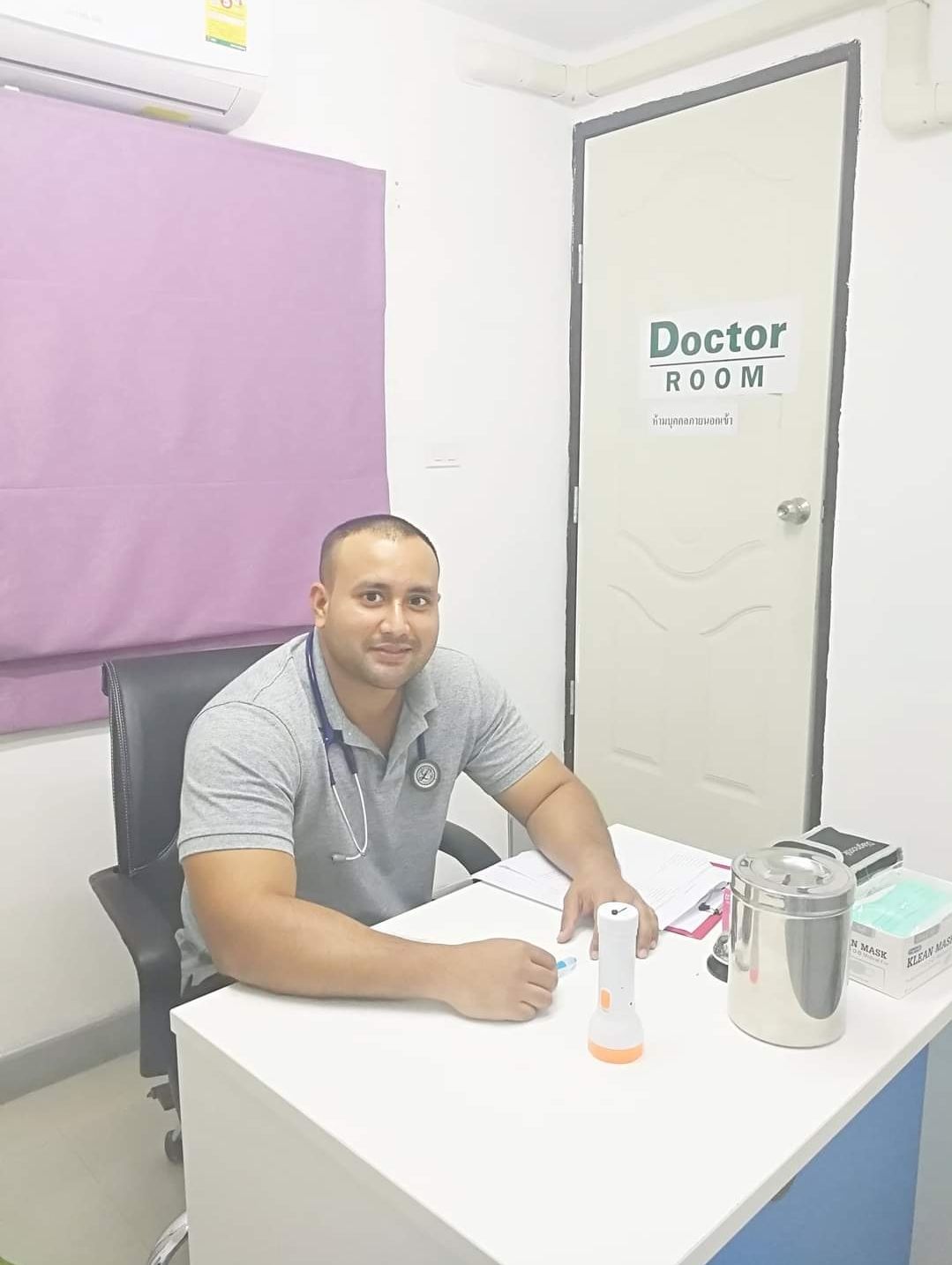
Dr. Ponlawat Pitsuwan is a physician at Doctor Bangkok, a private clinic in central Bangkok. He sees expats, residents, and medical tourists for general medicine, wellness consultations, and IV therapy. His focus is straightforward, evidence-based care delivered in plain language.