

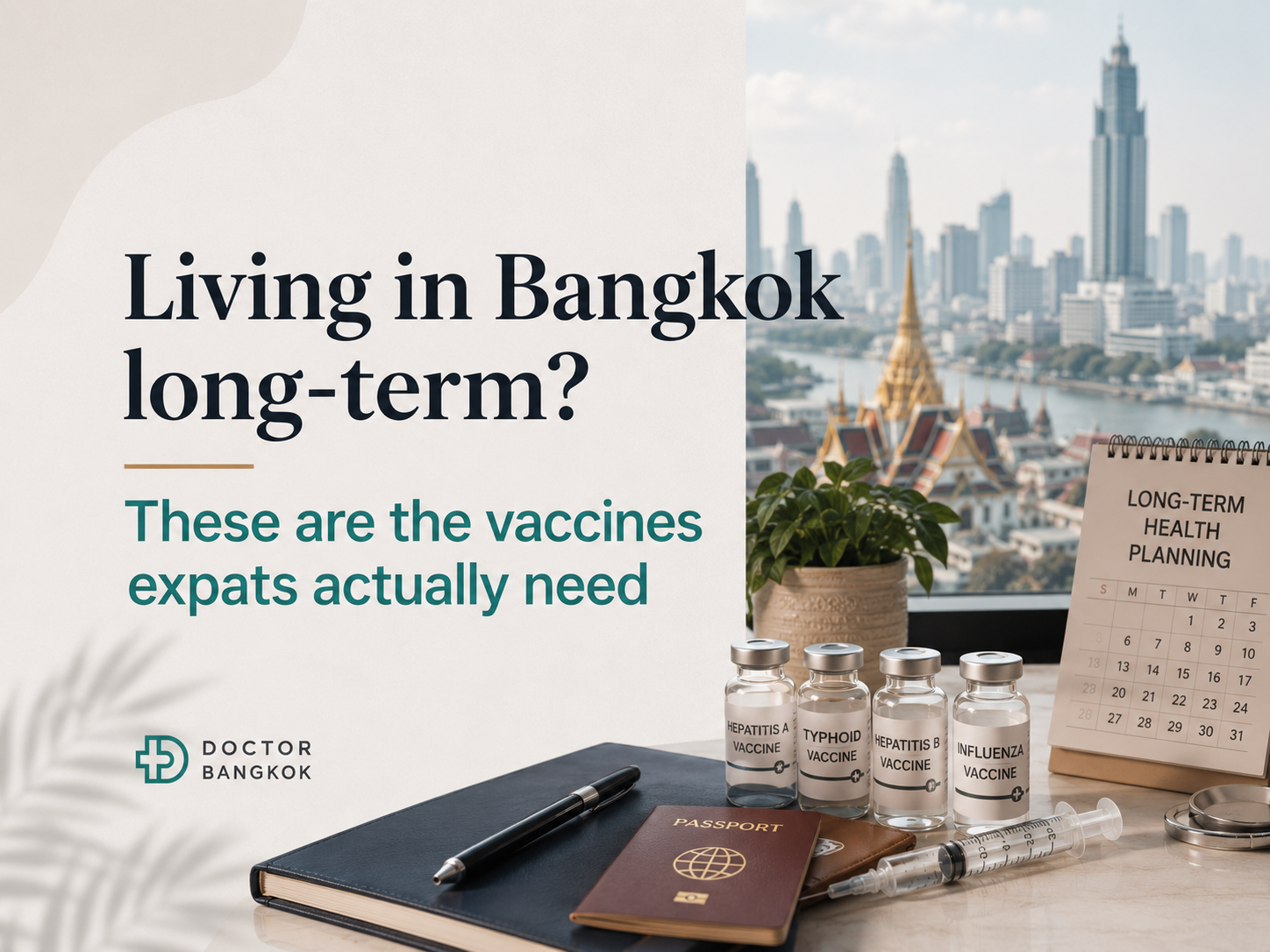
Clinically reviewed by Dr. Ponlawat Pitsuwan, Physician, Doctor Bangkok. Last reviewed: July 2026
Most expats moving to Bangkok need hepatitis A, hepatitis B, typhoid, rabies pre-exposure, and a Tdap booster at minimum. Influenza and Japanese encephalitis are strongly recommended for most lifestyles. Dengue vaccine eligibility depends on your prior exposure history and requires a consultation. A doctor should review your full vaccination history before you start, because many adults have lapsed immunity they do not know about.
If you have just moved to Bangkok, or you have been here a while and never quite got around to sorting your vaccinations, you are not alone. Most expats I see in clinic either have a list from their home country doctor that does not quite fit Bangkok, or they have no list at all. Neither is ideal.
Getting properly vaccinated in Bangkok is straightforward at a private clinic. The problem is that standard "travel jab" lists online are built for tourists staying two weeks, not people building a life here. What you need as a long-term Bangkok resident is different, and this article will tell you exactly what that looks like.

Thailand’s Vaccination System and What Expats Need to Know
Thailand has a national immunisation program that works well for Thai nationals and their children. As an expat, you are not part of it. You pay out of pocket at a private clinic, or through your international health insurance.
This is not a complaint, just a practical reality. Private vaccination in Bangkok is accessible, well-run, and often faster than what you may be used to at home. You need to know where to go and what to ask for.
Which Vaccines Do You Actually Need? Start With Your Lifestyle
Not every Bangkok expat needs the same vaccines. The right starting point is your actual daily life here, not a generic checklist.
If you work in an office, eat out regularly, and occasionally visit temples or parks, your core list looks one way. If you have young children in an international school, spend weekends hiking, or travel across Southeast Asia regularly, it looks another. The risk is real in both cases, just different.
Here is how I break it down in practice.
Core Vaccines That Almost Every Bangkok Expat Needs
Hepatitis A spreads through contaminated food and water. Bangkok’s street food scene is one of the best in the world and also one of the most direct routes to hepatitis A exposure. Two doses give you long-term protection, and if you eat out regularly, you need this one.
Hepatitis B spreads through blood and sexual contact. Three doses over six months. Most working-age adults from Western countries received this as children, but many are not actually sure. A quick blood test can confirm your immunity before we decide whether to start a course.
Typhoid is worth having if you eat local food regularly. The injectable vaccine lasts around two to three years. This is not a high-drama vaccine, just a sensible one for urban Bangkok life.
Tdap is a booster covering tetanus, diphtheria, and whooping cough. Most adults are overdue for this and do not realise it. Tetanus alone is reason enough in a city where minor cuts and scrapes happen regularly.
Influenza is often overlooked because people associate it with winter. Bangkok has year-round influenza circulation. I recommend an annual flu jab for all long-term expats.
Vaccines Specific to Bangkok and Southeast Asia
Japanese encephalitis is a mosquito-borne virus present in Thailand, including areas in and around Bangkok. The risk is higher if you spend time near rural areas or travel into the Thai countryside. For most long-term Bangkok residents, vaccination is recommended. The single-dose Imojev vaccine is available here and practical.
The dengue vaccine situation is more nuanced. Dengue is common throughout Bangkok, especially during rainy season. The Qdenga vaccine is now available in Thailand and is appropriate for many expats, but your prior dengue exposure history affects the recommendation. A doctor needs to assess your history before advising this one. Come in and talk it through rather than assuming you either need it or do not.
Rabies: The One Bangkok Expats Consistently Underestimate
I get asked about this constantly, and my answer is always the same: get pre-exposure rabies vaccination if you are staying more than a month. Bangkok has stray dogs throughout the city, monkeys at temple sites, and bats are more common than most people realise. You do not need to be trekking in rural Thailand to have a real exposure risk.
If you have had pre-exposure vaccination and something bites you, you need two booster doses promptly. That is manageable. If you have not had pre-exposure vaccination, you need a more urgent and complex post-exposure course, including rabies immunoglobulin, which can be harder to source quickly. Pre-exposure vaccination is three doses over a few weeks. It is one of the most practical decisions a Bangkok expat can make.

Vaccines You May Already Have — But May Have Lapsed
This is the part most expat vaccine articles skip entirely, and it matters a lot.
Many adults from the UK, US, Australia, and Europe had their MMR vaccine as children. MMR covers measles, mumps, and rubella. But immunity can wane, and some older adults only received one dose when two are now recommended. An antibody titre test, a simple blood test that checks whether you are still protected, tells us exactly where you stand.
Polio is similar. Adults vaccinated as children may have partial immunity. If you travel frequently across Southeast Asia, a booster is worth discussing. Hepatitis B is another one where many people think they had it but are not certain.
Do not assume you are covered. Bring whatever vaccination records you have to your first appointment. If you cannot find them, we can test rather than guess.
The Bangkok-Specific Risks That Get Underplayed
Dengue gets discussed, but urban density in Bangkok means mosquito exposure is higher than people expect. This is not a jungle disease. People get dengue in central Bangkok apartments. Mosquito avoidance stays important even with vaccination.
Zika is present in Thailand and deserves a specific mention for pregnant expats and partners of pregnant women. There is no Zika vaccine, so mosquito precautions are the main protective measure. If pregnancy is relevant to your situation, this is a conversation worth having with your doctor directly.
Vaccination Records and Documentation in Bangkok
Your vaccination records matter more than you might expect. International schools require documented immunisation histories for children. Work permit assessments sometimes reference vaccination status. Travel from Thailand to certain countries may require a yellow fever certificate, even though yellow fever is not present in Thailand itself.
The standard international document is the International Certificate of Vaccination or Prophylaxis. Private clinics in Bangkok, including Doctor Bangkok, can issue English-language records accepted by embassies, schools, airlines, and employers. Get your records organised and keep a copy somewhere accessible.
Does Your Expat Health Insurance Cover Vaccinations?
Most international health insurance plans include some preventive care coverage, but the details vary. Some cover routine immunisations without pre-approval. Others require you to notify the insurer before starting a multi-dose course like rabies pre-exposure.
Check your policy document before you book, not after. Look for "preventive care," "immunisations," and "travel vaccines" as separate line items. A detailed English-language invoice from your clinic makes reimbursement claims much smoother. At Doctor Bangkok, full English documentation is issued as standard.
What to Expect at Your Vaccination Appointment
For most expats, the first appointment is a vaccination review, not a jab session. We look at what you have had, what has lapsed, and what Bangkok specifically adds to your risk profile. That conversation takes around fifteen minutes.
From there we build a practical schedule. Not everything happens on day one, because some vaccines need to be spaced. We work around your schedule and priorities. After any injection, we ask you to wait fifteen minutes at the clinic, then you leave with written English documentation of what you received.
If you are living in Bangkok and not sure where your vaccinations stand, Doctor Bangkok offers travel medicine and vaccination consultations in central Bangkok, close to BTS. English-speaking physicians, same-day appointments where available, and full English documentation for insurance and school requirements. Book your vaccination review at doctorbangkok.co.th/vaccination/ or contact the clinic directly.
FAQ
I have just moved to Bangkok. Which vaccines should I get first?
Start with a consultation so a doctor can review your actual vaccination history. For most new Bangkok expats, the immediate priorities are hepatitis A, confirmed hepatitis B immunity, typhoid, and a Tdap booster. Rabies pre-exposure and influenza follow soon after. The order matters less than getting started.
Do I need the rabies vaccine if I am only living in Bangkok city?
Yes. Stray dogs, temple monkeys, and bats are present throughout urban Bangkok, not just rural areas. Pre-exposure vaccination means that if something bites you, the follow-up treatment is simpler and faster. Both the WHO and CDC recommend pre-exposure rabies vaccination for anyone staying more than one month.
Is the dengue vaccine right for me as a Bangkok expat?
It may well be, but it depends on whether you have had dengue before. A doctor needs to assess your exposure history before recommending it. Dengue is common in Bangkok year-round, and no vaccine replaces mosquito avoidance, so this is a conversation worth having in clinic.
Will my international health insurance cover vaccines in Bangkok?
Coverage depends on your specific policy. Many international plans include preventive care, but some require pre-approval for multi-dose courses like rabies pre-exposure. Check your policy before booking, and make sure your clinic provides English-language invoices to simplify reimbursement. Doctor Bangkok issues these as standard.
What vaccination documents do I need as a Bangkok expat?
You will likely need them for international school enrolment, work permit assessments, and travel from Thailand to certain countries. The International Certificate of Vaccination or Prophylaxis is the standard document for international purposes. Private clinics in Bangkok can issue English and Thai language records accepted by schools, employers, and embassies.
I had all my childhood vaccines. Do I still need to do anything?
Most likely yes. MMR, hepatitis B, and polio immunity can wane in adults, and many people are not certain what they actually received as children. An antibody titre test checks your current immunity directly. Bring whatever records you have and we can identify any gaps.
Is there a Zika vaccine available in Bangkok?
No. There is currently no approved Zika vaccine. Zika transmission does occur in Thailand, including in urban areas, which matters particularly for pregnant expats or partners of pregnant women. Mosquito precautions are the main protective measure. Talk to a doctor if this is relevant to your situation.
Dr. Ponlawat Pitsuwan
Physician, Doctor Bangkok
a private medical clinic in central Bangkok. He sees expats, residents, and medical tourists for travel medicine consultations, vaccination reviews, and general health assessments. His focus is straightforward, evidence-based care delivered in plain language.
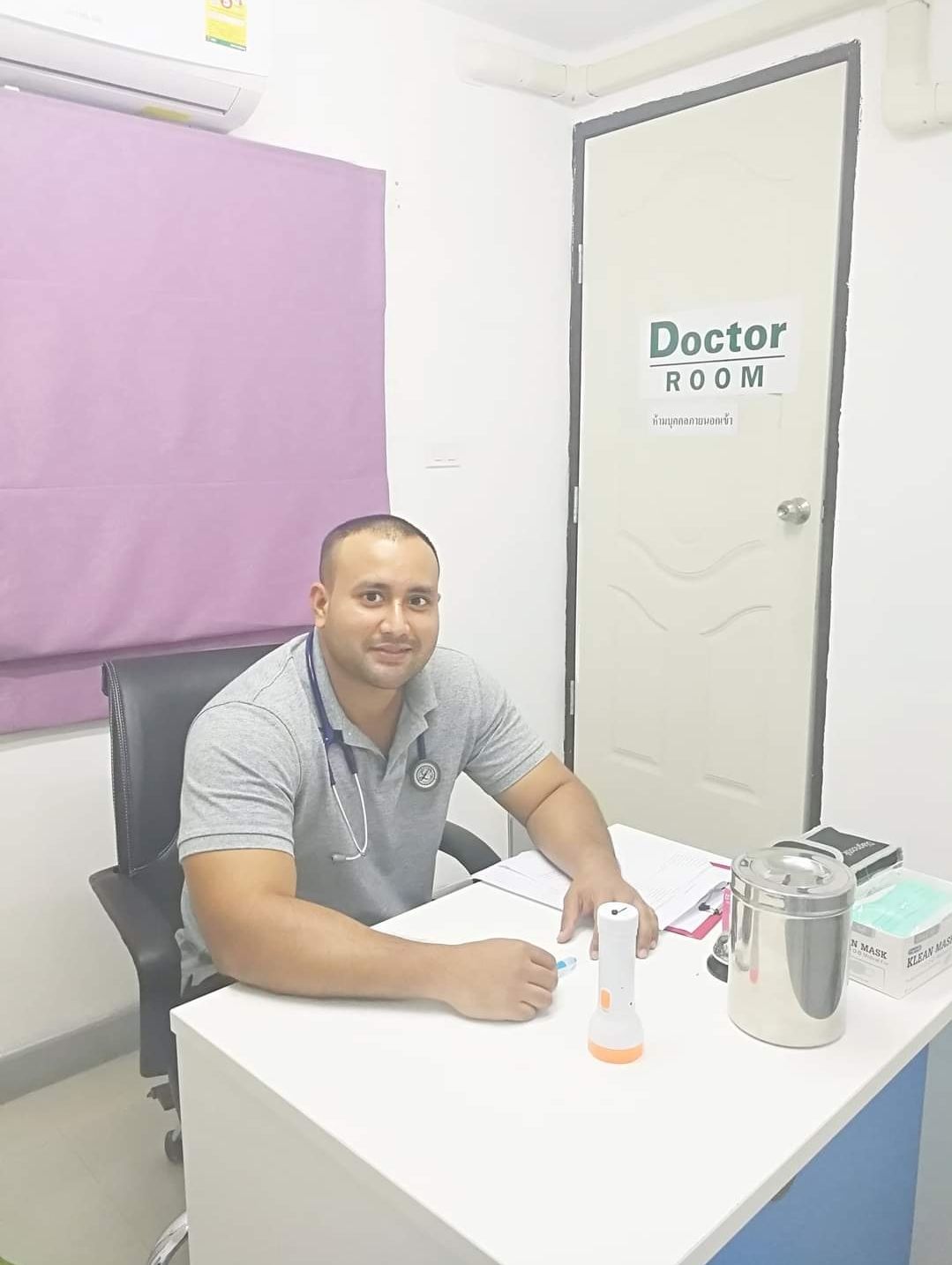
Dr. Ponlawat Pitsuwan is a physician at Doctor Bangkok, a private clinic in central Bangkok. He sees expats, residents, and medical tourists for general medicine, wellness consultations, and IV therapy. His focus is straightforward, evidence-based care delivered in plain language.