

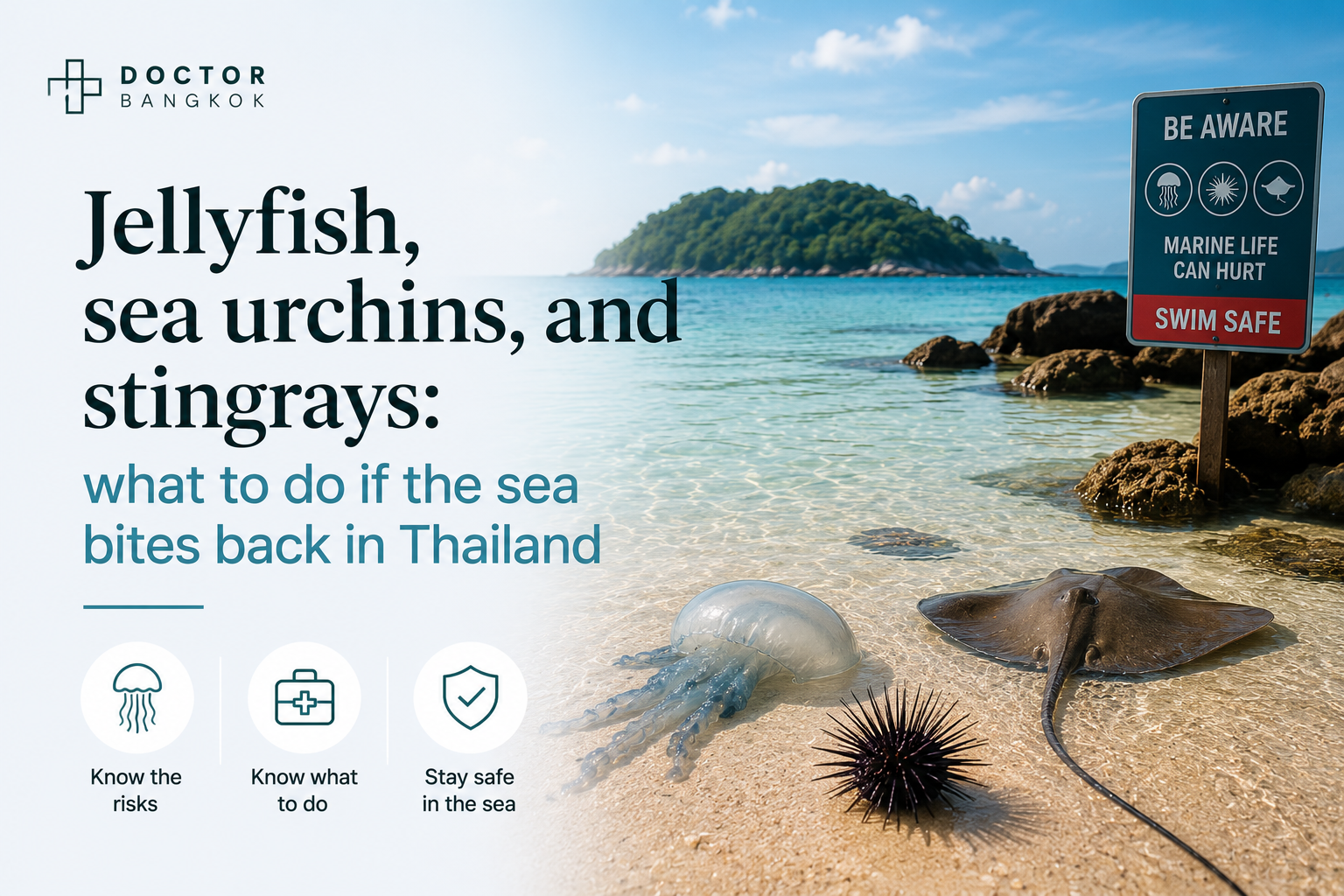
Clinically reviewed by Dr. Ponlawat Pitsuwan, Physician, Doctor Bangkok. Last reviewed: July 2026
If you get stung by a jellyfish in Thailand, rinse the area with seawater, not fresh water. Remove visible tentacles carefully. If you know the species was a box jellyfish, apply vinegar. For Portuguese man-of-war stings, do not use vinegar. If you feel chest pain, difficulty breathing, or worsening symptoms after any sting, call 1669 immediately.
You are at a Thai beach, the water is warm, and something wraps around your leg. A second later, the burning starts. If this has happened to you, or you are reading this right now trying to figure out what to do, stay calm and keep reading.
Thailand’s seas are beautiful, but a few creatures here can seriously hurt you. Most stings are painful but manageable. A small number are life-threatening. Knowing which is which, and doing the right thing in the first few minutes, makes a real difference.

Jellyfish in Thailand: species, seasons, and the two that matter most
Most jellyfish stings in Thailand cause pain, red welts, and a lot of misery for a few hours. Two species change that equation.
The box jellyfish is the one that kills. It is found in both the Gulf of Thailand and the Andaman Sea, and it is most active from May to October during the rainy season. Koh Samui and Koh Phangan see the highest number of serious cases. Contact with the tentacles can cause cardiac arrest. This is not an exaggeration. It is fast, and it is fatal without immediate help.
The second one to know is the Irukandji. It is a small box jellyfish species, and the initial sting feels mild. That is what makes it dangerous. Thirty minutes to two hours later, some patients develop chest pain, sweating, nausea, severe muscle cramps, and dangerously high blood pressure. If you felt a light sting and then start feeling any of those symptoms, that is not a coincidence. Get to a hospital.
The Portuguese man-of-war, sometimes called a bluebottle, is common on Thai beaches after storms. Its tentacles can extend far from its body, so you can get stung without even seeing it. The sting is intensely painful but rarely life-threatening in healthy adults. The bluebottle is not technically a jellyfish, and that matters when it comes to treatment.
| Species | Where in Thailand | Peak Season | Risk Level |
|---|---|---|---|
| Box jellyfish | Gulf of Thailand, Andaman Sea | May to October | Life-threatening |
| Irukandji | Gulf of Thailand, Andaman Sea | May to October | Severe, delayed onset |
| Portuguese man-of-war | Both coasts, post-storm | Year-round | Painful, rarely fatal |
| Moon jellyfish | Both coasts | Year-round | Mild |
Jellyfish sting first aid: the step that most people get wrong
The biggest mistake I see is people pouring fresh water on a sting. It feels like the obvious thing to do. It is the wrong thing. Fresh water causes unfired stinging cells to discharge, which releases more venom into your skin. Use seawater to rinse. Not tap water, not bottled water, not the beach shower.
The second mistake is rubbing the area. Rubbing also triggers those stinging cells. Remove visible tentacles by scraping carefully with a flat card or the edge of a shell. Do not touch them with bare fingers.
Now, the vinegar question. For box jellyfish stings, pour vinegar over the area for at least 30 seconds. Most Thai beach resorts and lifeguard stations stock vinegar for exactly this reason. It limits further venom release. It does not cure the sting, but it stops things getting worse.
For Portuguese man-of-war stings, do not use vinegar. For this species, vinegar can trigger additional venom release and make things worse. Seawater rinse and careful tentacle removal is the right approach. If you do not know which species stung you, use seawater only and get to a clinic.
After beach first aid, most people benefit from an oral antihistamine for itching and a mild painkiller for pain. A pharmacist at any Thai pharmacy can help with both. But if the pain is severe, if welts are spreading fast, or if you feel dizzy, tight in the chest, or short of breath, skip the pharmacy and go directly to emergency care. Call 1669 for an ambulance.

What a doctor actually does for a jellyfish sting
Most guides about jellyfish stings tell you to seek medical help and then stop. Here is what actually happens when you come in.
At Doctor Bangkok, the first thing we do is work out what species was likely involved, how much of the body was exposed, and whether there are any symptoms beyond the skin. This changes the treatment path significantly.
For moderate stings with significant skin involvement, we clean and assess the wound, prescribe topical steroids to reduce swelling, and in some cases give IV antihistamines for faster relief than tablets provide.
For suspected box jellyfish envenomation, IV antivenom exists and works best when given early. Availability at small island clinics in Thailand is not guaranteed, which is one reason getting to a well-equipped facility quickly matters. If you are on an island and the sting was severe, do not wait. Get to the nearest hospital by the fastest means available.
For Irukandji-pattern symptoms, treatment is supportive and requires monitoring over several hours. Patients are not simply discharged after a single check.
Even a sting that seems manageable deserves a clinical look if the welt is not improving, if there are signs of infection, or if you are not sure what stung you.
Jellyfish sting aftercare: skin that won’t heal
This is the part most guides skip, and it is where I see expats coming in weeks after a beach trip still dealing with problems.
After a significant jellyfish sting, the skin can do things that worry people. You might see persistent red or brown discolouration, raised welts that will not flatten, or in worse cases, blistering or skin that starts to break down. Deep envenomation from box jellyfish can damage skin tissue enough to cause keloid scarring or lasting hyperpigmentation if left untreated.
A delayed hypersensitivity reaction is also possible. This looks like a new itchy rash appearing days after the sting, sometimes in the pattern of where the tentacles touched. It can appear even after the initial sting seemed to be healing. This is your immune system responding, not a new infection.
If you are back in Bangkok and still dealing with skin that does not look right, come in. We can check for secondary infection, prescribe topical steroid cream if appropriate, and advise on scar management if needed. Early treatment gives you a much better chance of avoiding permanent skin changes.
Sea urchin stings in Thailand: how to get the spines out safely
Step on a sea urchin in Thailand and you will know about it immediately. The spines break off inside the skin and the pain is sharp and sudden.
Do not try to dig the spines out with a needle or tweezers on the beach. It usually breaks the spine further and risks infection in an unclean environment. The exception is a large, superficial spine you can clearly see and grip fully.
Soak the area in warm water as soon as possible. Shallow spines in non-joint areas often soften over days and work their way out. Spines near joints, spines that go deep, or any area that develops swelling, warmth, or discharge needs clinical assessment. A doctor can remove them properly and check for infection.
Black discolouration around the entry point is normal. It is dye from the spine, not infection. True infection looks like spreading redness, warmth, swelling, and sometimes fever.
Stingray injury in Thailand: how to treat it and when to see a doctor
Stingray injuries happen when people accidentally step on rays resting in shallow sand. The barbed tail whips upward and the wound is usually on the foot or lower leg.
The pain is severe and often described as a deep burn. The venom is heat-sensitive, which is why the most effective immediate treatment is hot water immersion. Put the injured area into water as hot as you can comfortably tolerate, around 45 degrees Celsius, for 30 to 90 minutes. This significantly reduces pain.
Do not pull out a barb that has broken off inside the wound. Get to a clinic. The wound needs thorough cleaning, assessment for retained material, and infection management. Stingray wounds are prone to infection because of the warm, shallow-water environment where they happen.
Any stingray wound to the chest or abdomen is a medical emergency. Call 1669.
Sandfly bites in Thailand: tiny but the itch lasts for days
Sandflies are much smaller than mosquitoes. They bite at dusk and dawn near beaches, and the bite itself is often painless. The itch arrives hours later and it is intense, often lasting several days.
Most sandfly bites do not need medical treatment. Clean the area, apply a mild hydrocortisone cream from any Thai pharmacy, and take an oral antihistamine for the itch. Try not to scratch. In this climate, broken skin gets infected quickly.
See a doctor if you develop a fever after multiple sandfly bites, if bites become very swollen or start to weep, or if you were visiting a rural border area where sandfly-transmitted infections are a concern. In Thailand that risk is low but not zero in certain areas.
Back in Bangkok after a beach trip and still dealing with a sting, a wound that will not heal, or skin that does not look right? Doctor Bangkok is a private clinic in central Bangkok, accessible by BTS, with English-speaking doctors who see exactly these cases. Walk-in appointments are welcome. Visit doctorbangkok.co.th or come in to get assessed.
Should I use vinegar on every jellyfish sting in Thailand?
No. Vinegar is the right treatment for box jellyfish stings. For Portuguese man-of-war stings, vinegar can trigger more venom release and make things worse. If you are not sure what stung you, rinse with seawater and get to a clinic for proper assessment.
I was stung by a jellyfish in Thailand a week ago and the welt is still there. Is that normal?
It can happen, especially after contact with box jellyfish tentacles. Persistent welts, new itchy rashes appearing days later, or skin that is darkening or blistering all warrant a doctor’s assessment. These can be signs of a delayed immune reaction or deeper skin damage that responds well to topical steroid treatment.
Can a jellyfish sting in Thailand leave a permanent scar?
Yes, particularly with box jellyfish. Deep envenomation can damage the skin enough to cause hyperpigmentation, raised scarring, or keloid formation. Early clinical wound care improves outcomes. If you are back in Bangkok and the skin still looks wrong, Doctor Bangkok can assess and advise on your options.
My sting felt mild at first but my symptoms are getting worse. What should I do?
Do not wait. A mild initial sting that develops into chest pain, sweating, nausea, or severe muscle cramps could be Irukandji syndrome. This is a medical emergency. Call 1669 or get to the nearest hospital immediately.
Is antivenom available for jellyfish stings in Thailand?
IV antivenom for box jellyfish exists, but availability varies. Major hospitals in Bangkok and larger tourist centres are more likely to carry it. Small island clinics may not. This is why getting to a well-equipped facility quickly matters for any severe sting. Doctor Bangkok can coordinate urgent referral if needed.
Who do I call in Thailand if someone collapses after a marine sting?
Call 1669, which is Thailand’s emergency medical service. You can also contact the Ramathibodi Poison Center at 1367 for expert advice on envenomation treatment. Do not drive someone with severe symptoms yourself if an ambulance can reach you faster.
Dr. Ponlawat Pitsuwan
Physician, Doctor Bangkok
a private medical clinic in central Bangkok. He sees expats, residents, and medical tourists for travel medicine, marine envenomation, wound care, and general medical consultations. His focus is straightforward, evidence-based care delivered in plain language.
Part of our guide to travel health in Bangkok.
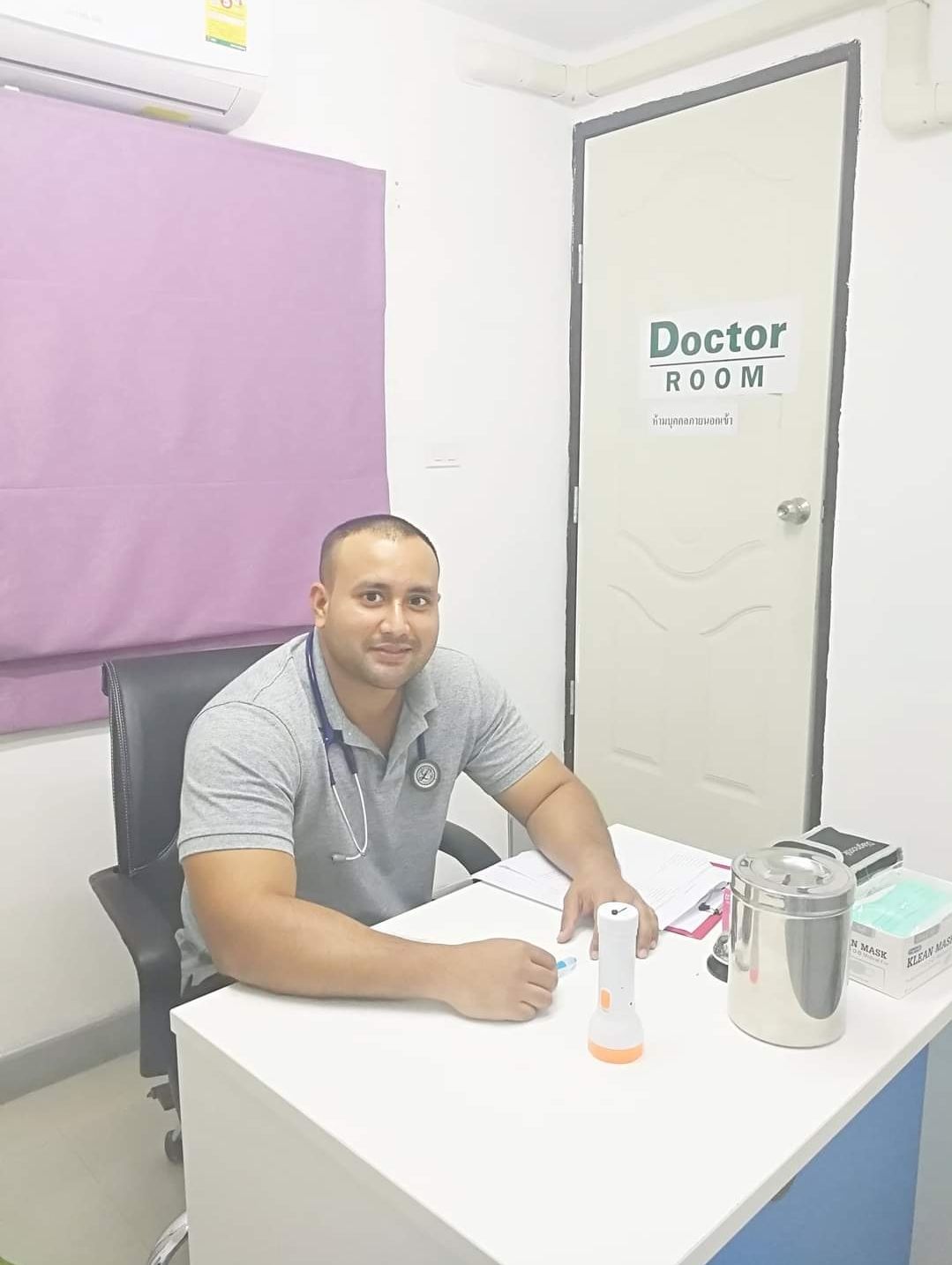
Dr. Ponlawat Pitsuwan is a physician at Doctor Bangkok, a private clinic in central Bangkok. He sees expats, residents, and medical tourists for general medicine, wellness consultations, and IV therapy. His focus is straightforward, evidence-based care delivered in plain language.