Clinically reviewed by Dr. Ponlawat Pitsuwan, Physician, Doctor Bangkok. Last reviewed: July 2026
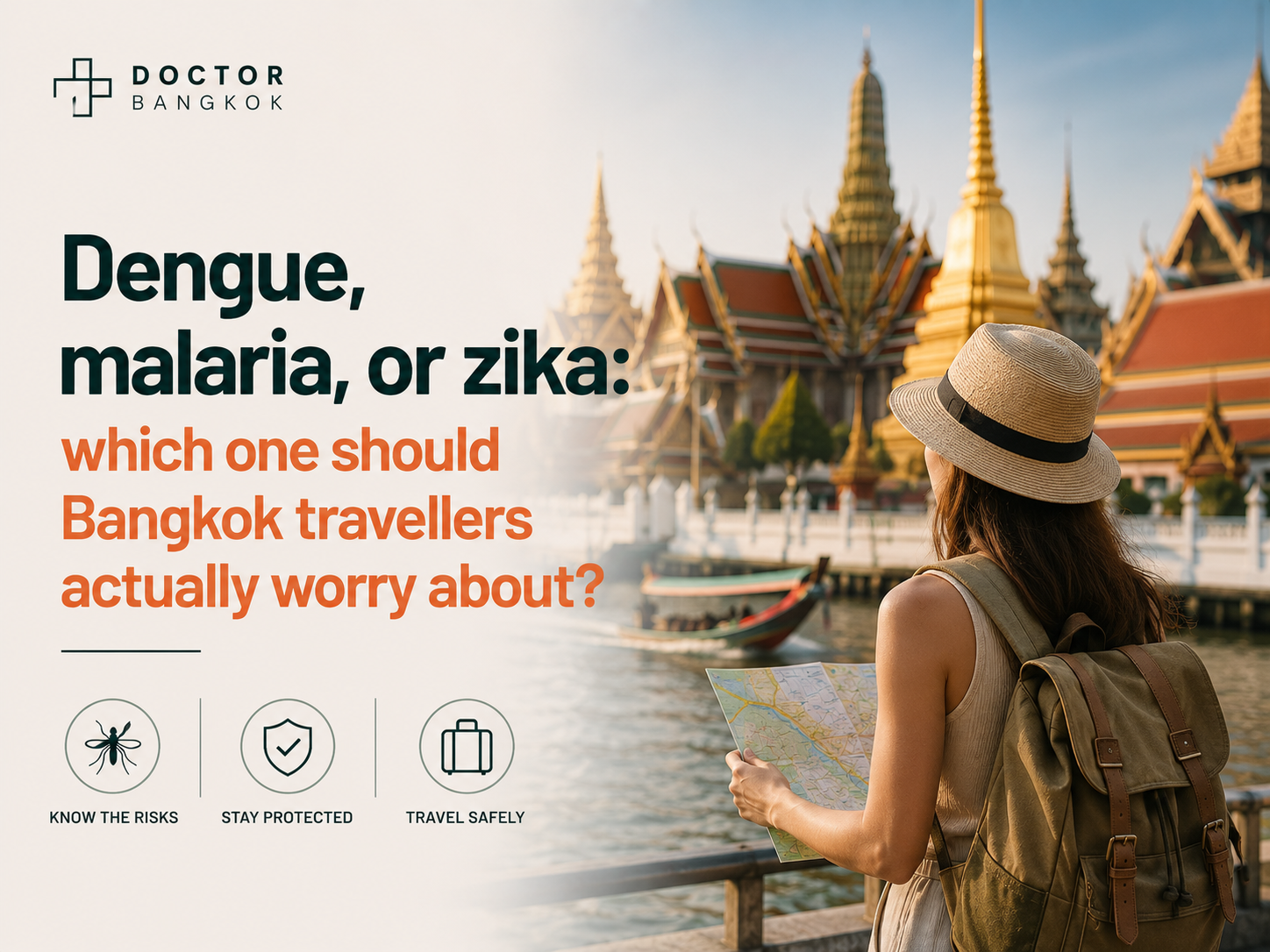
In Bangkok, dengue is the real risk. Malaria does not exist in the city and is only relevant if you are trekking near the Myanmar, Cambodia, or Laos border. Zika is still circulating in Thailand and matters especially if you are pregnant. If you have a high fever in Bangkok, assume dengue until a blood test says otherwise, and do not take ibuprofen before you get tested.
If you are lying in your Sukhumvit apartment with a fever of 39 degrees and aching bones, you are probably searching dengue vs malaria right now. I get this question several times a week, and the anxiety makes sense. You are far from home, the rainy season is peak mosquito season, and every article you find seems written for a tourist passing through. So let me give you the answer a Bangkok-based doctor would give you in person.
Dengue is the one that matters in Bangkok. It is year-round, it is urban, and it can turn serious fast if you ignore the warning signs. Malaria is a different story. It does not exist in Bangkok or most popular Thai destinations. You only need to think about it if you have been somewhere remote near a forested border. Zika sits in the middle. It is real, it is here, and most people underestimate it.

Dengue vs malaria in Thailand: the geographic split that changes everything
Bangkok has no malaria. None. The city is urban, and the Anopheles mosquito that carries malaria cannot survive here. You will not find a single locally acquired malaria case in central Bangkok. The same goes for Chiang Mai city, Phuket town, and Koh Samui. If someone tells you to take malaria pills for a Bangkok stay, they are giving you outdated advice.
Malaria is real in Thailand, but it is confined to specific areas. Forested zones along the Myanmar border in Mae Hong Son, Tak, and Kanchanaburi, and areas near the Cambodia and Laos borders carry genuine risk. If you are trekking overnight in those zones, prophylaxis matters. Drug choice also matters, because resistance to mefloquine is documented in parts of Thailand. Speak to a doctor rather than picking something up at a pharmacy.
Dengue is the opposite. It loves cities. The Aedes aegypti mosquito that carries dengue breeds in still water in urban environments, bites during daylight hours, and is present across Bangkok all year. Risk rises sharply during the rainy season from May to October, but I see dengue cases every single month.
Symptom comparison: dengue vs malaria vs flu vs Zika
This is what patients always ask first. Here is how the four conditions differ in practice.
| Symptom | Dengue | Malaria | Flu | Zika |
|---|---|---|---|---|
| Fever onset | Sudden, high (38.5–40°C) | Gradual or cyclical | Sudden | Usually mild or absent |
| Fever pattern | Persistent then drops | Cyclical spikes and sweats | Persistent | Low-grade or none |
| Muscle and joint pain | Severe, "breakbone" pain | Moderate | Moderate | Moderate joint pain |
| Headache | Severe, behind the eyes | Yes | Yes | Mild |
| Rash | Common, day 3–5 | Rare | Rare | Common |
| Bleeding signs | Possible (nosebleed, gum bleed) | Rare | No | No |
| Vomiting | Common | Common | Mild | Mild |
| Eye involvement | Pain behind the eyes | Uncommon | No | Conjunctivitis (red eyes) |
| Where you caught it | Anywhere in Thailand | Rural border zones only | Anywhere | Anywhere in Thailand |
The nickname "breakbone fever" exists for a reason. The muscle and bone pain in dengue is like nothing most people have felt before. If your whole body aches so badly that moving is painful, combined with sudden high fever and pain behind the eyes, that is dengue until proven otherwise. Flu can feel similar in the first day or two, but dengue escalates faster and the pain is more intense.
Zika is the quiet one. Many people infected feel mildly unwell or nothing at all. The danger is not what Zika does to a healthy adult. It is what it does to a developing baby.

Zika virus in Thailand: who should be most careful?
Zika did not disappear after 2016. Thailand’s Ministry of Public Health reported 433 Zika cases across 46 provinces between January 2024 and February 2025. A 2024 case from Phuket resulted in confirmed congenital Zika syndrome in a newborn. This is not a historical footnote. It is an active, ongoing situation.
The same Aedes aegypti mosquito that carries dengue carries Zika. Same mosquito, same bite, same daylight hours. The symptoms mimic dengue so closely that you cannot tell them apart without a specific test. A standard dengue NS1 test will not detect Zika. If your doctor suspects Zika, you need a separate Zika PCR test. Most expats do not know to ask for this.
If you are pregnant, trying to conceive, or have a partner who is pregnant, Zika deserves your full attention. Congenital Zika syndrome can cause severe brain development problems in unborn babies. There is no vaccine. If you are pregnant and develop any fever, rash, or red eyes in Bangkok, come in that day. Do not wait to see how you feel tomorrow.
Zika can also trigger Guillain-Barré syndrome, a nerve condition that can cause temporary paralysis, in a small number of adults. This is rare, but real.
How to tell the difference between dengue and a bad flu in Bangkok
Honestly, in the first 24 hours, you sometimes cannot. Both start with sudden fever and body aches. But there are clues that push me toward dengue quickly.
Pain behind the eyes is very specific to dengue. So is the severity of joint and muscle pain. If you are lying flat because standing up hurts too much, that points more toward dengue than flu. A rash appearing around day three to five, usually starting on the chest and spreading outward, is another strong sign. Flu does not cause a rash. Zika does, but Zika rashes tend to be itchy, while dengue rashes often are not.
Timing matters when it comes to testing. The NS1 antigen test works best in the first one to nine days of illness. A full blood count checks your platelet level, and falling platelets are a hallmark of dengue. If you have any rural travel history, we add a malaria blood film to the same panel. We run all of this at Doctor Bangkok with same-day results.
Do not take ibuprofen or aspirin if you think you might have dengue. These drugs affect platelet function and can worsen bleeding. Paracetamol only. This is one of the most important practical points I make to every patient who walks in with a fever. Take paracetamol, drink plenty of fluid, and get tested before you take anything else.
One more thing if you have already had dengue once. There are four dengue serotypes, and Thailand circulates all of them. Getting infected once gives you immunity only to that one type. A second infection with a different serotype carries a meaningfully higher risk of severe dengue. Long-term Bangkok residents are not safer after one infection. In some ways the risk is higher.
When do you need to go to hospital right now?
Most dengue cases can be managed with rest, fluids, paracetamol, and close monitoring. But some cases turn severe fast, and the window to act is short.
Go to a doctor today if you have severe abdominal pain that does not ease, persistent vomiting that stops you keeping fluids down, or any bleeding from the nose or gums. Blood in the urine or stool, black tarry stools, cold or clammy skin, or breathing that feels rapid and laboured are also signs that need same-day assessment. These can signal a shift from manageable dengue to a dangerous drop in blood pressure.
A fever above 39 degrees lasting more than two days without a clear cause also warrants same-day review.
The Qdenga dengue vaccine in Bangkok: who should consider it?
Qdenga is a two-dose dengue vaccine available in Bangkok, given three months apart. Phase III trial data shows strong protection against severe dengue across all four serotypes.
It is most relevant for expats and long-term residents staying in Bangkok through multiple rainy seasons, and for anyone who has already had dengue once and wants protection against re-infection. Unlike the older Dengvaxia vaccine, Qdenga does not require prior dengue infection to work.
The vaccine is not a reason to stop using mosquito repellent. But for someone planning to live in Bangkok for two to three years, it is a well-tolerated option worth a conversation. At Doctor Bangkok, we offer Qdenga and can talk through whether it makes sense for your situation.
Fever in Bangkok? Do not guess. Doctor Bangkok offers same-day dengue NS1 and full blood count testing, Zika PCR testing, malaria screening, and the Qdenga dengue vaccine. Our English-speaking doctors are in central Bangkok and BTS accessible. Book at doctorbangkok.co.th.
FAQ
Do I need malaria pills if I am living in or visiting Bangkok?
No. Bangkok is malaria-free and no prophylaxis is needed for the city. Malaria risk in Thailand is limited to forested border zones near Myanmar, Cambodia, and Laos. If you are planning a remote trek in those areas, speak to a doctor about which drug is right, because mefloquine resistance has been documented in parts of Thailand.
Can I take ibuprofen or aspirin for dengue fever?
No, and this matters. Ibuprofen and aspirin impair platelet function and can worsen bleeding in dengue. Paracetamol is the only recommended option for fever. Early dengue feels like flu, so many people self-medicate with ibuprofen before they know what they have. If you have a high fever in Bangkok, see a doctor before taking any anti-inflammatory.
What blood test should I ask for if I think I have dengue?
In the first one to nine days of illness, ask for the NS1 antigen test along with a full blood count to check your platelet level. After day five, dengue IgM and IgG antibody tests become more reliable. If you have any rural travel history, a malaria blood film should be added to the same panel.
Is Zika still a risk in Thailand, and should I worry if I am pregnant?
Yes, Zika is still circulating in Thailand, including Bangkok. If you are pregnant or trying to conceive, it deserves serious attention. Zika symptoms can mimic dengue and require a separate PCR test to diagnose. There is no vaccine, and congenital Zika syndrome can cause severe harm to a developing baby. Any pregnant person with a fever, rash, or red eyes should come in the same day.
I have already had dengue once. Am I immune now?
Only to the specific serotype you were infected with. There are four dengue serotypes and Thailand circulates all of them. A second infection with a different serotype raises your risk of developing severe dengue. Long-term Bangkok expats who have already had dengue should discuss the Qdenga vaccine at their next visit.
How is dengue different from chikungunya?
Both are spread by the same Aedes aegypti mosquito and cause fever with significant joint pain. Chikungunya joint pain tends to be more pronounced and can persist for weeks after the fever clears, while dengue is more likely to cause bleeding signs and platelet drop. A blood test is the only reliable way to tell them apart, and both need clinical assessment rather than home management.
Dr. Ponlawat Pitsuwan
Physician, Doctor Bangkok
a private medical clinic in central Bangkok. He sees expats, residents, and medical tourists for fever assessment, dengue and tropical disease testing, travel medicine, and general consultations. His focus is straightforward, evidence-based care delivered in plain language.
Part of our guide to travel health in Bangkok.

Dr. Ponlawat Pitsuwan is a physician at Doctor Bangkok, a private clinic in central Bangkok. He sees expats, residents, and medical tourists for general medicine, wellness consultations, and IV therapy. His focus is straightforward, evidence-based care delivered in plain language.