


Clinically reviewed by Dr. Ponlawat Pitsuwan, Physician, Doctor Bangkok. Last reviewed: June 2026
Skin allergies in Bangkok are triggered by dust mites, sunlight, latex, mosquito bites, and pet dander. Bangkok’s heat and humidity make allergic reactions more common and more severe than in most home countries. If your rash is spreading fast, your throat feels tight, or you have swelling beyond the bite site, see a doctor the same day. For everything else, a straightforward allergy assessment can identify your trigger and get you started on treatment.
A lot of my patients say the same thing: "I never had skin problems at home, but since moving to Bangkok, my skin has been a disaster." That is not in your head. Bangkok’s climate, its insects, and even its air conditioning create conditions that trigger skin reactions in ways that temperate countries simply do not. If you are Googling your rash at midnight in a Bangkok apartment, this is what I want you to know.
A skin allergy happens when your immune system overreacts to something that is usually harmless. The result can be a rash, hives, swelling, or itching. The tricky part is figuring out what is causing it, because in Bangkok there are more suspects than most people realise.

Dust mite allergy: symptoms, triggers, and how to reduce exposure at home
If you wake up with itchy skin, a runny nose, or red eyes, dust mites are often the first thing I look at. Bangkok’s humidity sits between 60 and 80 percent year-round, which is exactly the environment dust mites thrive in. The skin reaction can look like eczema: dry, red, itchy patches on the arms, neck, and the backs of the knees. It tends to be worse in the morning and in rooms where air conditioning recirculates allergens.
The steps that actually help are washing your bedding weekly in hot water, using allergen-proof mattress covers, and keeping bedroom humidity below 55 percent with a dehumidifier. These are not cures, but they reduce the allergen load enough that many patients notice real improvement.
For treatment, antihistamines help with day-to-day symptoms. If those are not enough, a topical corticosteroid, a cream that reduces skin inflammation, can bring flares under control. For patients with persistent symptoms, allergen immunotherapy is worth discussing. This involves taking drops or tablets daily under your tongue to gradually reduce your immune system’s response. It takes months, but the evidence behind it for dust mite allergy is strong.
Sun allergy: why some people react to sunlight and how to manage it
I see this more than people expect, especially in patients who moved from northern Europe or North America. Polymorphic light eruption, or PLE, is the most common type. It causes an itchy, bumpy rash on sun-exposed skin, usually the forearms, chest, and the V of the neck. It typically appears within hours of sun exposure and fades over a few days if you stay out of it.
Bangkok’s UV index regularly hits 11 to 12 during peak hours. If your skin has never dealt with that level of UV before, a reaction like PLE is not unusual.
There is also a separate condition called photoallergic contact dermatitis. This happens when something on your skin, often a sunscreen ingredient, a fragrance, or a medication like doxycycline, reacts with UV light and causes a rash. If you are taking doxycycline for malaria prevention and developing a rash on sun-exposed skin, that is the first thing I would investigate.
Management depends on which type you have. Broad-spectrum SPF 50 sunscreen, protective clothing, and avoiding peak sun between 10am and 3pm are the basics. Antihistamines help with itching. If a medication is the cause, stopping it under medical supervision usually resolves the reaction.

Latex allergy: causes, symptoms, and what to avoid in Bangkok hospitals
Natural rubber latex gloves are still in use in many Bangkok clinics and hospitals. If you have a latex allergy, this matters before any procedure, blood draw, or dental appointment.
Latex allergy causes symptoms ranging from a contact rash where latex touched your skin, to hives, to in severe cases anaphylaxis, a serious whole-body reaction that affects breathing and blood pressure. If you experience throat tightness, wheezing, or dizziness after latex contact, that is a medical emergency.
Tell every healthcare provider before any examination or procedure. Use the words "latex allergy" clearly and ask specifically for latex-free gloves. Do not assume they will check your chart. One thing many patients do not realise: if you have a latex allergy, you may also react to certain tropical fruits, including banana, avocado, kiwi, and mango. These are everywhere in Bangkok, so it is worth knowing.
Confirming a latex allergy is done with a patch test. Small amounts of potential allergens are applied to your skin for 48 hours to check for a delayed reaction. Getting it formally documented is useful when presenting at any Bangkok hospital or clinic.
Eye allergies: redness, itching, and eyelid swelling explained
Red, itchy, watery eyes that feel worse during Bangkok’s dry season are usually allergic conjunctivitis, inflammation of the eye lining triggered by an allergen. Dust mites, pet dander, and Bangkok’s PM2.5 air pollution are the main culprits I see here. If you wear contact lenses and are noticing more irritation than usual, the lenses may be trapping allergens against your eye all day.
A separate condition called eyelid contact dermatitis causes itching, redness, and flaking specifically on the eyelids. It is often triggered by cosmetics, eye drops, or even nickel in glasses frames. It looks different from conjunctivitis and is managed differently too.
Antihistamine eye drops work quickly for allergic conjunctivitis. For eyelid dermatitis, identifying and removing the trigger comes first. A mild topical corticosteroid on the eyelids may be needed, but this should be done under medical supervision because eyelid skin is delicate.
Mosquito bite allergy: when a bite causes a serious reaction
Most mosquito bites cause a small, itchy bump that fades in a day or two. But some people, particularly those new to Bangkok who have never been exposed to local mosquito species, develop what is called skeeter syndrome.
Skeeter syndrome is an allergic reaction to proteins in mosquito saliva. The bite site swells significantly, sometimes wider than 5cm, becomes red and firm, and can take up to ten days to settle. It looks a lot like cellulitis, a skin infection, and I see patients who have been given antibiotics for it when what they actually needed was an antihistamine and a topical steroid.
At the more serious end, rarely, a mosquito bite can trigger anaphylaxis: hives spreading beyond the bite, throat tightness, difficulty breathing, dizziness. This is a same-day emergency. If you have had a severe systemic reaction to an insect bite before, discuss carrying an adrenaline auto-injector with your doctor. In Bangkok, these can be prescribed at private clinics.
Cat and pet allergies: symptoms and management options
Cat allergy is one of the most persistent conditions I manage in expat patients. The main trigger is a protein that stays airborne for hours and sticks to clothing and furniture, so you can react to a cat that is not even in the room anymore. If you have recently moved into a Bangkok apartment that previously housed a cat, those allergens can linger for months even after a thorough clean.
Symptoms include itchy skin, hives, sneezing, and red eyes. In some patients, existing eczema gets noticeably worse. Antihistamines manage day-to-day symptoms. Allergen immunotherapy, as injections or sublingual tablets, has stronger evidence for long-term benefit if avoiding the animal is not realistic. HEPA air filters and keeping the cat out of the bedroom make a measurable difference in the meantime.
Not sure what is triggering your skin reactions? At Doctor Bangkok, we see expats and medical tourists for skin allergy evaluations, including skin prick testing and patch testing for contact allergies. We can identify your trigger and put together a treatment plan that fits your life in Bangkok. We are centrally located and BTS accessible. Book your allergy assessment at doctorbangkok.co.th/allergy-treatment.
FAQ
Why are my allergies so much worse since moving to Bangkok?
Bangkok’s year-round humidity creates near-perfect conditions for dust mites, and local mosquito species are allergens your immune system has never encountered before. Many expats also face higher UV levels, different pollens, and recirculated air conditioning, all of which can trigger or worsen skin reactions. Allergy testing at a clinic identifies what you are actually reacting to rather than leaving you guessing.
How do I know if my mosquito bite reaction needs a doctor?
A normal bite is small, itchy, and gone in a couple of days. If the swelling is larger than about 5cm, hard, warm, and lasting more than three days, that is worth seeing a doctor about. If you develop hives beyond the bite site, throat tightness, or dizziness, go straight to a clinic or emergency room the same day.
I am allergic to latex. Is it safe to have a procedure at a Bangkok clinic?
Tell every provider before anything touches you, including blood draws and routine examinations. Ask specifically for latex-free gloves and do not assume it is already in your notes. Also be aware that banana, avocado, kiwi, and mango can cross-react with latex allergy, which matters given how common those fruits are in Bangkok.
What allergy tests are available in Bangkok and what should I expect?
The main options are a skin prick test, where small amounts of common allergens are placed on your forearm and results come back in about 20 minutes, and a patch test, where allergens sit on your back for 48 hours to identify delayed contact reactions. A blood test is an alternative when skin testing is not suitable. Doctor Bangkok offers skin allergy assessment and can guide you to the right test for your situation.
Can sun allergy develop for the first time in Bangkok even if I never had it before?
Yes, and I see this regularly. Polymorphic light eruption can develop in adults who move from temperate climates to a high-UV environment like Bangkok, where the UV index frequently reaches 11 or 12. If you are also taking doxycycline for malaria prevention or using certain sunscreens, a drug-triggered photosensitivity reaction is possible and managed differently, so it is worth getting checked.
When should I go straight to emergency rather than a regular clinic appointment?
Go immediately if you have throat tightness, difficulty breathing, swelling of the tongue or lips, or you feel faint after any allergic exposure. These are signs of anaphylaxis, which needs adrenaline and emergency care, not antihistamines and a wait. For everything else, a same-day or next-day appointment at a private clinic is appropriate.
Dr. Ponlawat Pitsuwan
Physician, Doctor Bangkok
a private medical clinic in central Bangkok. He sees expats, residents, and medical tourists for skin allergy assessment, general medical consultations, and travel medicine. His focus is straightforward, evidence-based care delivered in plain language.
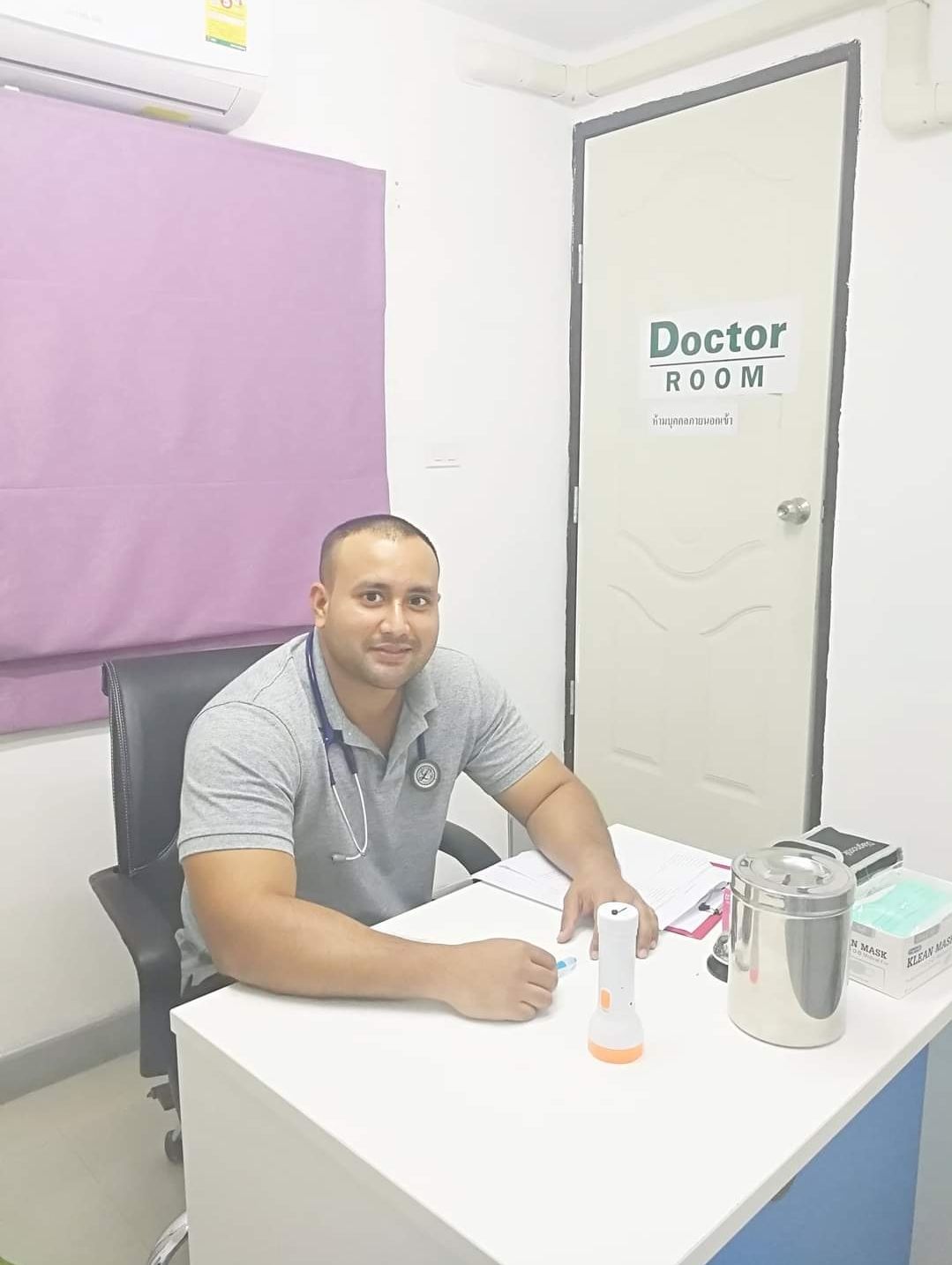
Dr. Ponlawat Pitsuwan is a physician at Doctor Bangkok, a private clinic in central Bangkok. He sees expats, residents, and medical tourists for general medicine, wellness consultations, and IV therapy. His focus is straightforward, evidence-based care delivered in plain language.