
Clinically reviewed by Dr. Ponlawat Pitsuwan, Physician, Doctor Bangkok. Last reviewed: September 2026
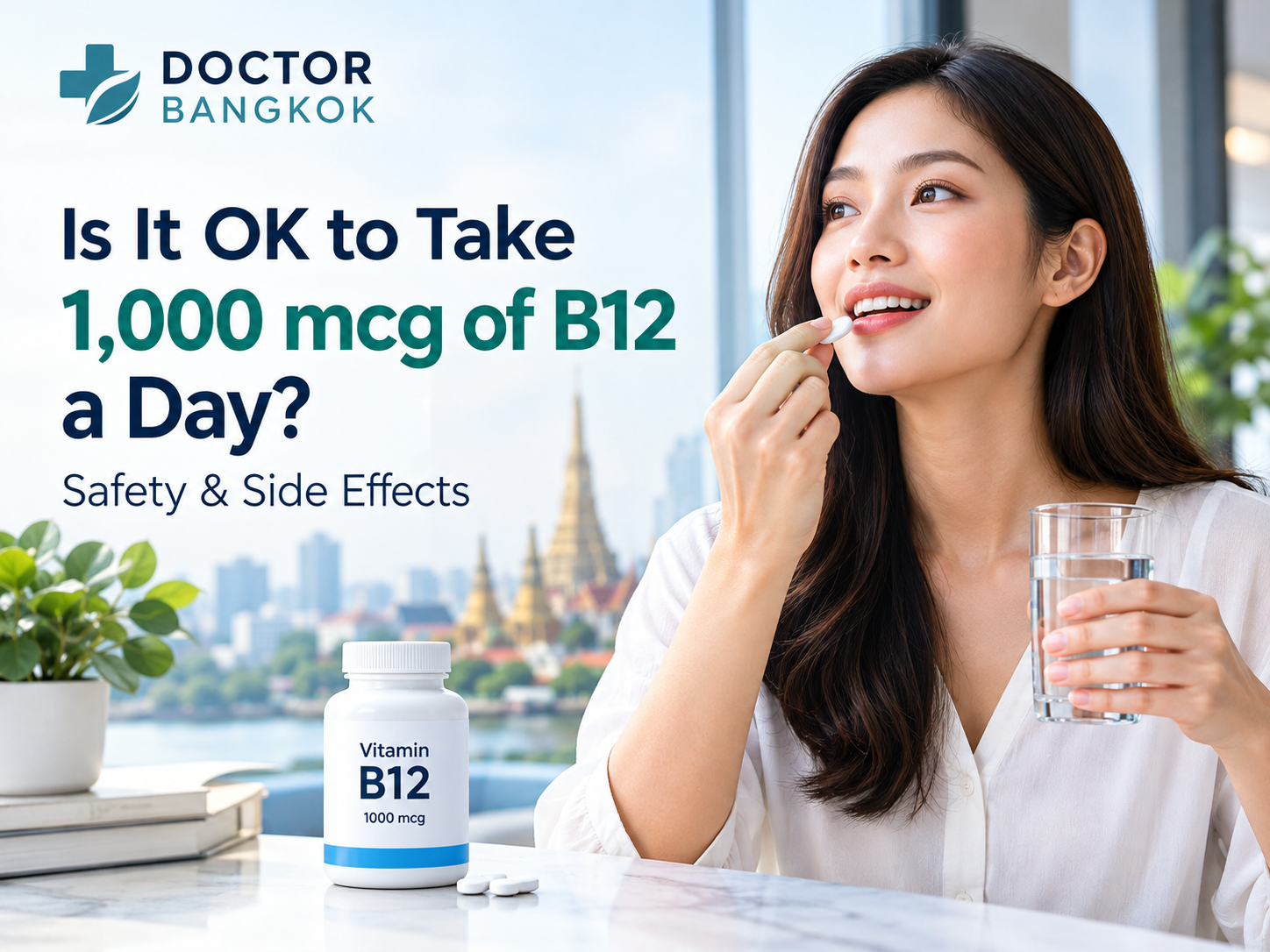
Yes, 1,000 mcg of B12 a day is safe for most people. B12 is water-soluble, so your body passes what it does not use. There is no established upper daily limit. The real question is not whether it is safe — it is whether you actually need it, and whether your gut can absorb it at all.
I get asked about B12 supplements several times a week. Usually it is an expat who is tired, a bit foggy, and already taking a bottle they picked up from a pharmacy near their condo. The fatigue is real. The concern is fair. But most people buying 1,000 mcg off the shelf have never tested their levels and have no idea if the dose is doing anything.
Here is what matters. Taking 1,000 mcg of B12 daily is not dangerous. But if your gut cannot absorb it properly, the number on the label barely matters. And in Bangkok, there are several common, easy-to-miss reasons why absorption fails even in people who eat well.

Why a 1,000 mcg Dose Exists When the Daily Requirement Is Just 2.4 mcg
The gap between 2.4 mcg and 1,000 mcg looks alarming. It is not. Your stomach uses a protein to pull B12 from food, but this system maxes out at roughly 1.5 to 2 mcg per dose. Once it is full, absorption through this route stops. A second, backup route picks up about 1 percent of whatever is left through the gut lining directly.
So with a 1,000 mcg tablet, you absorb a small controlled amount through the main route, plus roughly 10 mcg through the backup. That adds up to a meaningful therapeutic dose. The rest leaves in your urine. The large dose compensates for the inefficiency of the system, not because more is better.
Is 1,000 mcg of B12 a Day Safe?
Yes. No upper intake limit for B12 has been established by health authorities, including the NIH, because no consistent harm from oral B12 has been shown at any dose. Excess is cleared through urine. It does not build up in tissues the way fat-soluble vitamins do.
Safe is not the same as necessary, though. If your B12 stores are already normal, taking 1,000 mcg daily is largely redundant. You will pass most of it out. And if you have a genuine absorption problem, even 1,000 mcg orally may not be enough to correct a true deficiency.

Who Actually Needs 1,000 mcg of B12 a Day
This is where Bangkok gets specific. I see patients regularly who are fatigued, functioning on the surface, and unaware that their medications are quietly draining their B12.
Proton pump inhibitors, the reflux and heartburn tablets, are one of the biggest culprits. Bangkok’s food is spicy and rich, eaten at irregular hours, and PPI use is extremely common among long-term expats. These tablets reduce stomach acid, which you need to release B12 from food. Years of use can silently run stores down. Metformin is another. It is widely prescribed for type 2 diabetes and pre-diabetes, and it actively reduces B12 absorption. If you are on metformin and have never had your B12 checked, that is a gap worth closing.
Vegetarians and vegans are at clear risk, but most know it. The patients who catch me off guard are the meat-eaters with an undiagnosed absorption problem, or who have been on PPIs for years without anyone checking. Adults over 50 are also at higher risk because the stomach protein that pulls in B12 naturally declines with age.
Signs You May Be Low in B12 Even If You Eat Meat
Fatigue is the most common thing I hear. In Bangkok, most expats blame the heat, the hours, the commute. Sometimes that is right. Sometimes it is B12.
Watch for tiredness that does not improve with rest, tingling or numbness in the hands or feet, difficulty concentrating, or a sore and inflamed tongue. In more advanced cases, B12 deficiency causes red blood cells to grow abnormally large, which means they carry oxygen poorly. Neurological symptoms from B12 deficiency can become permanent if left long enough, and that is the one part I do not want patients to dismiss.
Most people do not realise this: your standard blood B12 level can look borderline normal while you are functionally deficient. Two more sensitive markers, methylmalonic acid and homocysteine, rise early in deficiency before your serum level drops far enough to flag. A basic B12 blood test can miss this window.
Are There Any Risks to Taking 1,000 mcg Long Term
For most people, long-term oral B12 at 1,000 mcg is not a concern. There is no meaningful toxicity and no kidney risk in healthy adults. Excess is cleared through urine.
Two things are worth knowing. First, a small number of case reports link one specific form of B12, cyanocobalamin, to acne-like skin reactions. It is not common, but it is real. If you develop skin changes after starting B12, switching to methylcobalamin is worth trying. Second, persistently high B12 in someone who is not supplementing can sometimes point to liver disease or a blood condition. This is not caused by supplements. It is a reason to always go through your results with a doctor rather than reading them alone.
Methylcobalamin vs Cyanocobalamin — Does the Form Matter
Yes, though not dramatically for most people. Cyanocobalamin is the synthetic form in most standard supplements. It is stable, well-studied, and works. Methylcobalamin is already in an active form and is the better choice for nerve-related symptoms or for people with certain metabolic variants. Hydroxocobalamin is the form most often used in injections.
For everyday supplementation, methylcobalamin is a reasonable first choice. If you are buying on price, cyanocobalamin works. What matters more than the form is whether you are absorbing it at all.
Oral Supplements vs B12 Injections in Bangkok
For most people with mild to moderate deficiency, high-dose oral B12 works well when taken consistently. Sublingual B12, which dissolves under the tongue, bypasses some gut absorption steps and may work slightly faster for some patients.
Injections are different. They skip the gut entirely, which makes them the right call when absorption is severely compromised or when oral doses have been tried and levels have not improved. At Doctor Bangkok, B12 injections are available as part of our vitamin therapy and IV drip services. Some patients combine them with a broader nutritional IV, others come in specifically for an intramuscular B12 shot.
If you are unsure which route is right, a blood test should come first. Treating without testing means you could be supplementing unnecessarily, or under-correcting a deficiency that needs a stronger approach.
Getting Your B12 Levels Tested in Bangkok
A serum B12 test is the standard starting point. For a fuller picture, especially if your level comes back borderline, adding folate, a full blood count, and methylmalonic acid gives you much more useful information.
At Doctor Bangkok, we run B12 testing as part of a same-day health check or a broader nutritional screen. Results come back quickly, and you leave knowing your actual level rather than guessing. If deficiency is confirmed, we talk through whether oral supplements are enough or whether you need injection therapy. That conversation takes about ten minutes and changes the whole management plan.
If you are a long-term Bangkok resident, on PPIs or metformin, vegetarian, over 50, or just chronically tired without a clear reason, getting tested once is a better move than supplementing blindly for another year.
Wondering if your B12 is actually low? Doctor Bangkok offers B12 blood testing and nutritional health checks at our central Bangkok clinic, a short walk from the BTS. If your results show deficiency, we discuss oral supplementation or B12 injection therapy in the same visit. Walk-ins welcome, or book ahead at doctorbangkok.co.th.
FAQ
Dr. Ponlawat Pitsuwan
Physician, Doctor Bangkok
a private medical clinic in central Bangkok. He sees expats, residents, and medical tourists for nutritional deficiency assessment, health checks, vitamin therapy, and general medical consultations. His approach is straightforward and evidence-based, explained in plain language.
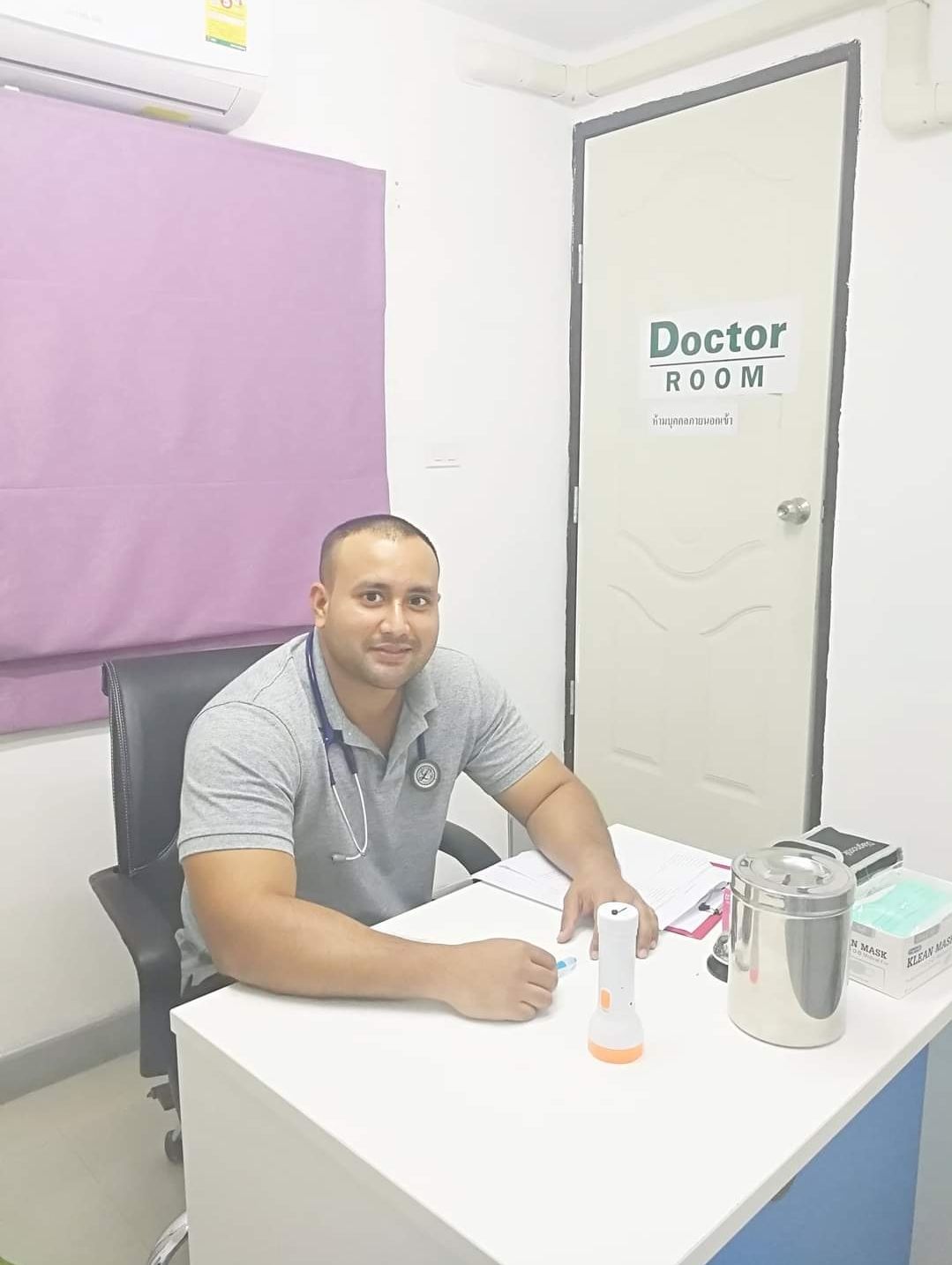
Dr. Ponlawat Pitsuwan is a physician at Doctor Bangkok, a private clinic in central Bangkok. He sees expats, residents, and medical tourists for general medicine, wellness consultations, and IV therapy. His focus is straightforward, evidence-based care delivered in plain language.