

Clinically reviewed by Dr. Ponlawat Pitsuwan, Physician, Doctor Bangkok. Last reviewed: July 2026
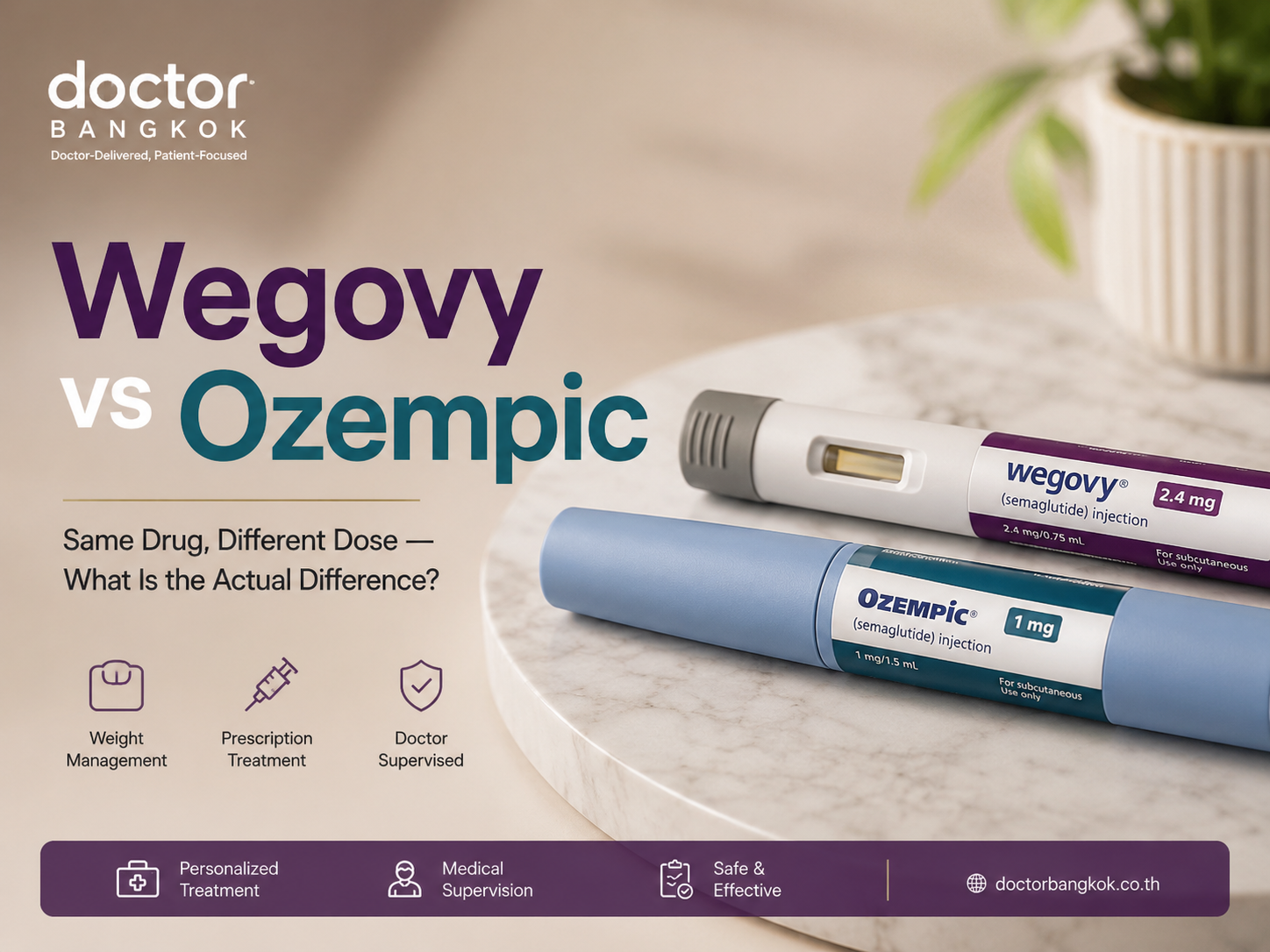
Wegovy and Ozempic both contain semaglutide, but they are not the same medication. Ozempic is approved for type 2 diabetes and goes up to 2.0mg weekly. Wegovy is approved for weight loss and reaches a higher maximum dose of 2.4mg weekly. The right one depends on why you need it, your medical history, and what your doctor recommends after a proper assessment.
If you have been researching weight loss injections in Bangkok, you have probably seen both names and wondered why there are two. The honest answer is that Wegovy and Ozempic come from the same company, contain the same active ingredient, and work the same way. But they are approved for different conditions, dosed differently, and that difference matters more than most people realise.
I see patients every week who come in asking for "Ozempic for weight loss" when what they actually need is a proper assessment first. Whether you have type 2 diabetes, whether you are trying to lose weight, and what your baseline health looks like all change the answer. This article walks you through what is actually different between these two medications, what to expect from treatment, and how to access either one safely in Bangkok.

Same Drug, Two Different Jobs
Semaglutide is the active ingredient in both. It helps your brain recognise that you are full, slows how quickly food moves through your stomach, and supports blood sugar control after meals.
Novo Nordisk developed Ozempic first, for blood sugar control in type 2 diabetes. It works well for that. But patients using it also lost significant weight, and clinical trials at higher doses showed results strong enough to justify a separate approval. That approval became Wegovy.
Same molecule, two brand names, different approved uses, different doses.
Wegovy vs Ozempic — Side-by-Side Comparison
| Feature | Ozempic | Wegovy |
|---|---|---|
| Active ingredient | Semaglutide | Semaglutide |
| Approved use | Type 2 diabetes | Chronic weight management |
| Maximum weekly dose | 2.0mg | 2.4mg |
| Starting dose | 0.25mg weekly | 0.25mg weekly |
| Approved age | 18 and older | 12 and older |
| Cardiovascular indication | Yes (ASCVD risk reduction) | Yes (high cardiovascular risk) |
| Administration | Weekly subcutaneous injection | Weekly subcutaneous injection |
| Manufacturer | Novo Nordisk | Novo Nordisk |

How the Doses Actually Work
The titration schedule, the step-up plan to reach your full dose, is where Wegovy and Ozempic start to look different.
With Ozempic for diabetes, most patients go from 0.25mg to 0.5mg after four weeks, then up to 1.0mg if needed. Some go to 2.0mg. The dose stops where blood sugar is managed.
Wegovy follows a longer step-up: 0.25mg, then 0.5mg, then 1.0mg, then 1.7mg, and finally 2.4mg as the target maintenance dose. Each step takes four weeks, so the full titration takes around sixteen to twenty weeks. This slower approach is deliberate. It gives your body time to adjust and reduces how bad the nausea gets.
The higher top dose in Wegovy is why the STEP 1 trial, published in the New England Journal of Medicine, showed roughly 15% average body weight loss over 68 weeks. That figure comes from the full 2.4mg dose combined with lifestyle support. Results without that combination are lower.
Side Effects and Safety — What to Know Before You Start
The most common side effects are nausea, vomiting, diarrhoea, and constipation. These are more likely as the dose goes up, which is exactly why the slow titration matters.
In my experience, the patients who struggle most are those who try to rush the process. Jumping doses to get faster results is the quickest way to feel genuinely awful for a week.
There are serious contraindications to know about. Neither drug should be used if you have a personal or family history of medullary thyroid carcinoma or a condition called MEN2. Anyone with a history of pancreatitis needs a careful conversation before starting. Gallbladder disease is also a documented risk with semaglutide. These are not reasons to avoid treatment for most people, but they are reasons to get a proper assessment first.
Which One Is Right for You?
This is the question I get asked most often. Here is how I think through it with patients.
If you have type 2 diabetes and your main goal is blood sugar control, Ozempic is the approved choice. If weight loss follows, that is a welcome outcome. If you do not have diabetes and your goal is weight loss, Wegovy is the approved option at the doses studied for that purpose.
What about using Ozempic off-label for weight loss? This is common, and doctors prescribe it this way regularly. The honest reason is often availability. In Bangkok, supply of both drugs varies by clinic and by month. What matters is that you are on a dose that is clinically right for your goal, not just whatever happens to be in stock.
If your BMI is below 27 with no weight-related health conditions, neither drug is indicated. Above that threshold, with conditions like high blood pressure, pre-diabetes, or high cholesterol, the case for treatment gets much stronger.
Wegovy vs Ozempic vs Mounjaro — Is Tirzepatide Worth Considering?
Some patients come in having already read about Mounjaro (tirzepatide). It works on two receptors rather than one and clinical trial data shows average weight loss above 20% at the highest doses, which is meaningfully better than semaglutide.
That said, it is newer, costs more, and has a shorter track record in real-world use. Semaglutide has been studied for longer and the safety data is more established. For most patients starting their first injectable weight loss treatment, semaglutide remains the standard first step.
Availability in Bangkok is also a factor. Mounjaro supply is less consistent than semaglutide at most clinics right now.
What Happens If You Stop?
Most patients who stop semaglutide regain a significant portion of the weight they lost, often within a year. This is not a sign the drug failed. It reflects how obesity works as a condition that often needs ongoing management.
I tell patients this before they start, not after. If you are planning to use this for six months and then stop, the expected outcome is weight regain. The more useful way to think about it is as part of a longer-term plan that includes real changes to eating and activity. The medication gives you a window to build those habits. What you do with that window matters.
Some patients successfully taper to a lower maintenance dose after reaching their target weight. That is a conversation to have with your doctor based on how your body responds.
Getting Semaglutide Safely in Bangkok — Price, Availability, and Counterfeits
Bangkok has a real counterfeit injectable problem. The Thai FDA has conducted raids seizing large quantities of fake weight loss injections. Counterfeit products can look convincing. The packaging may appear genuine, but the contents can range from inactive filler to genuinely dangerous compounds.
The only safe way to access semaglutide in Bangkok is through a licensed clinic. That means a doctor assesses you first, the product comes from a verified supply chain with proper cold-chain storage, and you can check the batch numbers and original Novo Nordisk packaging. Do not buy from social media, Line groups, or unverified online pharmacies.
On price: authentic semaglutide in Bangkok typically costs between ฿8,000 and ฿20,500 per month depending on the drug, dose, and clinic. That is substantially less than US list prices, which run around USD 1,300 to USD 1,600 monthly. For expats without Thai insurance coverage for this medication, the cost difference is real. But it is only a saving if the product is genuine.
At Doctor Bangkok, every patient who starts a weight management programme gets a full medical assessment before any prescription is issued. We do not dispense without one.
Why See a Doctor Instead of Going Straight to a Pharmacy?
In Thailand, semaglutide is legally a prescription-only medication. A doctor must evaluate you before you receive it. Some pharmacies do not enforce this. That is their risk to take, and it becomes yours if something goes wrong without a proper baseline assessment.
The assessment matters for your safety. Blood pressure, liver function, thyroid history, cardiovascular risk, current medications, all of these affect whether semaglutide is right for you and at what dose. Starting without that information is genuinely risky.
Ongoing monitoring matters too. If you are losing weight quickly, other medications may need adjusting. If nausea does not settle, the dose escalation may need to slow. None of that happens if you are managing without clinical oversight.
Thinking about semaglutide in Bangkok? Doctor Bangkok offers medical consultations for weight management, with a proper assessment before any prescription is issued. We carry authentic, cold-chain-stored product and provide ongoing monitoring throughout treatment. BTS accessible, English-speaking physicians. Book a consultation at doctorbangkok.co.th.
FAQ
Is Wegovy or Ozempic available in Bangkok without a prescription?
Both are legally prescription-only medicines in Thailand. You may find pharmacies that sell without one, but that route carries real risk, including counterfeit products and no safety check before you start. Getting either drug through a licensed clinic with a proper consultation is the only safe approach.
How much do Wegovy and Ozempic cost in Bangkok?
Authentic semaglutide in Bangkok typically costs between ฿8,000 and ฿20,500 per month depending on the drug and dose, which is significantly less than US list prices. Consultation fees and any baseline blood tests add to the upfront cost. Contact Doctor Bangkok for current pricing before your consultation.
Can I use Ozempic for weight loss if I do not have type 2 diabetes?
Yes, doctors prescribe Ozempic off-label for weight loss regularly. Wegovy is the version with formal approval for that use and reaches a slightly higher maximum dose. Whether Ozempic or Wegovy is more appropriate for you depends on your medical history, which is why a clinical assessment comes first.
What is the difference in dosage between Wegovy and Ozempic?
Both start at 0.25mg weekly, but Wegovy titrates up to 2.4mg while Ozempic caps at 2.0mg for most patients. The higher Wegovy dose is linked to greater average weight loss in clinical trials, but it also means a longer titration schedule and a higher chance of stomach-related side effects during dose increases.
How do I know the semaglutide I get in Bangkok is genuine?
Genuine product comes from a licensed clinic with verifiable cold-chain storage, original Novo Nordisk packaging, and traceable batch numbers. If you are buying from social media, online groups, or an unverified pharmacy, none of that can be confirmed. Counterfeit injectables have been seized in Bangkok in large quantities, so this is not a theoretical risk.
What happens when I stop taking semaglutide?
Most people regain a meaningful portion of the weight they lost, often within twelve months of stopping. This is why long-term planning matters before you start. Talk to your doctor about a maintenance strategy rather than treating it as a short course with a fixed end date.
Is Mounjaro better than Wegovy or Ozempic for weight loss?
Clinical trial data suggests tirzepatide (Mounjaro) produces greater average weight loss than semaglutide, but it is newer, costs more, and has a shorter real-world track record. For most patients starting injectable weight loss treatment for the first time, semaglutide is still the standard first choice.
Dr. Ponlawat Pitsuwan
Physician, Doctor Bangkok
a private medical clinic in central Bangkok. He sees expats, residents, and medical tourists for weight management, general health assessments, and chronic disease monitoring. His focus is straightforward, evidence-based care delivered in plain language.

Dr. Ponlawat Pitsuwan is a physician at Doctor Bangkok, a private clinic in central Bangkok. He sees expats, residents, and medical tourists for general medicine, wellness consultations, and IV therapy. His focus is straightforward, evidence-based care delivered in plain language.