
Clinically reviewed by Dr. Ponlawat Pitsuwan, Physician, Doctor Bangkok.
Last reviewed: July 2026
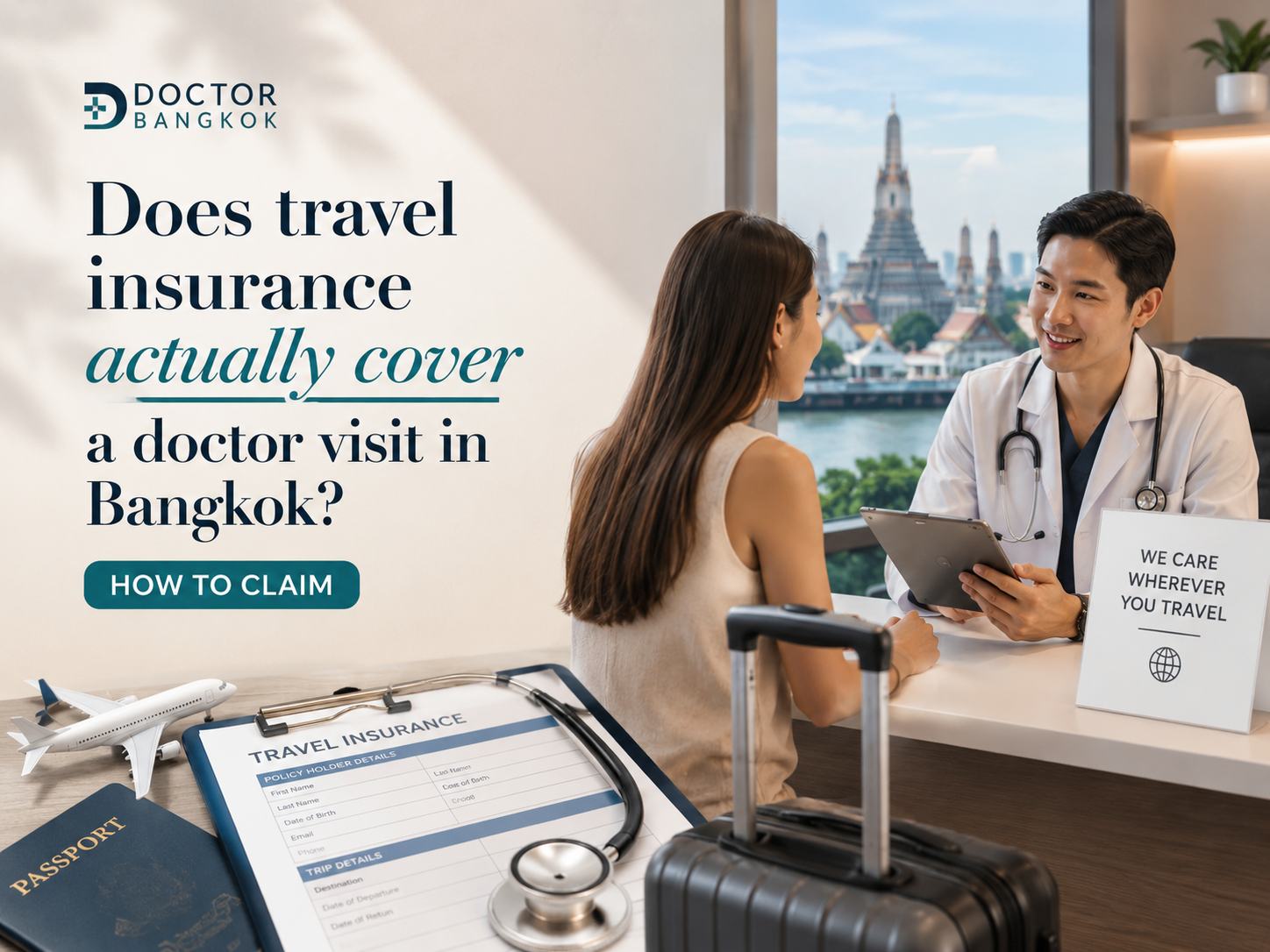
Most travel insurance policies cover emergency medical treatment in Bangkok, including clinic visits, hospital stays, and some outpatient care. What trips people up is the exclusions: motorbike accidents, pre-existing conditions, and not getting pre-authorisation before treatment. Keep your receipts, get your diagnosis in writing, and check your policy before you need it.
If you are sitting in a Bangkok hotel room with a fever, a bad stomach, or a leg that does not look right after a fall, the last thing you want to do is read your insurance policy from page one. Most people in that situation have no idea whether their cover works here, how to use it at a clinic, or what happens if they just pay and try to claim later.
The short answer is yes, most travel insurance policies cover genuine medical emergencies in Bangkok. But the detail matters. There are real gaps in most policies that catch people out, the claim process is more document-heavy than people expect, and the experience at a Bangkok clinic is different from what many visitors are used to back home. Here is what you actually need to know.

Is travel insurance worth getting for Bangkok and Thailand?
Yes, without question. Bangkok has excellent private hospitals and clinics, but they are not cheap, and they are not free at the point of care. Walk into a top-tier private hospital here without insurance and a two-night stay for something like dengue fever can cost more than many people earn in a month. Bangkok’s public hospitals are far more affordable, but for most visitors the language barrier and wait times make private care the realistic option.
Something many people do not realise is that some Bangkok private hospitals require an upfront deposit before they will admit you, even for an emergency. Insurance that covers this, or has a direct billing arrangement with the hospital, removes a very stressful problem at a very stressful moment.
Dengue fever is a real risk in Bangkok, particularly during the rainy season from roughly May to October. Most standard travel medical policies cover dengue because it is an illness you catch on the trip, not a pre-existing condition. Food poisoning and gastroenteritis work the same way. These are the two most common reasons visitors end up at our clinic, and both are typically covered.
Two exclusions catch people in Bangkok more than anywhere else. The first is motorbike accidents. Many policies exclude any incident where you were riding or riding pillion on a motorbike without the correct licence. Thailand requires a specific licence class for motorbikes, and many visitors who rent a scooter do not have one. The second is adventure sports without an add-on rider. Rock climbing, zip-lining, and similar activities are excluded by default on most budget policies.
One more thing for expats on a retirement or long-stay visa: Thailand’s O-A visa requires a minimum level of health insurance as a condition of the visa itself. Travel insurance almost certainly does not meet that standard. You need a dedicated health insurance policy for that.
What is a medical evacuation and when does your insurance cover it in Thailand?
Medical evacuation sounds dramatic, and in Bangkok it almost never happens. Evacuation cover exists for situations where your treating doctor certifies that you cannot receive adequate care locally. Bangkok has world-class private hospitals with specialist teams and advanced imaging. It would take an extraordinary clinical situation for an insurer to approve an evacuation out of Bangkok.
Where evacuation becomes more relevant is if you get seriously ill or injured outside Bangkok, on a southern island, in a northern province, or somewhere rural. In those cases, the first evacuation is usually to Bangkok, not out of Thailand. Most people do not think about that two-stage reality when they buy a policy.
Insurers must pre-approve evacuations. They will review your case and decide. In genuine emergencies this can happen quickly, but it is not automatic.
The practical takeaway: in Bangkok, evacuation is rarely the issue. What matters more is whether your policy covers the private clinic or hospital where you receive care, and whether you need pre-authorisation before turning up.
Travel insurance vs expat health insurance: which one do you actually need?
If you are visiting Bangkok for a few weeks, travel insurance is fine. If you have been here six months and you are calling Bangkok home, you have probably already outgrown what travel insurance can do for you.
Travel insurance covers emergencies. It does not cover a routine GP visit for a cough that has lasted two weeks. It does not cover prescription refills for ongoing conditions, dental, vision, or the regular outpatient care that residents actually need. The moment you are not a tourist passing through, travel insurance starts leaving big gaps.
Our team at Doctor Bangkok sees this regularly. Patients arrive expecting their travel policy to cover a follow-up visit or a chronic condition check, and it does not. Long-stay residents need expat health insurance with outpatient cover. It costs more, but it covers the day-to-day care that actually keeps you healthy.

What travel insurance does NOT cover in Bangkok
This is the section most people skip until it is too late.
Pre-existing conditions are the biggest one. If you have a heart condition, diabetes, asthma, or any ongoing medical issue and your trip to Bangkok triggers a related episode, many standard policies will not cover it unless you paid extra for a pre-existing condition waiver. Read this part of your policy carefully before you travel.
Non-emergency care without pre-authorisation is another common problem. Some policies require you to call your insurer and get approval before any treatment that is not an immediate emergency. If you skip that call, they may reject the claim entirely. This does not mean you need permission to see a doctor for a high fever. It means for anything non-urgent, check first.
The motorbike issue deserves repeating. If you are involved in an accident while riding a scooter on a tourist licence or no licence at all, many insurers will deny the claim. We will ask how the injury happened, and your insurer will too.
Alcohol-related incidents are excluded by most policies. If your blood alcohol was a factor in an accident or injury, do not expect the claim to go smoothly.
What happens at the clinic when you have travel insurance
When a patient walks into Doctor Bangkok with travel insurance, there are two ways this can go. The first is direct billing, where the clinic bills your insurer directly and you pay nothing or just a co-pay. The second is pay-and-claim, where you pay at the clinic and then submit everything to your insurer for reimbursement.
Direct billing depends on whether your insurer has an arrangement with the clinic. If yours does not, pay-and-claim is straightforward as long as you leave with the right paperwork.
Always ask for these before you leave: an itemised receipt showing each charge with a service code, a written diagnosis in English with the treating doctor’s name and registration number, copies of any prescriptions, and the clinic’s official stamp on all documents. At Doctor Bangkok, we provide all of this as standard because we know our patients need it for claims.
A guarantee of payment, sometimes called a GOP, is a document an insurer issues to a clinic confirming they will pay for treatment. If your insurer needs a GOP, call them before you arrive if possible, or call them from the clinic. We can assist with that call.
How to make a medical insurance claim step by step after seeing a doctor in Bangkok
Call your insurer before or immediately after seeking care for anything non-emergency. Most have a 24-hour helpline. Get a claim or reference number.
At the clinic, pay your bill if direct billing is not available and collect every document. Itemised receipt, English-language diagnosis, doctor’s details, prescription receipts. Do not leave without these.
Check your insurer’s claim submission window. Most have a deadline, often 30 to 90 days from the date of treatment. Missing it can invalidate the claim.
Submit the claim with all documents. Most insurers now accept digital submissions through an app or email. Keep copies of everything you send.
Follow up. Claims from Thailand sometimes require additional documentation. Respond quickly to any requests and keep the clinic’s contact details so your insurer can verify information directly if needed.
The biggest mistake I see is patients leaving with only a general receipt and no diagnosis letter. Without a written diagnosis in English, many insurers will not process the claim. Ask for it every time.
Doctor Bangkok is an English-speaking private clinic in central Bangkok, a short walk from the BTS. We handle travel insurance documentation as standard and can assist with direct billing enquiries. Whether you need a GP consultation, dengue testing, wound care, or a health check, we speak your language and we know the paperwork your insurer needs. Book an appointment at doctorbangkok.co.th.
Can I use my travel insurance at a private clinic in Bangkok, or only at hospitals?
Most travel medical policies cover eligible outpatient visits at private clinics, not just hospital admissions. The key question is whether your policy includes outpatient cover or only inpatient care. Check your schedule of benefits before you arrive. Doctor Bangkok can assist with direct billing enquiries or provide full English-language documentation for reimbursement claims.
What documents do I need to make a travel insurance claim after seeing a doctor in Bangkok?
You need an itemised receipt with individual charges listed, a written diagnosis in English with your doctor’s name and credentials, copies of any prescriptions, and the clinic’s official stamp on all documents. Always ask for these before you leave the clinic. A missing item can delay or deny your claim.
Does travel insurance cover dengue fever or food poisoning treatment in Bangkok?
Yes, in most cases. Both are illnesses you develop during the trip rather than pre-existing conditions, so standard travel medical policies typically cover treatment. Check whether your policy has sub-limits on outpatient treatment for tropical illness, as some budget policies do.
When does travel insurance actually cover a medical evacuation from Bangkok?
Rarely, and only when your treating doctor certifies that adequate care is not available locally. Bangkok’s private hospitals are among the best in Asia, so that bar is very high. Evacuation cover is far more relevant if you get sick or injured outside Bangkok, in a remote province or on an island. Your insurer must pre-approve any evacuation, so call them first.
I am an expat living in Bangkok. Is travel insurance enough, or do I need proper health insurance?
Travel insurance covers emergencies only. It will not cover routine GP visits, prescription refills, dental, or ongoing management of any chronic condition. For stays under three months, it is generally adequate. For longer stays, you need expat health insurance with outpatient cover. If you are on an O-A retirement visa, Thai immigration requires a minimum level of health insurance that travel insurance does not meet.
What happens if I get sick in Bangkok and I have no travel insurance at all?
You pay out of pocket, upfront, and Bangkok private hospitals may request a deposit before treatment. A private clinic visit is manageable, but a hospital admission for something like dengue fever or a road accident can become very expensive quickly. If you are uninsured, come to Doctor Bangkok first for an assessment. We can advise on the most clinically appropriate and cost-effective next step.
Dr. Ponlawat Pitsuwan
Physician, Doctor Bangkok
a private medical clinic in central Bangkok. He sees expats, residents, and visitors for general medical consultations, travel medicine, tropical illness, and health checks. His focus is straightforward, evidence-based care delivered in plain language.
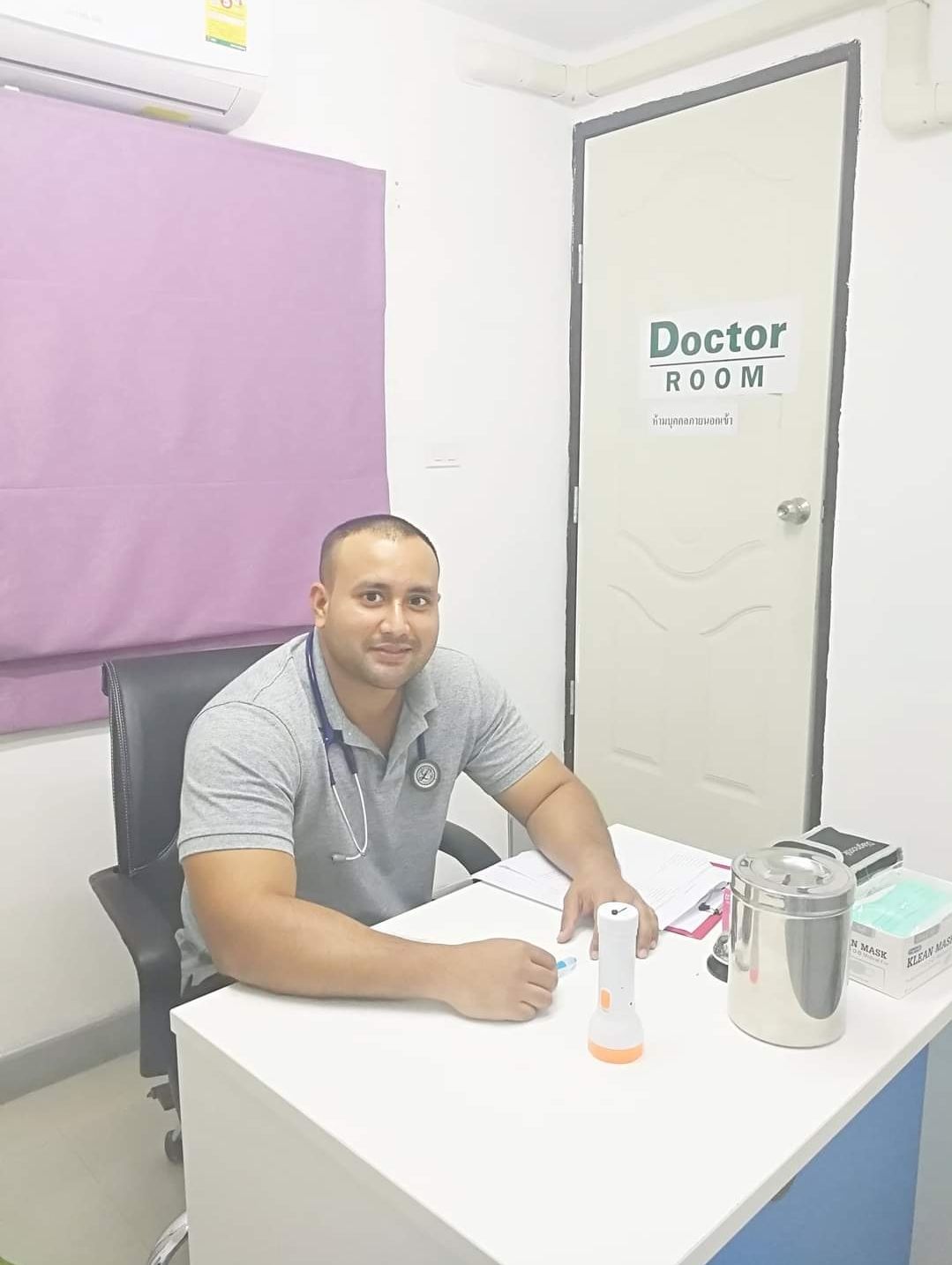
Dr. Ponlawat Pitsuwan is a physician at Doctor Bangkok, a private clinic in central Bangkok. He sees expats, residents, and medical tourists for general medicine, wellness consultations, and IV therapy. His focus is straightforward, evidence-based care delivered in plain language.