
Clinically reviewed by Dr. Ponlawat Pitsuwan, Physician, Doctor Bangkok. Last reviewed: July 2026
Skin rashes are one of the most common reasons expats and visitors come to see me in Bangkok. Most are caused by heat, fungal overgrowth, or insect bites, and most respond well to the right treatment. The tricky part is knowing which one you have, because the wrong treatment will not work, and some rashes need a doctor the same day. This guide will help you figure out where you stand.
You noticed something on your skin a few days ago. Maybe it started as a small patch. Maybe you woke up covered in itchy bumps. You have been Googling for an hour and now you are more confused than when you started. That is completely normal, and it happens to almost every expat I see, especially in the first few months of living here.
Bangkok’s heat and humidity do things to skin that most people have never experienced before. The conditions here create a perfect environment for heat rash, fungal infections, and skin reactions that would never have bothered you back home. The good news is that most of these are very treatable once you know what you are dealing with.

Heat rash in Bangkok: what it looks like and how to get rid of it
Heat rash, which you might know as prickly heat, is probably the most common skin complaint I hear about in this city. It happens when sweat gets trapped under the skin and the sweat glands get blocked. Bangkok’s humidity makes this worse because sweat cannot evaporate properly.
It shows up as small red or clear bumps, often in clusters. You will usually see it on the neck, chest, back, and anywhere clothing rubs against skin. It is itchy, sometimes stinging, and it gets worse in the heat.
The fix is straightforward: cool down, stay dry, and let the skin breathe. Loose, breathable clothing helps. A cool shower and a light moisturiser work better than anything heavy or oily. Over-the-counter calamine lotion can ease the itch. If you scratch repeatedly, you can break the skin barrier and end up with a secondary infection, which then needs a different kind of treatment.
One thing I warn patients about: once heat rash has healed, the skin can be left darker in patches. This is called post-inflammatory hyperpigmentation, and it is harmless, but it can take weeks to fade. In Bangkok’s climate, if you do not manage your environment, the rash just keeps coming back. Long-stay expats often find they need to change their daily routine, not just treat each episode.
Fungal skin infections in Thailand: why they are so common and how to treat them
I see fungal skin infections constantly. Bangkok is genuinely one of the best places on earth for fungi to thrive, because the warmth and moisture never really let up.
The most common ones I deal with are tinea versicolor, tinea cruris (jock itch), and athlete’s foot. Each one looks different and responds to different treatment, which is where people get into trouble.
Tinea versicolor causes patchy discolouration, often on the chest, back, and upper arms. The patches may be lighter or darker than your normal skin, with fine scaling. Sun exposure makes the colour difference more obvious, which is often when people first notice it. Here is the part that actually matters: oral terbinafine, a common antifungal tablet many people pick up at a pharmacy, does not work well against this type of infection. The right oral treatment is itraconazole or fluconazole. Getting the wrong drug means weeks of failed treatment.
Tinea cruris and athlete’s foot respond well to topical clotrimazole or terbinafine cream, available at Boots or Watsons without a prescription. Mild cases often clear with consistent use over two to four weeks.
There is also a condition called Pityrosporum folliculitis, which causes acne-like bumps on the back and chest. It gets misdiagnosed as regular acne and treated with antibiotics, which do nothing for it. The treatment is antifungal, not antibacterial.
A quick skin scraping in clinic takes a minute and gives us a clear answer. We also use a Wood lamp, which makes certain fungal infections visible immediately. Getting this right matters, because in Bangkok’s climate, relapse rates are high even with correct treatment. Many long-stay patients need a maintenance strategy, not just a one-off course.

Bed bugs in Bangkok hotels: how to spot them and what to do if bitten
Bed bugs are real in Bangkok, and they exist across all price brackets of accommodation. The bites look like small, intensely itchy red welts, usually in a line or cluster on skin that was pressed against the mattress or bedding. They often do not appear until 24 to 48 hours after the bite itself, so you may not notice until you have already moved hotels or come home.
To check your room, look at the mattress seams, the headboard, and along the bed frame. Dark spots or small blood stains on the sheets are a tell. If you find them, tell the hotel and request a different room.
For the bites themselves, an antihistamine tablet reduces the itch, and a mild topical corticosteroid cream settles the inflammation. The biggest problem I see is scratching that leads to a secondary bacterial skin infection. If your bite sites start weeping, crusting, or developing spreading redness, that is no longer the bite itself. That is a skin infection, and you need antibiotics.
One thing I want to flag specifically for Bangkok: do not automatically assume bites are from bed bugs. There is a condition called paederus dermatitis, caused by a small rove beetle. If this beetle is crushed on your skin, it releases a chemical that causes a burning, blistering rash in a streak or line. It is sometimes mistaken for bed bug bites, but the treatment is different. If your rash is blistering rather than just itchy, come in and get it checked.
Swimmer’s ear in Bangkok: why it happens and how to treat it fast
This is slightly off the skin rash topic, but I include it because I get asked about it a lot, especially by expats using pools and gym facilities in Bangkok.
Swimmer’s ear is an infection of the ear canal skin. Bangkok’s pools, particularly older or less-maintained ones, can harbour bacteria that thrive in warm, wet environments. You get it when water sits in the ear canal after swimming.
The symptoms are an itchy or painful ear canal, sometimes with discharge. Treatment is prescription antibiotic ear drops, and they work fast, usually within a few days. Using cotton buds or swimming while it is active makes things worse.
If your ear hurts and you have been swimming recently, come in and get it checked. It is a simple diagnosis and fast to treat.
When your Bangkok rash needs a doctor today
Most rashes I have described can be managed with pharmacy products or a routine clinic visit. But some cannot wait.
See a doctor the same day if your rash comes with fever. In Bangkok, a rash plus fever can mean dengue, chikungunya, or a bacterial infection spreading through the skin. Dengue rash typically appears a few days into the illness as a faint red flush with small clear patches. It requires same-day blood testing. The short version is: fever plus rash together always needs a doctor, not a pharmacy.
Also come in urgently if a rash is spreading rapidly with warmth and redness around it. That is cellulitis, a bacterial skin infection that can become serious quickly. Blistering over a large area, a rash involving your lips or eyes, or tiny pinpoint red dots under the skin that do not fade when you press on them are all red flags.
If you are immunocompromised for any reason, any unusual rash warrants a same-day opinion.
Thai pharmacy versus clinic: what you can manage yourself
Pharmacy-first is reasonable for mild athlete’s foot, small patches of heat rash, and minor insect bites without signs of infection. Boots and Watsons both stock clotrimazole cream, calamine lotion, and antihistamine tablets without a prescription.
Come to a clinic if the rash has not improved after five to seven days of pharmacy treatment, it is spreading, it is blistering, you have fever, or you simply do not know what it is. A skin scraping or a Wood lamp check gives you the answer quickly. Guessing wrong with antifungals costs time and money and leaves the underlying problem untreated.
At Doctor Bangkok, we see skin complaints from expats and visitors every week. The consultation is in English, the tests are done in clinic, and for most straightforward rashes, we can give you a clear answer and a treatment plan the same day. If you think an allergy may be driving your rash, we also offer allergy treatment assessment to identify specific triggers and stop the cycle.
Skin rash and not sure what it is? Doctor Bangkok is an English-speaking private clinic in central Bangkok, BTS accessible, with same-day appointments available. We assess and treat heat rash, fungal skin infections, insect bite reactions, and skin infections. If your rash has you worried, come in and get a clear answer. Book at doctorbangkok.co.th.
How do I know if my Bangkok rash is heat rash or a fungal infection?
Heat rash appears as small red or clear bumps in clusters, gets better quickly when you cool down, and has no scaling. A fungal infection like tinea versicolor shows well-defined patches with fine flaking and does not improve just by cooling the skin. If you are not sure after 48 to 72 hours of home care, a quick skin scraping at a clinic gives you the answer.
Can I treat a fungal skin infection in Bangkok with creams from a pharmacy?
For athlete’s foot or ringworm, yes, clotrimazole or terbinafine cream from Boots or Watsons often works for mild cases. But tinea versicolor is caused by a different organism entirely, and oral terbinafine tablets will not work against it. Getting the right drug requires knowing which fungus you have, and that requires a clinical assessment.
I woke up with bites in my Bangkok hotel. How do I know if they are bed bugs or mosquitoes?
Bed bug bites tend to appear in a line or cluster on skin that touched the mattress, often show up 24 to 48 hours after the bite, and are intensely itchy. Mosquito bites appear immediately on any exposed area. Also consider paederus dermatitis from rove beetles, which causes a burning, blistering streak and is sometimes mistaken for bed bug bites.
Why does my skin rash keep coming back after I treat it in Bangkok?
Bangkok’s year-round heat and humidity mean conditions like tinea versicolor and heat rash have a high relapse rate, even with correct treatment. One-off treatment is rarely enough for long-stay residents. A maintenance plan, which might include regular antifungal washes and barrier skincare, is usually the better approach.
When should a skin rash in Bangkok be treated as a medical emergency?
See a doctor the same day if your rash comes with fever, is spreading rapidly with redness and warmth, is blistering over a large area, involves your lips or eyes, or shows tiny pinpoint red dots that do not fade under pressure. Rash plus fever in Bangkok can mean dengue, and that needs same-day blood testing.
Can I get an allergic rash from hotel products or food in Bangkok?
Yes, and it is more common than most people realise. Hotel laundry detergents, local food ingredients, and even tap water can trigger allergic contact dermatitis in people with sensitive skin. If your rash keeps appearing in patterns linked to bedding, clothing, or meals, an allergy assessment at Doctor Bangkok can help identify the specific trigger.
Dr. Ponlawat Pitsuwan
Physician, Doctor Bangkok
a private medical clinic in central Bangkok. He sees expats, residents, and medical tourists for skin complaints, tropical infections, general medical concerns, and travel health. His focus is straightforward, evidence-based care delivered in plain language.
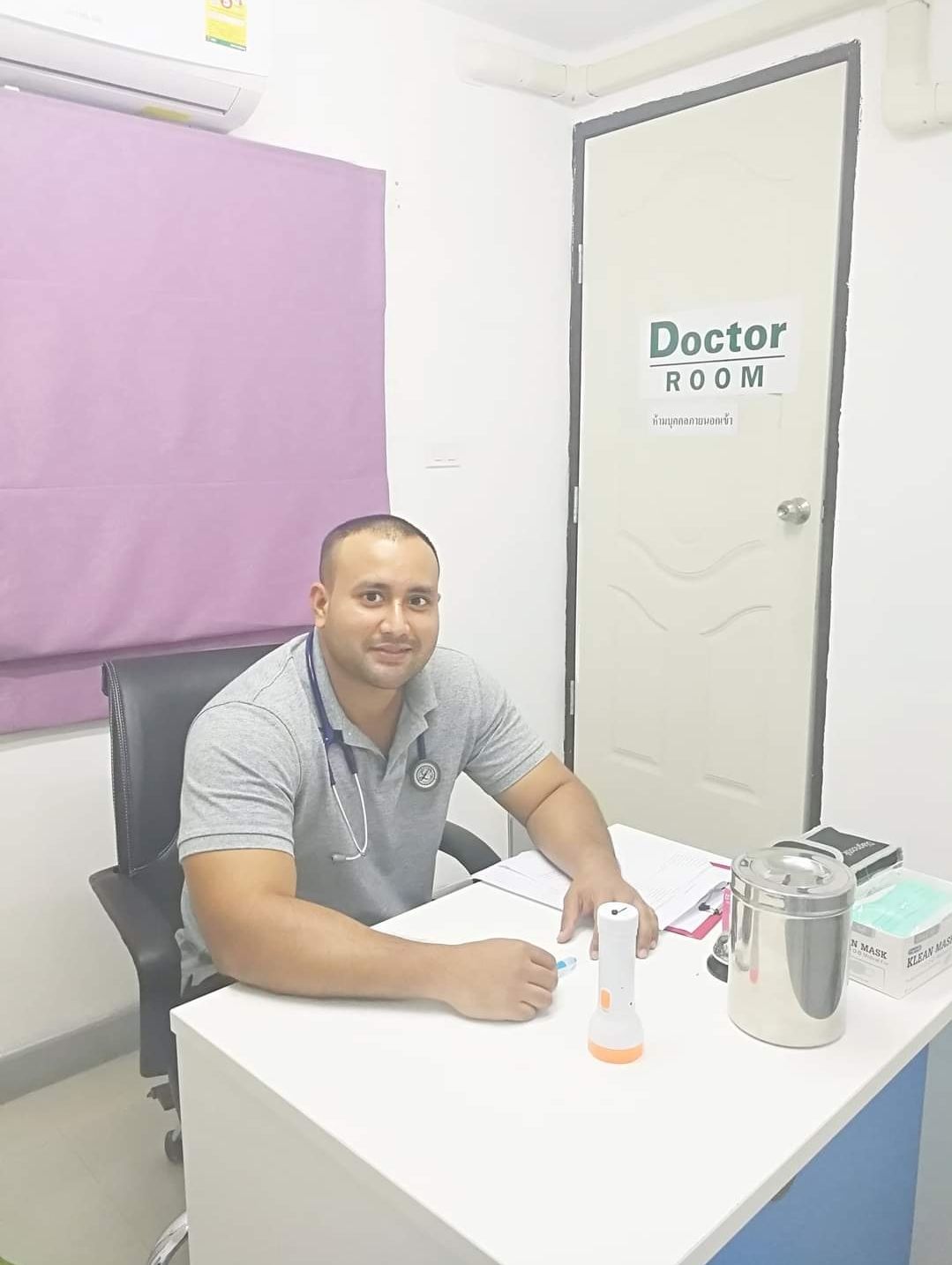
Dr. Ponlawat Pitsuwan is a physician at Doctor Bangkok, a private clinic in central Bangkok. He sees expats, residents, and medical tourists for general medicine, wellness consultations, and IV therapy. His focus is straightforward, evidence-based care delivered in plain language.