
Clinically reviewed by Dr. Ponlawat Pitsuwan, Physician, Doctor Bangkok.
Last reviewed: July 2026
Bangkok is not an easy city for severe food allergies. Fish sauce and shrimp paste appear in almost every savoury dish, there is no law requiring restaurants or street vendors to disclose allergens, and epinephrine autoinjectors are not available at street pharmacies. With the right preparation and a clear emergency plan, most allergic expats and visitors manage well here. Without it, the risks are real.
If you have a serious food allergy and you are heading to Bangkok, or already living here, you have probably searched this topic and come away more anxious than informed. Most guides tell you to carry a translation card and avoid peanuts. That is not enough.
The reality of eating in Bangkok with a fish, shellfish, peanut, or wheat allergy is more complicated than most travel blogs let on. This article covers what you actually need to know: which hidden allergens show up where, why communication with Thai restaurants works differently, how to get epinephrine in Bangkok, and what to do in the hours after a reaction. I will also explain when to visit a clinic versus when to go straight to an emergency room.

Thailand Has No Restaurant Allergen Disclosure Law — What That Means for You
Back home, most restaurants are legally required to tell you if a dish contains a major allergen. In Thailand, there is no equivalent law. No requirement for menus to flag allergens. No obligation for staff to disclose ingredients.
This is not a criticism of Thai food culture. It is just a fact you need to build your safety strategy around. At street food stalls and most local restaurants, allergen management is voluntary and entirely dependent on the individual cook’s understanding of your request.
Your safety depends on how clearly you communicate, not on any system around you.
The Hidden Allergens in Thai Cuisine That Most Guides Miss
Everyone knows to watch for peanuts. Fewer people realise that fish sauce, called nam pla in Thai, is a base ingredient in Thai cooking. It goes in at the start, in amounts too small to see or taste clearly, and it cannot be removed after cooking. For anyone with a fish allergy, this matters enormously.
Shrimp paste, called kapi, is the same story. It forms the base of most curry pastes and many dipping sauces. Even dishes described as vegetarian may contain kapi unless you are eating at a specifically vegan restaurant.
Thai soy sauce is another issue most guides miss. Many commercial soy sauces used in Thailand are fermented using wheat, making them unsafe for people with wheat or gluten sensitivities.
Cross-contact from shared woks and cooking oil is essentially unavoidable at street level. A wok used to cook prawns five minutes ago is not scrubbed between dishes. This is not negligence, it is how a busy stall operates. International hotel kitchens and higher-end restaurants with trained staff are genuinely different environments. If your allergy is severe, where you eat matters as much as what you order.

How to Communicate a Food Allergy in Thailand When You Do Not Speak Thai
The word for allergy in Thai is แพ้, pronounced "pay." That single word is your most important tool. When someone hears แพ้, they understand the conversation is medical, not just a preference.
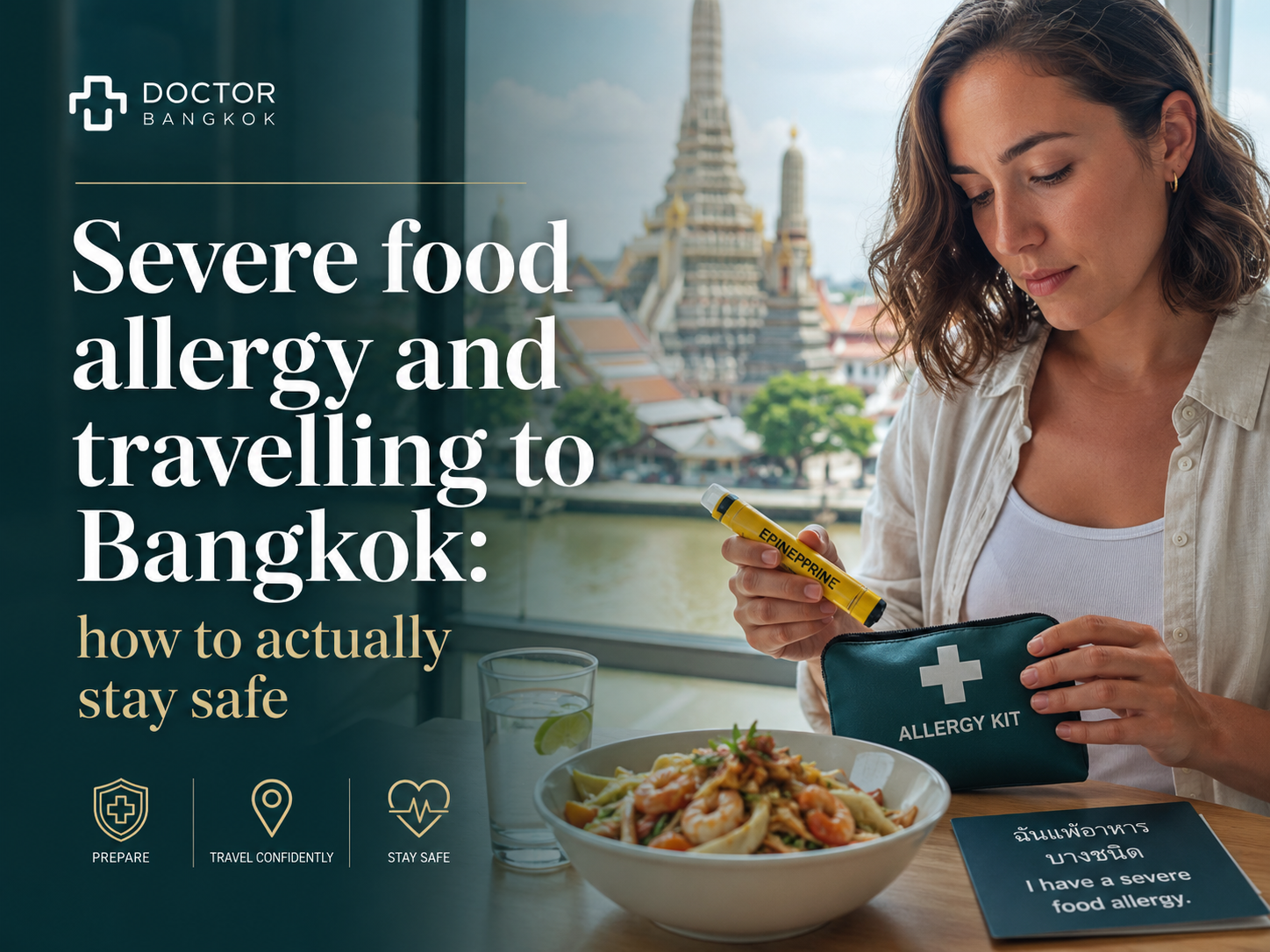
A printed Thai-script allergy card is not optional if you have ever had anaphylaxis. The card must name every allergen in Thai script, not just general categories. For fish allergy: น้ำปลา (fish sauce) and กะปิ (shrimp paste) must be listed explicitly. For peanut: ถั่วลิสง. For shellfish: อาหารทะเล. For soy: ถั่วเหลือง.
Thai culture is warm and staff genuinely want to help. That same warmth means a vendor may say "no peanuts" because they want to reassure you, not because they have checked. This is a cultural difference in how reassurance works, not dishonesty. That is exactly why the written card matters more than the verbal answer.
Jay Food — the Safest Category for Fish and Shellfish Allergies
Jay food, marked เจ, is Thailand’s Buddhist vegan tradition. Jay restaurants use no meat, no fish, no fish sauce, no shrimp paste, and no eggs. For someone with a fish or shellfish allergy, jay food is meaningfully safer than standard Thai cooking.
One important caveat: jay food uses a lot of soy-based protein as a meat substitute. If you have a soy allergy, jay food is not your safe option.
Getting a Formal Allergy Diagnosis in Bangkok
A lot of expats arrive here having never been formally tested. They know roughly what triggers a reaction, but they have never had a skin prick test or a specific IgE blood test. Some develop new sensitivities after moving to Bangkok, from novel exposures in Thai cuisine.
If you do not know exactly what you are allergic to, or if your reactions have been getting more severe, that needs addressing before your next restaurant meal. At Doctor Bangkok’s allergy service, we can run a skin prick test or an ImmunoCAP blood test to identify what your immune system is reacting to. Both are standard, straightforward tests we run in clinic.
The result gives you a clear list of what to avoid. It also helps us write you a proper emergency action plan, something every allergic expat in Bangkok should have on their phone or in their bag.
EpiPen Availability in Bangkok — What to Do If Yours Is Lost, Expired, or Damaged
This is something I get asked regularly, and the answer surprises most people. Street pharmacies in Bangkok do not stock epinephrine autoinjectors. You cannot walk in and buy one. You need a prescription in Thailand.
If you arrive without an autoinjector, or yours is expired, lost, or damaged, the right step is a clinic or hospital appointment. Bring your old device if you still have it, your home country prescription, or a letter from your GP. A Thai doctor will review your history and prescribe accordingly.
Branded autoinjectors like EpiPen may be available through hospital dispensaries, but more commonly in Bangkok you will be prescribed a pre-filled epinephrine syringe. It is the same medication in a different format. Do not wait until after a reaction to sort this out. Come in when you arrive.
Anaphylaxis in Bangkok — Where to Get Emergency Treatment Fast
What to Do in the First Minutes
If you or someone with you has throat tightness, a changing voice, severe vomiting, dizziness, or is losing consciousness after eating, this is anaphylaxis. Use your epinephrine immediately if you have one. Then call 1669, Thailand’s emergency ambulance number. Tell the dispatcher the address and the words "allergic reaction, cannot breathe" in English. Most 1669 dispatchers have enough English for this.
If you cannot wait for an ambulance, get into a taxi and go to the nearest hospital emergency department. Bumrungrad, Bangkok Hospital, and Samitivej all have English-speaking staff and full emergency capacity.
After a Reaction That Seems to Have Settled — Do Not Go Home Yet
Even after a reaction appears to resolve, a second wave of symptoms can occur hours later. This is called biphasic anaphylaxis. It is not common but it is serious enough that any allergic reaction should be assessed by a doctor the same day, even if you feel fine.
If your reaction was mild, meaning hives, itching, or slight swelling without throat or breathing symptoms, take an antihistamine and get to a clinic for same-day review. At Doctor Bangkok we can check you over, review the severity, and make sure you have the right plan going forward. Do not just go home and wait.
If you are living in or visiting Bangkok with a food allergy, Doctor Bangkok can help you prepare properly. We offer allergy consultations, skin prick testing, ImmunoCAP blood testing, emergency action plan documentation, and epinephrine prescription for eligible patients. Our clinic is in central Bangkok, BTS accessible, with English-speaking physicians available. Book through doctorbangkok.co.th/allergy-treatment/ or walk in during opening hours.
FAQ
Is it safe to eat street food in Bangkok if I have a peanut or shellfish allergy?
It carries real risk. There is no allergen disclosure law for street vendors, fish sauce and shrimp paste are in almost everything savoury, and shared wok cross-contact is unavoidable. Carry a Thai-script allergy card, know the emergency number 1669, and if you have a history of severe reactions, visit a clinic before you travel to get a written emergency action plan.
Where can I get an EpiPen or epinephrine in Bangkok if mine is lost or expired?
Street pharmacies do not stock epinephrine autoinjectors and cannot dispense without a prescription, so you need a clinic or hospital appointment. Bring your old device, your home prescription, or a doctor’s letter, and a Thai doctor can prescribe a replacement. In Bangkok this is often dispensed as a pre-filled epinephrine syringe rather than a branded autoinjector, but it is the same medication. You can arrange this at Doctor Bangkok’s allergy service.
What should I do immediately after a suspected allergic reaction to food in Bangkok?
For mild symptoms like hives or itching, take an antihistamine and seek same-day clinic review. For throat tightness, vomiting, or dizziness, use your epinephrine immediately and call 1669 or go to a hospital emergency department. Even a reaction that appears to settle on its own should be assessed the same day, because a second wave of symptoms can occur hours later.
Can I get a food allergy test done in Bangkok?
Yes. Bangkok private clinics including Doctor Bangkok can perform skin prick tests and ImmunoCAP blood tests to identify allergic reactions across a wide panel of allergens. This is particularly useful if you have never been formally tested, or if you have developed new symptoms since moving to Bangkok. Visit doctorbangkok.co.th/allergy-treatment/ for more detail.
Does Thai food always contain fish sauce — can a restaurant leave it out if I have a fish allergy?
Fish sauce goes in at the start of cooking and cannot be removed after the fact. Fish proteins survive fermentation, so even small amounts are unsafe for fish-allergic patients. Outside international hotel kitchens, most cooks will not think of fish sauce as something that needs disclosing. Your Thai-script allergy card must name น้ำปลา and กะปิ explicitly, and jay vegan restaurants are a safer category for fish and shellfish allergies.
I have a soy allergy — is Thai food safe for me?
Soy appears in Thai cooking through soy sauce, tofu, and soy-based condiments. Some Thai soy sauces also contain wheat as a fermentation ingredient, which matters if you have both soy and wheat sensitivity. Jay vegan restaurants, often suggested as a safe option, use a lot of soy-based protein as a meat substitute, so they are not a safe choice for soy-allergic patients. Carry a card that explicitly names ถั่วเหลือง and seek out international or hotel restaurants where kitchen staff can verify ingredients.
Dr. Ponlawat Pitsuwan
Physician, Doctor Bangkok
a private medical clinic in central Bangkok. He sees expats, residents, and medical tourists for allergy consultations, emergency assessment, and general medical care. His focus is straightforward, evidence-based care delivered in plain language.
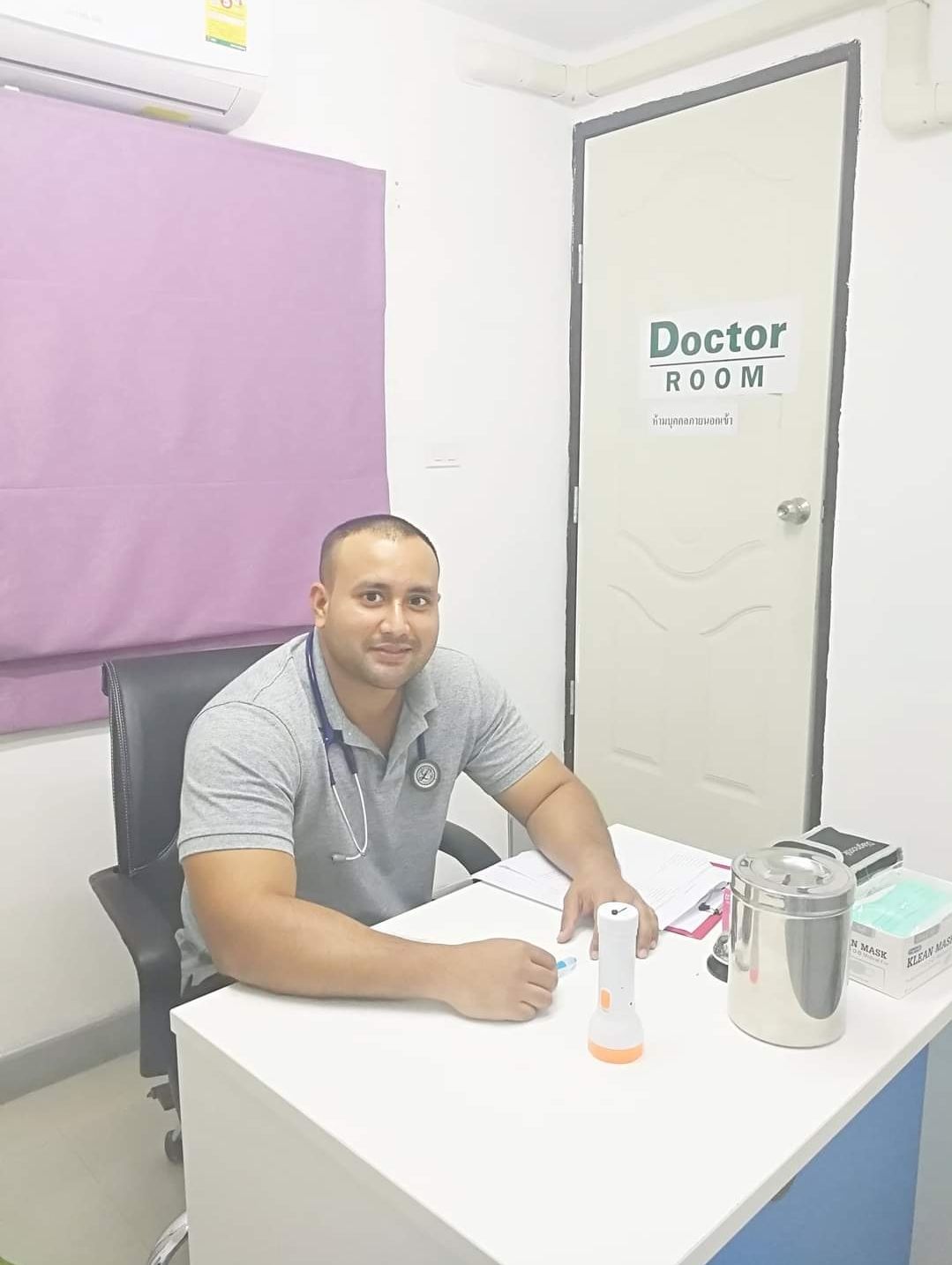
Dr. Ponlawat Pitsuwan is a physician at Doctor Bangkok, a private clinic in central Bangkok. He sees expats, residents, and medical tourists for general medicine, wellness consultations, and IV therapy. His focus is straightforward, evidence-based care delivered in plain language.