


Clinically reviewed by Dr. Ponlawat Pitsuwan, Physician, Doctor Bangkok. Last reviewed: July 2026
Bangkok belly is traveller’s diarrhea picked up in Bangkok, usually from contaminated food or water. Symptoms include loose stools, stomach cramps, nausea, and sometimes fever. Most cases settle within three to five days with rest and fluids. If you have blood in your stool, a fever above 38.5°C, or symptoms lasting beyond 72 hours, see a doctor the same day.
You are probably reading this from a hotel bathroom. Or you are two days into your Bangkok trip and things have gone wrong in a very specific way. Maybe it started after street food last night. Maybe it has been building since yesterday morning. Either way, you want to know how bad this is, how long it will last, and what you should actually do.
Most cases of Bangkok belly are uncomfortable but manageable. A smaller number need medical treatment. And a few need it urgently. This article will help you tell the difference and explain exactly what to do next, including what happens if you come in to see us.

What Actually Causes Bangkok Belly
The most common cause is a bacterium called enterotoxigenic E. coli, or ETEC. You pick it up through contaminated food or water, and it starts causing trouble within hours. Ice made from tap water, undercooked meat, raw salads, and food left out in the heat are the usual culprits.
Not everything labelled Bangkok belly is bacterial, though. Norovirus causes a shorter, sharper illness, usually 24 to 48 hours of vomiting and diarrhea that hits fast and fades fast. A parasitic infection like Giardia is slower, sometimes appearing one to three weeks after exposure, and it will not clear without specific treatment. That distinction matters because the treatment is completely different.
Your gut is also not used to the local bacteria here. Locals have spent their whole lives building tolerance to these organisms. Your gut has no experience with them. That is a real reason why travellers get sick and the person at the same food stall does not.
Bangkok Belly vs Food Poisoning
Patients ask me this a lot. The honest answer is that they overlap, but timing tells you something useful.
Food poisoning from toxins already present in the food, like Staph aureus, hits within one to six hours of eating. It tends to be short and sharp, mostly vomiting, and usually clears within 24 hours. Bangkok belly from bacterial infection typically starts six to 24 hours after exposure, with diarrhea as the main problem. If symptoms started within an hour of a meal and you are mostly vomiting, that points more toward a toxin. If it started the next morning and diarrhea is leading, that points more toward bacterial infection.
In practice, the most important question is not which one it is, but how severe it is and whether it is getting worse.

Why Bangkok Is Harder on Your Body Than Other Destinations
Bangkok sits at 35°C or above for most of the year, with high humidity on top of that. When you are already losing fluid through diarrhea and sweating in that heat, dehydration moves fast.
In a cooler country, moderate diarrhea might leave you feeling rough but functional for a day. Here, the same illness can push you into significant dehydration by evening. Dark urine, dizziness when you stand up, and a dry mouth are signs you are already behind on fluids. Bangkok’s climate genuinely changes the clinical picture. Do not assume you have time to wait it out.
Symptoms and When to Stop Self-Treating
The typical picture is loose or watery stools, stomach cramping, nausea, and sometimes a low fever. You might feel fine between episodes, or you might feel completely wiped out.
These are the signs that tell me a patient needs same-day attention. Bloody or mucus-streaked stool means the gut lining is inflamed. Fever above 38.5°C alongside diarrhea points to a more serious bacterial infection. Symptoms that have not improved after 72 hours suggest either a resistant organism, a parasitic cause, or something else entirely. If you cannot keep fluids down at all, you cannot self-treat, because everything you drink comes straight back up. Dizziness when standing, very dark urine, or feeling faint are signs of dehydration that may need IV fluids.
If any of those apply, stop waiting. I see patients every week who waited a day too long.
What a Doctor Actually Does
When you come in with Bangkok belly symptoms, the first thing we do is check how dehydrated you are and how severe the illness is. We take a full history: what you ate, where, when symptoms started, what your stool looks like, whether you have a fever.
A stool test is not needed for every case. For mild to moderate illness caught early, treatment is clinical. For symptoms lasting several days, for bloody stool, or when we suspect a parasitic infection, a stool culture changes what we prescribe. You can read more about what to expect at a Bangkok belly treatment consultation on our travel health page.
If antibiotics are needed, the two we use most often are Azithromycin and Ciprofloxacin. Metronidazole is used for confirmed Giardia. We prescribe based on your symptoms and likely cause, not just because you asked. The wrong antibiotic for a viral illness does nothing, and the wrong choice for certain bacterial infections can make things worse.
For nausea and vomiting, we can prescribe Ondansetron. It works quickly and means you can actually keep oral fluids down. If you are dehydrated and cannot manage fluids by mouth, IV rehydration is available on-site. Most patients feel significantly better within an hour. All medications are dispensed at the clinic, so there is no need to find a pharmacy.
Managing Bangkok Belly at Home Before You Come In
Start oral rehydration solution, ORS, straight away. This is not just water. ORS contains the right balance of salts and sugar to help your body absorb fluid properly. You can buy it at any 7-Eleven in Bangkok. Drink small amounts frequently rather than large amounts at once.
Loperamide, the active ingredient in Imodium, slows your gut and reduces the number of trips to the bathroom. It is fine for watery diarrhea when you need to function. Do not use it if you have a fever or blood in your stool. In those cases, slowing the gut traps the problem rather than letting your body clear it.
Eat plain food when you can: rice, crackers, banana. Avoid dairy, spicy food, and alcohol until you are fully recovered.
Can Bangkok Belly Cause Long-Term Gut Problems
Most people recover completely and never think about it again. But some do not, and this is a conversation I have often with longer-stay expats.
Post-infectious IBS, or PI-IBS, can develop after a gut infection even once the original bacteria has cleared. Ongoing bloating, unpredictable bowel habits, and abdominal discomfort that lingers for weeks are worth investigating. Before any longer-term diagnosis, we would want to rule out a persistent parasitic infection like Giardia, because the two can look very similar. If your acute illness resolved weeks ago but your gut still does not feel right, that warrants a proper assessment.
Seeing a Doctor in Bangkok
Doctor Bangkok is on Sukhumvit, a few minutes from BTS. We see walk-in patients with no appointment needed. If you are too unwell to travel, we offer hotel visits across central Bangkok. Understanding what is Bangkok belly and when it needs clinical care is exactly what we are here to help with.
Most international travel insurance policies cover private medical consultations in Bangkok, including treatment for traveller’s diarrhea. We provide itemised receipts that meet the documentation requirements for insurance reimbursement claims. We do not offer direct billing, but everything you need to make a claim is provided at the time of your visit.
If you are an expat and this keeps happening, that is worth a proper conversation. Recurrent gut infections point to either ongoing exposure or something about how your gut is responding that needs investigating.
Dealing with Bangkok belly and not sure whether to wait it out? Doctor Bangkok offers same-day walk-in consultations on Sukhumvit, hotel visits across central Bangkok, IV rehydration on-site, and English-speaking physicians available around the clock. No appointment needed. Visit doctorbangkok.co.th or come straight in.
Frequently Asked Questions
How long does Bangkok belly last?
Most bacterial cases improve within three to five days with proper treatment. Without treatment, symptoms can drag on for a week or more. Parasitic infections like Giardia will not clear on their own and can persist for weeks, so if you are not improving after 48 to 72 hours, come in rather than continuing to wait.
Should I take antibiotics for Bangkok belly?
Only if a doctor confirms you need them. Antibiotics are appropriate for moderate to severe bacterial infection, typically when you have more than four loose stools a day, a fever, or blood in your stool. They do nothing for viral illness and can make certain bacterial infections worse if the wrong one is prescribed.
When should I see a doctor instead of waiting it out?
Go the same day if you have blood or mucus in your stool, fever above 38.5°C, symptoms lasting beyond 72 hours, or you cannot keep any fluids down. In Bangkok’s heat, dehydration moves faster than most people expect. What feels manageable at 9am can require IV fluids by mid-afternoon.
Can Bangkok belly cause long-term gut problems?
Yes. Post-infectious IBS can develop after a gut infection even once the original illness has cleared. Ongoing bloating, unpredictable bowel habits, and abdominal discomfort weeks after recovery are worth investigating. A clinical assessment rules out persistent infection before any longer-term diagnosis is considered.
Is treatment for Bangkok belly covered by travel insurance?
Most international travel insurance policies cover private medical consultations in Bangkok, including for traveller’s diarrhea. Doctor Bangkok provides itemised medical receipts with everything you need to submit a reimbursement claim. Check your policy excess and coverage limits before your visit.
Is it safe to use Imodium for Bangkok belly?
Loperamide is fine for watery diarrhea when you have no fever and no blood in your stool. If either of those are present, you need medical assessment rather than something that slows your gut and keeps the problem inside.
What is the difference between Bangkok belly and Giardia?
Bangkok belly from bacterial infection usually starts within 24 hours of exposure and settles within days. Giardia takes longer to appear, sometimes one to three weeks, and does not clear without specific treatment. If your gut has been off for more than a week or two, Giardia is worth testing for. You can find out more about Bangkok belly symptoms and when they point to something more on our travel health page.
Dr. Ponlawat Pitsuwan
Physician, Doctor Bangkok
a private medical clinic in central Bangkok. He sees expats, residents, and medical tourists for traveller’s diarrhea, gut infections, dehydration, and general travel health concerns. His focus is straightforward, evidence-based care delivered in plain language.
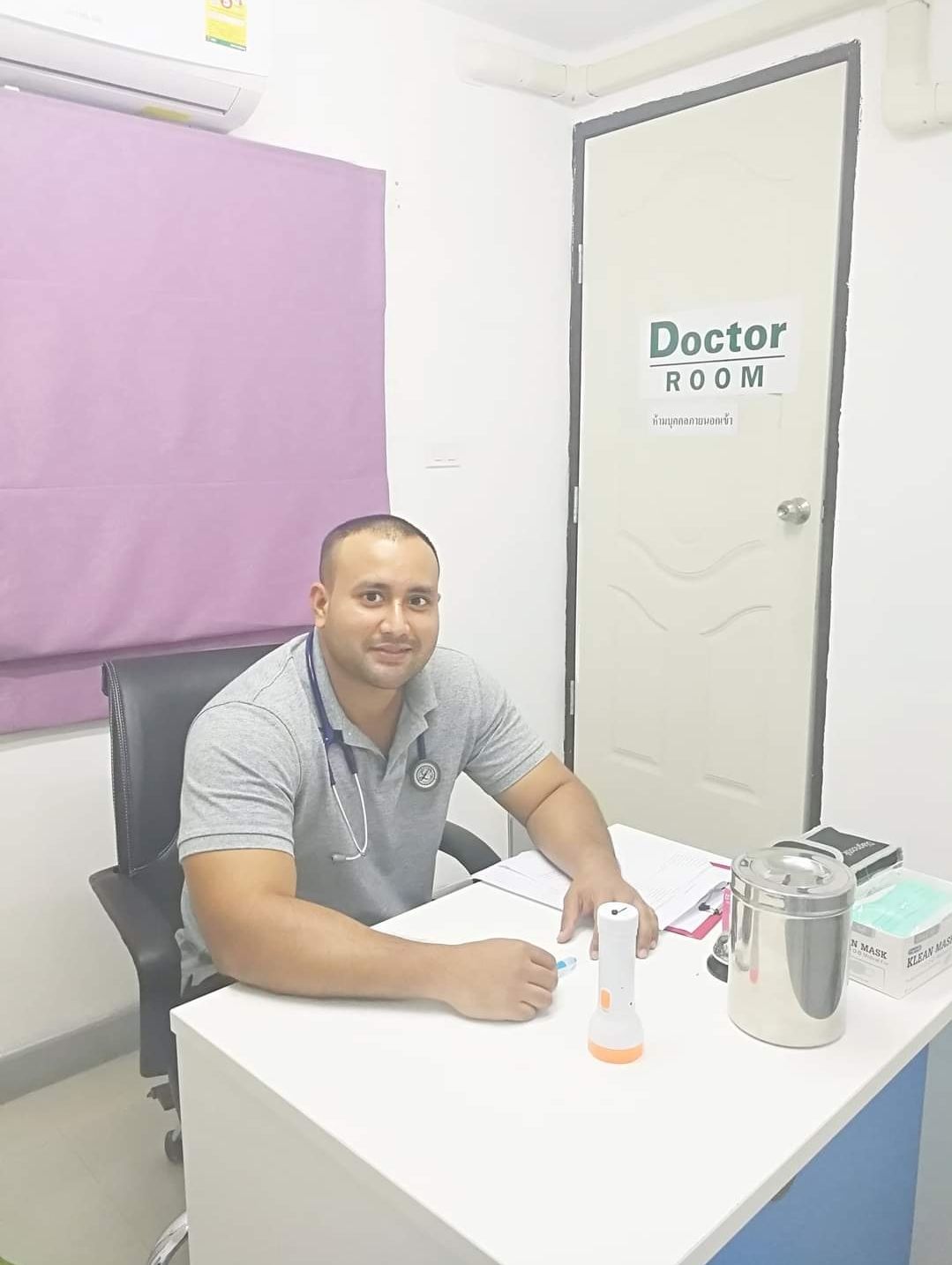
Dr. Ponlawat Pitsuwan is a physician at Doctor Bangkok, a private clinic in central Bangkok. He sees expats, residents, and medical tourists for general medicine, wellness consultations, and IV therapy. His focus is straightforward, evidence-based care delivered in plain language.