
Clinically reviewed by Dr. Ponlawat Pitsuwan, Physician, Doctor Bangkok.
Last reviewed: July 2026
STI rates are rising sharply in Bangkok and across Thailand. Many infections cause no symptoms at all, which means most people who have one do not know it. Regular testing is the only reliable way to know your status. If you have had new or multiple partners, getting screened every three to six months is a reasonable starting point.
If you are living in Bangkok, visiting for a few weeks, or somewhere in between, this is worth reading. Not because you have done anything wrong. Because STI rates are genuinely rising here, and the infections spreading fastest are the ones least likely to give you any warning sign at all. Chlamydia, gonorrhea, and early syphilis rarely announce themselves. You can feel completely fine and still have something that needs treatment.
Getting tested in Bangkok is straightforward. You do not need to speak Thai, navigate a complicated system, or explain yourself to anyone. What you do need is accurate information about what is happening locally, who is at risk, and what to do next.

The Local Picture — STI Rates in Bangkok
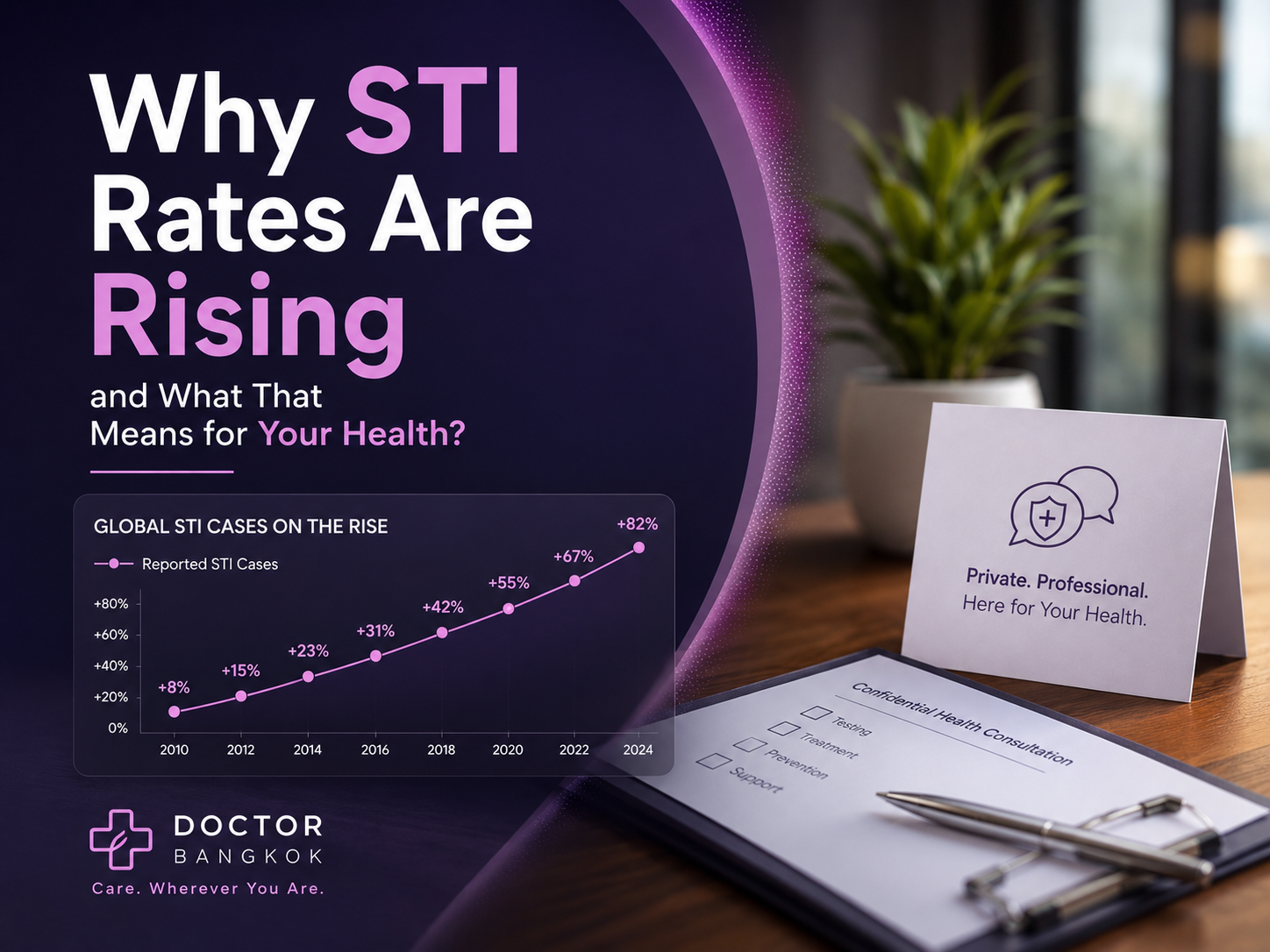
The numbers here are hard to ignore. Bangkok saw STI rates climb from around 11.8 per 100,000 people in 2013 to roughly 90 per 100,000 by 2017. By 2024, that figure had reached nearly 97 per 100,000. That is not a gradual drift. That is a significant increase over a short period.
Syphilis has been the sharpest mover. Cases of congenital syphilis, where the infection passes from mother to baby during pregnancy, have also been increasing in Thailand. That tells you something important: infections are not being caught early enough. Gonorrhea cases are rising too, and drug-resistant strains are now a confirmed problem in Thailand, consistent with WHO surveillance across the region.
These are not abstract statistics. They describe what I see in practice, and what is circulating in the city you are living in or visiting right now.
Why STI Rates Are Rising — The Drivers Behind the Trend
No single reason explains this. It is a combination of things happening at the same time.
Condom use has declined among younger adults globally, and Bangkok is no different. Dating apps have made meeting new partners faster and easier. That is not a moral judgment, just a reality that changes how infections spread. At the same time, stigma around sexual health keeps people away from testing, so infections go undetected longer and keep spreading.
Antibiotic-resistant gonorrhea deserves specific mention. WHO data confirms resistance across a significant proportion of cases in Southeast Asia. This means the infection is harder to treat than it used to be, and older antibiotic regimens no longer always work. If you test positive for gonorrhea, you need a proper assessment to make sure you get the right treatment.
Reduced clinic access during and after the COVID years also created gaps in routine screening. Infections that would have been caught earlier were not, and some of that backlog is still working through the population now.

Who Is Most at Risk in Bangkok?
I want to be direct here without being alarmist. Some groups face higher exposure, and knowing that helps you make informed decisions.
Men who have sex with men face disproportionately higher rates of HIV, syphilis, and gonorrhea, both in Thailand and globally. Thai Ministry of Public Health surveillance consistently shows this group is among those most affected. If this applies to you, testing every three months is the standard recommendation, not every six.
Young adults aged 15 to 24 account for a large proportion of new STI diagnoses in Thailand. Expats and long-stay visitors who are sexually active with new or multiple partners sit in a similar risk category regardless of age. People newly arrived in Bangkok are also worth mentioning here. Change in environment often means change in behaviour, and testing should follow accordingly.
The Infections You Need to Know About
| Infection | Symptoms | Treatable? | Key Point |
|---|---|---|---|
| Chlamydia | Usually none | Yes, antibiotics | Most common bacterial STI; PCR test recommended |
| Gonorrhea | Often none | Yes, but resistance growing | Drug-resistant strains confirmed in Thailand |
| Syphilis | Variable; can be silent for years | Yes, antibiotics | Rising sharply in Bangkok; congenital risk if untreated |
| HIV | Often no acute symptoms | Managed with daily medication | PEP within 72 hours if recently exposed |
| Herpes (HSV) | Often none or mild | Managed, not cured | Transmission possible without visible sores |
| HPV | Usually none | Managed; vaccine available | Vaccine recommended for prevention |
When Should You Get Tested?
This is the question I get most often. The answer depends on two things: when the exposure happened, and which infection you are concerned about.
Every STI has a window period. That is the gap between exposure and when a test can reliably detect the infection. Testing too early can give you a false negative, which is worse than not testing because it creates false reassurance. For HIV, a fourth-generation blood test can detect infection from around 18 to 45 days after exposure. For chlamydia and gonorrhea, PCR testing can pick up infection from as little as one to two weeks. Syphilis usually shows up on a blood test from three to six weeks after exposure.
If you have had a potential HIV exposure in the last 72 hours, do not wait for a test result. Come in now. PEP, a short course of medication that can prevent HIV infection, must be started within 72 hours. Every hour matters.
For everything else, the general rule for sexually active people with new or multiple partners is every three to six months, consistent with Thai public health guidance. If you are not sure when you last tested, that is your answer.
Prevention Options Beyond Condoms
Condoms remain the most effective barrier against most STIs, and I always recommend them. But there are now additional tools worth knowing about.
PrEP is a daily tablet that prevents HIV infection in people who are HIV-negative but at ongoing higher risk. It is highly effective, with strong evidence behind it, and it is available at Doctor Bangkok. If you are sexually active with multiple partners, or with a partner whose HIV status is unknown, PrEP is worth a conversation.
PEP is the emergency option. If you have had a potential HIV exposure in the last 72 hours, PEP can prevent infection. It is a short course of medication taken daily for 28 days, and it must be started as soon as possible.
Doxy-PEP is a newer strategy. Taking doxycycline within 72 hours of unprotected sex has shown promise in reducing bacterial STI rates in higher-risk groups. Evidence is still building, but guidelines are beginning to include it. Ask your doctor whether it makes sense for you.
HPV vaccination is available and recommended for both men and women, regardless of age, if not previously vaccinated. The vaccine works best before exposure but still has benefit after.
How Often Should Expats in Bangkok Get Tested?
If you are sexually active with new or multiple partners, every three to six months is the practical answer. That matches Thai Ministry of Public Health guidance and what I recommend in practice.
If you are in a stable relationship with one partner and both of you have tested negative after your window periods, annual testing is reasonable. If your situation changes, your testing schedule should change with it.
The point is not to make you anxious. The point is that most STIs give you no warning signs. The only way to know is to test.
STI Testing at Doctor Bangkok — What to Expect
A lot of patients tell me they put off testing because they did not know how it worked here, or worried about privacy. Let me clear that up.
At Doctor Bangkok, you can walk in any time, including at 2am, with no appointment needed. You do not need to show ID. Testing is completely confidential, and results are not shared with employers, insurers, or immigration. If you would prefer to be tested at your hotel, that option is available too.
A standard STI screen involves a blood draw and, depending on the infections you want to test for, a urine sample or swab. Results for most panels come back within one to three days. If something comes back positive, we discuss treatment the same visit. You leave with a clear plan.
Doctor Bangkok also provides itemised receipts for insurance reimbursement. Many international and expat health plans cover private diagnostic consultations, though coverage varies, so check your policy in advance. You can find out more about what we test for on our travel health page.
STI rates are rising in Bangkok, and most infections show no symptoms. If you have had new or multiple partners, or it has been more than six months since your last screen, the practical step is to get tested. Doctor Bangkok offers confidential STI testing with no ID required, 24 hours a day, seven days a week. English-speaking physicians. BTS accessible on Sukhumvit Soi 13. Hotel visits available. Walk in or book at doctorbangkok.co.th.
FAQ
Do I need to show ID or give my name to get an STI test at Doctor Bangkok?
No. Testing at Doctor Bangkok is completely anonymous. You do not need to show ID or provide your full name, and results are never shared with employers, insurers, or immigration authorities. Privacy is not something you need to negotiate for here.
How soon after potential exposure should I get tested?
It depends on the infection. For HIV, a fourth-generation blood test is reliable from around 18 to 45 days after exposure. For chlamydia and gonorrhea, PCR testing can detect infection from about one to two weeks. Syphilis shows up on a blood test from roughly three to six weeks. If it has been less than 72 hours since a potential HIV exposure, come in immediately for PEP rather than waiting to test.
Can I get tested if I have no symptoms?
Yes, and this is actually the most important reason to test. Chlamydia, gonorrhea, and early syphilis are frequently asymptomatic, meaning they cause no noticeable symptoms at all. Most people who have one of these infections feel completely normal. Regular screening is the only way to know your status.
What is the difference between PrEP and PEP, and are they available in Bangkok?
PrEP is a daily tablet taken by people who are HIV-negative but at higher ongoing risk, to prevent infection before any exposure happens. PEP is emergency treatment taken after a potential HIV exposure and must be started within 72 hours. Both are available at Doctor Bangkok. PEP is time-critical, so if you think you need it, come in now rather than waiting until morning.
Will my insurance cover STI testing in Bangkok?
Many international and expat health insurance plans cover private consultations and diagnostic testing. Doctor Bangkok provides itemised receipts with the detail needed for a reimbursement claim. Direct billing is not available, so you pay at the time and claim back from your insurer. Check your policy terms before your visit, as coverage varies.
How often should I get tested if I am sexually active in Bangkok?
For most sexually active people with new or multiple partners, every three to six months is the practical standard, consistent with Thai Ministry of Public Health guidance. If you are a man who has sex with men, every three months is more appropriate given higher exposure rates. If your situation changes, your testing frequency should change with it.
What is antibiotic-resistant gonorrhea and should I be worried?
Gonorrhea has developed resistance to several antibiotics that used to treat it reliably, and WHO surveillance confirms this is a problem across Southeast Asia, including Thailand. It does not mean gonorrhea is untreatable, but it does mean the right antibiotic matters. If you test positive, your doctor will make sure you receive a regimen that works.
Dr. Ponlawat Pitsuwan
Physician, Doctor Bangkok
a private medical clinic in central Bangkok. He sees expats, residents, and medical tourists for sexual health screening, STI treatment, HIV prevention including PrEP and PEP, travel medicine, and general medical consultations. His focus is straightforward, evidence-based care delivered in plain language.
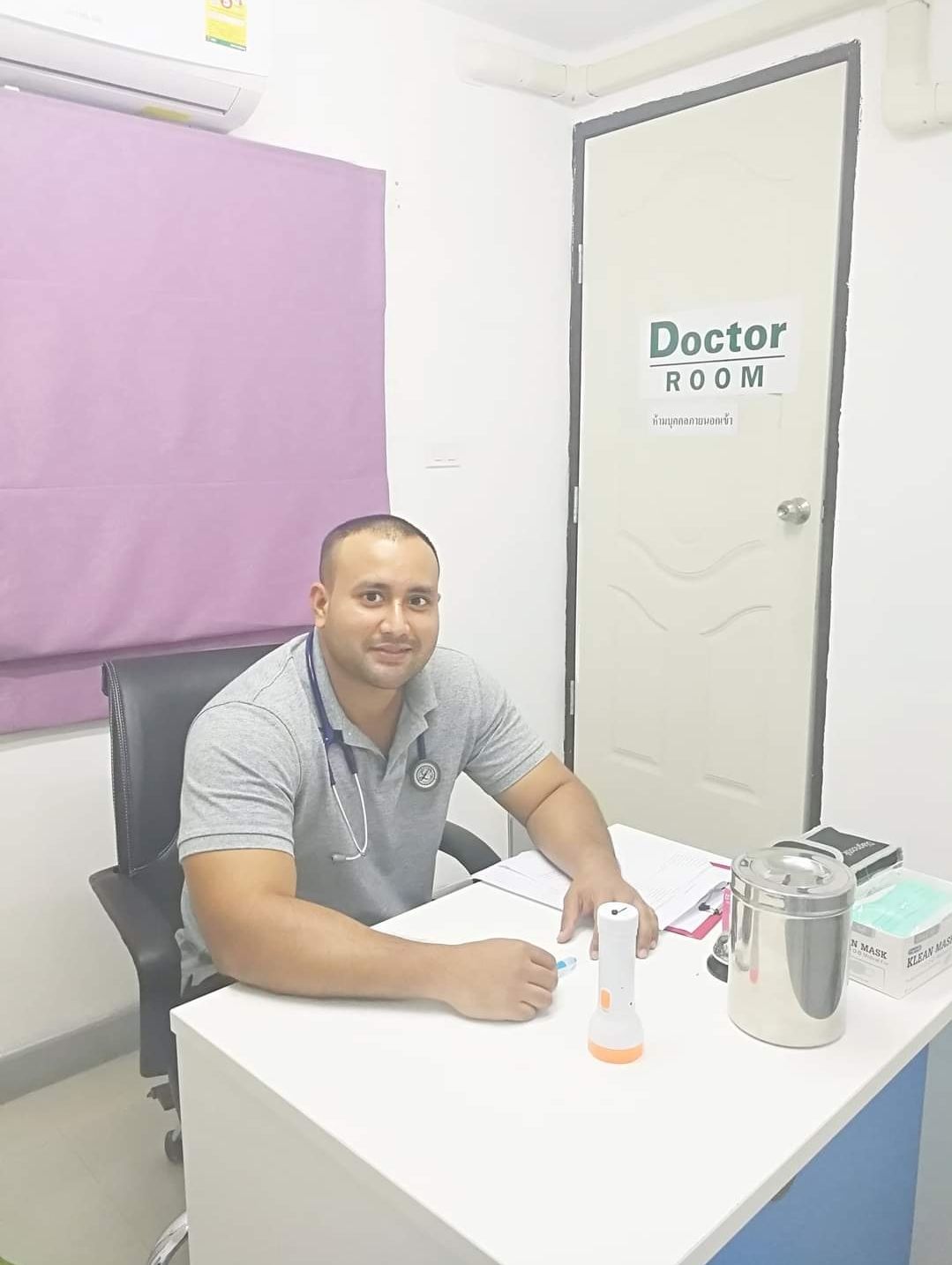
Dr. Ponlawat Pitsuwan is a physician at Doctor Bangkok, a private clinic in central Bangkok. He sees expats, residents, and medical tourists for general medicine, wellness consultations, and IV therapy. His focus is straightforward, evidence-based care delivered in plain language.