
Clinically reviewed by Dr. Ponlawat Pitsuwan, Physician, Doctor Bangkok. Last reviewed: August 2026
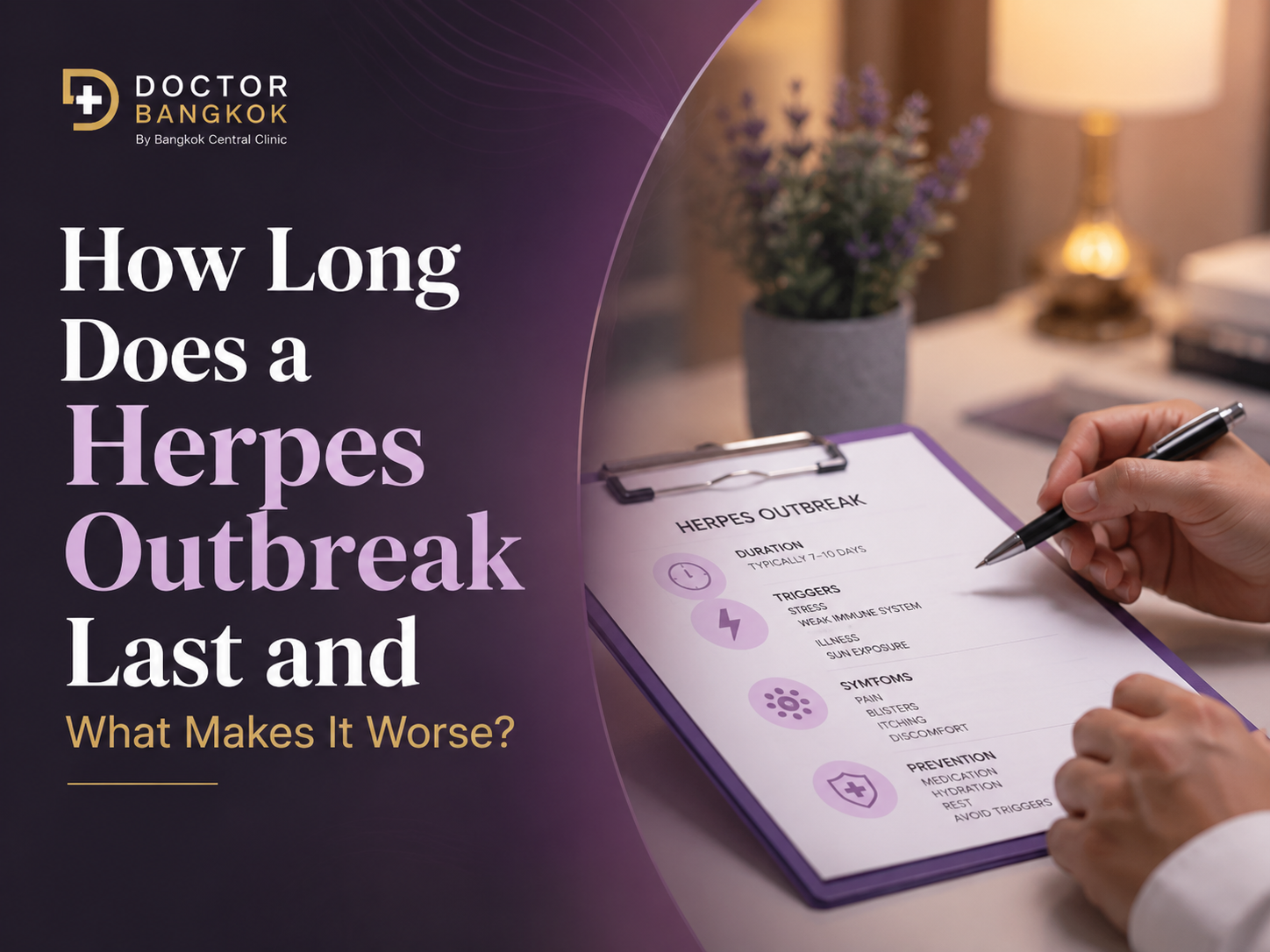
A first herpes outbreak usually lasts two to four weeks. Recurrent outbreaks are shorter, typically seven to ten days. Starting antiviral medication within 72 hours of your first symptoms can cut that time down. If you are unsure whether what you have is herpes, the most accurate time to test is during an active outbreak.
If you are reading this because something appeared a few days ago and you are not sure what it is, that is exactly the right time to act. A lot of patients come to me after waiting a week, sometimes two, hoping it would just go away. Sometimes it does. But the window for the most effective treatment closes fast.
Herpes is one of the most common infections I see at the clinic, and one of the most misunderstood. Most people either panic or ignore it. Neither helps. What actually helps is knowing what you are dealing with, how long it is likely to last, and what to do about it right now.

First Outbreak vs. Recurrent Outbreaks — How Long Each One Lasts
The first outbreak is almost always the worst one. Your immune system has never seen this virus before, so it takes longer to get it under control. Most people deal with symptoms for two to four weeks.
Recurrent outbreaks are a different story. Your body already has antibodies, so it responds faster. Most recurrent episodes clear in seven to ten days. Some people find theirs resolve in as little as three to five days.
A lot of patients are surprised to learn their first outbreak may not look dramatic. Some people have blisters. Some have redness and discomfort that gets mistaken for a rash, an ingrown hair, or friction irritation. That is especially common here in Bangkok, where heat and humidity cause skin reactions that look similar.
| First Outbreak | Recurrent Outbreak | |
|---|---|---|
| Typical duration | 2 to 4 weeks | 7 to 10 days |
| Severity | Usually worst episode | Milder over time |
| Systemic symptoms | Fever, body aches, swollen glands | Rare |
| Warning signs before blisters | Possible, sometimes none | Tingling, itching, burning |
| Best time to test | During active sores | During active sores (PCR swab) or between outbreaks (blood test) |
The Stages of a Herpes Outbreak
Most outbreaks follow the same pattern. Knowing where you are in it helps you make better decisions.
It starts with a warning phase called the prodrome. You may feel tingling, itching, or burning before anything appears on the skin. This phase lasts one to two days and is the best time to start antiviral medication.
Then blisters form. Small, fluid-filled sores appear, sometimes in a cluster, and can be painful. After a few days the blisters break open and become shallow sores. This is often the most uncomfortable stage.
After that, the sores dry out and crust over. Picking at crusts delays healing and raises the risk of a skin infection. Full healing for a first outbreak usually takes another one to two weeks. For recurrent outbreaks, it is faster.

What Makes a Herpes Outbreak Last Longer
This is what I get asked most often. Patients want to know why their outbreak seems to be dragging on.
Stress is the biggest factor. Physical and emotional stress both suppress your immune response, giving the virus more room to run. I see this a lot with expats and visitors who arrive in Bangkok already run down from long-haul flights and disrupted sleep.
UV light exposure is a well-documented trigger for oral herpes. A week at the beach without sun protection on your lips can set one off and slow healing during an active outbreak. Poor sleep, illness, hormonal shifts, and anything else that strains your immune system can also extend an episode.
Bangkok-specific factors matter too. The heat and humidity here can slow healing of surface lesions. Tight clothing and friction in the genital area do not help. Staying cool, wearing loose breathable clothing, and keeping the area clean and dry all make a genuine difference.
Can Antiviral Medication Shorten a Herpes Outbreak?
Yes, and the timing matters a lot.
The three antivirals used for herpes are acyclovir, valacyclovir, and famciclovir. They do not cure herpes. The virus stays in your system between outbreaks. But they can meaningfully shorten how long an outbreak lasts and how severe it gets.
For a first outbreak, starting treatment early can shorten duration by two to four days. For recurrent outbreaks, starting within 72 hours of the first symptom, ideally during the prodrome, can cut the episode short by one to two days. Some patients start at the first sign of tingling and the blister never fully develops.
There are two approaches. Episodic therapy means you take antivirals when an outbreak starts. Suppressive therapy means you take a daily low dose to reduce how often outbreaks happen. If you are getting six or more outbreaks a year, daily suppressive therapy is worth discussing with your doctor. Good evidence supports it for reducing both frequency and transmission risk to partners.
How Long Are You Contagious During a Herpes Outbreak?
You are contagious from the start of the prodrome through to when the skin has fully healed. That includes the period before any visible sores appear, which is why transmission can happen even when someone thinks they are fine.
The virus can also be present on the skin between outbreaks with no symptoms at all. This is called asymptomatic shedding, and it is one of the main reasons herpes spreads so widely. If you have HSV-2 and are sexually active, this matters for your partner regardless of visible outbreaks.
Condoms reduce transmission risk but do not eliminate it, because shedding can occur in areas not covered. Suppressive antiviral therapy significantly reduces shedding and, with it, transmission risk.
Getting Tested and Treated for Herpes in Bangkok
A lot of patients I see waited weeks before coming in. Some were embarrassed. Some assumed it would go away. Some did not know where to go or whether the clinic would be confidential and English-speaking.
The answer to all of those concerns is straightforward. Doctor Bangkok is confidential, English-speaking, and on Sukhumvit, accessible from the BTS.
If you have an active outbreak right now, the best test is a PCR swab taken from the sore. This confirms whether you have HSV-1 or HSV-2 and gives you a reliable result. If your outbreak has already cleared, a herpes IgG blood test can detect whether you carry the virus. You can find full details on our sexual health testing page.
You can get tested and receive an antiviral prescription on the same visit. That matters because the 72-hour treatment window does not wait for a follow-up appointment. If you are not sure whether what you have is herpes or something else, come in during the outbreak. That is when we can give you the clearest answer.
How to Reduce How Often Outbreaks Come Back
You cannot prevent outbreaks entirely, but most patients can reduce how often they happen.
Managing stress is the single most impactful thing you can do. Sleep, diet, and treating illness quickly all help. If sunburn triggers your oral outbreaks, SPF lip balm every time you go outdoors is a simple fix. If Bangkok heat seems to aggravate things, lightweight cotton clothing and staying cool during an outbreak genuinely helps.
For people with frequent recurrences, daily suppressive therapy with valacyclovir or acyclovir is the most evidence-based option. It will not eliminate all outbreaks but can reduce their frequency. It also reduces the amount of virus on the skin surface, which lowers the risk of passing it to a partner.
If your outbreaks are becoming more frequent or more severe, that is worth discussing with a doctor. It can sometimes signal that something else is affecting your immune system.
Worried about a current outbreak or want to know your herpes status? Doctor Bangkok offers confidential herpes testing and antiviral prescriptions on the same visit, with English-speaking doctors and fast results. We are on Sukhumvit and BTS accessible. Visit doctorbangkok.co.th/std-test-bangkok/ to book or walk in today.
Frequently Asked Questions
How long does a first herpes outbreak last compared to later ones?
A first outbreak typically lasts two to four weeks because your immune system is encountering the virus for the first time. Recurrent outbreaks are usually seven to ten days and often milder. Some patients find recurrent episodes last as little as three to five days, especially if they start antiviral medication early.
Can antiviral medication shorten how long a herpes outbreak lasts?
Yes. Starting acyclovir, valacyclovir, or famciclovir within 72 hours of your first symptom can cut outbreak duration by one to two days for recurrent episodes and two to four days for a first outbreak. At Doctor Bangkok, we can prescribe antivirals on the same visit as your STD test so you do not lose that window.
What triggers a herpes outbreak and makes it last longer?
The main triggers are stress, poor sleep, UV light exposure, illness, and hormonal changes. For people in Bangkok, long-haul travel fatigue, heat, and disrupted routines are common aggravating factors. Addressing these during an outbreak can help it resolve faster.
Should I get tested during an active outbreak or wait until it clears?
During an active outbreak is the best time. A PCR swab from the sore gives the most accurate result and tells you whether you have HSV-1 or HSV-2. Between outbreaks, an IgG blood test can detect antibodies. Doctor Bangkok offers both, with same-day results available.
Is it possible to have herpes without ever having an obvious outbreak?
Yes, and it is more common than most people realise. Many people with HSV-2 have symptoms so mild they are mistaken for an ingrown hair, razor burn, or minor skin irritation. Asymptomatic shedding still occurs, meaning the virus can be passed on even without visible sores. This is why routine sexual health screening matters even when you feel fine.
How long am I contagious during a herpes outbreak?
From the very start of the prodrome through to when the skin has fully healed. You are most contagious when blisters are active and open, but shedding can begin before sores appear. Antiviral therapy and condom use both reduce transmission risk, though neither eliminates it entirely.
Dr. Ponlawat Pitsuwan
Physician, Doctor Bangkok
a private medical clinic in central Bangkok. He sees expats, residents, and medical tourists for sexual health concerns including herpes testing, STD screening, and antiviral treatment. His focus is straightforward, evidence-based care delivered in plain language.
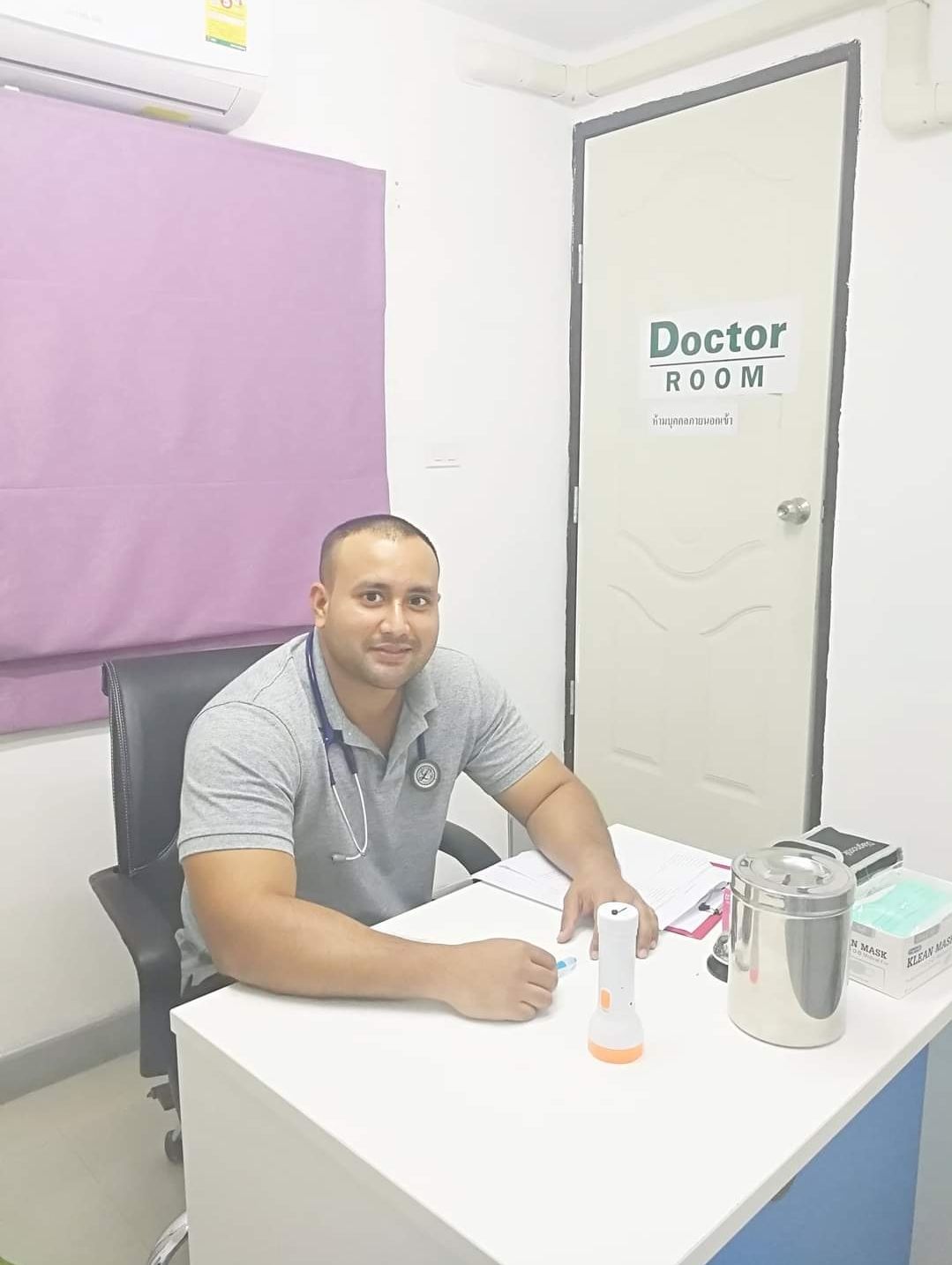
Dr. Ponlawat Pitsuwan is a physician at Doctor Bangkok, a private clinic in central Bangkok. He sees expats, residents, and medical tourists for general medicine, wellness consultations, and IV therapy. His focus is straightforward, evidence-based care delivered in plain language.