
Clinically reviewed by Dr. Ponlawat Pitsuwan, Physician, Doctor Bangkok. Last reviewed: August 2026
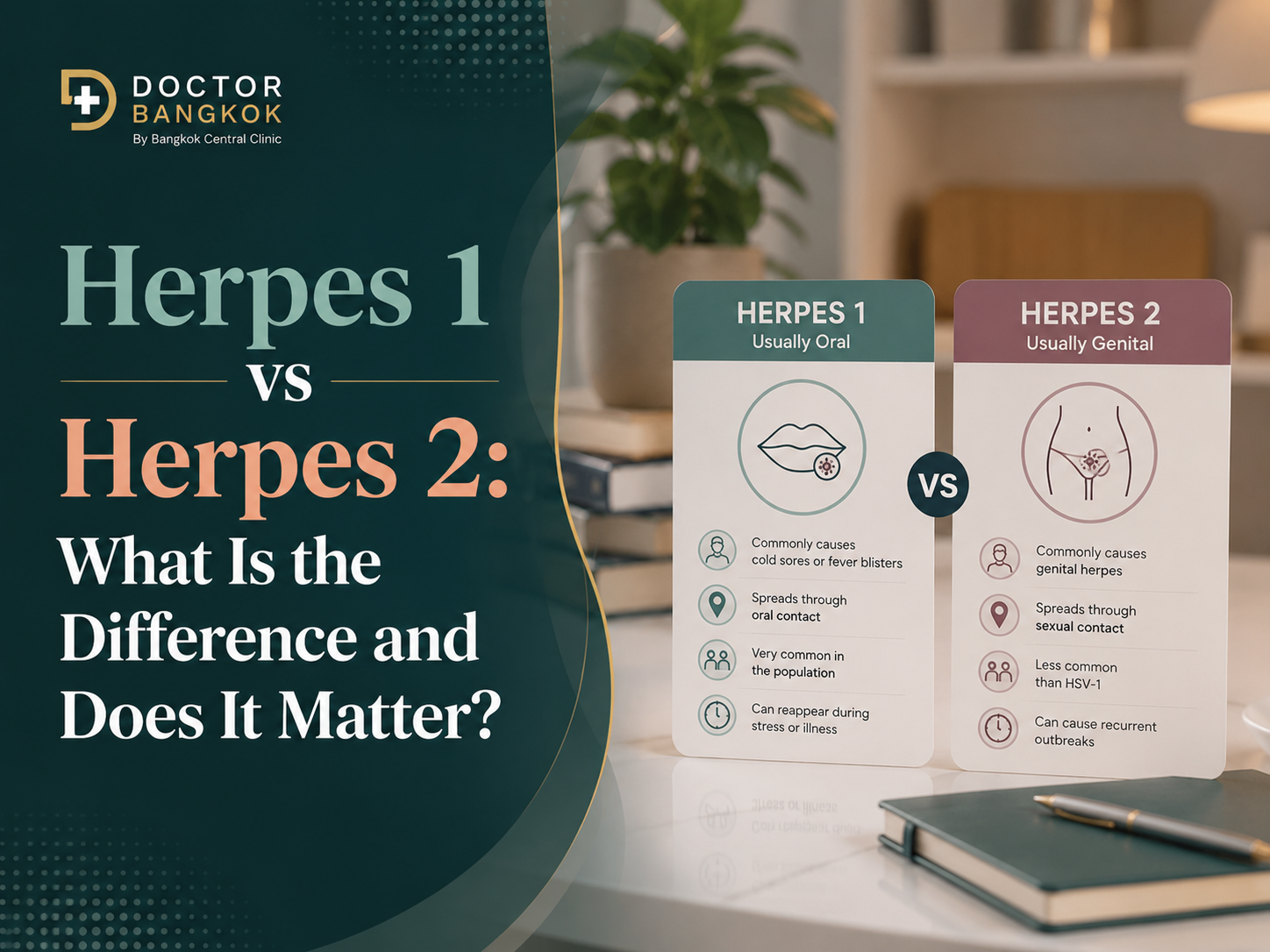
HSV-1 typically causes cold sores around the mouth, while HSV-2 typically causes genital herpes. But the line between them is blurrier than most people realise. HSV-1 can cause genital herpes through oral sex, and which type you have affects how often outbreaks return and how easily you can pass it on without knowing.
If you have just noticed a sore, had a positive test result, or are trying to understand what a partner has told you, you are probably looking for a straight answer. The short version: both types are herpes simplex virus, both are lifelong, and both are manageable. But the type does matter, and here is why.
A lot of patients come in thinking herpes is one thing. They are surprised to learn that HSV-1 and HSV-2 behave quite differently over time, that one can show up where you would expect the other, and that knowing which type you have changes how we approach treatment and partner conversations.

HSV-1 and HSV-2 — The Basic Difference
HSV-1 is the virus most commonly responsible for cold sores. You usually pick it up in childhood, often from a kiss or shared cup, and it lives in the nerves around your face and mouth. Most people with HSV-1 either never have a noticeable outbreak or get occasional cold sores that come and go.
HSV-2 is the type most closely linked to genital herpes. It lives in the nerves at the base of your spine and tends to cause sores or ulcers in the genital area. It also recurs more often than HSV-1 and can be active on the skin with no symptoms at all.
Both types spread through skin-to-skin contact. Neither requires a visible sore to be transmitted.
The Blurring Line — When HSV-1 Causes Genital Herpes
This is the part most people do not know, and it matters. HSV-1 can infect the genital area. It happens through oral sex, even when no cold sore is visible. HSV-1 now accounts for a significant and growing share of new genital herpes diagnoses, particularly in younger adults.
So if you test positive for genital herpes and the result comes back HSV-1, it does not mean something unusual happened. It just means the virus was transmitted to a different site than the one it typically prefers.
Knowing your type is the part that actually matters. Genital HSV-1 and genital HSV-2 behave very differently over time, and that changes the advice I give about recurrence, suppressive treatment, and partner risk.

Why the Type Affects How Often Outbreaks Come Back
HSV-1 prefers the nerves near the face. When it infects the genital area, it tends to recur very rarely, sometimes once or twice in a lifetime.
HSV-2 is right where it wants to be in the genital area. It recurs far more often, sometimes many times a year, and it sheds from the skin even between outbreaks. That ongoing shedding is why HSV-2 carries a higher transmission risk to partners.
This changes what I recommend. A patient with genital HSV-1 who has had one outbreak may never need daily antiviral medication. A patient with genital HSV-2 who has frequent recurrences, or a partner they want to protect, is a much better candidate for suppressive therapy.
Asymptomatic Shedding — How You Can Pass Herpes On Without Knowing
You do not need a visible sore to transmit herpes. The virus can be present on the skin with no symptoms, and a partner can pick it up through normal sexual contact.
HSV-2 sheds without symptoms more often than HSV-1. This is part of why genital HSV-2 spreads more easily between partners. HSV-1 around the mouth also sheds, which is how cold sore transmission to a partner’s genitals can happen during oral sex.
Condoms reduce the risk but do not eliminate it, because the virus can shed from skin that a condom does not cover. This is an honest conversation I have with patients regularly, and it is part of why knowing your type is worth doing.
Does the Type of Herpes Actually Matter Clinically?
Yes. Here is the practical answer.
Recurrence frequency is different. Genital HSV-2 recurs much more often than genital HSV-1. If you have genital HSV-1, you may have very few outbreaks over your lifetime. If you have genital HSV-2, recurrences are more likely and may warrant daily suppressive antiviral medication such as valacyclovir or acyclovir.
Transmission risk is different. Because HSV-2 sheds more often without symptoms, the risk of passing it to a partner is higher over time. Suppressive therapy reduces, though does not eliminate, that risk, and the evidence behind it is strong.
Pregnancy is worth mentioning. A first-time genital herpes infection late in pregnancy, from either type, carries risks for the newborn. It is not a reason to panic, but it is a reason to speak openly with your obstetrician. If you are pregnant and have questions about herpes, come in and we will talk through it.
The emotional side is real too. Many patients I see in Bangkok are dealing with a diagnosis far from home, without their usual support. The type does not change that. What I can tell you is that herpes is common, it is manageable, and a diagnosis does not define your relationships or your health.
Getting Tested for Herpes in Bangkok — What You Actually Need to Know
Which test you need depends on your situation.
If you have an active sore right now, a PCR swab from that sore is the most accurate option. Do not wait for the sore to heal before coming in. If you have no current symptoms but want to know whether you have been exposed, an IgG antibody blood test can detect past infection. Your body takes up to 12 weeks to develop detectable antibodies after exposure, so testing too early can give a false negative.
A note on false positives: the HSV-2 IgG test has a known false positive rate, particularly at low positive readings. If your result is weakly positive for HSV-2, a confirmatory test is worth discussing with your doctor.
Doctor Bangkok offers confidential herpes testing, both PCR swab during outbreaks and IgG antibody screening, as part of our STD testing service in Bangkok. We will advise you on which test fits your situation, explain the results clearly, and discuss next steps without judgment.
Treatment — Managing HSV-1 and HSV-2 Long-Term
Neither type can be cured. Both can be managed well with antivirals.
Treatment falls into two categories. Episodic treatment means taking antivirals at the start of an outbreak to shorten its length and severity. Suppressive therapy means taking antivirals daily to reduce how often outbreaks happen and to lower the chance of passing the virus to a partner.
Suppressive therapy makes the most sense for people who have frequent outbreaks, for people with partners who do not have herpes, and sometimes during pregnancy. Daily antivirals also reduce, though do not eliminate, asymptomatic shedding. This is something I always cover with patients who are newly diagnosed and in a relationship.
If you have noticed symptoms, had a potential exposure, or want to know your herpes status as part of a sexual health check, Doctor Bangkok can help. We offer confidential HSV-1 and HSV-2 testing, including PCR swab and IgG antibody tests, at our clinic on Sukhumvit Soi 13. English-speaking doctors, discreet results, no referral needed. Walk-ins welcome or book online at doctorbangkok.co.th.
Frequently Asked Questions
If I have HSV-1 cold sores, can I give my partner genital herpes?
Yes, you can. HSV-1 can be transmitted to a partner’s genitals through oral sex, including when no cold sore is visible, because the virus can shed from the skin without symptoms. This is now one of the most common ways genital herpes is acquired. If this is a concern, both partners can get tested at Doctor Bangkok to understand their status.
What is the difference between a herpes swab test and a blood test?
A PCR swab from an active sore is the most accurate test during an outbreak. A blood test, specifically an IgG antibody test, detects past exposure even when you have no symptoms. Antibodies take up to 12 weeks to develop after exposure, so timing matters. A doctor can advise you on which test makes sense for your situation.
Is genital HSV-1 less serious than genital HSV-2?
In terms of recurrence, yes. Genital HSV-1 tends to recur far less often, sometimes only once or twice ever. Genital HSV-2 recurs more often and sheds without symptoms more frequently, which raises the risk of passing it to a partner. Both types are manageable with antivirals, but the type guides what we recommend for suppressive therapy.
Can I get herpes tested in Bangkok with no symptoms?
Yes. An IgG blood test can detect HSV-1 or HSV-2 antibodies even without an active outbreak. It is a routine part of sexual health screening. Doctor Bangkok offers confidential herpes antibody testing as part of its sexual health screening service, with English-speaking doctors and discreet results.
I was just diagnosed with herpes in Bangkok. What should I do now?
First, make sure the type has been confirmed, as HSV-1 and HSV-2 are managed differently over time. Then speak with a doctor about whether episodic or daily suppressive antiviral treatment is right for you. Doctor Bangkok can provide a follow-up consultation, prescription, and ongoing support in a straightforward, non-judgmental setting.
Do condoms fully protect against herpes transmission?
Condoms significantly reduce the risk but do not eliminate it. Herpes can shed from skin that a condom does not cover. Combined with suppressive antiviral therapy, the risk is reduced further. This is worth discussing openly with your doctor, especially if your partner does not have herpes.
About the author: Dr. Ponlawat Pitsuwan is a physician at Doctor Bangkok, a private medical clinic in central Bangkok. He sees expats, residents, and medical tourists for sexual health consultations, STD testing, and ongoing herpes management. His focus is straightforward, evidence-based care delivered in plain language.
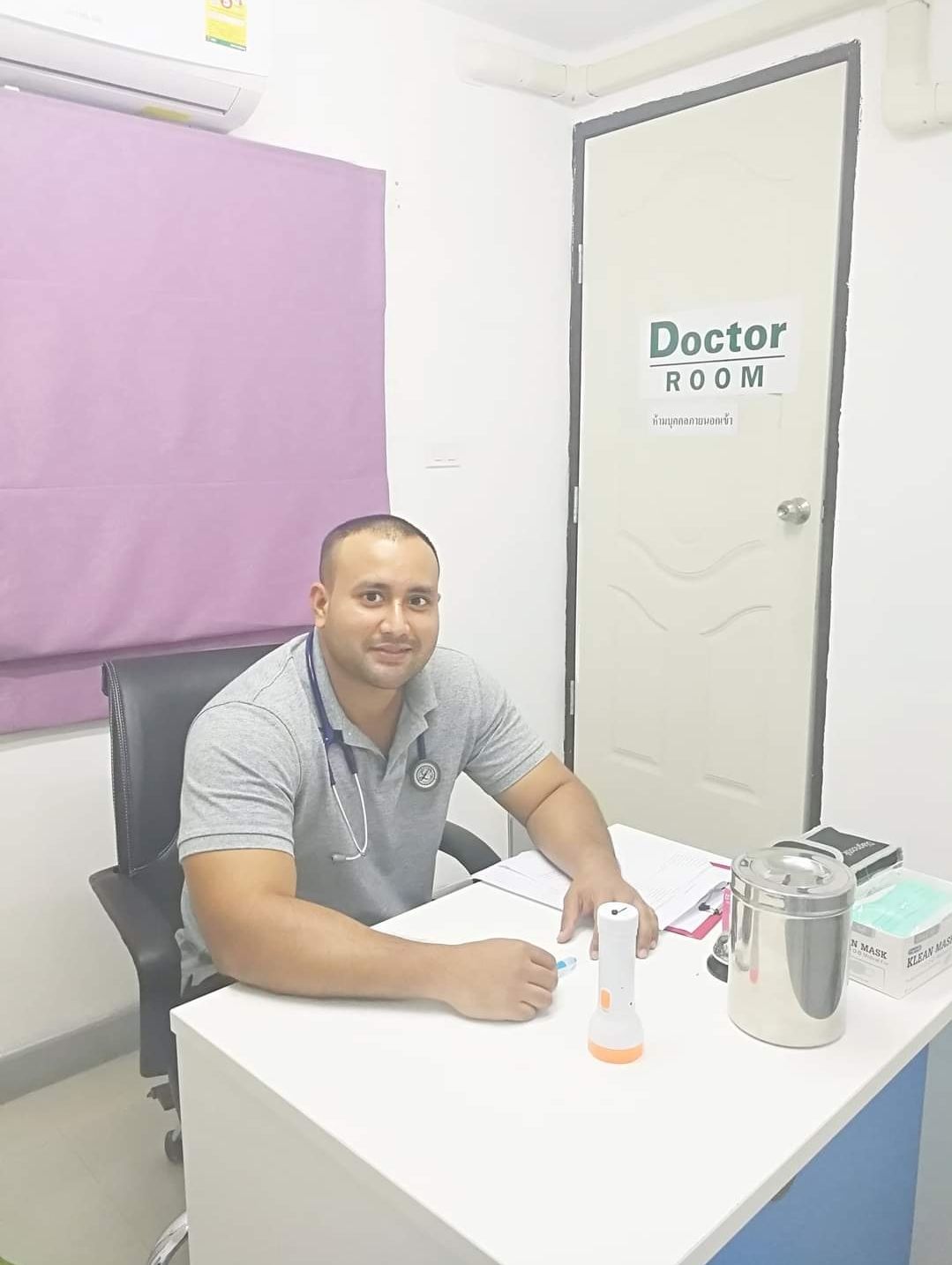
Dr. Ponlawat Pitsuwan is a physician at Doctor Bangkok, a private clinic in central Bangkok. He sees expats, residents, and medical tourists for general medicine, wellness consultations, and IV therapy. His focus is straightforward, evidence-based care delivered in plain language.