
Clinically reviewed by Dr. Ponlawat Pitsuwan, Physician, Doctor Bangkok.
Last reviewed: October 2026
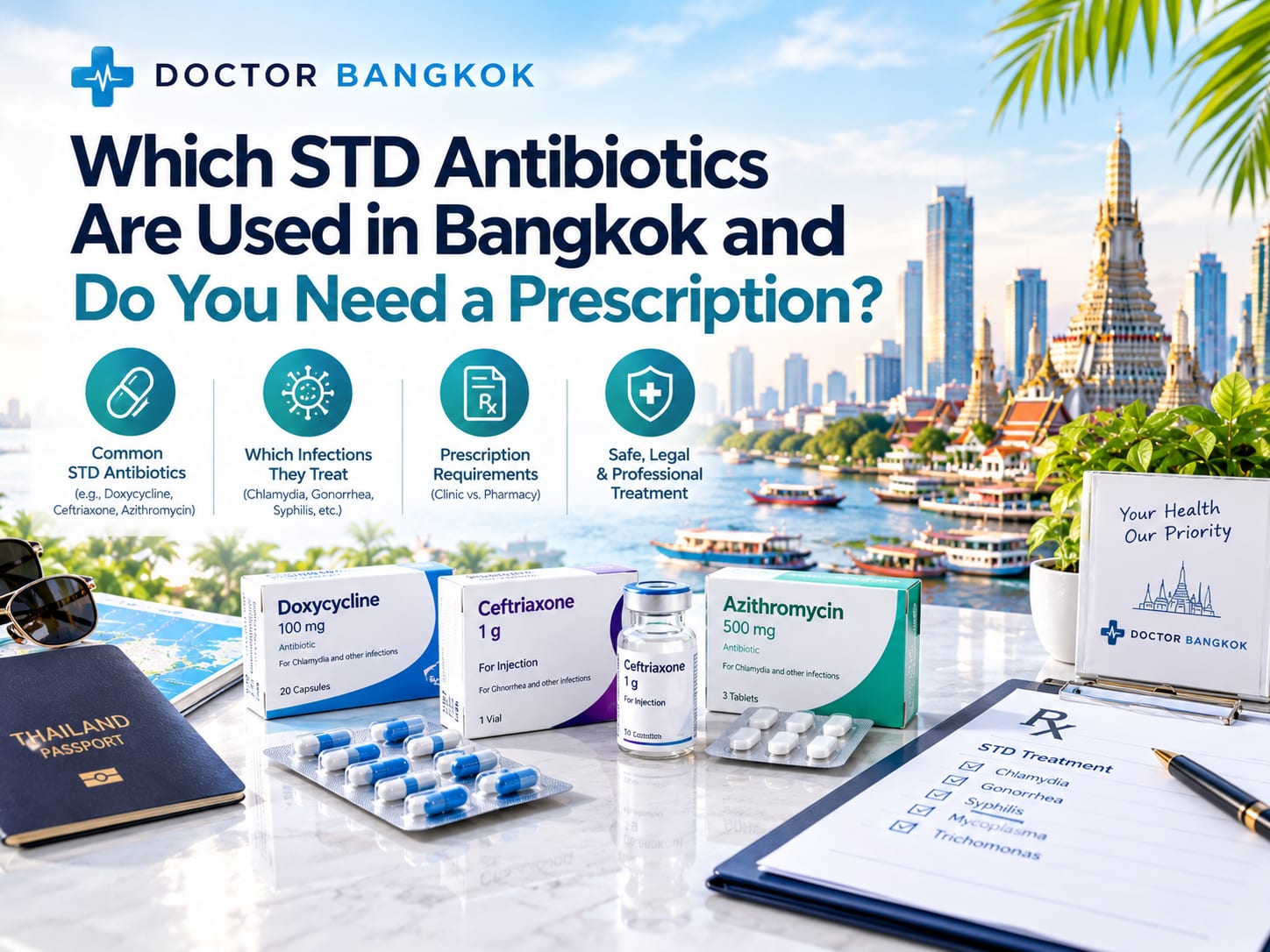
Bacterial STDs in Bangkok are treated with prescription antibiotics: ceftriaxone plus azithromycin for gonorrhea, doxycycline or azithromycin for chlamydia, benzathine penicillin for syphilis, and metronidazole for trichomoniasis. Under Thai law, antibiotics are prescription-only medicines. Getting tested and diagnosed before treatment is not optional, it is how you make sure you are taking the right drug for the right infection.
You are reading this on your phone, probably fitting it between something else. You think you may have an STD, you are in Bangkok, and you want to know what gets prescribed and whether you can grab something from a pharmacy. Both are fair questions. The short answers: yes, specific antibiotics are used for each infection, and yes, you legally need a prescription for them in Thailand.
What stops most people from getting this right is skipping the test. Without a confirmed diagnosis, you cannot know which antibiotic you need. Bangkok also has a documented resistance problem with gonorrhea, which means the wrong drug will not just fail to help. It will delay the right treatment while your symptoms worsen, or disappear in a way that masks a still-active infection.

The STD Situation in Bangkok That Expats and Visitors Should Know
Syphilis cases in Thailand have risen sharply over recent years, with national surveillance data recording around 21,000 reported cases as of mid-2025, continuing an upward trend. Gonorrhea remains the most commonly reported bacterial sexually transmitted infection in the country. These are not abstract figures if you live here or pass through regularly.
Many people assume they would know if something was wrong. With chlamydia especially, most people have no symptoms at all. That is why testing rather than waiting is the right call.
Which STD Antibiotics Are Prescribed in Bangkok
The drugs used here follow WHO STI treatment guidelines, which Thai clinics apply alongside local resistance data.
Gonorrhea
Current first-line treatment is a single intramuscular ceftriaxone injection. Azithromycin is no longer routinely combined with ceftriaxone for gonorrhea, because resistance to azithromycin has risen significantly and co-treatment is no longer supported by current major guidelines including CDC 2021. If chlamydia has not been excluded, doxycycline is added to cover that infection separately.
Drug-resistant gonorrhea is an active concern in Bangkok. A GARDP-supported clinical trial is running in the city to test alternative regimens because standard first-line agents are under pressure from resistance. A culture and sensitivity test confirms whether the strain you have will respond to what you are given.
Chlamydia
Doxycycline taken twice daily for seven days is the current preferred treatment, supported by CDC and other major guidelines. Doxycycline should not be used in pregnancy, so tell your doctor if you are pregnant or may be pregnant. Azithromycin as a single dose was widely used for years, but doxycycline has shown better results in current evidence, particularly for rectal infections. Your doctor will advise based on the site of infection and your medical history.
Syphilis
Benzathine penicillin G by injection is the standard treatment, with the number of doses set by the stage of infection. Early-stage syphilis requires fewer doses than late-stage disease. If you have a penicillin allergy, your doctor will discuss alternatives, but penicillin remains the most reliably effective option per current guidelines.
Trichomoniasis
Trichomoniasis is caused by a parasite rather than a bacterium, but it responds to metronidazole. Metronidazole should be used with caution in the first trimester of pregnancy and may interact with alcohol. Treatment is straightforward once the correct diagnosis is confirmed.

Do You Need a Prescription for STD Antibiotics in Bangkok?
Legally, yes. Under the Thai Drugs Act, antibiotics are classified as prescription-only medicines. In practice, enforcement is uneven, and some pharmacies will sell antibiotics without a prescription. You may have already noticed this.
The clinical problem with self-treating is separate from the legal one. If you buy antibiotics without a confirmed diagnosis, you are guessing. Chlamydia and gonorrhea can coexist. Syphilis can look like other conditions. Taking the wrong antibiotic risks masking symptoms while an infection continues to progress. It also contributes directly to antibiotic resistance across the city.
A confirmed diagnosis protects you after treatment too. You need to know what you had in order to retest correctly and to advise a partner. A pharmacy transaction gives you none of that. For a full breakdown of how prescriptions work in Thailand, see our sexual health service page.
Antibiotic Resistance in Bangkok and Why It Changes What You Should Do
Antibiotic resistance in gonorrhea is not a future concern in Bangkok. It is happening now. Strains resistant to older fluoroquinolone antibiotics such as ciprofloxacin are well established here. That is why ciprofloxacin is no longer recommended as a gonorrhea treatment in Thailand or most of the world.
If you are considering buying antibiotics from a pharmacy, there is no way to know from a counter whether the strain you have responds to what you are buying. Ceftriaxone remains effective for most cases right now, but resistance patterns shift. Treatment based on a culture result is always more reliable than treatment based on a guess.
What Happens at a Sexual Health Consultation at Doctor Bangkok
A sexual health consultation at Doctor Bangkok is straightforward. You speak with an English-speaking doctor, give a relevant history, and we decide which tests apply. That usually means a urine sample, a swab, or a blood test depending on the infection being assessed. Rapid results are available the same day for some tests, and PCR-based results typically come back within 24 hours.
If a bacterial infection is confirmed, we prescribe and, where relevant, administer antibiotics in the same visit. You leave with a confirmed diagnosis, the correct treatment, and a clear plan for follow-up. The clinic is BTS accessible and open to both walk-ins and scheduled appointments. Results are not shared with employers, immigration, or insurers without your consent.
This is what getting STD antibiotics in Bangkok should look like: a prescription tied to a diagnosis, not a guess from a shelf. You can book a sexual health appointment or read more about what the consultation involves before you come in.
After Your Antibiotics: Retesting and Partner Notification
Finishing antibiotics does not automatically confirm the infection is gone. For gonorrhea, a test of cure is recommended one to two weeks after completing treatment. For chlamydia, retesting is advised at around three to four weeks to allow accurate NAAT-based results. For syphilis, blood tests at three months and again at six months confirm that antibody levels are falling as expected.
Avoid sex until you have completed treatment and, where possible, until a follow-up test confirms clearance. Telling a recent partner matters. If they are not treated, reinfection is common. Some clinics offer discreet partner notification support if that helps. You can ask about this when you visit our sexual health clinic.
Book a sexual health consultation at Doctor Bangkok Doctor Bangkok offers confidential sexual health consultations with English-speaking doctors. We test for chlamydia, gonorrhea, syphilis, trichomoniasis, and other infections, and can prescribe and administer antibiotics the same day where a diagnosis is confirmed. The clinic is centrally located and BTS accessible. Book a walk-in or scheduled appointment through our sexual health page.
Frequently Asked Questions
Dr. Ponlawat Pitsuwan
Physician, Doctor Bangkok
a private medical clinic in central Bangkok. He sees expats, residents, and medical tourists for sexual health consultations, STD testing, and treatment including antibiotic prescriptions for bacterial infections. His focus is straightforward, evidence-based care delivered in plain language.
References
- Workowski KA, Bachmann LH, Chan PA, et al. Sexually Transmitted Infections Treatment Guidelines, 2021. MMWR Recomm Rep. 2021;70(4):1-187.
- Bachmann LH, Johnson RE, Cheng H, et al. Update to CDC’s Treatment Guidelines for Gonococcal Infection, 2020. MMWR Morb Mortal Wkly Rep. 2020;69(50):1911-1916.
- World Health Organization. WHO guidelines for the treatment of Chlamydia trachomatis, Neisseria gonorrhoeae, and Treponema pallidum. Geneva: WHO; 2016.
- Stier EA, et al. Sexually Transmitted Infections: Updates From the 2021 CDC Guidelines. Am Fam Physician. 2022;105(5):514-520.
- Thailand Department of Disease Control, Ministry of Public Health. Syphilis surveillance data, 2025. Reported via Government Public Relations Department.
- Global Antibiotic Research and Development Partnership (GARDP). Gonorrhoea research programme.
The information in this article is for educational purposes only and does not constitute medical advice. It should not be used to self-diagnose or replace a consultation with a qualified physician. If you have concerns about your health, contact a licensed medical professional. For appointments at Doctor Bangkok, visit doctorbangkok.co.th.
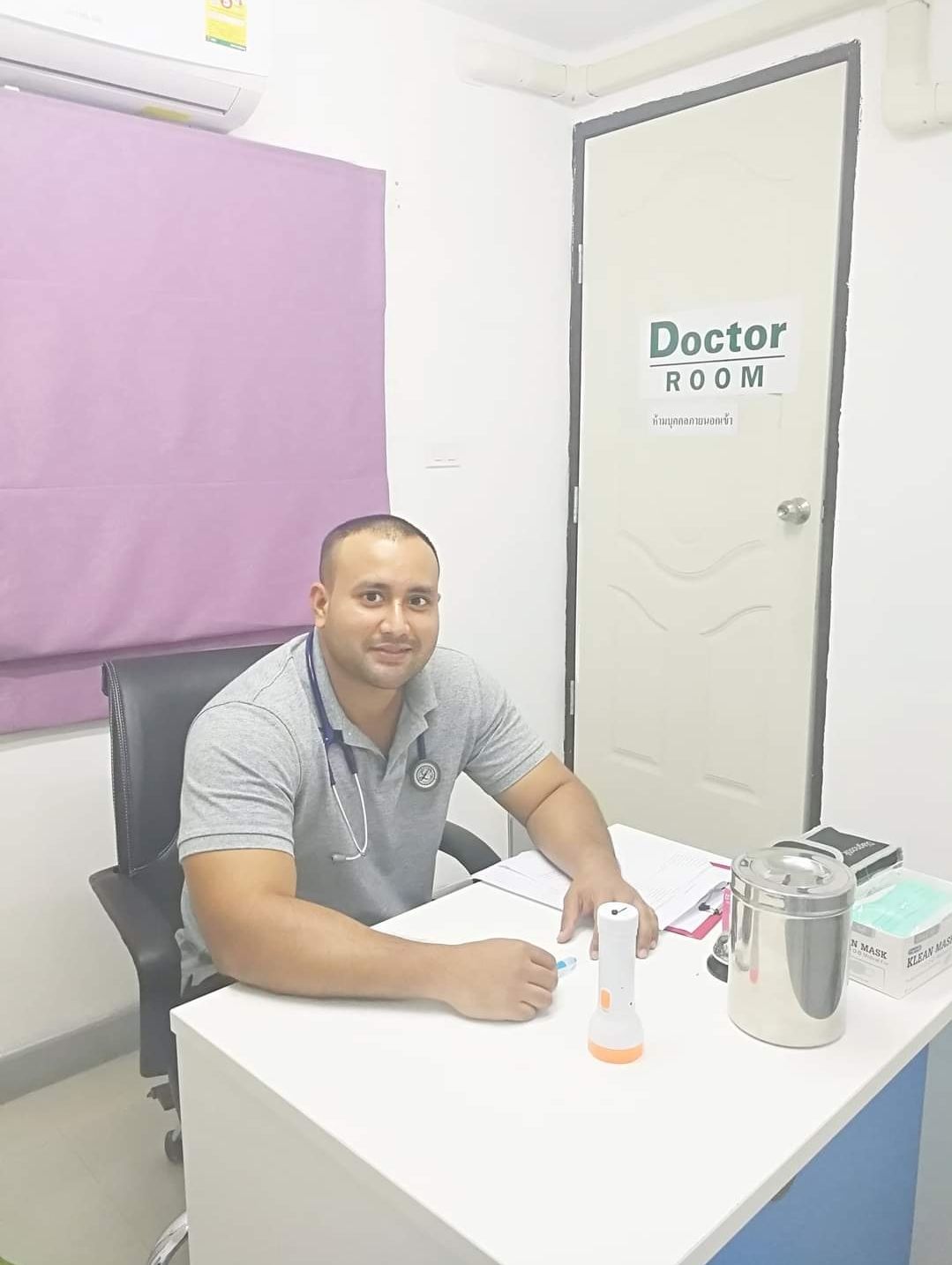
Dr. Ponlawat Pitsuwan is a physician at Doctor Bangkok, a private clinic in central Bangkok. He sees expats, residents, and medical tourists for general medicine, wellness consultations, and IV therapy. His focus is straightforward, evidence-based care delivered in plain language.