
Clinically reviewed by Dr. Ponlawat Pitsuwan, Physician, Doctor Bangkok.
Last reviewed: October 2026
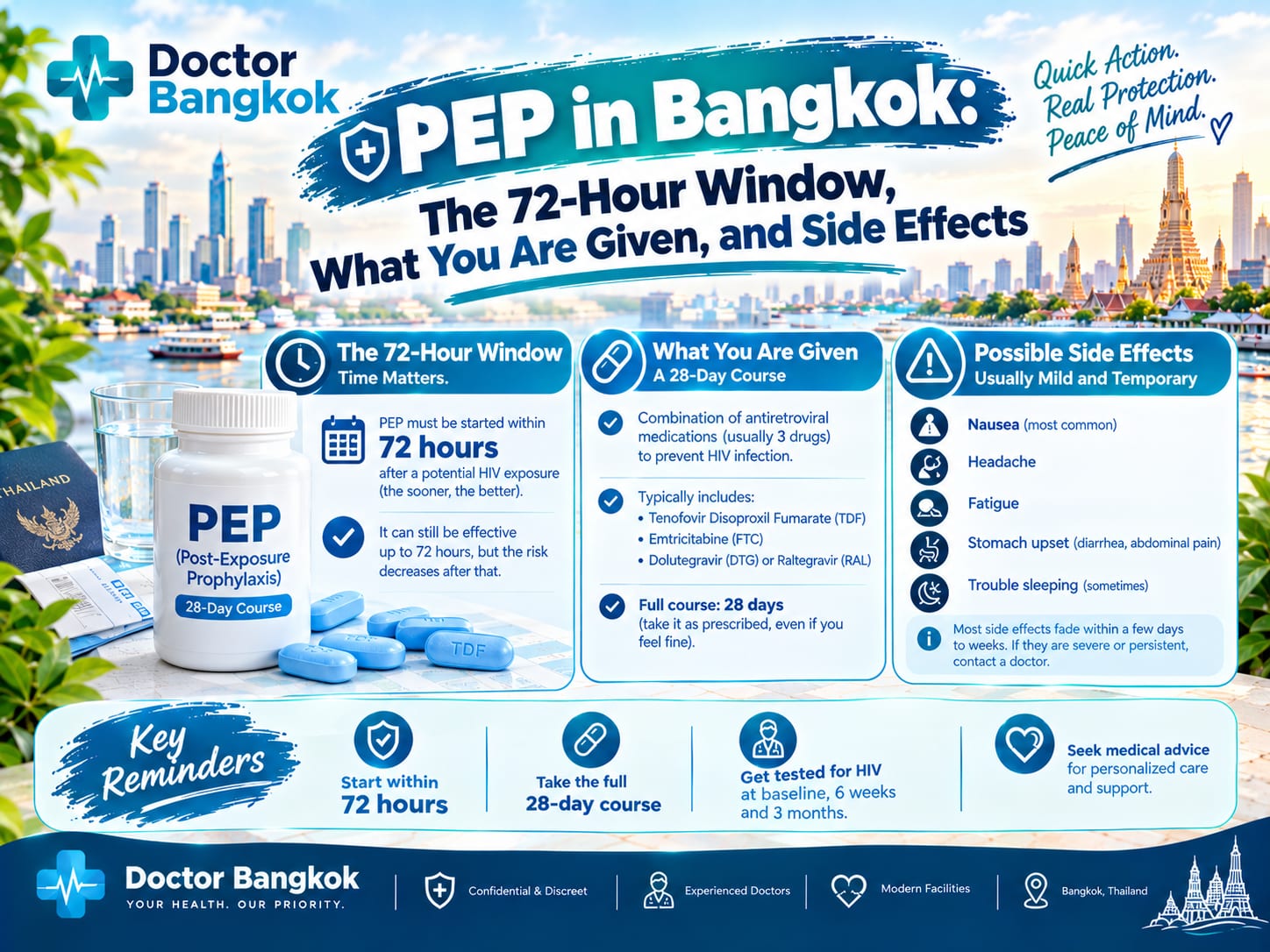
PEP (post-exposure prophylaxis) is a 28-day course of antiretroviral medication that can prevent HIV after a possible exposure. It must start within 72 hours of exposure. The sooner you start, the better it works. If you are in Bangkok and think you may have been exposed, get assessed today. Do not wait to see if symptoms appear.
The clock starts the moment exposure happens. If something occurred last night, this morning, or two days ago, the question is not whether to get checked. It is how quickly you can get to a clinic. Seventy-two hours is the hard limit for starting PEP in Bangkok, and every hour inside that window matters.
PEP is not something you order online or self-prescribe. It requires a doctor to assess your exposure, confirm your HIV-negative status, check a few blood values, and prescribe the right course. At Doctor Bangkok, that entire process happens the same day, in English, in a private setting. Here is what to expect.

Am I Actually at Risk? How the Exposure Assessment Works
Not every possible exposure carries the same risk. Before prescribing PEP, a doctor needs to understand what happened. The route of exposure matters: receptive anal sex carries a higher transmission risk per act than oral sex, which carries a very low risk. Whether the other person is known to be HIV-positive, and whether they are on treatment with an undetectable viral load, also changes the picture significantly.
This is a clinical conversation, not a judgement one. The goal is to confirm whether PEP is warranted and to document the exposure clearly before treatment starts.
If the source partner is HIV-positive and on effective treatment with an undetectable viral load, the risk of transmission is effectively zero. This is the principle behind U=U: Undetectable equals Untransmittable. A doctor will still review the full picture with you before deciding the right course of action.
What Happens at Your First Appointment
The first appointment covers three things: the exposure assessment above, baseline blood tests, and the prescription.
Baseline blood tests run before you start PEP. An HIV Ag/Ab combination test confirms you are seronegative at the time of exposure. This matters because PEP is for prevention, not treatment. If you are already HIV-positive, the medication required is entirely different.
You will also be tested for hepatitis B, hepatitis C, and syphilis, because these can be transmitted through the same exposure routes. A kidney function check is also included: the most commonly prescribed PEP regimen contains tenofovir, which is processed by the kidneys. Results come back quickly, and in most cases your prescription is issued the same day.

PEP in Bangkok: What You Are Given and How to Take It
The standard PEP regimen in Bangkok follows WHO and Thai national guideline recommendations. Most patients receive a combination of tenofovir, emtricitabine, and dolutegravir, taken as a single daily dose for 28 days. Some regimens use raltegravir in place of dolutegravir. Your doctor will explain what you have been given and why.
The 28-day course must be completed in full. Missing doses reduces how well PEP works. Take your doses at roughly the same time each day and set a phone reminder if that helps. If you are travelling within Thailand during the 28 days, make sure you have enough supply before leaving Bangkok.
The 72-Hour Window: Earlier Is Always Better
Seventy-two hours is the outer limit, not the goal. Starting PEP within 24 hours of exposure gives you the strongest protection. Starting at hour 71 still helps, but the benefit is lower than starting at hour 12. Both the WHO and CDC recommend starting as soon as possible after exposure.
If you are past 72 hours, PEP is no longer indicated for this exposure. That is a firm clinical boundary. What you should do instead is arrange a baseline HIV test now, and plan follow-up tests at four to six weeks and 12 weeks post-exposure. A negative result at 90 days using a fourth-generation HIV Ag/Ab test is considered conclusive by current guidelines. You can book an HIV test in Bangkok directly and discuss the right testing schedule at that appointment.
If you are still inside the window and in central Bangkok, Doctor Bangkok is BTS accessible and offers same-day appointments for urgent sexual health concerns. The 72-hour PEP window does not pause while you decide.
Side Effects and What to Do If You Feel Unwell
Most people tolerate the standard PEP regimen, but side effects are real and worth knowing about before you start. The most common ones are nausea, headache, fatigue, and loose stools, particularly in the first one to two weeks. These tend to settle as your body adjusts.
Taking your dose with food reduces nausea for most patients. If nausea is severe enough that you vomit within an hour of taking the tablet, contact your prescribing clinic. They need to know whether you need a replacement dose.
Drug interactions are something easily overlooked. Recreational drugs including MDMA and methamphetamine can interact with antiretroviral medications. If you are on other regular medications, including supplements and hormonal therapy, tell your doctor at the first appointment. Do not stop PEP because of side effects without speaking to a doctor first. Stopping early makes the full course ineffective.
After PEP: Follow-Up Testing and Whether PrEP Makes Sense
Finishing the 28-day course does not mean you are cleared. HIV antibodies may not be detectable immediately after exposure, even after completing PEP. A follow-up HIV test at four to six weeks post-exposure is recommended. A confirmatory test at 90 days provides a reliable final result.
Doctor Bangkok offers follow-up HIV testing as part of ongoing sexual health services at our STD clinic in Bangkok. You do not need to repeat the full baseline panel, just the HIV test at the appropriate intervals.
If your lifestyle involves ongoing risk of HIV exposure, the conversation after PEP is often the right time to start PrEP. PrEP is a daily tablet that provides continuous protection before exposure happens. Think of PEP as the emergency response and PrEP as the ongoing prevention strategy. Both are available through our PrEP and PEP service in Bangkok.
PEP vs PrEP: A Quick Comparison
| PEP | PrEP | |
|---|---|---|
| When you take it | After a possible exposure | Before ongoing risk |
| How long | 28 days | Ongoing daily |
| When to start | Within 72 hours of exposure | Before exposure begins |
| What it prevents | HIV (post-exposure) | HIV (ongoing) |
| Requires baseline tests | Yes | Yes |
| Follow-up needed | Yes, HIV test at 4 to 6 weeks and 12 weeks | Yes, regular HIV and kidney checks |
Both require a prescription and an initial clinical assessment. Dolutegravir, one of the standard third drugs in PEP regimens, is generally avoided in the first trimester of pregnancy due to a small risk of neural tube defects. Tell your doctor if you are pregnant or could be pregnant before starting PEP. If you have used PEP more than once in a year, your doctor will likely raise PrEP as a better long-term option.
If you think you have been exposed to HIV in the last 72 hours, do not wait. Doctor Bangkok provides same-day PEP assessment, baseline blood testing, and prescription in English, at a private clinic in central Bangkok, accessible by BTS. If your 72-hour window has already closed, we can arrange baseline HIV testing and a follow-up schedule. Contact us or book online at doctorbangkok.co.th.
Frequently Asked Questions
Dr. Ponlawat Pitsuwan
Physician, Doctor Bangkok
a private medical clinic in central Bangkok. He sees expats, residents, and medical tourists for HIV prevention, sexual health consultations, STD testing and treatment, and urgent PEP assessment. His focus is straightforward, evidence-based care delivered in plain language.
References
- Centers for Disease Control and Prevention. Antiretroviral Postexposure Prophylaxis After Sexual, Injection Drug Use, or Other Nonoccupational Exposure to HIV — CDC Recommendations, United States, 2025. MMWR Recomm Rep 2025;74(RR-1).
- World Health Organization. Guidelines for HIV post-exposure prophylaxis, 2024.
- Rodger AJ, et al. Risk of HIV transmission through condomless sex in serodifferent gay couples with the HIV-positive partner taking suppressive antiretroviral therapy (PARTNER): final results of a multicentre, prospective, observational study. Lancet 2019;393(10189):2428–2438.
- National Institutes of Health, NIAID. The Science Is Clear: With HIV, Undetectable Equals Untransmittable. HIV.gov, 2019.
- i-Base. Updated WHO guidelines for HIV PEP (July 2024). HIV Treatment Bulletin, 2024.
- HIVinfo, NIH. Post-Exposure Prophylaxis (PEP). Fact Sheet, last reviewed March 2025.
The information in this article is for educational purposes only and does not constitute medical advice. It should not be used to self-diagnose or replace a consultation with a qualified physician. If you have concerns about your health, contact a licensed medical professional. For appointments at Doctor Bangkok, visit doctorbangkok.co.th.
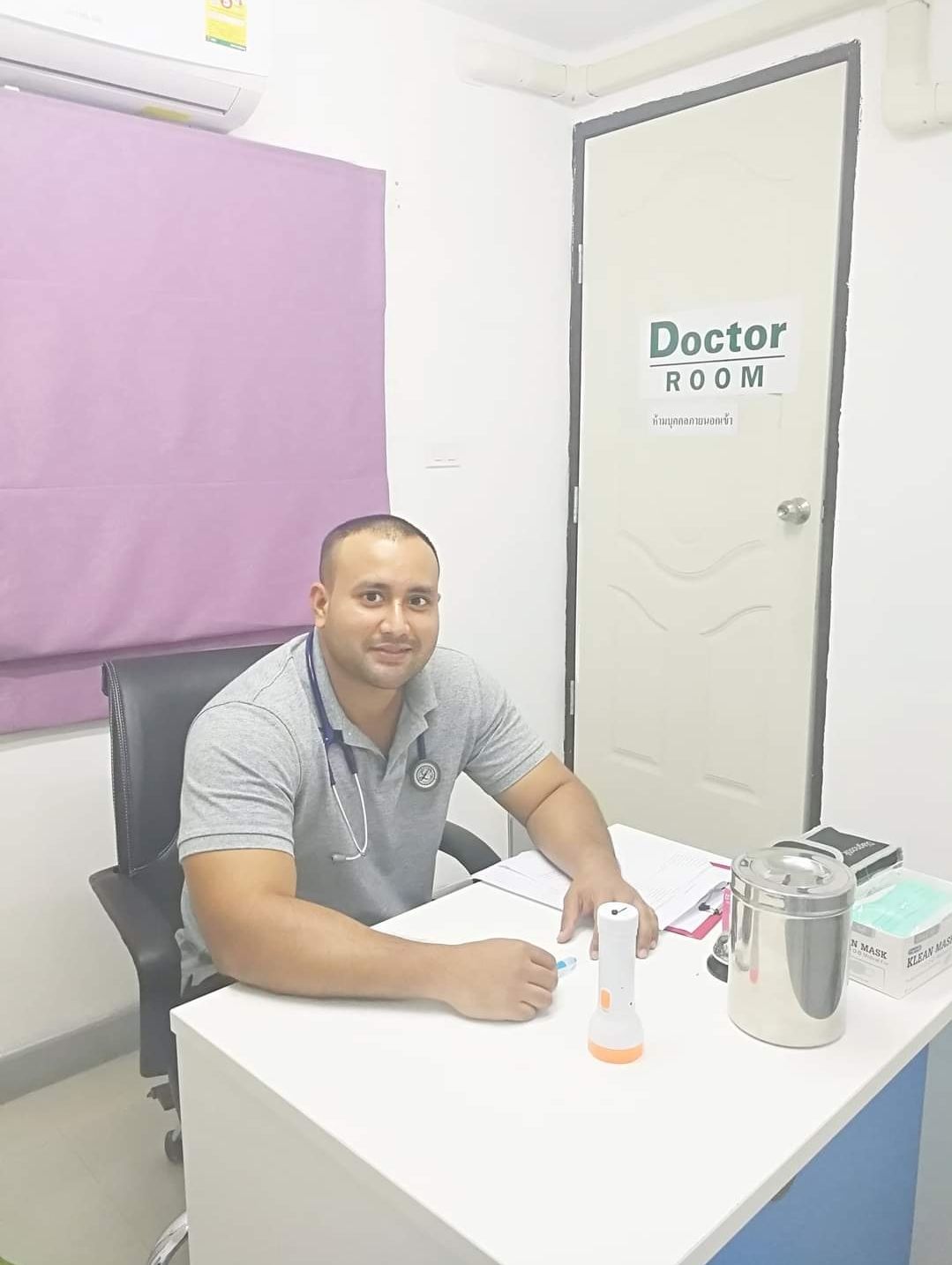
Dr. Ponlawat Pitsuwan is a physician at Doctor Bangkok, a private clinic in central Bangkok. He sees expats, residents, and medical tourists for general medicine, wellness consultations, and IV therapy. His focus is straightforward, evidence-based care delivered in plain language.