
Clinically reviewed by Dr. Ponlawat Pitsuwan, Physician, Doctor Bangkok.
Last reviewed: October 2026
The right HIV test depends on when your exposure happened. A 4th-generation antigen/antibody test is reliable from around 45 days after exposure. An RNA test can detect infection earlier, from around 10 to 33 days. Antibody-only rapid tests take longest to become reliable, up to 90 days. Testing too early for the test type you choose can produce a false negative. Doctor Bangkok offers confidential HIV testing with same-day results on Sukhumvit, a short walk from BTS Asok.
You had a risk. Maybe last weekend, maybe a few weeks ago. Now you are checking your phone between meetings or sitting on the BTS wondering whether to go in. Get tested. The slightly longer answer is that the test you need depends on how long ago the risk happened, and getting that wrong can give you a false sense of security.
Bangkok has good private HIV testing options and several free public ones. This guide maps each test type to the right exposure window, explains how accurate each one is, and tells you what to expect when you come in. If your exposure was within the last 72 hours, go straight to the PEP section first.

Which HIV Test Matches Your Exposure Timeline?
Not all HIV tests work the same way, and this is the part that matters most.
After exposure, HIV passes through a window period. This is the gap between infection and when a test can detect it. Test too early for the method you are using and the result may come back negative even if you are infected. The window period differs by test type.
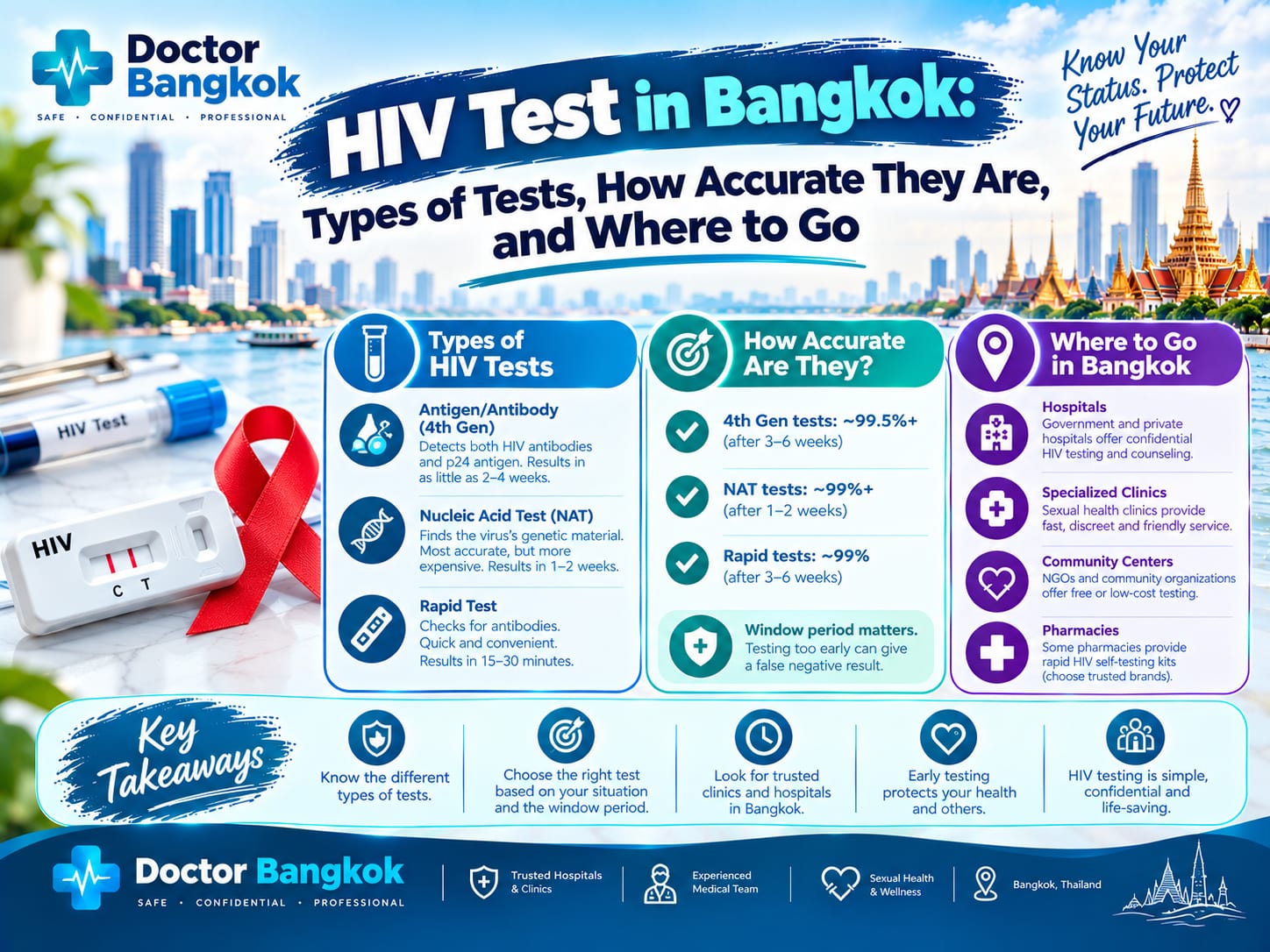
The RNA test (also called NAT) detects the virus itself. It has the shortest window period, roughly 10 to 33 days after exposure, per CDC guidance. It is the right choice if your risk was recent and you cannot wait.
The 4th-generation antigen/antibody test, sometimes called a combo or Ag/Ab test, detects both the p24 antigen and HIV antibodies. Its window period is around 18 to 45 days. Most guidelines recommend a confirmatory repeat at 45 days for certainty. This is the standard test used at most private clinics in Bangkok, including Doctor Bangkok.
The antibody-only rapid test detects only antibodies, which take longer to develop. Its window period extends to around 23 to 90 days. It is fast and widely available, but it is the least reliable option close to an exposure.
| Test Type | What It Detects | Window Period (CDC) | Result Time |
|---|---|---|---|
| RNA / NAT | HIV RNA (virus itself) | ~10-33 days | Usually 1-3 days |
| 4th-Gen Ag/Ab | p24 antigen + antibodies | ~18-45 days | Same day or next business day |
| Antibody-only rapid | HIV antibodies only | ~23-90 days | 15-30 minutes |
How Accurate Are HIV Tests?
A 4th-generation test done at 45 days or beyond is highly accurate. If it comes back negative after that window, you can be confident in the result.
If it comes back positive, a confirmatory test is always done before any diagnosis is made. A single reactive result is never the final word.
The false negative rate drops sharply once you are past the window period for the test type you used. This is why timing matters more than which clinic you choose. Testing at week two with an antibody-only rapid test is simply the wrong tool for the job.
RNA tests are highly sensitive early on, but they are more resource-intensive. They are not always the first-line choice unless there is a clinical reason to detect infection as early as possible.

What Actually Happens During an HIV Test in Bangkok
If you have never been tested before, here is what to expect. At Doctor Bangkok, you check in, speak briefly with a doctor or nurse, and give a small blood sample from your arm. No long questionnaire, no waiting in a general queue.
For a 4th-generation lab test, results come back the same day or by the next business day. For a rapid antibody test, you wait around 15 to 30 minutes at the clinic. The doctor reviews the result with you privately and explains what it means, including whether a repeat test is advisable given your exposure timing.
Results from a private clinic in Bangkok are protected under patient confidentiality and are not shared with employers, embassies, or immigration authorities.
HIV Testing After High-Risk Exposure: PEP Comes First
If your exposure was within the last 72 hours, do not wait for a test result before acting. PEP, post-exposure prophylaxis, is a course of antiretroviral medication that can prevent HIV from establishing infection. It must be started within 72 hours, and earlier is better.
Doctor Bangkok offers PEP assessment and prescription. A baseline HIV test is required before starting PEP to confirm you are currently negative. PEP is not suitable for everyone. Tell your doctor about any other medications you take and any kidney or liver problems, as these affect which regimen is safe for you. If you develop a rash, severe nausea, or yellowing of the skin while on PEP, contact your doctor the same day. Full details on PEP timelines and what the course involves are on the PrEP and PEP in Bangkok page.
If the risk was more than 72 hours ago, PEP is no longer an option. Wait until you are within the right window period for your test type, then test.
For ongoing prevention, PrEP is a daily medication that significantly reduces the risk of acquiring HIV. It requires a baseline HIV test and kidney function check before starting, plus follow-up tests every few months while you are on it.
Public vs. Private HIV Testing in Bangkok
You have real options, and the right one depends on your priorities.
The Thai Red Cross AIDS Research Centre on Ratchadamri Road offers free anonymous HIV testing. It is a well-established option. Waiting times can be longer and English-language support is not guaranteed. For budget-conscious expats or long-stay residents who are not in a hurry, this is a legitimate route.
Private clinics, including Doctor Bangkok, offer same-day or next-day results, English-speaking physicians, and a discreet environment. You can discuss PEP, PrEP, or a broader STI screen in the same visit. If you want a full sexual health check combining HIV with tests for other STIs, a private clinic is the more practical choice. The STD clinic Bangkok page outlines what a combined screen typically includes.
HIV Testing at Doctor Bangkok: What to Expect
Doctor Bangkok is on Sukhumvit Soi 13, a short walk from BTS Asok and MRT Sukhumvit. The clinic is walk-in and operates in English. You do not need to book ahead, though appointments are available.
For an HIV test, you will see a doctor, give a blood sample, and receive your result the same day in most cases. If you are within a high-risk window, the doctor will discuss whether an RNA test or a repeat 4th-generation test is more appropriate. Advice on PrEP, PEP, and STI co-testing is available as part of the same visit.
Results are kept under clinic confidentiality and are not reported to any government body or employer. If a result requires follow-up, the doctor will explain your next steps before you leave. The sexual health page also covers the HIV window period in more detail.
After a Reactive Result: What Happens Next in Bangkok
A reactive or positive result from a screening test is not a confirmed diagnosis. A confirmatory test is always done first.
If a diagnosis is confirmed, this is not the end of the conversation. HIV is a manageable chronic condition. With antiretroviral therapy, people living with HIV can reach an undetectable viral load. Undetectable means untransmittable, which is the basis of the U=U principle, a well-established finding in HIV medicine.
In Thailand, antiretroviral therapy is available through the National Health Security Office for Thai nationals and through private channels for foreigners. Your doctor at Doctor Bangkok can advise on referral pathways and explain your options clearly.
Need an HIV test in Bangkok? Doctor Bangkok offers confidential, same-day testing on Sukhumvit, with English-speaking doctors available for walk-in appointments. Whether you need a 4th-generation lab test, an RNA test, or advice on PEP or PrEP after a recent exposure, we can assess and advise in a single visit. Walk in to Doctor Bangkok on Sukhumvit Soi 13, close to BTS Asok and MRT Sukhumvit.
FAQ
Dr. Ponlawat Pitsuwan
Physician, Doctor Bangkok
a private medical clinic in central Bangkok. He sees expats, residents, and medical tourists for HIV testing, sexual health assessments, STI screening, and PrEP and PEP consultations. His focus is evidence-based care delivered in plain language.
References
- CDC. HIV Testing. Centers for Disease Control and Prevention.
- WHO. Updated guidelines for HIV post-exposure prophylaxis (PEP), July 2024. i-Base HTB summary.
- WHO. HIV/AIDS Fact Sheet. World Health Organization.
- NIAID. HIV Undetectable=Untransmittable (U=U), or Treatment as Prevention. National Institute of Allergy and Infectious Diseases.
- Thai Red Cross AIDS Research Centre. Anonymous Clinic. Thai Red Cross Society.
- Prevention Access Campaign. Science Validates Undetectable = Untransmittable HIV Prevention Message.
The information in this article is for educational purposes only and does not constitute medical advice. It should not be used to self-diagnose or replace a consultation with a qualified physician. If you have concerns about your health, contact a licensed medical professional. For appointments at Doctor Bangkok, visit doctorbangkok.co.th.
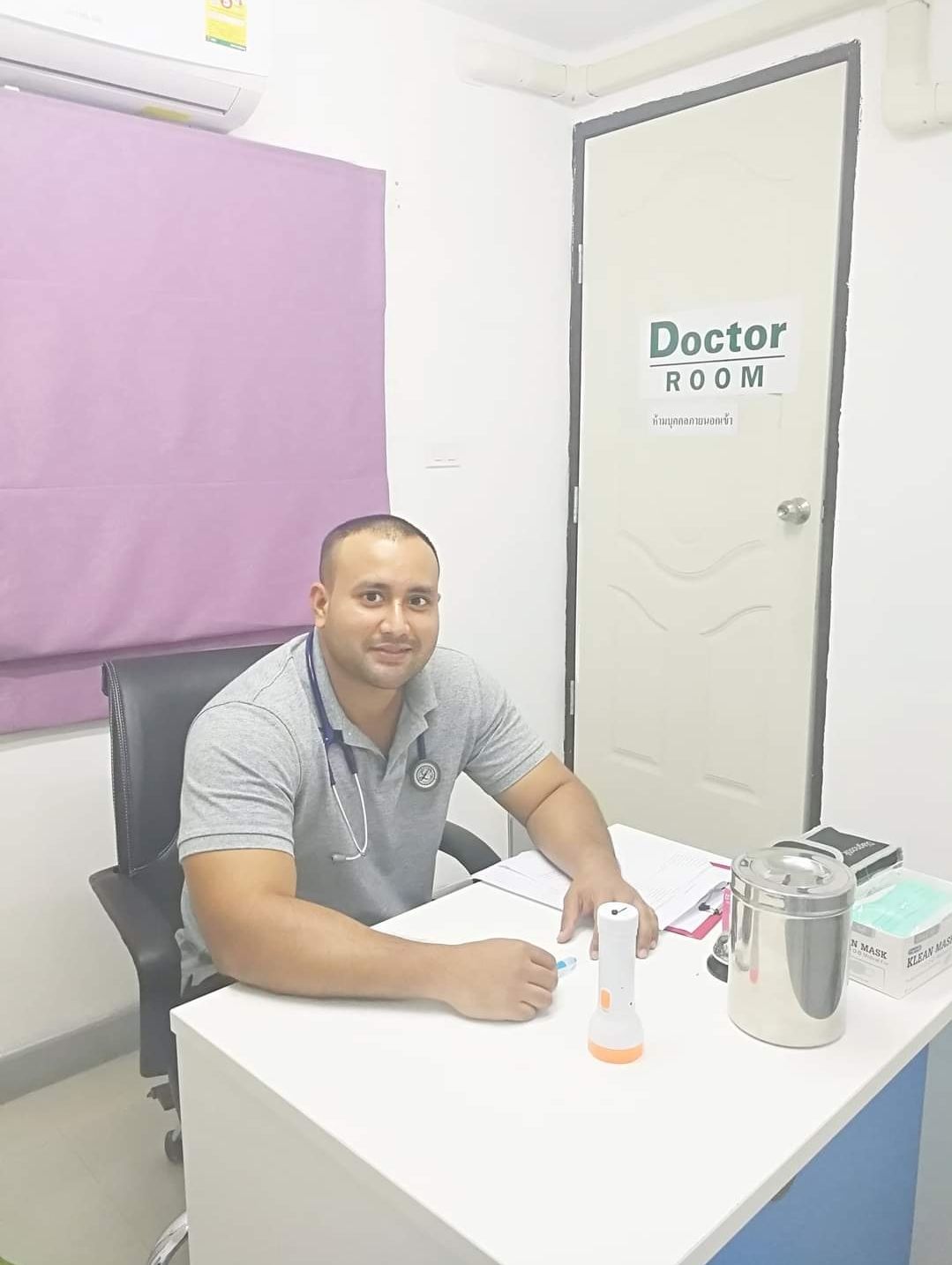
Dr. Ponlawat Pitsuwan is a physician at Doctor Bangkok, a private clinic in central Bangkok. He sees expats, residents, and medical tourists for general medicine, wellness consultations, and IV therapy. His focus is straightforward, evidence-based care delivered in plain language.