
Clinically reviewed by Dr. Ponlawat Pitsuwan, Physician, Doctor Bangkok.
Last reviewed: October 2026
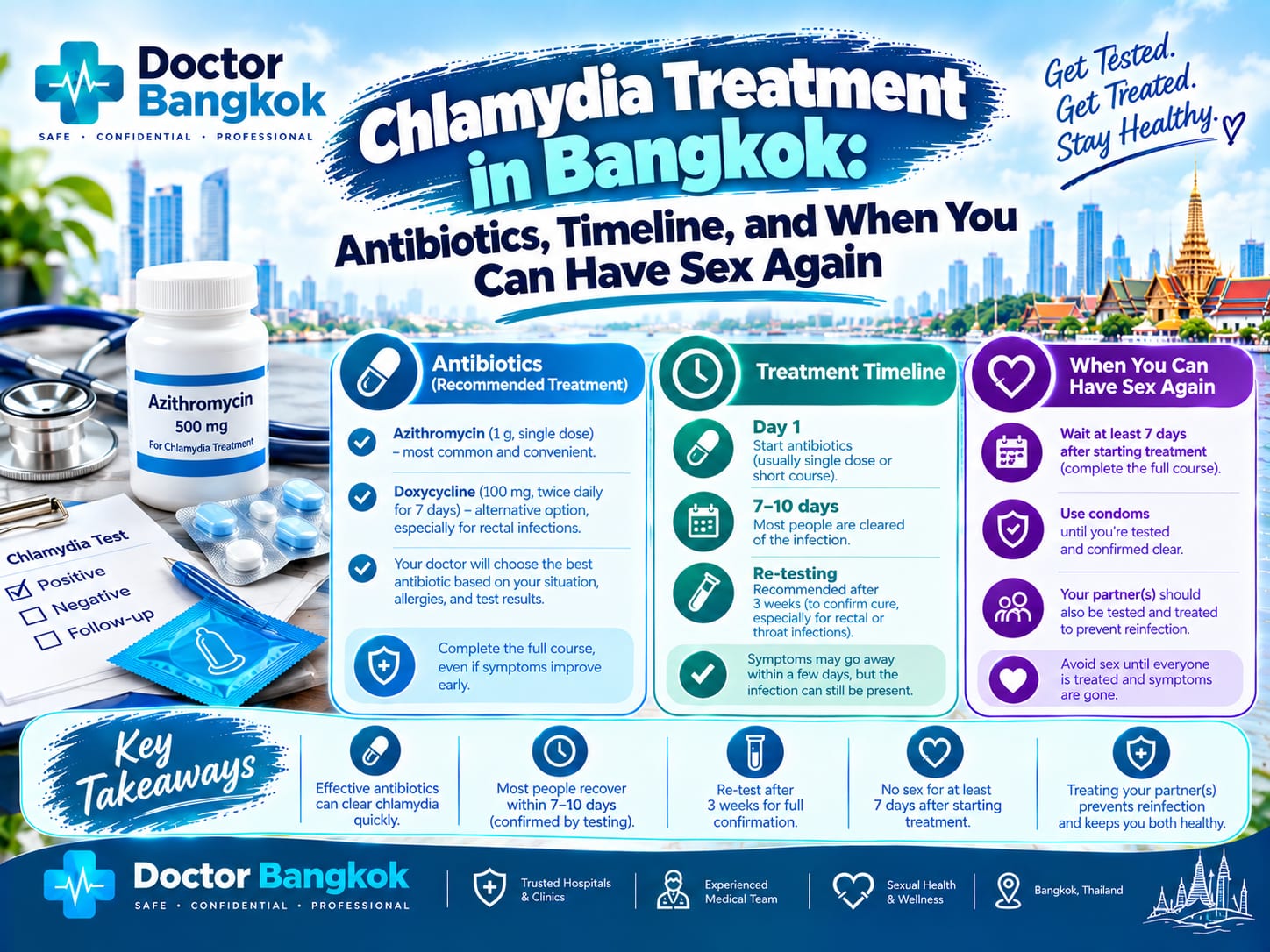
Chlamydia is curable with antibiotics. The two first-line options are azithromycin and doxycycline, and your doctor will choose based on where the infection is and your circumstances. You must avoid sex until you and your partner have both finished treatment. Retesting three months later is strongly recommended.
You got a positive result. Maybe you expected it, maybe you did not. Either way, you want to know what happens next, how long it takes, and when life goes back to normal. Chlamydia is one of the more straightforward infections to cure. The right antibiotic, taken correctly, clears it.
What trips people up is the detail. The "seven days" rule you found online may not apply to the antibiotic you are prescribed. Your partner needs treatment too, or you will be back here in a few months. And a test taken too early will not tell you anything useful. Here is what you actually need to know, in the order you need to know it.

How Chlamydia Is Diagnosed in Bangkok
The standard test for chlamydia is a nucleic acid amplification test, also called a NAAT or PCR test. It checks for the bacteria’s genetic material in a urine sample or a swab, depending on where the infection may be. This is the test recommended by WHO and NHS guidelines, and it is what reputable private clinics in Bangkok use.
Rapid antigen tests are not reliable for chlamydia. If a clinic offers you a chlamydia result in under an hour, treat that result with caution. At Doctor Bangkok, we use PCR-based testing, with results typically back within one to two days.
Many people with chlamydia have no symptoms at all. That is not a reason to wait. Untreated chlamydia causes real damage over time, and you can pass it on without knowing.
Azithromycin or Doxycycline: Which Antibiotic Will You Be Prescribed?
Both appear in current treatment guidelines, but since 2021 the CDC has listed doxycycline as the preferred regimen and azithromycin as an alternative. They work differently, and the choice matters.
Azithromycin is given as a single oral dose of one gram, which makes it a practical option for travellers or anyone who finds a multi-day regimen difficult to manage. Doxycycline is taken twice daily for seven days. It is preferred for rectal chlamydia, and current guidelines favour it as the first choice for genital infection at many sites because of stronger supporting evidence.
Your doctor at Doctor Bangkok will choose based on the site of infection, any other medications you are taking, and whether you are pregnant. Doxycycline is not safe in pregnancy. Azithromycin is not the first choice for rectal infections. These distinctions are why you should not self-prescribe.
Azithromycin resistance and reduced efficacy, particularly for rectal and urethral infection, was a key reason the 2021 CDC guidelines moved doxycycline to the preferred position. Both drugs remain listed treatment options, but they are not equivalent in all situations.
| Azithromycin | Doxycycline | |
|---|---|---|
| Dosing | Short course | Twice daily for 7 days |
| Preferred for rectal chlamydia | No | Yes |
| Safe in pregnancy | Generally yes | No |
| When to restart sex | 7 days after final dose, both partners treated | Both partners complete full course first |

When Can You Have Sex Again After Chlamydia Treatment?
This is where the flat "seven days" rule causes problems. The answer depends on which antibiotic you were given.
If you were prescribed doxycycline, avoid all sexual contact, including oral sex, until both you and your partner have completed the full seven-day course. Not seven days from your first dose. Seven days of treatment, both of you finishing.
If you were prescribed azithromycin, wait seven days after your final dose, and until your partner has also completed treatment. Reinfection from an untreated partner is the most common reason chlamydia comes back. It is not a treatment failure. It is a logistics failure.
The sexual health page at Doctor Bangkok covers the full guidance on when sex is safe after treatment.
Your Partner Needs Treatment Too
This is not optional. If your partner is not tested and treated at the same time as you, reinfection is likely. You do not need to have had symptoms, and you do not need to know exactly when the infection happened.
The practical approach is simultaneous treatment: both tested, both prescribed antibiotics, both abstaining until the course is done. If your partner is in Bangkok, they can walk into our STD clinic in Bangkok and be seen the same day. If your partner is abroad, they need to see a doctor wherever they are. A positive test on your end is enough clinical grounds for their doctor to treat them.
Partner notification feels uncomfortable. Do it anyway. Untreated chlamydia in a partner causes the same complications it causes in you.
What Happens If Chlamydia Is Left Untreated
In women, untreated chlamydia can lead to pelvic inflammatory disease, an infection that spreads to the uterus and fallopian tubes. This can cause chronic pelvic pain and, in some cases, infertility or ectopic pregnancy. In men, it can cause epididymitis, an inflammation of the tube behind the testicle that can affect fertility if left long enough.
Chlamydia also increases susceptibility to other sexually transmitted infections, including HIV. If you are HIV-negative and sexually active in Bangkok, it is worth knowing about PrEP and PEP as part of a broader prevention approach.
None of these complications are inevitable. All of them are avoidable. Treatment takes a few days. The consequences of skipping it can last much longer.
After Treatment: Retesting and What Comes Next
Finishing antibiotics does not mean you are done. Retesting three months after completing treatment is standard clinical advice, particularly for people under 25, anyone whose partner may not have been treated at the same time, and those with multiple partners. This is not because the antibiotics failed. It is because reinfection in the months after treatment is common.
A test of cure, meaning a repeat test shortly after finishing antibiotics to confirm the infection has cleared, is not routinely needed for uncomplicated chlamydia treated with standard antibiotics. Your doctor will advise if your situation is an exception.
If you came in through the STD Test Bangkok pathway, we can schedule your three-month follow-up before you leave the clinic.
Getting Chlamydia Treatment at Doctor Bangkok
If you have just had a positive test, or you want to get tested because you are not sure, here is what a visit looks like. You walk in, no appointment needed. You see an English-speaking doctor. You give a urine sample or a swab. Results come back within one to two days. If the result is positive, we prescribe the right antibiotic and walk you through the abstinence timeline, partner treatment, and follow-up schedule.
Billing is discreet. We do not share results with employers or insurers without your consent. For patients with travel insurance, we can often process your visit directly through your insurer. Details are on our travel insurance clinic Bangkok page.
Bangkok’s public hospitals handle many things well. For sexual health, the language barrier and less private settings put a lot of people off. A walk-in private clinic with English-speaking physicians is a straightforward alternative.
Need confidential chlamydia treatment in Bangkok? Doctor Bangkok offers walk-in appointments with English-speaking doctors at our Sukhumvit clinic. Same-day consultations available. PCR testing, antibiotic treatment, and follow-up care all in one place. Visit doctorbangkok.co.th or walk in to book your appointment.
Frequently Asked Questions
Dr. Ponlawat Pitsuwan
Physician, Doctor Bangkok
a private medical clinic in central Bangkok. He sees expats, residents, and medical tourists for sexual health consultations, STI testing and treatment, general medicine, and travel health. His focus is straightforward, evidence-based care delivered in plain language.
References
- Centers for Disease Control and Prevention. Chlamydial Infections — STI Treatment Guidelines 2021. CDC. 2021.
- NHS England. Chlamydia — Treatment. NHS. 2023.
- World Health Organization. WHO guidelines for the treatment of Chlamydia trachomatis. WHO. 2016.
- Bachmann LH et al. (summarised in AAFP). Sexually Transmitted Infections: Updates From the 2021 CDC Guidelines. American Family Physician. 2022.
- University of Illinois Chicago, Drug Information Group. What are the updated treatment recommendations for chlamydia and gonococcal infections? UIC College of Pharmacy. 2022.
- NHS Scotland / Right Decisions. Chlamydia: Management and Follow-Up. NHS Dumfries and Galloway. 2023.
The information in this article is for educational purposes only and does not constitute medical advice. It should not be used to self-diagnose or replace a consultation with a qualified physician. If you have concerns about your health, contact a licensed medical professional. For appointments at Doctor Bangkok, visit doctorbangkok.co.th.
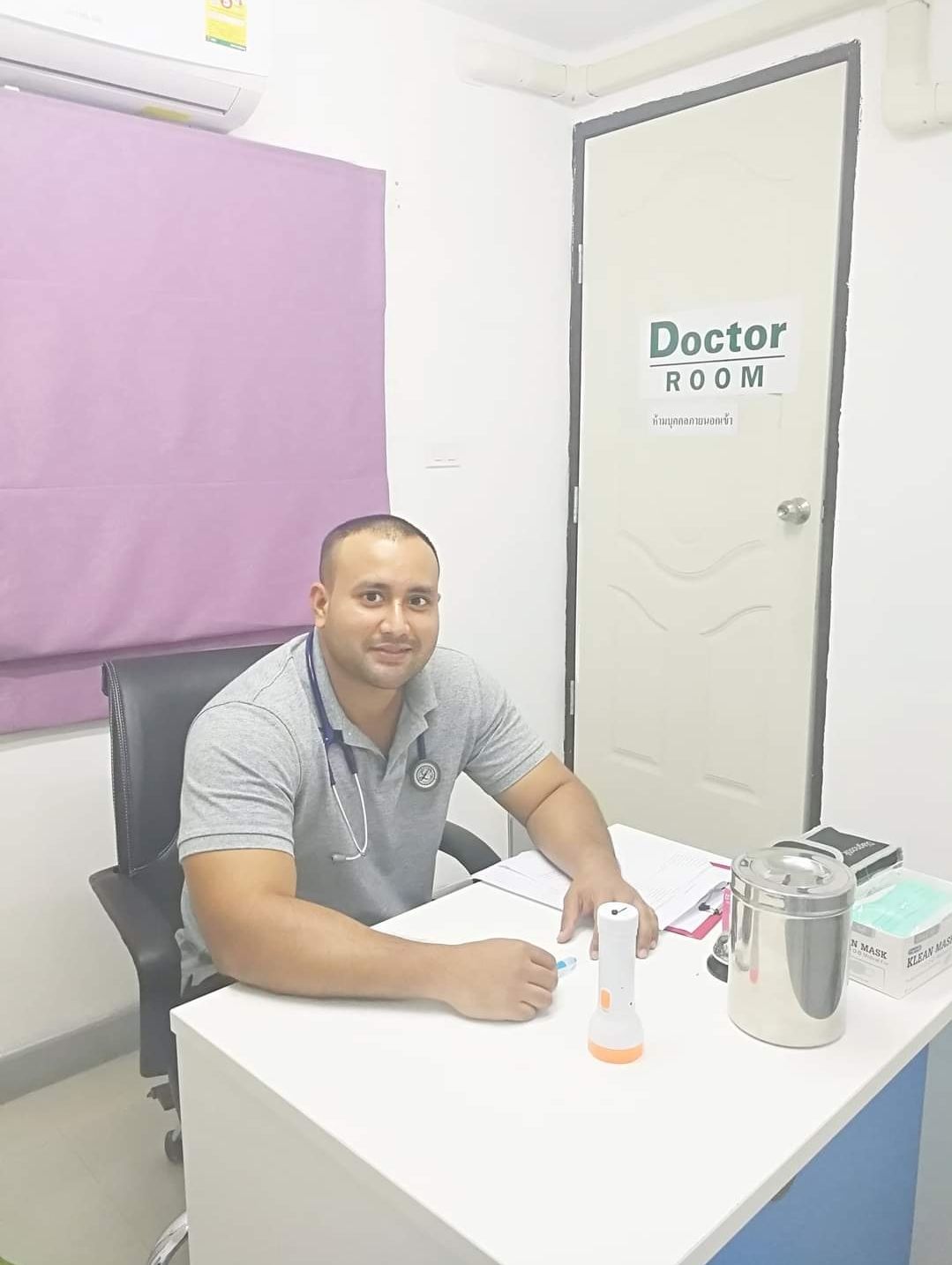
Dr. Ponlawat Pitsuwan is a physician at Doctor Bangkok, a private clinic in central Bangkok. He sees expats, residents, and medical tourists for general medicine, wellness consultations, and IV therapy. His focus is straightforward, evidence-based care delivered in plain language.