

An IV drip after a long-haul flight to Bangkok can rapidly correct dehydration and electrolyte depletion, which are the two most physically correctable components of post-flight fatigue. It cannot reset your body clock or eliminate jet lag entirely. For travellers who land dehydrated, exhausted, and needing to function quickly, a physician-supervised IV drip at a Bangkok clinic is a clinically reasonable and fast-acting option.
Landing in Bangkok after a long-haul flight is its own particular kind of unpleasant. You step off a twelve to eighteen-hour flight into heat and humidity above 35 degrees Celsius, with cabin-dry skin, a dull headache, and the cognitive clarity of someone who has been breathing recycled air at altitude for the better part of a day. The city does not ease you in gently.
IV drip therapy has become one of the most searched post-flight recovery options among Bangkok arrivals, and the question people are actually asking is not whether IV drips exist but whether they are worth it for this specific situation. The honest answer is: it depends on what you are trying to fix, and understanding that distinction takes about five minutes.
Doctor Bangkok offers physician-supervised IV drip therapy in Bangkok with same-day availability, including for post-flight arrivals. This article explains what the therapy actually addresses, where the evidence supports it, and when oral rehydration is genuinely sufficient.

What a Long-Haul Flight Actually Does to Your Body
Post-flight fatigue is not a single problem. It is three or four overlapping problems that happen to arrive at the same time, and treating them effectively means understanding which ones are physiologically correctable quickly and which ones simply require time.
Dehydration From Cabin Air
Aircraft cabins maintain humidity between 10 and 20 percent, substantially below the 30 to 50 percent your respiratory tract and skin function comfortably in. At this humidity level you lose fluid continuously through breathing and skin evaporation, even while sitting still. On a twelve-hour flight, a typical adult loses between one and two litres of fluid through this mechanism alone, before accounting for any alcohol consumed, meals skipped, or limited water intake. Most people arrive in Bangkok already mildly to moderately dehydrated.
This matters because mild dehydration at just one to two percent of body weight produces measurable cognitive impairment, headache, fatigue, and reduced concentration. These are also classic jet lag symptoms, which is why it is often difficult to tell where dehydration ends and circadian disruption begins. Correcting dehydration does not cure jet lag, but it removes a significant and correctable layer of how bad you feel.
Electrolyte Depletion
Fluid loss from cabin air takes electrolytes with it, particularly sodium, potassium, magnesium, and chloride. If you consumed alcohol during the flight, the diuretic effect of alcohol accelerated this further. Low magnesium contributes to headache, muscle tension, and poor sleep quality. Low potassium affects muscle function and energy. These deficits are real and measurable, and they are correctable through either IV electrolyte replacement or careful oral rehydration over several hours.
Circadian Rhythm Disruption: The Part IV Cannot Fix
Jet lag in its core sense is a desynchronisation between your internal body clock and the local light-dark cycle. Your circadian rhythm is regulated by the suprachiasmatic nucleus in the hypothalamus, which sets the timing of cortisol release, core body temperature, melatonin production, and sleep pressure through adenosine accumulation. Crossing multiple time zones rapidly shifts the external clock while the internal one stays behind.
Eastward travel to Bangkok, which is the direction most arrivals from Europe, Australia, and the Americas take, is harder than westward travel because your body finds it easier to delay sleep than to advance it. Adjusting to a new time zone eastward typically takes one day per time zone crossed for full adaptation. No IV formulation changes this. Circadian resynchronisation requires light exposure, appropriately timed sleep, and time.
Where the confusion arises is that dehydration and electrolyte depletion make the subjective experience of jet lag substantially worse. Correcting them does not eliminate jet lag, but it removes the amplifying layer. The person who lands in Bangkok and immediately rehydrates properly will feel meaningfully better than the person who does not, even though both still have a body clock running six hours behind.
Bangkok’s Heat Compounds the Problem
Most long-haul arrival cities are temperate. Bangkok is not. Stepping off a flight into heat above 35 degrees Celsius and humidity above 75 percent at any hour of the day or night accelerates fluid loss immediately. The body’s cooling mechanism, evaporative sweating, is impaired by the humidity, meaning you sweat more to achieve less cooling. A traveller who lands already dehydrated from the flight and then spends twenty minutes in transit in Bangkok’s heat can move from mild to moderate dehydration before reaching their hotel.
This is a Bangkok-specific factor that generic post-flight recovery advice written for arrivals into London or Singapore does not account for. It strengthens the case for prompt rehydration on arrival here compared to many other destinations.
What IV Therapy Can and Cannot Do After a Flight
The table below maps the main post-flight symptoms against what IV therapy addresses and how strong the evidence is for each.
| Symptom | IV Drip Helps? | Evidence Level |
| Dehydration from cabin air | Yes, rapidly and reliably | Strong |
| Electrolyte depletion | Yes | Strong |
| B-vitamin depletion (alcohol, poor intake) | Yes | Moderate |
| Energy and cognitive fog from dehydration | Yes, once hydration is restored | Moderate |
| Nausea and headache from dehydration | Yes | Moderate |
| Circadian rhythm misalignment (core jet lag) | No, IV cannot reset the body clock | Not applicable |
| Sleep disruption | No direct effect | Not applicable |
| Bangkok heat dehydration on arrival | Yes, rapid correction | Strong |
The pattern is clear. IV therapy is effective for the physiological deficits that are correctable quickly: dehydration, electrolytes, B vitamins, and the symptoms that flow from those deficits. It has no direct mechanism for correcting circadian disruption, which is a neurological timing problem, not a nutritional one.
This is worth stating plainly because some clinics in Bangkok market IV therapy as a jet lag cure. It is not. It is a fast and effective way to correct the dehydration and nutrient depletion component of how you feel, which is often the majority of the physical discomfort but is not the whole picture.

IV Drip Versus Oral Rehydration: An Honest Comparison
The most common pushback on post-flight IV therapy is that oral rehydration achieves the same result if you drink enough water. This is partially true and worth engaging with honestly.
For mild post-flight dehydration in a person with no nausea and no time pressure, oral rehydration with electrolytes over two to four hours is clinically adequate. Your gut absorbs fluid and electrolytes efficiently when functioning normally, and the end state after four hours of careful oral rehydration is roughly similar to the end state after a forty-five-minute IV drip.
The IV drip is materially better in three situations. First, when you need to function within an hour of landing, whether for a business meeting, a family event, or simply because you have been feeling terrible for eighteen hours and do not want to feel terrible for another four. Second, when nausea from the flight makes consistent oral intake difficult or impossible. Third, when Bangkok’s arrival heat has pushed the degree of dehydration beyond what comfortable oral intake can correct quickly. A litre of IV saline reaches your circulation in forty-five minutes. The equivalent oral rehydration requires two to three hours of consistent, deliberate drinking.
The case for oral rehydration is that it is cheaper, carries no procedural risk, and is perfectly adequate when time is not a constraint and nausea is not a factor. The case for IV therapy is speed, reliability, and the addition of electrolytes, B vitamins, and magnesium in a single formulation that would require multiple separate oral products to replicate.
Which IV Formulation Is Right After a Long-Haul Flight?
The appropriate formulation depends on your specific situation at landing. A physician consultation at Doctor Bangkok takes ten minutes and determines which of the following is right for you based on your symptoms, how long the flight was, whether you consumed alcohol, and your current health status.
| Drip Type | Key Ingredients | Best For |
| Hydration | Normal saline or lactated Ringer’s, electrolytes | Post-flight dehydration |
| Recovery / Jet lag | Saline, B-complex, vitamin C, magnesium, electrolytes | General post-flight recovery |
| Hangover recovery | Saline, B vitamins, ondansetron, electrolytes | Post-flight + post-alcohol |
| Immune support | High-dose vitamin C, zinc, glutathione | Illness prevention during travel |
| Myers’ Cocktail | B-complex, vitamin C, magnesium, calcium | Fatigue, general wellness |
For most post-flight arrivals, a hydration or recovery drip covering saline, electrolytes, B-complex, and magnesium is the right starting point. If you consumed significant alcohol during the flight, an antiemetic such as ondansetron can be added. If you are arriving during Bangkok’s hot season and spent time in transit, the hydration volume may be increased.
Doctor Bangkok’s IV drip service is available same-day, including for arrivals earlier in the day or evening. The physician consultation before your drip confirms the right formulation for your actual state on arrival, not a generic package selected from a menu.
What to Do Alongside IV Therapy for Faster Recovery
IV therapy addresses the physiological depletion component of post-flight recovery. The circadian component requires a different set of inputs, and combining both gives you the fastest overall recovery.
Light Exposure
Natural light is the most powerful circadian resynchroniser available. The suprachiasmatic nucleus uses light input from the retina to reset the body clock. Spending twenty to thirty minutes in natural daylight within two hours of landing, even at low intensity, begins shifting melatonin timing toward the local cycle. In Bangkok this is straightforward: the outdoor light intensity even on an overcast day is substantially higher than indoor lighting.
If you arrive at night, avoid bright light until morning and keep room lighting dim. Your eyes’ exposure to blue-spectrum light in the evening signals the brain to delay melatonin release, which worsens your ability to sleep at the local bedtime.
Sleep Timing
The single most effective thing you can do for jet lag after addressing dehydration is to align your sleep as quickly as possible with local Bangkok time. This means staying awake until at least 9 pm local time on arrival day if possible, then sleeping through to a normal wake time. A short nap of no more than ninety minutes in the early afternoon is acceptable but avoid sleeping in the evening, which sets the body clock further behind.
Low-dose melatonin, 0.5 to 1 mg taken thirty minutes before your target Bangkok bedtime, can assist the initial adjustment. Higher doses do not produce proportionally better results and can leave you feeling groggy the following morning.
Movement
Light walking improves peripheral circulation, reduces the fluid pooling in legs that occurs during prolonged sitting, and raises core body temperature slightly, which supports the circadian signal that daytime is active time. A fifteen to twenty minute walk after your IV drip session is a reasonable and useful next step before heading to your hotel.
When Is IV Therapy After a Flight Most Worth It?
For most healthy travellers arriving in Bangkok with mild post-flight fatigue, the combination of oral rehydration, electrolyte replacement, a meal, and adequate sleep handles recovery adequately over twenty-four to forty-eight hours. That is the honest baseline.
IV therapy adds clear value in the following situations. You have a time-sensitive commitment within a few hours of landing and need to be functional, not recovering. You consumed significant alcohol during the flight and landed nauseous and unable to take fluids orally. You have a history of significant jet lag that reliably takes more than three days to resolve and want to compress the dehydration component of that. You landed during Bangkok’s hot season and spent extended time in transit or outdoor areas before reaching air conditioning. You have a gastrointestinal condition that limits oral absorption or makes large fluid volumes uncomfortable.
If none of those apply and you have the time to rehydrate and rest normally, oral rehydration is sufficient and the IV drip is a faster but not necessary option. At Doctor Bangkok, the physician consultation before treatment is the right place to make that determination. If IV therapy is not clearly beneficial for your situation, you will be told so.
Doctor Bangkok offers same-day IV drip sessions for post-flight arrivals in central Bangkok, close to the BTS network and accessible from the main hotel corridors in Sukhumvit and Silom. All sessions include a physician consultation before the drip begins. English-speaking doctors are available throughout. Book or enquire here.
Safety Considerations for Post-Flight IV Therapy
IV therapy after a flight carries the same clinical requirements as IV therapy at any other time. A physician assessment before treatment is not optional, and it matters more in the post-flight context because you may be arriving with an existing health condition, taking medications, or in a more depleted state than usual.
Disclose your full medication list, any cardiovascular or kidney conditions, and whether you consumed alcohol during the flight. Anticoagulants, diuretics, and certain blood pressure medications all affect how IV fluids should be formulated and at what rate they should be administered. Pregnancy requires individual assessment for any formulation beyond basic saline hydration.
The procedural risks, bruising at the insertion site, vein irritation, and rare allergic reactions, are the same as for any IV session and are managed through proper aseptic technique and pre-treatment screening. At Doctor Bangkok, all ingredients are pharmaceutical-grade and registered with the Thai FDA, อย., for intravenous use. Emergency equipment including epinephrine and oxygen is maintained on-site throughout all sessions.
Frequently Asked Questions
Does IV drip actually help with jet lag?
It helps with the dehydration and electrolyte component of how jet lag feels, which is often a significant part of the physical discomfort. It does not reset your circadian rhythm or reduce the number of days needed for your body clock to adjust to Bangkok time. Think of it as removing the dehydration amplifier from the jet lag experience rather than curing jet lag itself.
How soon after landing can I get an IV drip in Bangkok?
Same-day appointments are available at Doctor Bangkok. You can book before your flight or call on arrival. The physician consultation and drip session typically take sixty to ninety minutes in total. Many patients come directly from the airport or after checking into their hotel.
Is it better to drink water or get an IV drip after a long flight?
For mild dehydration with no nausea and no time pressure, careful oral rehydration with electrolytes over two to three hours is clinically adequate. IV therapy is the better choice when you need to recover quickly, when nausea limits oral intake, or when the degree of dehydration is significant. The physician consultation at Doctor Bangkok will give you an honest assessment of which applies to your situation.
What IV drip is best for jet lag and post-flight fatigue?
A hydration or recovery drip covering saline or lactated Ringer’s, B-complex vitamins, magnesium, and electrolytes addresses the main physiological deficits from a long-haul flight. If alcohol was consumed, an antiemetic can be added. The right formulation is confirmed at your physician consultation based on your symptoms and health history.
How long does the IV drip session take?
The session itself runs thirty to sixty minutes depending on the formulation and volume. Including the pre-treatment physician consultation and post-infusion observation, plan for sixty to ninety minutes in total. Most patients feel noticeably better before the drip finishes.
Is IV therapy safe after a long flight?
Yes, in a properly equipped clinic with physician oversight. The key requirements are a pre-treatment assessment covering your medical history and medications, pharmaceutical-grade Thai FDA-approved ingredients, single-use sterile equipment, and emergency equipment on-site. Doctor Bangkok meets all of these as standard.
How much does a post-flight IV drip cost in Bangkok?
Basic hydration drips start from around 1,000 THB. Recovery formulations with B-complex, magnesium, and electrolytes typically fall between 2,500 and 5,000 THB. All sessions at Doctor Bangkok include a physician consultation. Full pricing is available on the IV drip Bangkok page.
Can I combine IV therapy with melatonin for jet lag?
Yes. IV therapy addresses dehydration and nutrient depletion. Low-dose melatonin, 0.5 to 1 mg taken thirty minutes before your target Bangkok bedtime, supports circadian adjustment. They work on different mechanisms and are complementary. Discuss melatonin use with the physician at your Doctor Bangkok consultation if you want specific dosing guidance.
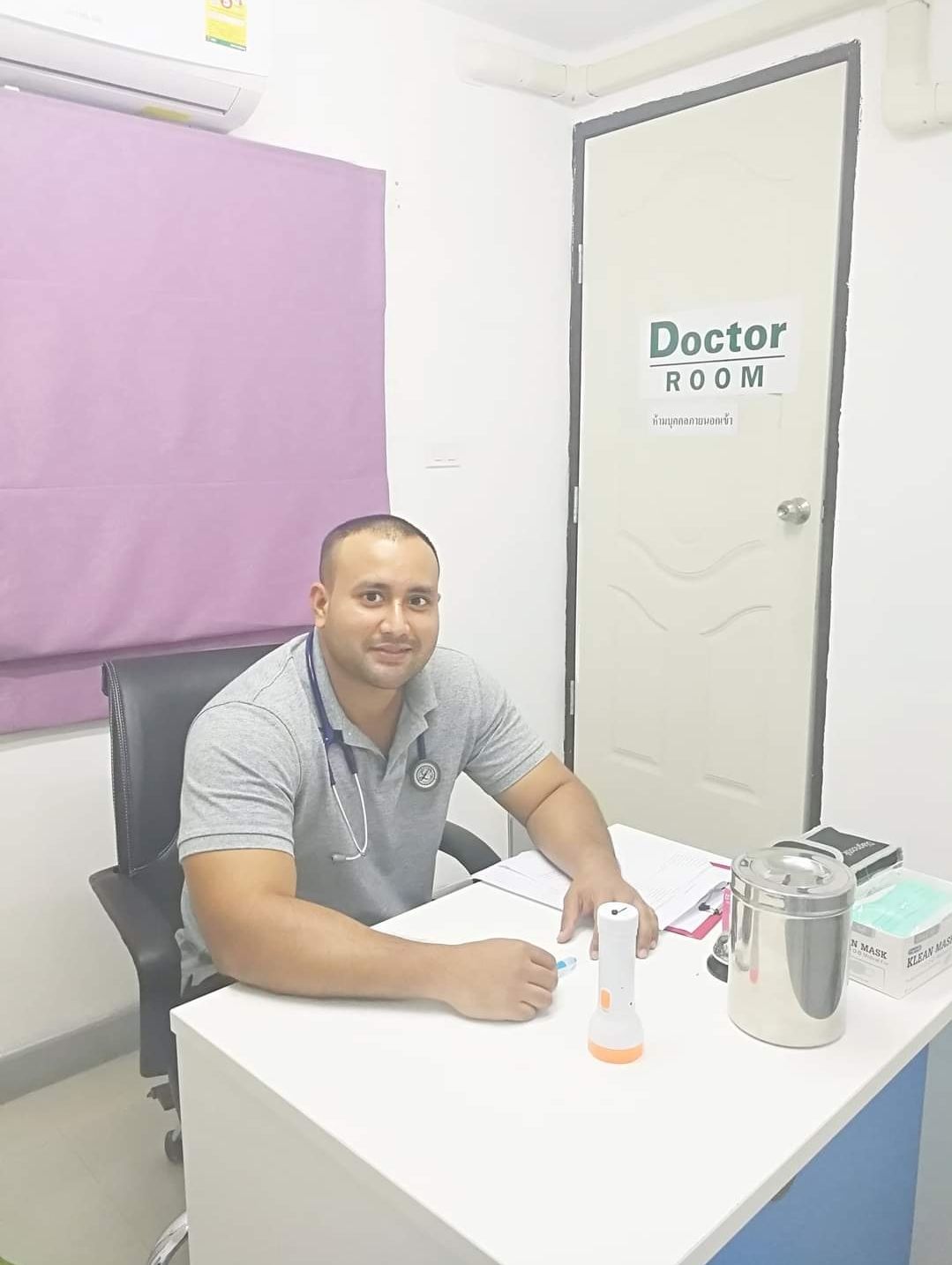
Dr. Ponlawat Pitsuwan is a physician at Doctor Bangkok, a private clinic in central Bangkok. He sees expats, residents, and medical tourists for general medicine, wellness consultations, and IV therapy. His focus is straightforward, evidence-based care delivered in plain language.