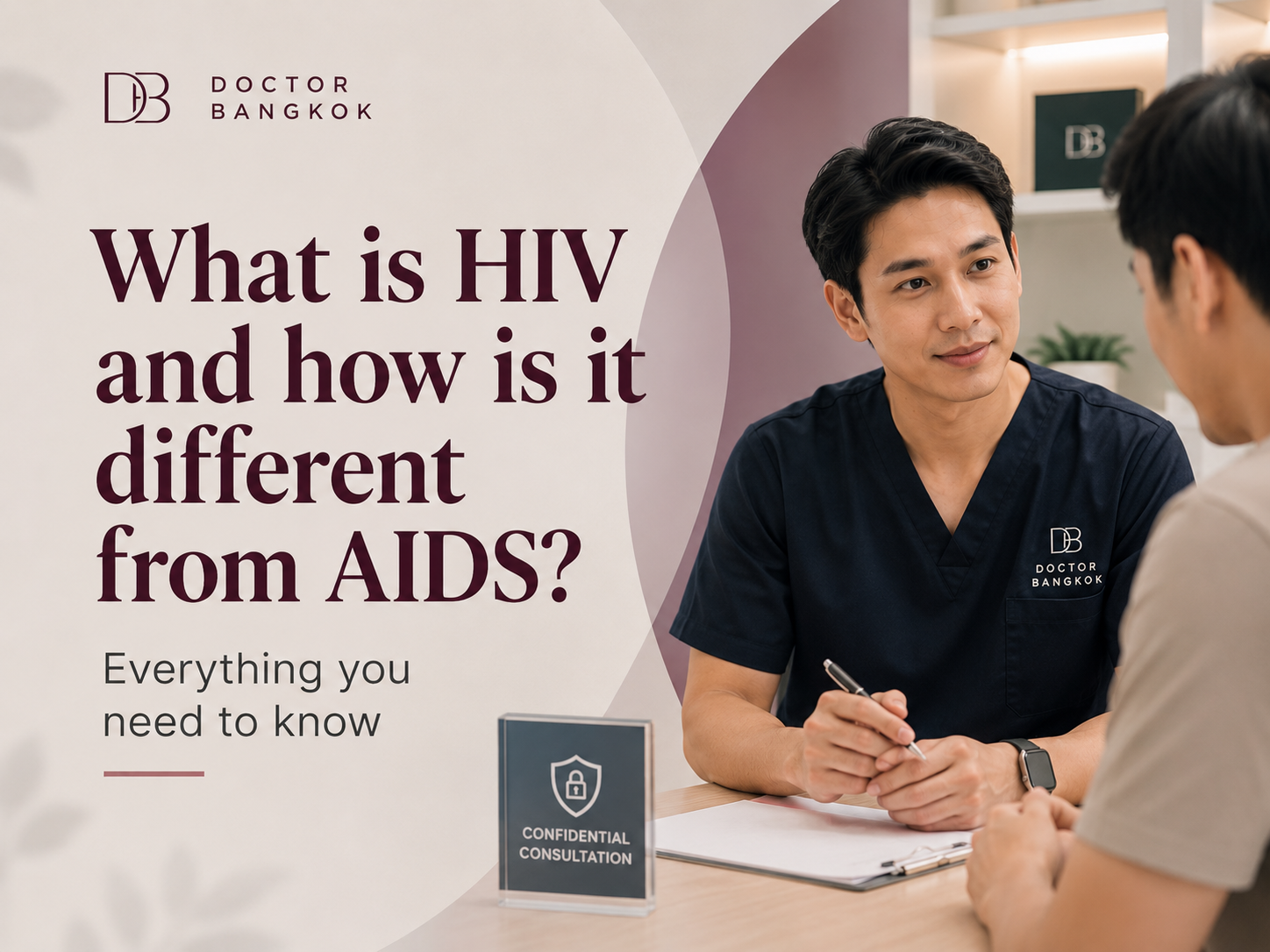

Clinically reviewed by Dr. Ponlawat Pitsuwan, Physician, Doctor Bangkok. Last reviewed: July 2026
HIV is the virus that attacks the immune system. AIDS is the most advanced stage of untreated HIV, when the immune system becomes severely damaged. They are not the same thing, and with modern treatment most people living with HIV never progress to AIDS.
The terms HIV and AIDS are often used as if they mean the same thing, and this causes a lot of unnecessary fear. In my clinic in Bangkok, people newly worried about HIV frequently believe a positive result is a death sentence. It is not, and the confusion between these two terms is a big part of why that myth persists.
Understanding the difference is genuinely reassuring. HIV is a manageable long-term condition when it is diagnosed and treated. AIDS is a stage that modern medicine is designed to prevent. This article explains how the two relate, and why early testing is what keeps one from becoming the other.
What is HIV?
HIV stands for human immunodeficiency virus. It is a virus that infects and gradually weakens the immune system, specifically the CD4 cells that help the body fight infection. Without treatment, HIV slowly reduces the number of these cells over years, leaving the body less able to defend itself.
Crucially, having HIV does not mean you are ill. Many people live for years with HIV and feel completely well, which is exactly why testing matters. You cannot tell you have it from how you feel.
What is AIDS?
AIDS stands for acquired immunodeficiency syndrome. It is not a separate virus but the most advanced stage of HIV infection, reached only when HIV has been left untreated for a long time and the immune system has become severely damaged.
At this stage the body can no longer defend itself against certain serious infections and cancers, known as opportunistic conditions, that a healthy immune system would normally keep in check. A diagnosis of AIDS is based on this severe immune damage or the presence of these specific conditions, rather than simply on having the virus.
How HIV can progress to AIDS
Untreated HIV typically moves through stages: an early acute illness, a long period where the person feels well but the virus is quietly active, and finally advanced disease if nothing is done. This progression can take many years, which is both the danger and the opportunity, because there is a long window in which to intervene.
Treatment changes everything
Modern antiretroviral therapy stops the virus from replicating and allows the immune system to recover and stay strong. Someone diagnosed and treated today can expect a near-normal life expectancy and, in most cases, will never develop AIDS. Treatment is what breaks the link between HIV and its advanced stage.
Undetectable equals untransmittable
When treatment reduces the amount of virus in the blood to an undetectable level, HIV cannot be passed on to sexual partners. This principle, often summarised as undetectable equals untransmittable, has transformed how we think about living with HIV.
Why the difference matters for you
The practical message is simple. The earlier HIV is found, the easier it is to keep it from ever progressing. Testing is not just about a diagnosis; it is the step that opens the door to treatment that protects your health and your partners. Prevention tools such as PrEP and PEP, which you can read about on our PrEP and PEP page, add another layer of protection.
When to see a doctor and get tested
If you have ever had a possible exposure and have never been tested, that alone is a good reason to get tested now, whether or not you feel unwell. See a doctor sooner if you have unexplained ongoing symptoms such as persistent fever, night sweats, weight loss, chronic diarrhoea, or repeated infections, as these can be signs of advanced, untreated HIV that needs prompt care.
Testing at our clinic is confidential and non-judgemental. Whatever the result, there is a clear and hopeful path forward, and we will walk you through it.
Knowing your status early is the single best way to keep HIV manageable. Our walk-in clinic in Sukhumvit offers confidential HIV testing and clear advice. Visit our HIV testing in Bangkok page or contact us to arrange a visit.
Frequently asked questions
Is HIV the same as AIDS?
No. HIV is the virus, while AIDS is the most advanced stage of untreated HIV infection. Having HIV does not mean you have AIDS, and with treatment most people never reach that stage.
Does having HIV mean I will get AIDS?
Not with treatment. Effective antiretroviral therapy keeps the immune system healthy and prevents progression to AIDS. This is why early diagnosis and staying on treatment are so important.
Can you live a normal life with HIV?
Yes. Someone diagnosed and treated today can expect a near-normal life expectancy. HIV is now a manageable long-term condition rather than the fatal illness it was once thought to be.
What does undetectable equals untransmittable mean?
It means that when treatment lowers the virus in the blood to an undetectable level, HIV cannot be passed on to sexual partners. It is one of the most important benefits of effective treatment.
How do I know which stage I am at?
Only testing and a medical assessment can tell you. A blood test can confirm HIV, and further tests measure the health of your immune system. We can arrange and explain all of this at your consultation.
Dr. Ponlawat Pitsuwan
Physician, Doctor Bangkok
Dr. Ponlawat is a physician at Doctor Bangkok, a private medical clinic in central Bangkok. He counsels expats and travellers on HIV testing and prevention, and is committed to replacing fear and misinformation with clear, hopeful and accurate advice.
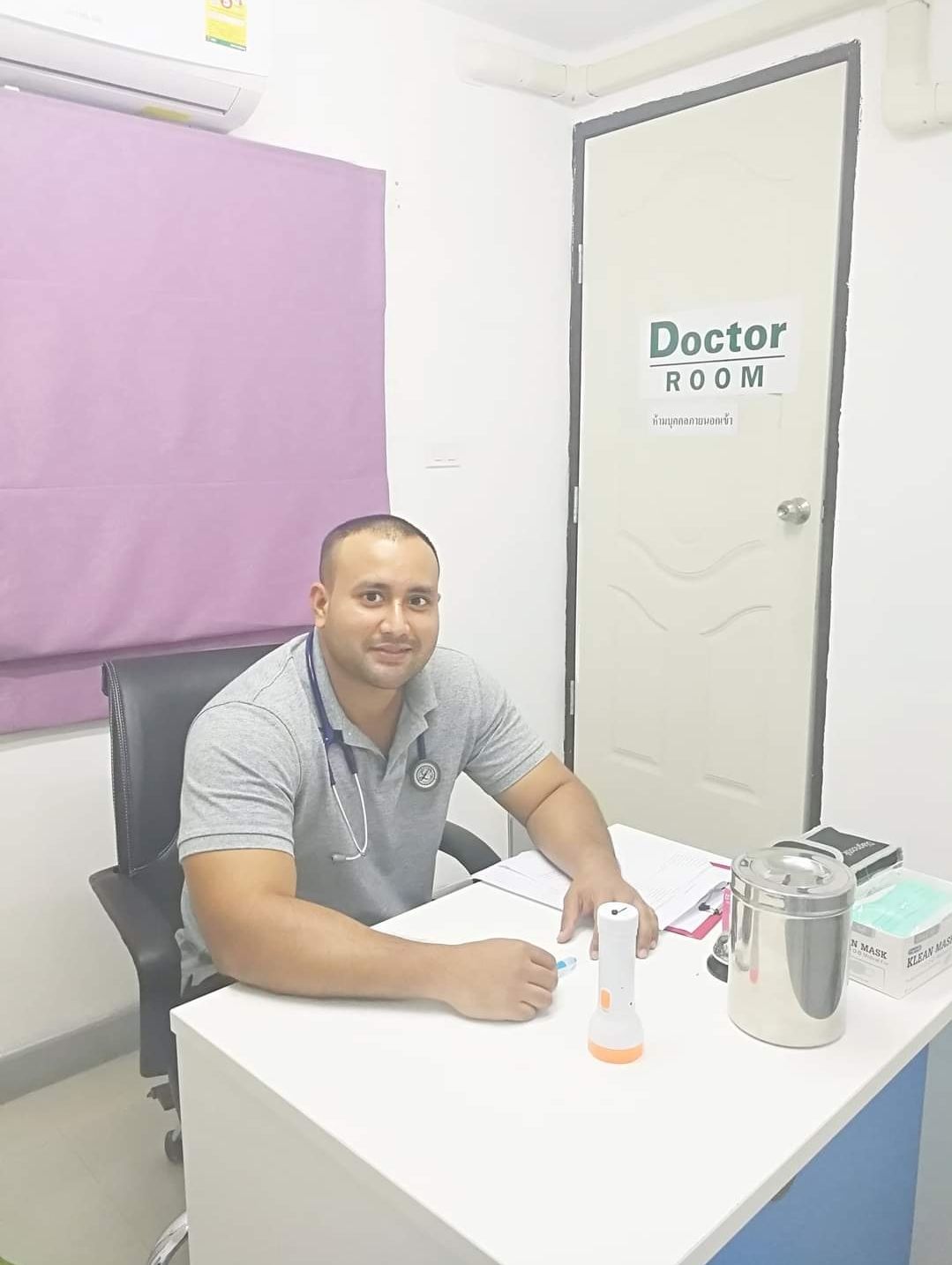
Dr. Ponlawat Pitsuwan is a physician at Doctor Bangkok, a private clinic in central Bangkok. He sees expats, residents, and medical tourists for general medicine, wellness consultations, and IV therapy. His focus is straightforward, evidence-based care delivered in plain language.