
Clinically reviewed by Dr. Ponlawat Pitsuwan, Physician, Doctor Bangkok. Last reviewed: July 2026
HIV transmission through oral sex is possible but considered very low risk. Most people who have oral sex with an HIV-positive partner, even without a condom, will not contract HIV. The risk rises with specific factors: ejaculation in the mouth, bleeding gums, mouth sores, or a partner with a high detectable viral load. Regular testing and knowing your options matter more than avoiding oral sex entirely.
If you are reading this after an unprotected encounter in Bangkok and you are worried, that is completely understandable. This is one of the most common questions I get at the clinic, and the anxiety is usually much higher than the actual risk warrants. So here is the straight answer: HIV from oral sex is possible, but the risk is genuinely low compared to unprotected anal or vaginal sex.
That said, low risk is not zero risk. Your specific situation matters. Knowing when to test, and whether you need PEP, matters a lot. This article walks you through all of it, clearly and without the jargon.

Why the mouth is harder for HIV to infect
Oral tissue is thicker and tougher than the tissue inside the rectum or vaginal wall. It is much less likely to absorb HIV even when exposed. Saliva also contains proteins that actively interfere with the virus. This does not make oral sex completely safe, but it explains why transmission through this route is so much lower.
The key is an intact mouth lining. If there are no sores, no bleeding gums, and no active ulcers, the barrier holds up well. When that barrier breaks, the risk changes. That is the part worth paying attention to.
Does your role during oral sex change the risk?
Yes, it does. Giving oral sex, meaning your mouth on your partner’s genitals, carries a slightly higher theoretical risk because semen and pre-seminal fluid can contain HIV. If your partner ejaculates in your mouth and has a detectable viral load, your risk is higher than if there is no ejaculation. Even so, the overall risk remains low in absolute terms.
Receiving oral sex carries an even lower risk, close to negligible. Saliva from a partner’s mouth does not transmit HIV efficiently, even if they are HIV-positive. Giving oral sex to a woman also carries very low risk, with only a handful of cases ever documented worldwide.

What actually increases the risk
This is the section that matters most if you had a specific encounter in mind.
Ejaculation in the mouth is the biggest factor. Semen carries HIV at higher concentrations than pre-seminal fluid, so ejaculation raises the exposure meaningfully. Bleeding gums or mouth sores matter too. A cut or ulcer creates a direct entry point. Even brushing your teeth hard before oral sex can cause small bleeds that nudge the risk slightly higher.
Genital sores on your partner, from herpes or syphilis for example, increase viral exposure. A partner with a high or unknown viral load is also significant. Someone who is not on HIV treatment, or whose treatment is not working, has much higher concentrations of the virus in their genital fluids.
U=U and what it means for oral sex
If your partner is HIV-positive and on effective treatment with a confirmed undetectable viral load, they cannot sexually transmit HIV to you. This is called U=U, which stands for Undetectable equals Untransmittable. It applies to all sexual routes, including oral sex, and is backed by strong evidence from large clinical studies.
This matters in Bangkok, where many people living with HIV are on antiretroviral therapy. But the key word is confirmed. Undetectable means regular blood tests showing sustained suppression, not just a partner’s word that they take their medication. If you do not know your partner’s status, U=U does not apply to your risk calculation.
Other STIs from oral sex you should know about in Bangkok
When it comes to oral sex in Bangkok, HIV is actually not your biggest concern. I tell patients this regularly, and it surprises most of them.
Syphilis has seen a sharp resurgence in Thailand, particularly among younger adults and men who have sex with men. Gonorrhoea of the throat, known as pharyngeal gonorrhoea, is common and often causes no symptoms at all. Herpes and HPV both spread readily through oral contact. These infections are more transmissible than HIV through this route and they are more prevalent in Bangkok right now. If you are getting tested after oral sex, test for all of these, not just HIV.
When and how to get tested after oral sex in Bangkok
If you had oral sex and are worried about HIV, here is the practical answer. A 4th generation HIV test checks for both the antibody your body produces and a protein from the virus itself. It can detect most infections from around 18 to 45 days after exposure, with a reliable result at 45 days.
Do not test in the first two weeks. A result that early is likely to be falsely negative, which gives you false reassurance at exactly the wrong moment. Come in at the 45-day mark for a conclusive result. At Doctor Bangkok, we offer 4th generation HIV testing with fast turnaround. We can test you for gonorrhoea, syphilis, herpes, and other STIs at the same visit, which makes much more sense given what is circulating in Bangkok right now.
Do you need PEP after oral sex?
PEP, post-exposure prophylaxis, is medication you take within 72 hours of a high-risk HIV exposure to prevent infection. It works well when taken correctly, but it is designed for genuinely high-risk exposures.
For most oral sex encounters, including receiving oral sex or giving it without ejaculation, PEP is not routinely recommended. The risk does not typically justify a 28-day course of medication. However, if you had bleeding gums or active mouth sores, your partner is known to be HIV-positive with an unknown or detectable viral load, or there was ejaculation in your mouth, those factors warrant a proper clinical assessment. Do not try to decide this alone. Come in within 72 hours and we can look at your specific situation together.
For ongoing protection, PrEP (pre-exposure prophylaxis) is worth discussing if you have frequent unprotected sexual contact in Bangkok. The evidence for PrEP preventing HIV transmission is strong, and Doctor Bangkok offers PrEP consultations for anyone who wants to explore that option.
Reducing your risk going forward
The practical steps are straightforward. Condoms during fellatio reduce transmission risk for both HIV and other STIs. Dental dams during cunnilingus offer protection as well. Avoiding oral sex when you or a partner has active mouth or genital sores makes a real difference.
Regular STI screening matters more than most people realise. If you are sexually active in Bangkok and not in a mutually tested relationship, testing every three to six months is sensible. You can book a sexual health screen at Doctor Bangkok that covers all the infections relevant to oral sex in one visit.
Worried after oral sex in Bangkok? Whether you need an HIV test, a full STI screen, or want to talk through PEP or PrEP, Doctor Bangkok offers private, English-language consultations in central Bangkok with same-day appointments available. Book your consultation at doctorbangkok.co.th.
FAQ
Can I get HIV from a blowjob if there was no ejaculation in my mouth?
The risk without ejaculation is considered negligible. Pre-seminal fluid does contain HIV but at much lower concentrations than semen, and your oral tissue provides a strong natural barrier. That said, it is still worth a routine STI check, since gonorrhoea of the throat and syphilis do not require ejaculation to spread.
Should I take PEP after unprotected oral sex in Bangkok?
For most oral sex exposures without aggravating factors, PEP is not routinely recommended by clinical guidelines. If you had bleeding gums, active mouth sores, or your partner is HIV-positive with an unknown or detectable viral load, come in for an assessment within 72 hours and we can decide together. Do not wait past that window, because PEP must be started within 72 hours to be effective.
What STIs am I more likely to catch from oral sex than HIV in Bangkok?
Pharyngeal gonorrhoea, syphilis, herpes, and HPV all transmit easily through oral sex and are significantly more common in Bangkok than HIV through this route. Syphilis in particular has risen sharply in Thailand over recent years. If you are testing after oral sex, always include these in your screen.
If my partner is HIV-positive but undetectable, can they give me HIV through oral sex?
No. A person on effective treatment with a confirmed undetectable viral load cannot sexually transmit HIV to a partner. This principle, U=U, is backed by strong clinical evidence. It does not protect against other STIs, and it requires confirmed viral suppression, not just a partner saying they take their medication.
How soon after oral sex should I get an HIV test?
Wait at least 45 days before testing for a reliable result with a 4th generation test. Testing within the first two weeks is likely to produce a false negative, which gives false reassurance. At Doctor Bangkok, we can advise you on timing based on your specific exposure and test you for other STIs at the same visit.
Does having a cold sore mean I can give someone HIV through oral sex?
A cold sore is caused by herpes simplex virus, not HIV, so it does not create HIV risk on its own. However, an active cold sore breaks the skin barrier in the mouth, which can slightly increase vulnerability to HIV if you are the one receiving oral sex from an HIV-positive partner. More immediately, an active cold sore means you can transmit herpes to your partner, which is a much more direct concern.
Dr. Ponlawat Pitsuwan
Physician, Doctor Bangkok
a private medical clinic in central Bangkok. He sees expats, residents, and medical tourists for HIV testing, sexual health consultations, STI screening, and PrEP and PEP assessment. His focus is straightforward, evidence-based care delivered in plain language.
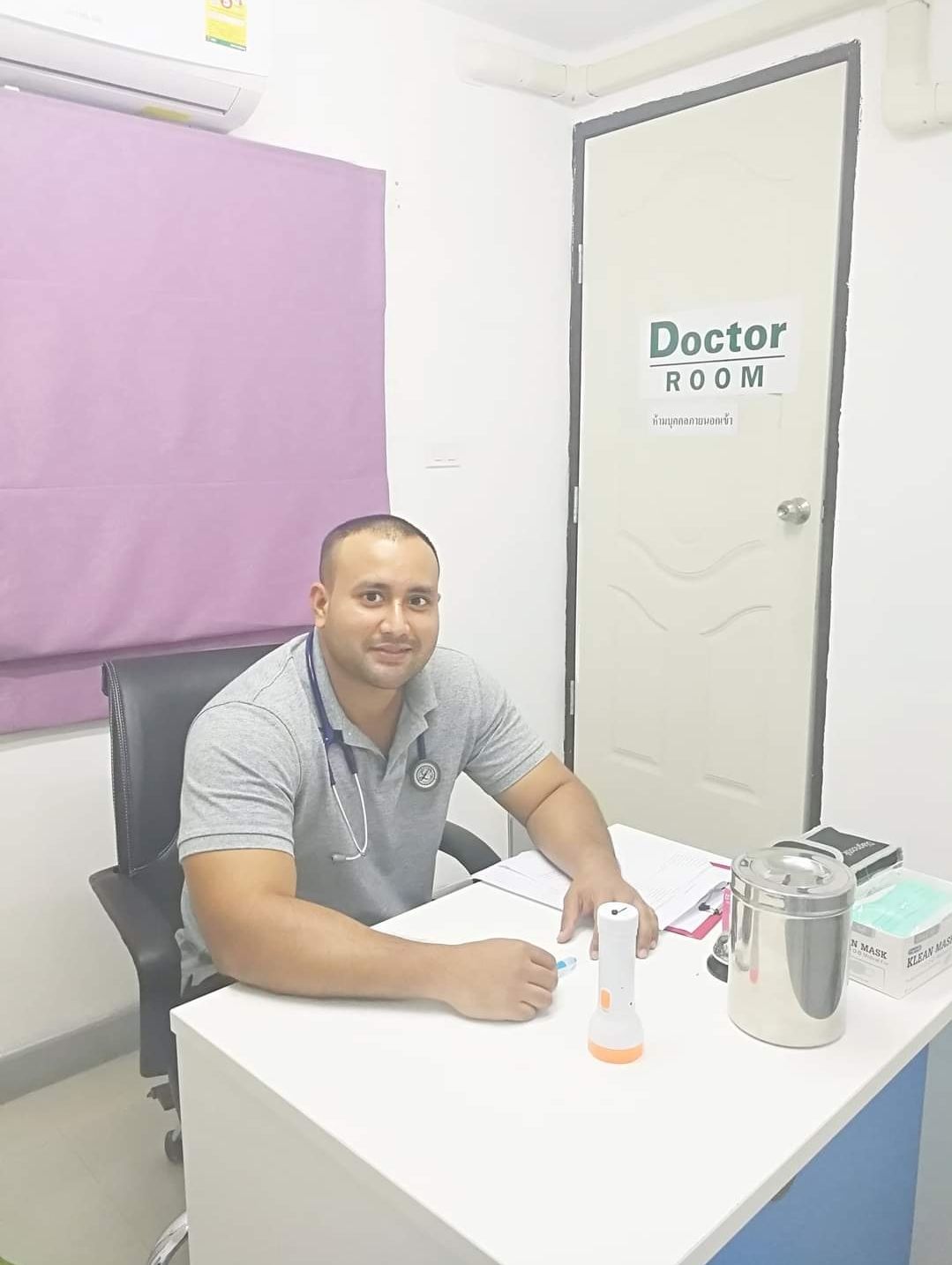
Dr. Ponlawat Pitsuwan is a physician at Doctor Bangkok, a private clinic in central Bangkok. He sees expats, residents, and medical tourists for general medicine, wellness consultations, and IV therapy. His focus is straightforward, evidence-based care delivered in plain language.