
Clinically reviewed by Dr. Ponlawat Pitsuwan, Physician, Doctor Bangkok.
Last reviewed: November 2026
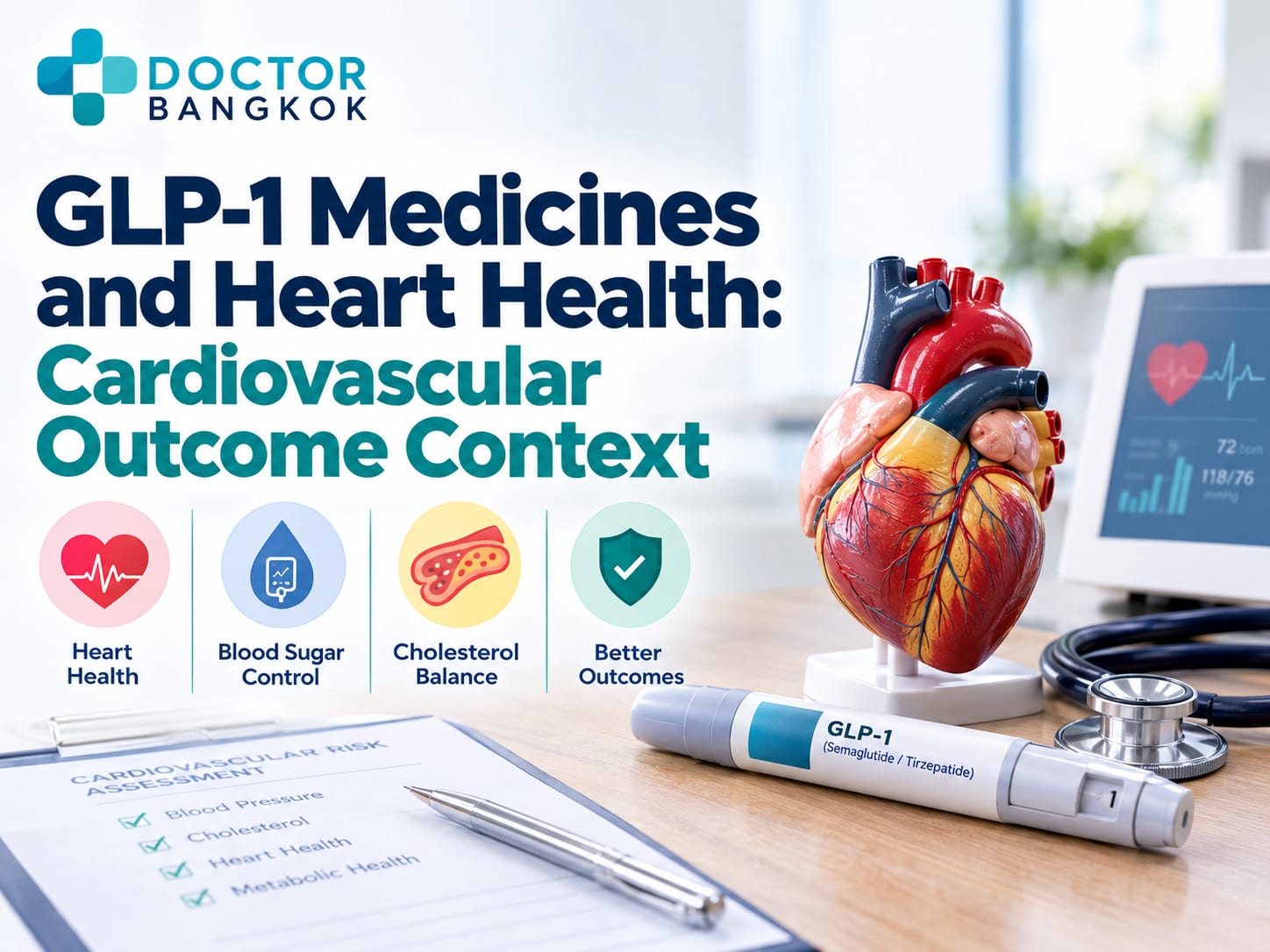
GLP-1 receptor agonists, including semaglutide and liraglutide, have shown reductions in major adverse cardiovascular events in large outcome trials. These benefits appear in people with established cardiovascular disease and, in the case of semaglutide, in people with obesity who do not have diabetes. The benefits are tied to ongoing treatment and require monitoring to manage blood pressure and other cardiometabolic markers over time.
You are already on a blood pressure tablet. Maybe a statin too. Now you are reading about GLP-1 medicines and wondering whether the heart data applies to someone in your situation. That is the right question, and the answer depends on your personal risk profile, not just the trial headlines.
The cardiovascular evidence for certain GLP-1 receptor agonists is real and clinically meaningful. But the trials studied specific populations, the benefits take time to accumulate, and starting these medicines alongside existing heart medications needs proper oversight. Here is what the evidence actually shows, who it applies to, and what monitoring looks like in practice.

Why GLP-1 Cardiovascular Benefits Appear in Prescribing Guidelines
GLP-1 receptor agonists were originally developed to lower blood sugar in type 2 diabetes. Regulators then required large cardiovascular outcome trials to prove the medicines did not increase cardiac risk. What those trials found went further.
The LEADER trial studied liraglutide in people with type 2 diabetes and high cardiovascular risk. It showed a reduction in major adverse cardiovascular events, a term covering heart attack, stroke, and cardiovascular death. The SUSTAIN-6 trial with semaglutide showed similar results.
These findings shifted GLP-1 medicines from "safe for the heart" to "actively beneficial for high-risk patients." That is why cardiovascular risk reduction now appears in prescribing guidelines alongside blood sugar control.
Weight Loss Versus Direct Cardiometabolic Effects
Some of the cardiac benefit from GLP-1 therapy comes from weight loss. Less weight means lower blood pressure, better lipid profiles, and less strain on the heart.
But the full picture appears to involve more than the scale. Research suggests GLP-1 receptor agonists may have direct effects on the health of the cells lining blood vessels, and anti-inflammatory effects not fully explained by weight reduction alone. Tirzepatide, a dual GLP-1 and GIP receptor agonist, is generating emerging data in this area, though its cardiovascular outcome trial evidence is still developing compared to semaglutide and liraglutide.
Both pathways, weight-mediated and direct, likely contribute. The relative size of each contribution is still being studied.

What the SELECT and LEADER Trials Show
The SELECT trial is the most relevant for people without diabetes. It studied semaglutide in adults with obesity and established cardiovascular disease but no type 2 diabetes. It showed a statistically significant reduction in major adverse cardiovascular events over a mean follow-up of around 3.3 years. This was the first large trial to show cardiovascular benefit from a GLP-1 medicine in a population without diabetes.
Beyond heart attack and stroke, some trials also reported reductions in heart failure hospitalisation. That outcome tends to get less attention in general coverage but matters clinically, particularly for people with metabolic syndrome or early cardiac dysfunction.
The LEADER trial followed participants for a median of 3.8 years. These are not short-course medicines. The cardiovascular benefit in these trials accumulated over years of sustained treatment.
Why Individual Risk Still Needs Personal Assessment
The trial populations were specific. SELECT enrolled people with a BMI of 27 or above and existing cardiovascular disease. LEADER enrolled people with type 2 diabetes and high cardiac risk. If you do not fit those profiles closely, the results do not automatically apply to you.
This matters for expats and long-term residents managing health in Bangkok, often without easy access to their full medical history or a home-country GP. A cardiovascular risk assessment is part of every GLP-1 consultation at Doctor Bangkok, including blood pressure review and a check of your current medications. You can also use the cardiovascular risk calculator to get a sense of your baseline before you come in.
People with active heart failure, a recent acute coronary syndrome, or complex arrhythmia typically need a cardiologist’s input before starting. For most other candidates, a thorough GP assessment is the right first step.
Blood Pressure, Cholesterol, and Follow-Up Labs
GLP-1 therapy often reduces blood pressure. If you are already on an antihypertensive, a further drop can cause symptoms, particularly dizziness on standing. Antihypertensive dose adjustment is sometimes needed once GLP-1 therapy is established. Do not stop your tablets on your own.
The same applies to statins. LDL cholesterol often improves with weight loss and metabolic changes from GLP-1 therapy, but it does not reliably normalise without statin therapy in high-risk patients. Your prescribing doctor should review your full lipid panel before and after starting.
Follow-up labs are not optional. A structured check-in at around 12 to 16 weeks after starting is standard practice. Doctor Bangkok can arrange blood draws and results review at the clinic on Sukhumvit Soi 13 or through the doctor-on-call service at your hotel or condo.
Who Qualifies on Cardiovascular Grounds, and Who Should Wait
Thailand’s regulatory framework for injectable GLP-1 medicines changed in September 2026. These medicines now require a prescription from a licensed doctor. That is a patient safety measure. Counterfeit injectable products have circulated in Thailand through unregulated channels, and the risks of using them are real.
For cardiovascular indications specifically, the patients with the strongest evidence base are those with established cardiovascular disease and either obesity or type 2 diabetes. The SELECT and LEADER trials did not study people with low baseline cardiovascular risk, so the benefit-to-risk calculation in that group is less straightforward.
If your goal is purely weight loss with no cardiovascular history, the heart data is useful context, not your primary clinical reason to start. That is a separate conversation worth having with a prescribing doctor. The GLP-1 service page covers eligibility in more detail.
People who should not start without specialist input include those with a personal or family history of medullary thyroid carcinoma or multiple endocrine neoplasia type 2 (MEN2), active pancreatitis, or severe gastroparesis. These are contraindications regardless of cardiovascular status.
Ready to check whether GLP-1 therapy applies to your situation? Doctor Bangkok’s 24/7 clinic on Sukhumvit Soi 13 offers same-day GLP-1 consultations including blood pressure review, lab assessment, and prescription where appropriate. If you cannot get to the clinic, the doctor-on-call service comes to your hotel or condo anywhere in Bangkok. All consultations are with English-speaking physicians. Visit the GLP-1 service page or contact us to book.
Frequently Asked Questions
Dr. Ponlawat Pitsuwan
Physician, Doctor Bangkok
a private medical clinic in central Bangkok open 24/7, with a doctor-on-call service that reaches your hotel or condo within the hour. He sees expats, residents, and medical tourists for GLP-1 consultations, cardiovascular risk assessment, metabolic health, and general medical care. His approach is evidence-based care delivered in plain language.
References
- Lincoff AM, Brown-Frandsen K, Colhoun HM, et al. Semaglutide and Cardiovascular Outcomes in Obesity without Diabetes. N Engl J Med. 2023;389(24):2221-2232.
- Marso SP, Daniels GH, Brown-Frandsen K, et al. Liraglutide and Cardiovascular Outcomes in Type 2 Diabetes (LEADER). N Engl J Med. 2016;375(4):311-322.
- Marso SP, Bain SC, Consoli A, et al. Semaglutide and Cardiovascular Outcomes in Patients with Type 2 Diabetes (SUSTAIN-6). N Engl J Med. 2016;375(19):1834-1844.
- Nation Thailand. Thailand makes GLP-1 injections prescription-only from September 15. Nation Thailand, 2026.
- American College of Cardiology. SELECT: Semaglutide vs. Placebo in Overweight or Obese Patients With Pre-Existing CVD, But Without Diabetes. ACC.org, 2023.
The information in this article is for educational purposes only and does not constitute medical advice. It should not be used to self-diagnose or replace a consultation with a qualified physician. If you have concerns about your health, contact a licensed medical professional. For appointments at Doctor Bangkok, visit doctorbangkok.co.th.

Dr. Ponlawat Pitsuwan is a physician at Doctor Bangkok, a private clinic in central Bangkok. He sees expats, residents, and medical tourists for general medicine, wellness consultations, and IV therapy. His focus is straightforward, evidence-based care delivered in plain language.