
Clinically reviewed by Dr. Ponlawat Pitsuwan, Physician, Doctor Bangkok. Last reviewed: July 2026
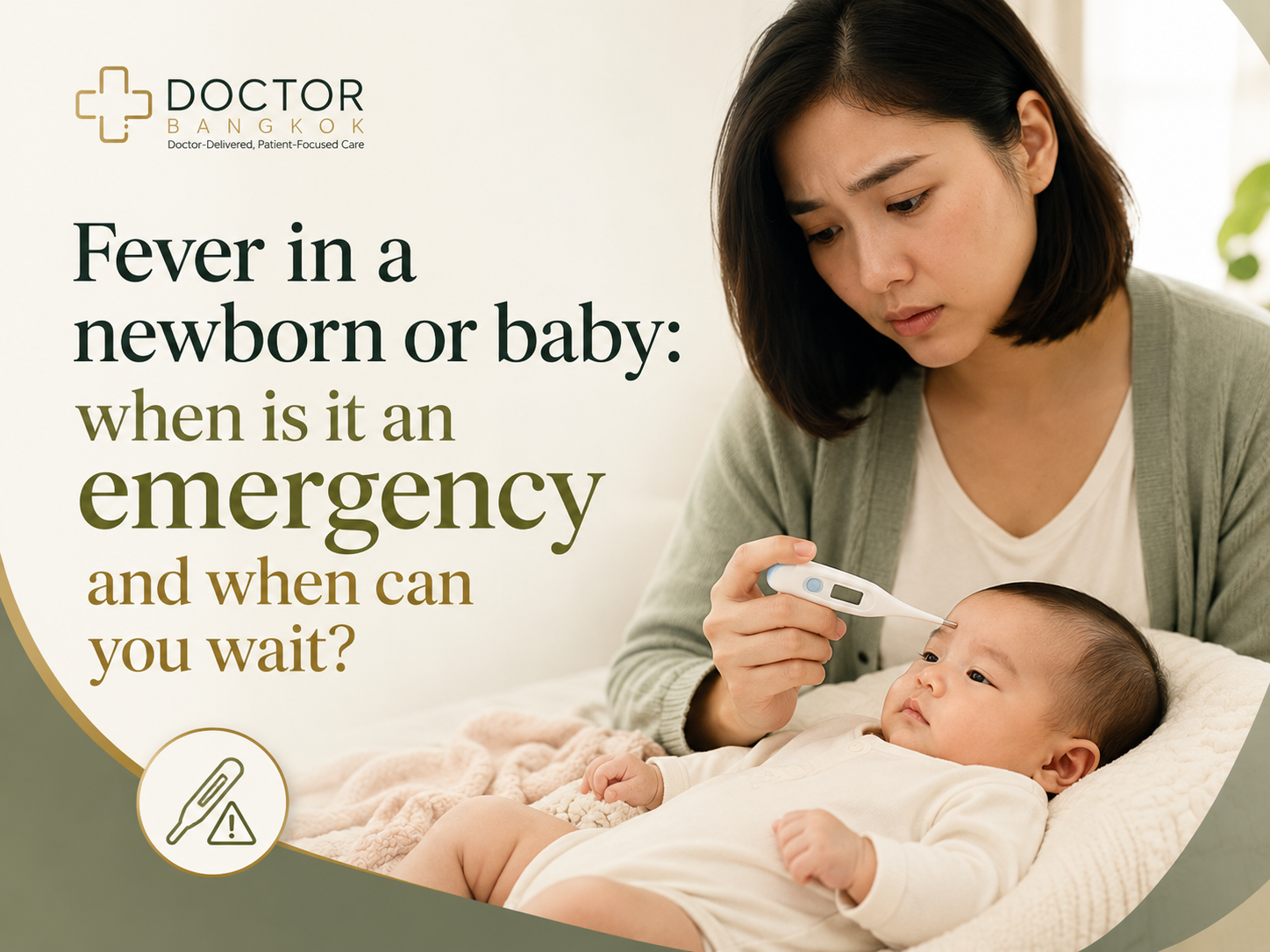
In a baby under 3 months old, a rectal temperature of 38°C (100.4°F) or above is a medical emergency. Do not wait to see if it improves. Do not give fever medication and monitor at home. Get to a doctor immediately. In Bangkok’s heat, always confirm with a rectal thermometer before acting, because overheating can look exactly like fever.
It is 2am. Your baby feels hot. You are in Bangkok, far from your usual doctor, and you are not sure if this is serious or if you are overreacting. Here is a direct answer so you can stop searching and start doing the right thing.
The rule is simple. Under 3 months old, any temperature at or above 38°C taken rectally is an emergency. Full stop. It does not matter if your baby looks fine. It does not matter if they fed recently. Newborns can have a serious infection and still appear calm and alert. Age is what drives the decision here, not behaviour.

What temperature counts as a fever in a newborn?
The number you need to know is 38°C, or 100.4°F. That is the threshold used by paediatricians worldwide, including here in Bangkok.
The method matters too. Rectal temperature is the only reliable method for babies under 3 months. Forehead strips, ear thermometers, and underarm readings are not accurate enough for this age group. A missed fever in a newborn is a serious miss.
Most pharmacies in Bangkok stock digital rectal thermometers. Boots, Watsons, and most hospital pharmacies carry them. The Rossmax and Braun brands are widely available and reliable. Buy one before you need it.
How to take your newborn’s temperature correctly
Lay your baby on their back or tummy on a flat surface. Apply a small amount of petroleum jelly to the tip of the thermometer. Gently insert it about 1.5 to 2.5 cm into the rectum and hold it in place until it beeps. That reading is what matters.
Do not use forehead strip thermometers. They are sold everywhere in Thai pharmacies but they are not accurate for newborns. Ear thermometers are also unreliable under 6 months because the ear canal is too small and curved.
If an underarm reading is your only option, add 0.5°C to estimate the true temperature. Get a rectal thermometer as soon as you can.

Age-based guide: how urgency changes as your baby gets older
Your baby’s age is the most important factor in deciding how fast you need to move.
From birth to 28 days old, there is no watching and waiting. Any rectal temperature of 38°C or above means go to the emergency room now. Babies this young have a very limited ability to fight infection, and things can worsen rapidly.
From 29 to 60 days old, the same threshold and the same urgency apply. What may differ is what happens at the hospital, which depends on blood test results and how your baby looks. Some babies in this range can be monitored without admission if results are reassuring. But that is a doctor’s call, not a home decision.
From 2 to 3 months old, the picture starts to shift slightly. A temperature of 38°C or above still needs prompt assessment, but your baby’s behaviour becomes more useful at this age. A baby who is feeding, alert, and consolable may be seen and sent home with close follow-up. A baby who is limp, inconsolable, or breathing strangely still needs emergency care.
After 3 months, the rules change more. Most fevers in previously healthy older babies are viral and resolve without complications. You still need a doctor for high or persistent fever, but the urgency depends on other symptoms too.
Red-flag symptoms that mean go right now
Regardless of age or temperature, these symptoms mean emergency care immediately.
A bulging fontanelle, the soft spot on top of the head, especially when your baby is calm and upright. A rash of small red or purple spots that do not fade when you press a glass against them. A seizure, or a seizure that has just happened. Very fast breathing, grunting with each breath, or blue or grey lips and fingertips. Inconsolable crying for more than an hour despite everything you try. A limp, floppy baby who is hard to wake.
Do not drive to a clinic for these. Go straight to the emergency room of the nearest major hospital.
Bangkok-specific considerations: heat, humidity, and tropical infections
Bangkok’s temperature regularly exceeds 35°C. Newborns cannot regulate their body temperature well. An overdressed baby in a hot room, or one left in a car even briefly, can develop elevated skin temperature that looks and feels exactly like a fever. This is overheating, not infection, and it responds to cooling.
If your baby feels hot, remove a layer of clothing, move them into a cool air-conditioned room, and recheck the rectal temperature after 15 to 20 minutes. If the temperature drops below 38°C, overheating was likely the cause. If it is still at 38°C or above after cooling, seek care immediately.
Dengue is something I think about in every febrile patient in Bangkok, including older infants. If there is any possibility of dengue, do not give ibuprofen. It can worsen dengue bleeding complications. Paracetamol, sold as Panadol syrup in Thai pharmacies, is the only safe choice when dengue is possible. The team at Doctor Bangkok can help you assess dengue risk and guide you on this.
Hand, foot, and mouth disease also circulates widely in Bangkok, especially in nurseries and baby groups. It causes fever alongside mouth sores and a rash on the palms and feet. It is viral and usually mild, but fever in young babies still needs assessment.
Vaccine fever: what is normal after Thai immunisation schedule shots
Post-vaccine fever is very common and usually starts within 12 hours of the injection. It typically lasts one to two days and resolves on its own.
The Thai Expanded Programme on Immunisation includes BCG, hepatitis B, DTP, Hib, and rotavirus vaccines in the first months of life. All of these can cause a mild temperature rise.
Here is the part that catches parents off guard. A post-vaccine fever does not change the under-3-months rule. If your baby is under 3 months old and develops a rectal temperature of 38°C or above after vaccination, you still need immediate medical evaluation. The vaccine cannot be assumed as the cause without ruling out other infections. Do not wait because the timing seems to explain it.
What you can do at home while you wait or travel to care
For babies under 3 months with a temperature of 38°C or above, there is no home management phase. You are on your way to the doctor. Do not give fever medication without a doctor’s instruction for this age group.
For older babies, keep them cool and remove excess clothing. Continue breastfeeding or formula feeding through a fever. Watch for signs of dehydration: fewer wet nappies than usual, a dry mouth, a sunken fontanelle, or no tears when crying.
Do not give ibuprofen to any baby under 6 months. Do not give aspirin to any child at any age. If your baby is over 3 months and your doctor has confirmed it is appropriate, weight-based paracetamol is the right choice. The dose is on the Panadol syrup packaging and your pharmacist can help you calculate it.
You can also reach out to Doctor Bangkok for fever guidance and same-day assessment before deciding where to go. We see families in this situation regularly and can help you triage quickly.
What to expect when you arrive at hospital
For a baby under one month with a fever, expect a blood culture, full blood count, urine test, and inflammatory markers. A lumbar puncture to check for meningitis is often recommended at this age. Plan for a multi-hour visit and a high likelihood of overnight admission while results come back, often two to three days minimum.
For babies aged one to two months, the workup is similar but the need for admission depends on test results and how your baby appears.
Major private hospitals in Bangkok such as Bumrungrad, Samitivej, and Bangkok Hospital have English-speaking paediatricians available around the clock. If you are unsure where to go, contact the team at Doctor Bangkok and we can help you decide quickly.
Worried about your baby’s temperature in Bangkok? Doctor Bangkok offers same-day fever assessments by English-speaking physicians. We can help you decide whether to monitor at home, come in for evaluation, or go straight to a paediatric emergency room. We also see older babies and children for post-vaccine fever questions, dengue assessment, and general illness. Visit doctorbangkok.co.th or contact us directly to book. We are centrally located and BTS accessible.
My newborn feels warm but is acting completely normally. Do I still need to go to the ER?
Yes. In babies under 3 months, acting normally does not rule out a serious infection. Newborns with bacterial sepsis or meningitis can appear calm and alert in the early stages. Any rectal temperature of 38°C or above in this age group requires immediate evaluation, regardless of behaviour.
Can Bangkok’s heat cause my newborn to have a false fever?
Yes, and this is something I see happen here. Overdressing, a hot car, or a room without air conditioning can raise your baby’s skin temperature without any infection. Remove a layer of clothing, move to a cool room, and recheck the rectal temperature after 15 to 20 minutes. If it drops below 38°C, overheating was likely the cause. If it stays at 38°C or above, treat it as a true fever and see a doctor.
My baby just had vaccinations at a Thai hospital. Is their fever normal?
Post-vaccine fever is common, usually starts within 12 hours, and clears within two days. However, if your baby is under 3 months old, a rectal temperature of 38°C or above still requires immediate assessment even when the timing seems to explain it. The vaccine cannot be confirmed as the cause without ruling out other infections first.
Can I give my newborn paracetamol to bring the fever down?
No, not for babies under 3 months, and not without a doctor telling you to. These babies need emergency assessment first, not fever medication at home. For babies over 3 months, weight-based paracetamol such as Panadol syrup is appropriate when your doctor confirms it. Never give ibuprofen under 6 months, and never give aspirin to any child. In Bangkok, if dengue is a possibility, stick to paracetamol only even in older babies.
My baby is 4 months old and has a fever of 38.5°C. Can I wait until morning?
At 4 months with no other red-flag symptoms, a temperature of 38.5°C can usually be monitored at home for a few hours if your baby is feeding, alert, and consolable. Watch closely for a rash that does not fade under pressure, laboured breathing, persistent inconsolable crying, or a temperature rising above 39°C. If any of those appear, do not wait. A quick call or visit to Doctor Bangkok for fever advice can help you decide without an unnecessary trip to the emergency room in the middle of the night.
Dr. Ponlawat Pitsuwan
Physician, Doctor Bangkok
a private medical clinic in central Bangkok. He sees expats, residents, and medical tourists for fever assessment, paediatric illness queries, travel medicine, and general medical consultations. His focus is straightforward, evidence-based care delivered in plain language.
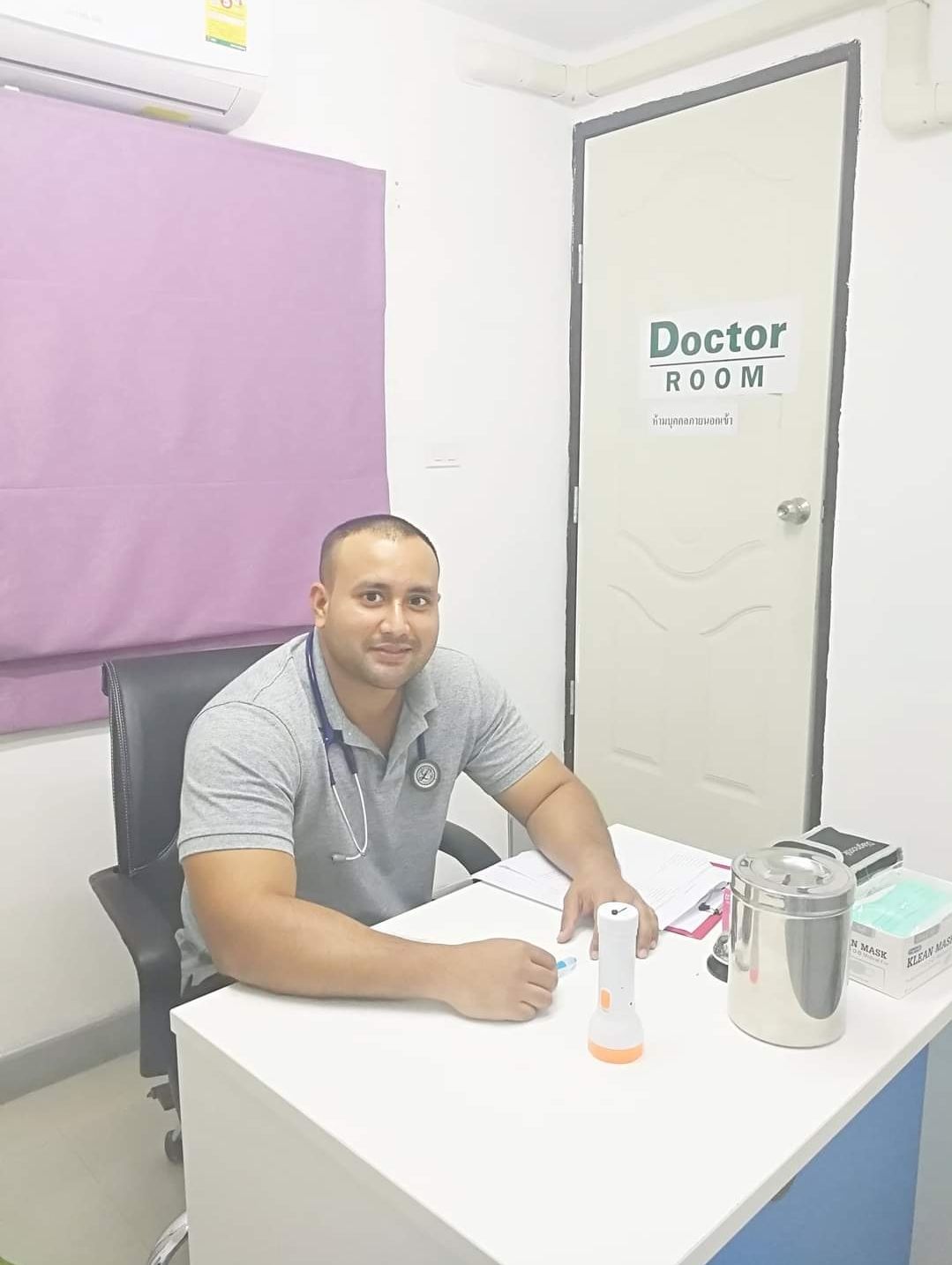
Dr. Ponlawat Pitsuwan is a physician at Doctor Bangkok, a private clinic in central Bangkok. He sees expats, residents, and medical tourists for general medicine, wellness consultations, and IV therapy. His focus is straightforward, evidence-based care delivered in plain language.