
Clinically reviewed by Dr. Ponlawat Pitsuwan, Physician, Doctor Bangkok. Last reviewed: June 2026
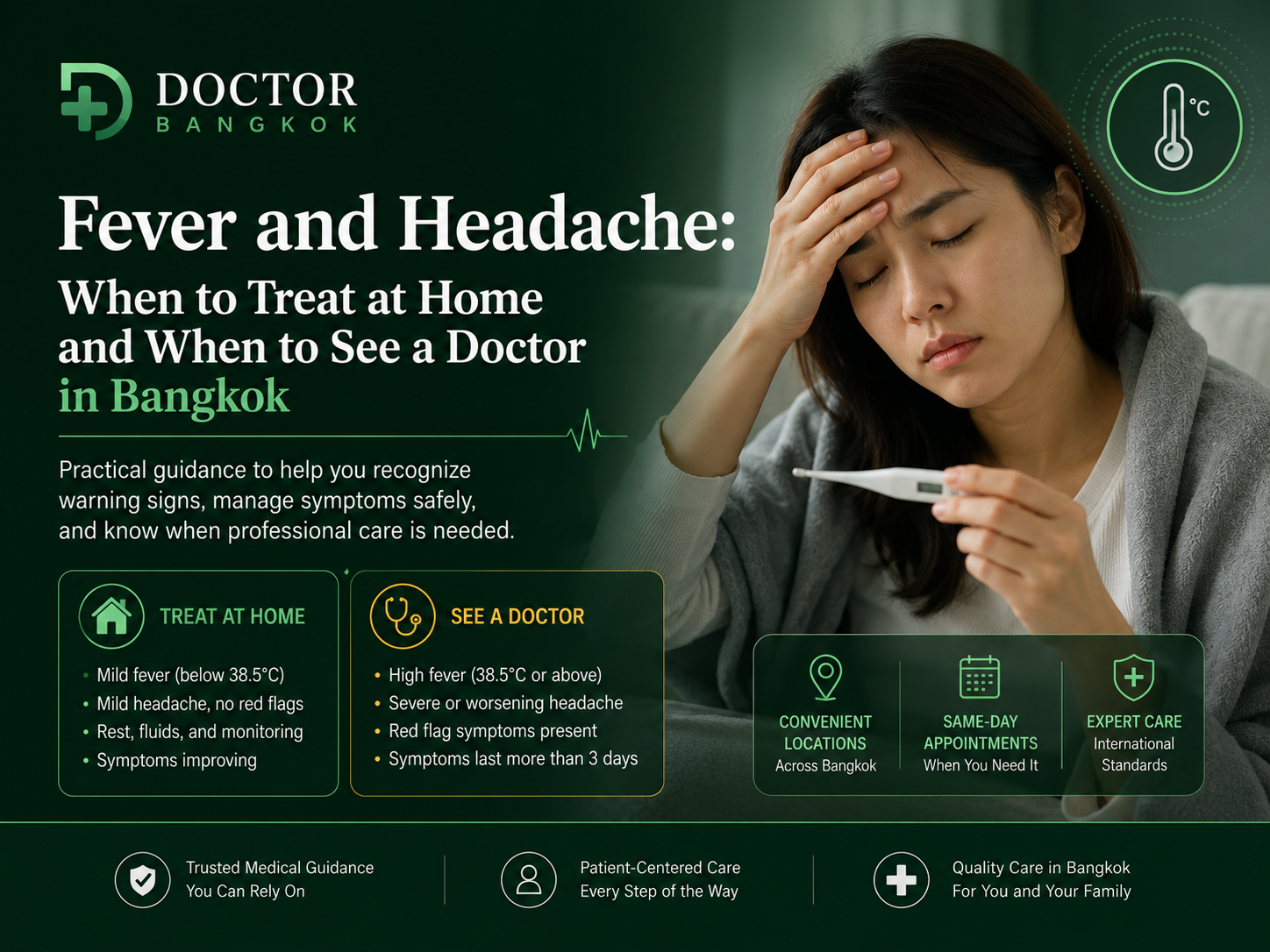
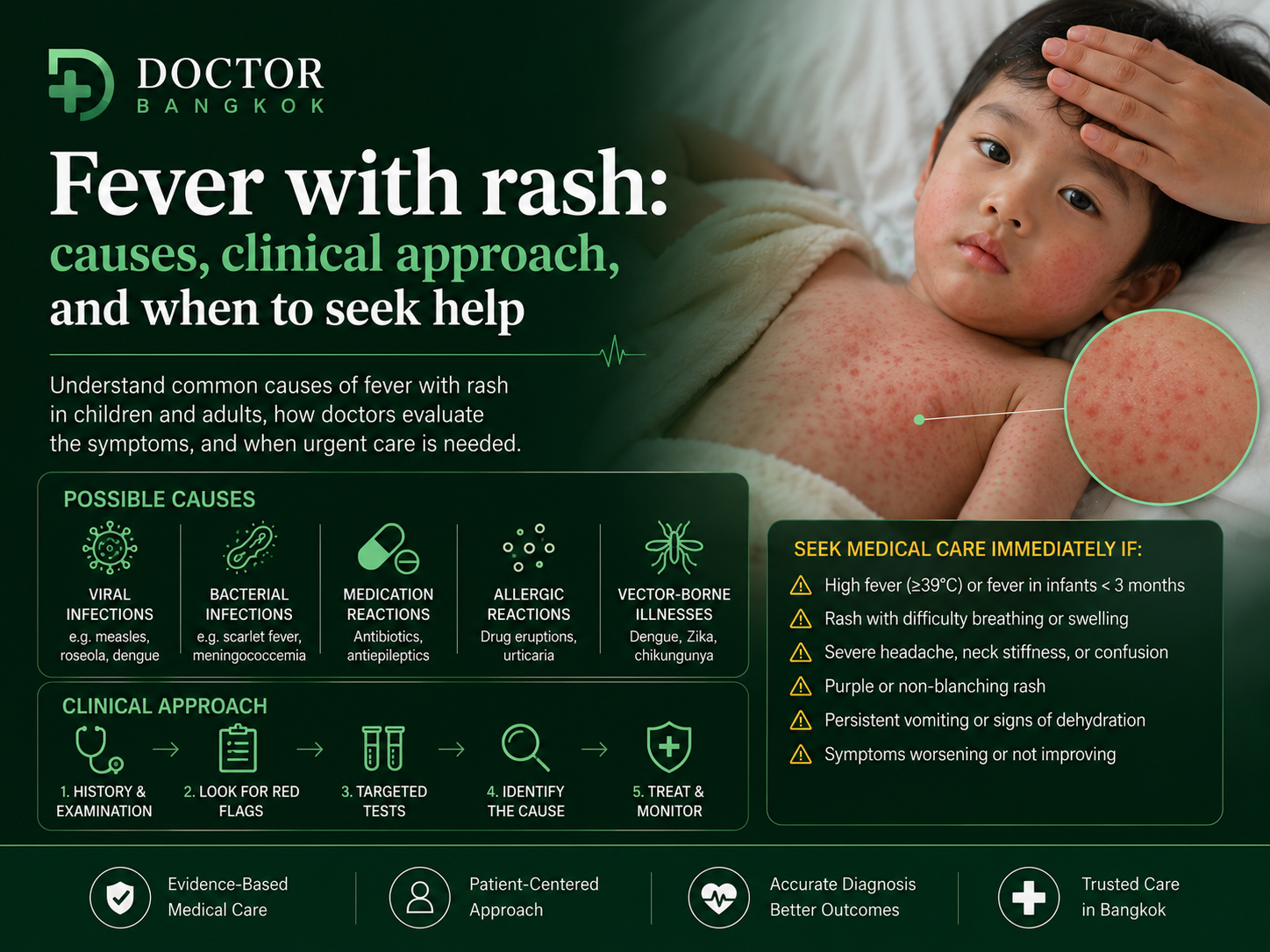
Fever with rash together can point to anything from a mild viral illness to a serious condition like dengue or meningococcal disease. A rash that does not fade when pressed with a glass, or fever with neck stiffness or confusion, needs emergency care. Most other presentations can be assessed at a clinic the same day.
Fever and rash appearing together is a pattern I see often at the clinic. Most of the time it is a self-limiting viral illness that settles within a week. But in Bangkok, the list of possible causes is longer than in most cities, and some of them matter a great deal if you miss them. Dengue circulates here year-round. Scrub typhus is underreported. Imported infections arrive through Suvarnabhumi regularly. A rash that a doctor in London might call a simple viral exanthem could, in this setting, be dengue, chikungunya, or a rickettsial infection that needs specific testing.
What makes it harder for patients is that most of these conditions start with similar symptoms: fever, body aches, and a rash that shows up a few days in. The question I get most often is whether to wait it out, go to a clinic, or head straight to a hospital. This article answers that.

Fever with Rash in Adults: Common and Serious Causes
Viral infections are the most common cause. A rash made up of flat reddened areas mixed with raised spots, appearing two to five days into a fever, is the classic pattern. In Bangkok, dengue is the first thing to rule out. Chikungunya looks similar but tends to cause worse joint pain. Zika virus causes a milder fever with a fine widespread rash, red eyes, and joint pain. It is a lower risk in Thailand right now but still present.
On the bacterial side, scarlet fever from group A Streptococcus produces a rough, sandpaper-texture rash starting on the chest. Scrub typhus, caught from mite bites in rural or semi-rural areas, causes fever, a rash, and a small black crusted skin lesion at the bite site called an eschar. Secondary syphilis causes a non-itchy rash that classically involves the palms and soles. It gets missed more often than it should.
Drug reactions are worth mentioning too. If a rash appears within days to weeks of starting a new medication, that connection needs to be reviewed. Some drug reactions are mild. Others are medical emergencies.
Two causes are always emergencies. Meningococcal disease causes a rapidly spreading rash of pinpoint bleeds or purple patches under the skin. Severe sepsis from any bacterial source can look the same. Any non-blanching rash in a febrile patient needs emergency assessment, not a clinic appointment.
When is a Fever with Rash a Medical Emergency?
The most important warning sign is a non-blanching rash. Press a clear glass firmly against the spots. If they stay visible through the glass rather than fading, go directly to a hospital emergency department. This means blood is leaking under the skin. It can indicate meningococcal disease, severe dengue with a very low platelet count, or serious sepsis.
Other reasons to go straight to hospital: confusion or altered consciousness, neck stiffness and sensitivity to light, severe difficulty breathing, a rash spreading visibly over minutes, or signs of shock such as cold sweats, rapid heart rate, and faintness.
With dengue specifically, the dangerous window is often when the fever breaks. Severe abdominal pain, persistent vomiting, bleeding from the gums or nose, and restlessness as the temperature drops are all warning signs. That drop in fever can feel like recovery starting. It is not always.
For presentations without these features, a same-day clinic assessment is the right first step.

Fever with Rash in Children: Key Differences
Children get rashes with viral infections more easily than adults do. Roseola causes a high fever that resolves suddenly, followed immediately by a pink blanching rash across the trunk. Hand, foot, and mouth disease causes fever with small blisters on the palms, soles, and inside the mouth. Both are self-limiting. Hand, foot, and mouth disease circulates actively in Bangkok’s international school community.
Scarlet fever is more common in children aged five to fifteen. Dengue affects any age and should be on the list for a febrile child with rash in Bangkok just as much as for an adult. Children with dengue can deteriorate faster, partly because warning signs can be harder to spot and partly because smaller blood volume means changes become significant more quickly.
The threshold for seeking same-day care should be lower for children. Any child under five with fever and rash, especially if not drinking, unusually drowsy, or with a spreading rash, needs prompt assessment.
Other Causes of Fever with Rash in Southeast Asia
If you have been outdoors, visited rural areas, or travelled to neighbouring countries recently, the range of possible diagnoses expands.
Scrub typhus is one I see more than people expect. It is caught from infected mite larvae in scrubland, forest edges, and some urban green spaces in Thailand. The key feature is the eschar at the bite site, a small black crust on the skin that is easy to overlook. It is often in the groin, armpit, or trunk. Scrub typhus responds well to doxycycline. Missing it can lead to organ complications.
Chikungunya causes high fever and a rash alongside joint pain that can be severe and last weeks. It looks similar to dengue in the first few days. We need lab tests to separate them reliably.
Measles still circulates in parts of Southeast Asia. The rash starts on the face and spreads downward, accompanied by cough, runny nose, and red eyes. Small white spots inside the cheeks, called Koplik spots, appear before the rash. That finding points specifically to measles.
Dengue Fever Rash: What It Looks Like and When It Appears
Dengue is the most important febrile illness with rash to consider in Bangkok. I want patients to know what to look for.
The fever in dengue starts suddenly, often reaching 39 to 40 degrees Celsius. It comes with severe headache, pain behind the eyes, deep muscle aches, and joint pain. The rash does not usually appear on day one. Early in the illness the skin may look flushed. A more defined rash of reddened areas with small islands of normal-looking skin appears around day three to five.
Later, as platelet levels fall, tiny pinpoint bleeds called petechiae can appear on the skin. A falling platelet count is the finding that changes the level of care required.
We test for dengue using the NS1 antigen test in the first five days of illness. After day five, antibody tests are more useful. At Doctor Bangkok, dengue testing is available the same day as your consultation, which matters because early confirmation tells us how closely you need to be monitored.
The warning signs in dengue appear as the fever breaks, usually around day four to six. This is the highest-risk period. Severe abdominal pain, persistent vomiting, bleeding from any mucosal surface, restlessness, and a sudden platelet drop on blood tests all indicate the need for hospital-level care.
There is no antiviral treatment for dengue. You rest, stay well hydrated, and use paracetamol for fever. Avoid ibuprofen and aspirin as both increase bleeding risk. Uncomplicated dengue with close monitoring can sometimes be managed without hospital admission. Warning signs change that.
Scarlet Fever Rash: Appearance, Distribution, and Diagnosis
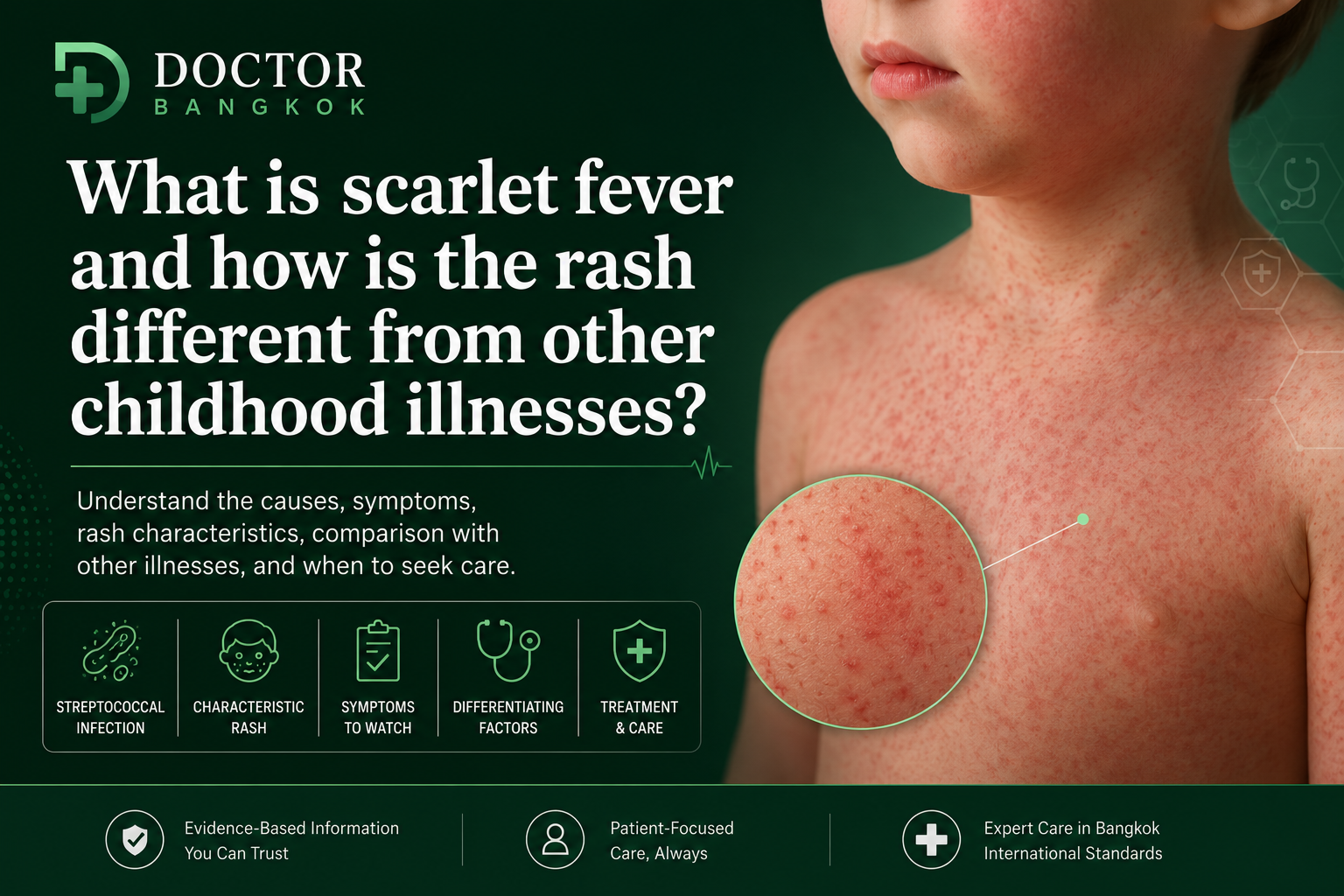
Scarlet fever starts with a sudden sore throat, fever, and headache. The rash follows within one to two days, beginning on the chest and neck and spreading outward. The defining feature is texture: it feels like fine sandpaper. The skin is red with tiny raised bumps. In skin folds like the armpits and groin, the rash tends to concentrate into red lines.
The tongue is a useful sign. Early on it looks white with red bumps showing through, called a white strawberry tongue. By day four or five the white coating peels to reveal a bright red strawberry tongue.
We confirm the diagnosis with a rapid strep test from a throat swab. Results come back within minutes. Treatment is penicillin or amoxicillin for ten days. For penicillin allergy, azithromycin or clarithromycin is used instead. Completing the full course matters. Stopping early raises the risk of rheumatic fever, which can damage heart valves.
Scarlet fever in adults tends to be milder than in children, but it is not something to leave untreated.
How a Doctor Diagnoses the Cause of Fever with Rash
When you come in with fever and rash, I start with history. When did the fever start? When did the rash appear? Where did it begin and how has it spread? Is there a sore throat, joint pain, eye redness, or any bleeding? Recent travel outside Bangkok, new medications, and vaccination history all matter.
The physical examination maps the rash in detail: whether it blanches or not, what type of spots are present, where they are, and what else is found on examination. These findings together often narrow the diagnosis before a single test is run.
Blood tests typically include a full blood count to check platelet levels and white cells. For suspected dengue, we add the NS1 antigen test and liver function tests. For suspected scarlet fever, we swab the throat. If scrub typhus is possible based on travel or exposure history, specific serology can be sent to the lab.
Most rapid results come back within the same visit. Specialist tests take twenty-four to forty-eight hours. I will explain the results clearly, tell you what monitoring is needed, and advise you directly if hospital care becomes the right next step.
If you have developed fever and rash in Bangkok and are not sure what is causing it, come in for a same-day assessment at Doctor Bangkok. English-speaking physicians, on-site dengue testing, full blood count, and a clinical examination that takes the local disease context seriously. Walk-in and booked appointments are available. Visit doctorbangkok.co.th to book.
Frequently Asked Questions
Can a fever with rash be life-threatening?
Most adults with fever and rash have a self-limiting viral illness. However, some causes are serious and move fast. Meningococcal disease can progress to septic shock within hours. The warning sign is a non-blanching rash: spots that stay visible when you press a clear glass firmly against the skin. Dengue can also become dangerous when platelet counts fall severely. Fever with rash plus neck stiffness, confusion, or rapid spreading of the rash means go directly to an emergency department.
How do I know if my rash is dengue or something else?
Dengue usually starts with a sudden high fever, severe headache, pain behind the eyes, and deep muscle and joint ache. The rash appears around day three to five and often shows areas of redness with small islands of normal skin. Chikungunya looks similar but the joint pain tends to be worse and last longer. Scarlet fever comes with a sore throat and a sandpaper-texture rash. Drug reactions follow the start of a new medication. The only reliable way to confirm dengue is an NS1 antigen test in the first five days, combined with a clinical assessment.
Should I go to a clinic or hospital with fever and rash in Bangkok?
For presentations without emergency warning signs, a clinic is the right first step. You get a clinical examination, same-day blood tests including dengue testing, and a clear explanation of results. Doctor Bangkok offers this with English-speaking physicians and same-day appointments. If results show a critically low platelet count, dengue warning signs develop, or there are features of serious bacterial infection, the physician will advise hospital transfer and help coordinate that. Go straight to a hospital if you have a non-blanching rash, fever with confusion or neck stiffness, active bleeding, or signs of shock.
Is scarlet fever common in adults in Bangkok?
Scarlet fever is more often diagnosed in children, but adults do develop it. In Bangkok’s shared offices, international schools, and communal housing, group A Streptococcus spreads through respiratory droplets without much difficulty. Adults living with a child who has scarlet fever are at real exposure risk. The illness can feel milder in adults, which leads some people to skip treatment. That is a mistake because untreated scarlet fever carries a risk of rheumatic fever, a complication that can cause lasting heart valve damage. A full ten-day antibiotic course resolves it reliably when treated properly.
What blood tests are done for fever with rash at a clinic?
A standard workup includes a full blood count to check platelet levels, white cell count, and haemoglobin. When dengue is suspected, we add the NS1 antigen test and liver function tests. C-reactive protein helps distinguish bacterial from viral causes. Suspected scarlet fever gets a rapid throat swab for group A Streptococcus, with results in minutes. If the clinical picture suggests scrub typhus, such as a patient returning from rural areas with an eschar, specific rickettsial serology is sent to the lab. Most rapid results are back before you leave the clinic.
What should I do if my fever and rash started after travelling outside Bangkok?
Tell the physician clearly where you have been and when. Travel history changes the differential significantly. Rural Thailand carries a genuine scrub typhus risk. Patients returning from Myanmar, Cambodia, or Laos need malaria excluded even though malaria itself does not usually cause a rash. Zika is relevant for anyone pregnant or planning a pregnancy. The incubation periods of tropical infections mean symptoms can appear days to weeks after exposure. Mention any travel in the three weeks before your fever started, not just the few days immediately before.
About the Author
Dr. Ponlawat Pitsuwan
Physician, Doctor Bangkok
A private medical clinic in central Bangkok. He sees expats, residents, and medical tourists for fever assessment, tropical infectious diseases including dengue, and general medical consultations. His approach is straightforward, evidence-based care delivered in plain language.
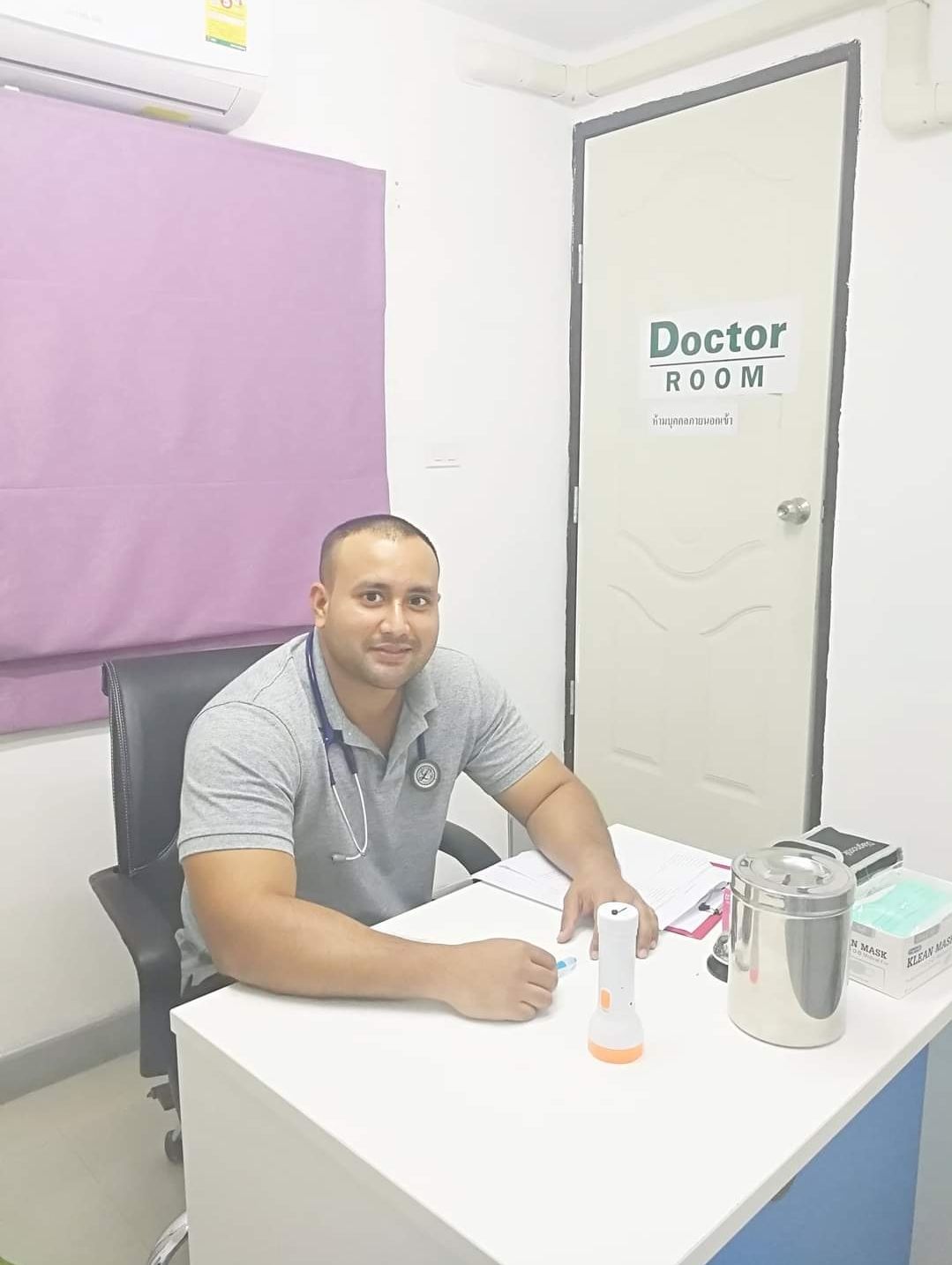
Dr. Ponlawat Pitsuwan is a physician at Doctor Bangkok, a private clinic in central Bangkok. He sees expats, residents, and medical tourists for general medicine, wellness consultations, and IV therapy. His focus is straightforward, evidence-based care delivered in plain language.