

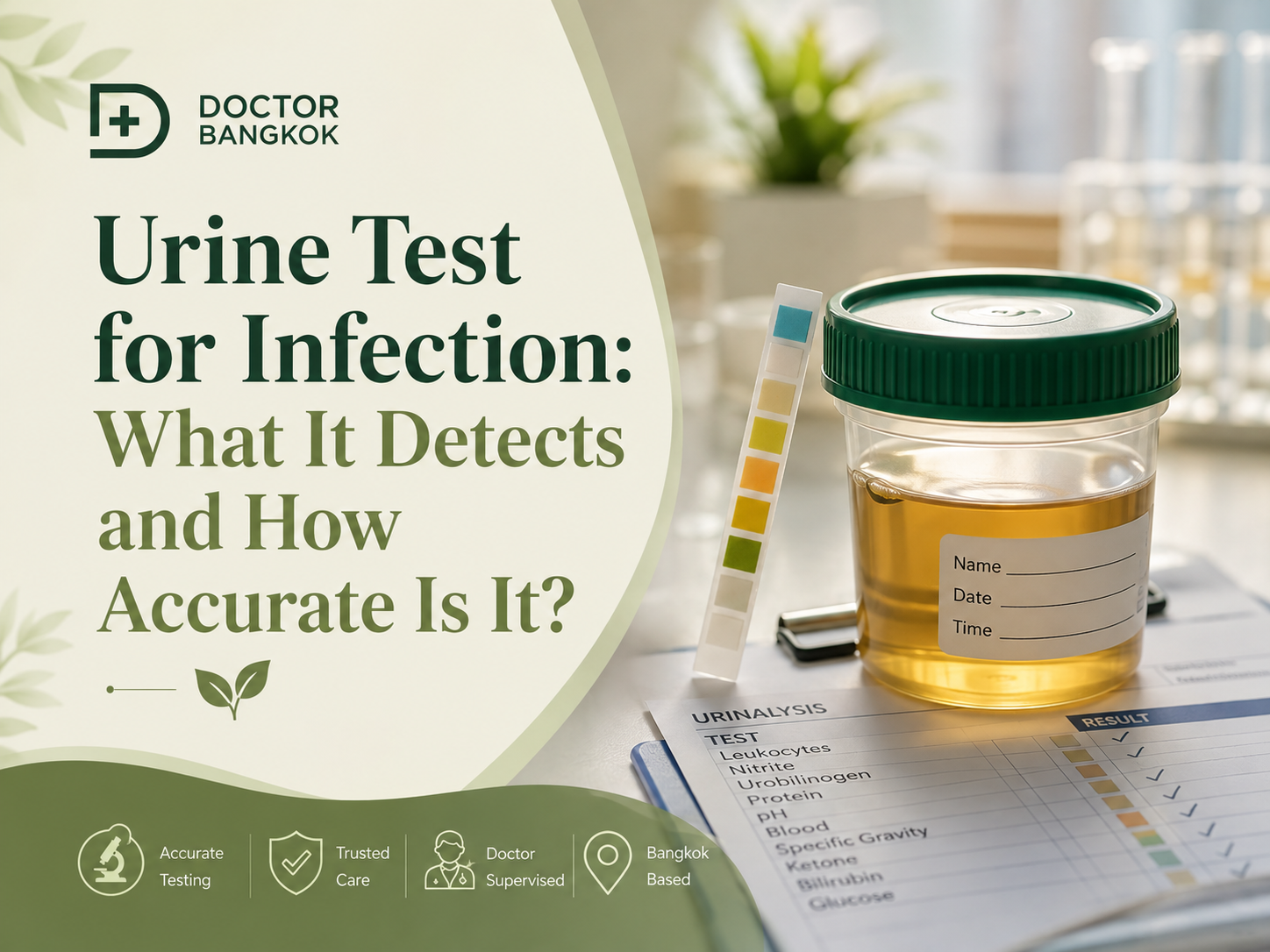
Clinically reviewed by Dr. Ponlawat Pitsuwan, Physician, Doctor Bangkok. Last reviewed: August 2026
A urine test for infection can detect bacteria, white blood cells, and other markers that point to a urinary tract infection. The most common test, the dipstick, gives fast results but misses some infections. A urine culture is more accurate and tells your doctor which antibiotic will actually work. If you have already taken antibiotics before testing, a PCR urine test may be your best option.
If you have burning when you urinate, pain in your lower abdomen, or the feeling that you always need to go, you are probably wondering whether you need a urine test and what it will tell you. This is one of the most common reasons patients walk into a clinic in Bangkok, especially expats who tried treating themselves first with antibiotics bought at a pharmacy.
Not all urine tests work the same way. Some give you an answer in minutes. Others take a couple of days but give you far more useful information. Getting the right test matters, especially in Bangkok where antibiotic resistance is a real and growing problem. Here is what each test does, what it can and cannot detect, and what to do when your results are not adding up.

The Three Main Types of Urine Test for Infection
The Dipstick Test
This is the quickest option. You produce a urine sample, a strip is dipped in, and results come back within minutes. The strip checks for several things at once: white blood cells, a marker called leukocyte esterase that signals inflammation, and nitrites, which many bacteria produce.
The dipstick is useful as a fast first look. But it has real limitations. Published data puts leukocyte esterase sensitivity at around 60 to 80 percent, and nitrite detection is lower still. A normal dipstick does not fully rule out an infection, particularly if the bacteria causing it do not produce nitrites.
The Urine Culture
This is the most reliable test for a confirmed infection. Your sample goes to a lab, and the lab identifies exactly what organism is present. It also shows which antibiotics will kill it and which ones it resists. That report is called antibiotic sensitivity, and it is what guides proper treatment.
The downside is time. A culture usually takes 48 to 72 hours. For anyone with a recurrent infection, a treatment that has failed before, or symptoms that do not match a simple UTI, waiting for that result is worth it.
The PCR Urine Test
PCR detects bacterial DNA directly in your urine. It does not need bacteria to be alive or actively growing, which makes it useful when you have already taken antibiotics before coming in. Results are usually available within 24 hours.
This is particularly relevant in Bangkok, where antibiotics are easy to buy over the counter. If you self-treated before getting tested, tell your doctor. It changes which test makes the most sense.
| Dipstick | Urine Culture | PCR | |
|---|---|---|---|
| Speed | Same visit | 48 to 72 hours | Within 24 hours |
| Accuracy | Moderate | High | High |
| Identifies organism | No | Yes | Yes |
| Antibiotic sensitivity | No | Yes | Sometimes |
| Works after antibiotics | Partially | Reduced | Yes |
| Best for | Initial screen | Confirmed infection, treatment guidance | Post-antibiotic testing, difficult organisms |
How Accurate Is Each Test, and What Can Cause a Wrong Result?
A false negative, meaning the test misses an infection that is actually there, is more common than most people realise. The biggest reason I see in Bangkok is patients who took antibiotics before getting tested. Even a single dose can suppress bacterial growth enough to make a culture come back negative, even when the infection is still present.
Other causes include a poorly collected sample, dilute urine from drinking too much water before the test, and testing during menstruation. Some bacteria simply do not trigger the markers a dipstick looks for.
If your results are negative but your symptoms are real, that is a clinical conversation worth having. A negative result is not always the whole answer.

How to Collect a Urine Sample Correctly
This matters more than most patients expect. A contaminated or diluted sample is one of the most common reasons results come back unclear.
Hold your urine for at least one hour before giving the sample. When you collect it, let the first stream go into the toilet, then collect the middle portion into the container. This is called a midstream clean-catch, and it reduces contamination from skin bacteria near the urethra. Avoid testing during your period if possible.
At Doctor Bangkok, the team walks you through collection before you go into the bathroom. That small step makes a real difference to the reliability of your results.
What Else Can a Urine Test Detect Beyond Bacterial Infection?
A urine test is not only for UTIs. Depending on the panel your doctor orders, it can flag blood in the urine, which may point to kidney stones or other conditions. It can detect glucose, a potential marker for uncontrolled diabetes. It can show protein, which may suggest kidney stress.
Urine can also be used for targeted STI testing. A standard urinalysis does not test for chlamydia or gonorrhoea, but a separate urine PCR or NAAT panel can. If your symptoms include discharge, pain during sex, or discomfort that feels different from a typical UTI, mention that to your doctor. A combined UTI and STI urine panel may be more appropriate. Doctor Bangkok offers both, and the team can advise on the right combination based on your symptoms and history.
Why Getting Tested Properly in Bangkok Matters
Bangkok has a real problem with antibiotic resistance. Antibiotics are available without a prescription at most pharmacies, and many patients, both Thai and expat, self-treat before they ever see a doctor. I see this regularly in clinic. Someone tries one antibiotic, feels slightly better, stops the course, and comes in weeks later still unwell.
When you treat without knowing which organism is causing the infection, you risk choosing the wrong antibiotic. When you treat without knowing resistance patterns, you risk making resistant bacteria harder to treat in future. The World Health Organization has identified antimicrobial resistance as one of the most serious global health threats, and Thailand has higher rates of resistance to commonly used antibiotics than many higher-income countries.
Getting a proper culture or PCR test, not just a dipstick, is not overcautious. It is how you make sure the treatment you take actually works.
When to See a Doctor Instead of Waiting
Mild UTI symptoms are worth investigating if they persist for more than two or three days. But some situations need same-day assessment. A high fever alongside urinary symptoms, pain in your back or sides, nausea, vomiting, or symptoms that are getting rapidly worse all suggest this may not be a simple bladder infection.
If you have had two or more UTIs in the past six months, that pattern warrants a proper workup, not just another course of antibiotics. Recurrent infections sometimes point to an underlying cause that needs investigation.
Getting a Urine Test for Infection at Doctor Bangkok
At Doctor Bangkok, a urine test for infection starts with a short consultation. You explain your symptoms, your doctor decides which test fits your situation, and you collect your sample in the clinic. The dipstick result, if needed, is available before you leave. Culture and PCR results come back within one to three days depending on the panel.
What happens next matters as much as the test itself. Your doctor reviews results with you directly and explains what they mean in plain language. If bacteria are found, treatment is guided by the sensitivity report, not a guess. If your results are negative but your symptoms persist, the conversation continues.
You can book a same-day appointment online. Our diagnostic testing clinic is in central Bangkok, a short walk from BTS, and English-speaking doctors are available every day.
Burning when you urinate? Pain in your lower abdomen? Do not wait it out or reach for pharmacy antibiotics without knowing what you are treating. Doctor Bangkok offers urine infection testing, including dipstick, culture, and PCR panels, with results reviewed by an English-speaking physician. Book a same-day appointment at doctorbangkok.co.th or visit our diagnostics page for full details on urine testing in Bangkok.
Frequently Asked Questions
Can a urine test miss an infection if I already took antibiotics from a pharmacy?
Yes, and this is one of the most common scenarios I see in Bangkok. Antibiotics taken before sample collection can suppress bacterial growth, making a culture come back falsely negative even when the infection is still active. If you have already self-treated, tell your doctor before the test. PCR testing is a better option in that situation because it detects bacterial DNA, which remains present even after antibiotics have been taken.
What is the difference between a dipstick, a urine culture, and a PCR urine test?
A dipstick is fast but gives limited accuracy. A culture is the most reliable test for identifying the exact organism and which antibiotics will treat it, but it takes 48 to 72 hours. PCR detects bacterial DNA directly, gives results within about 24 hours, and works even after antibiotic use. Which test is right for you depends on your symptoms, your history, and whether you have already taken any medication.
How long does it take to get urine test results in Bangkok?
A dipstick gives you an answer before you leave the clinic. A urine culture takes 48 to 72 hours because the lab needs time to grow and identify any bacteria present. PCR results are typically back within 24 hours. At Doctor Bangkok, your doctor discusses results with you directly and explains the next steps.
Does a urine test for infection also check for STIs like chlamydia or gonorrhoea?
A standard urinalysis or urine culture does not test for STIs. However, urine can be used for PCR or NAAT testing specifically for chlamydia, gonorrhoea, and trichomonas. If your symptoms might point to an STI alongside urinary discomfort, ask your doctor about a combined panel. Doctor Bangkok offers both UTI and STI urine testing and can advise on the right combination for your situation.
Do I need to prepare before a urine test for infection?
Yes, and how you collect the sample directly affects accuracy. Hold your urine for at least one hour before the test. Let the first stream go into the toilet and collect the middle portion into the container. Avoid testing during menstruation if possible. The team at Doctor Bangkok will walk you through this before you collect your sample.
What does it mean if my urine test is negative but I still have symptoms?
A negative result does not always mean there is no infection. The test can miss an infection if you collected the sample incorrectly, if you recently took antibiotics, or if the organism causing the problem is not detected by the test used. If your symptoms persist after a negative result, go back to your doctor. A different test or a closer look at other causes may be needed.
Dr. Ponlawat Pitsuwan
Physician, Doctor Bangkok
a private medical clinic in central Bangkok. He sees expats, residents, and medical tourists for urinary tract infections, STI testing, diagnostic workups, and general medical consultations. His focus is straightforward, evidence-based care delivered in plain language.
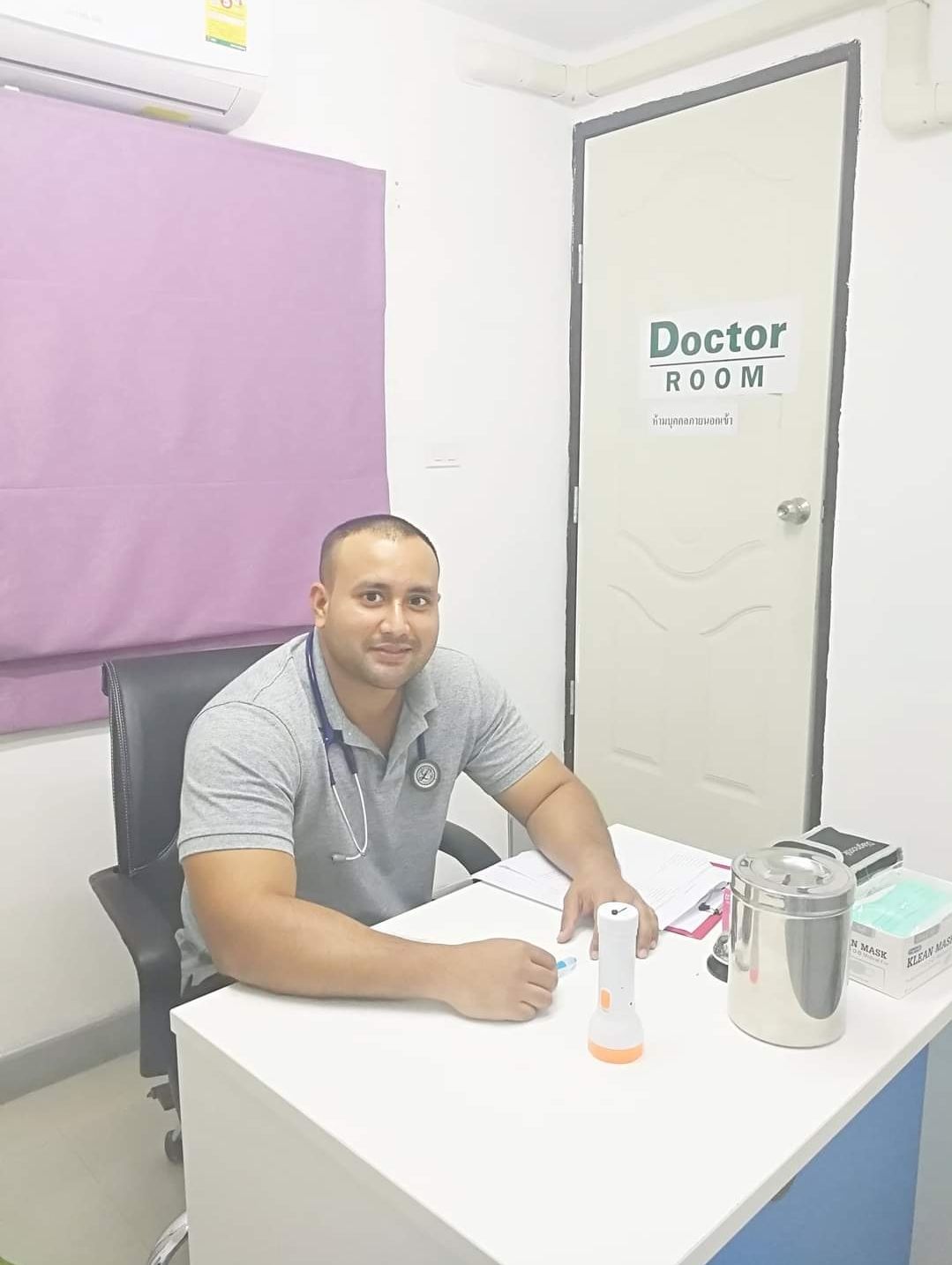
Dr. Ponlawat Pitsuwan is a physician at Doctor Bangkok, a private clinic in central Bangkok. He sees expats, residents, and medical tourists for general medicine, wellness consultations, and IV therapy. His focus is straightforward, evidence-based care delivered in plain language.