

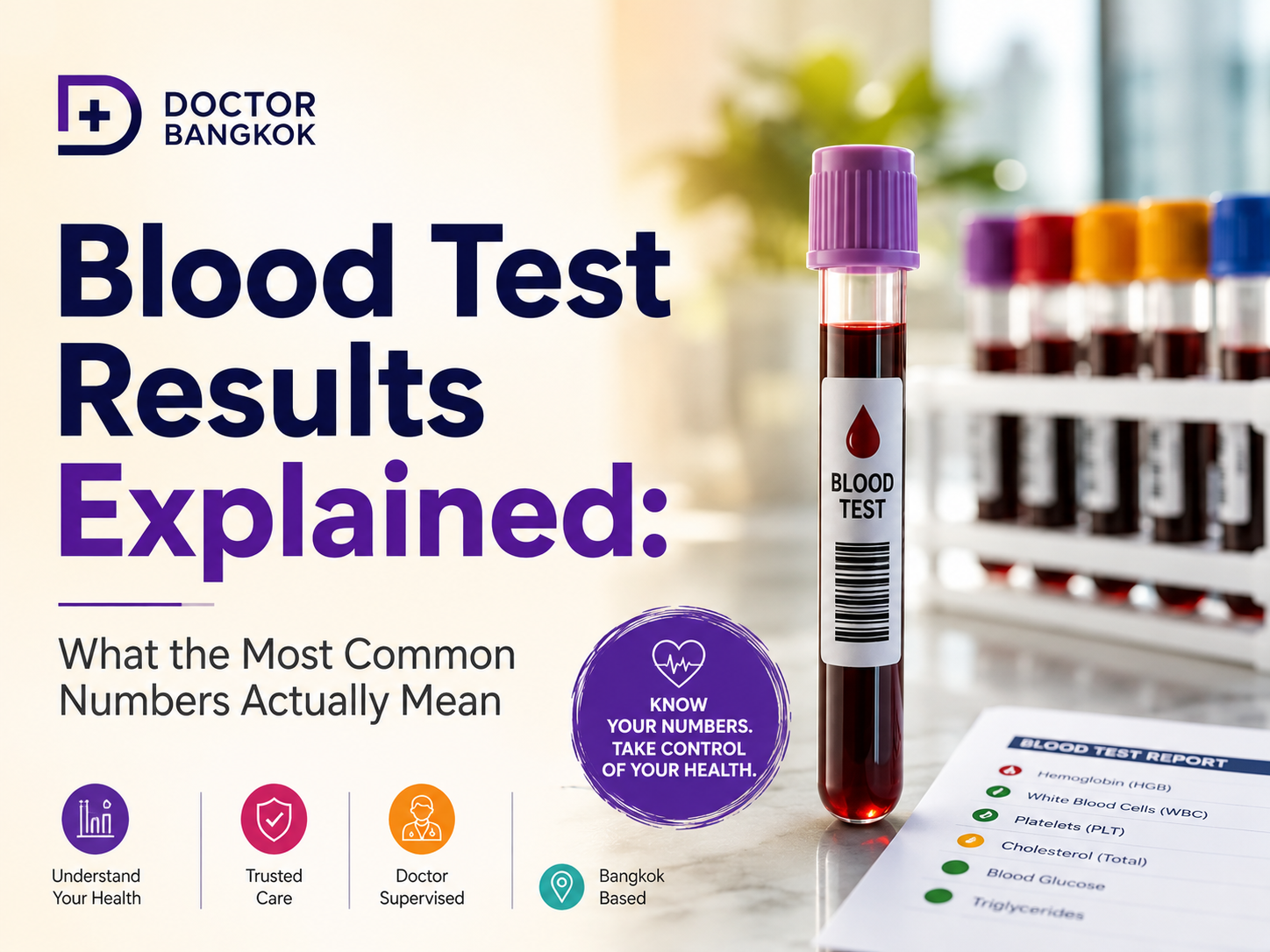
Clinically reviewed by Dr. Ponlawat Pitsuwan, Physician, Doctor Bangkok.
Last reviewed: August 2026
Blood test results show numbers alongside a reference range. If your result falls outside that range, it gets flagged H for high or L for low. A flag does not automatically mean something is wrong. It means a doctor needs to look at that number in the context of your full health picture. Most common panels include a complete blood count, liver and kidney markers, cholesterol, blood sugar, and thyroid levels.
You get handed a page of numbers. Some have an H or L printed next to them. Nobody explains what any of it means, and you are now sitting in a Bangkok hotel room or apartment trying to Google your way to a diagnosis. I see this every week at the clinic.
A flagged result is not a verdict. It is a signal that something needs a closer look. This article walks you through the most common blood test numbers, what they actually measure, and what to do when something looks off. If you are an expat and your Bangkok results look nothing like the results you got back home, there is usually a simple reason for that too.

How to Read a Thai Lab Report
Thai lab reports follow a standard layout. You will see the test name on the left, your result in the middle, the unit of measurement, and then the reference range for that lab. At the far right you will often see an H, L, or A flag. H means your result is above the range. L means it is below. A means abnormal in a more general sense.
The reference range is specific to the lab that ran your test. Different labs set slightly different ranges. A result flagged L at one lab might sit comfortably within range at another. That is not a flaw in the system. It is one reason a single flagged number needs clinical context, not a Google search.
Units matter too. Thai labs generally report cholesterol in mg/dL. If you are from the UK or Australia, you are used to seeing mmol/L. A total cholesterol of 200 mg/dL is the same as 5.2 mmol/L. Same result, very different-looking number. This unit difference causes a lot of unnecessary panic when patients compare their Bangkok panel to results from home.
Why Your Bangkok Results May Look Different From Home
Two things drive this confusion: units and reference ranges.
Glucose, cholesterol, and triglycerides are the most common offenders on units. The US and most Thai labs use mg/dL. The UK, Australia, and much of Europe use mmol/L. Check the units before you assume anything has changed.
On reference ranges: labs set their ranges based on population data. Research from Siriraj Hospital and Mahidol University has shown that blood count reference ranges for Thai patients can differ meaningfully from Western norms, particularly for haemoglobin and white blood cell counts. A result flagged low on a Thai lab report may actually be normal for that population. A doctor familiar with both systems can give you a far more accurate read than a unit-by-unit comparison at home.

The Most Common Blood Test Panels Explained
Complete Blood Count (CBC)
The CBC looks at your blood cells. Three things matter most. Your haemoglobin tells us how well your blood carries oxygen. A low haemoglobin can point to anaemia, which means your body is not getting enough oxygen to function properly. Your white blood cell count shows how your immune system is behaving. A high count often signals infection or inflammation, and a very low count can mean your body is struggling to fight off illness. Your platelet count matters for clotting, and this one becomes especially important in Bangkok because dengue fever causes platelet counts to drop sharply and quickly. A fever with falling platelets needs urgent attention.
Liver Function Tests
The main markers are ALT, AST, and ALP. ALT and AST are enzymes released when liver cells are under stress. Mildly raised levels are common and can come from alcohol, fatty liver, or certain medications. Significantly raised levels need follow-up. ALP can reflect liver or bone issues. On their own these numbers tell us something is happening. They do not tell us why. That requires more history and sometimes more tests.
Kidney Function
Creatinine and eGFR, your estimated kidney filtration rate, are the two numbers I look at first. A rising creatinine or a falling eGFR means the kidneys are under stress. BUN, or blood urea nitrogen, is another marker of kidney workload. These numbers are sensitive to hydration. If you came in after a night out or a day in the Bangkok heat without enough water, your kidney markers may look worse than they actually are.
Lipid Profile
This gives you your cholesterol picture. LDL is the one we worry about most because high levels raise cardiovascular risk over time. HDL is protective and you want this one higher. Triglycerides reflect fat in the blood and often rise with high sugar intake, alcohol, or metabolic issues. A total cholesterol number alone tells us very little. The ratio of LDL to HDL matters more.
Blood Glucose and HbA1c
A fasting glucose test shows your blood sugar on the day of the test. HbA1c tells us your average blood sugar over the past two to three months. I find HbA1c much more useful because it cannot be manipulated by a single good day. If you have been living in Bangkok for a year and your diet has shifted significantly, your HbA1c might tell a story your fasting glucose does not.
Thyroid Function
TSH, or thyroid stimulating hormone, is the first number to check. A high TSH usually means your thyroid is underactive. A low TSH often means it is overactive. Free T4 is the hormone your thyroid actually produces, and we look at that alongside TSH for a fuller picture. Thyroid problems are commonly missed because the symptoms, including fatigue, weight changes, and mood shifts, overlap with so many other conditions.
Blood Tests That Matter More When You Live in Bangkok
There are a few tests I recommend to expats that might not appear on a standard panel back home.
Hepatitis B surface antigen, or HBsAg, checks whether you are currently infected with hepatitis B. Prevalence in Thailand is significantly higher than in most Western countries. If you have never been tested and are not vaccinated, this should be on your list.
Uric acid is worth adding if you have shifted your diet since arriving. Thai food is high in purines and sodium, and elevated uric acid leads to gout. I see this more often in expats who have been here a year or two.
Vitamin D surprises people. You are in a tropical country, but many expats spend their days in air-conditioned offices and malls. Low vitamin D affects bone health, immunity, and energy levels, and deficiency is more common here than most people expect.
If you have a fever in Bangkok, dengue is always on my mind. The key markers are platelet count and white cell count. If both are dropping and you have had a fever for more than two days, come in. Do not wait.
What a Flagged Result Actually Means and When to Act
Most flagged results are mildly borderline and need monitoring, not immediate action. A slightly high LDL or a mildly low haemoglobin with no symptoms is usually a lifestyle conversation, not an emergency.
The flags that warrant prompt follow-up are a significantly elevated ALT or AST, a creatinine level that has jumped compared to a previous result, a falling platelet count, blood glucose or HbA1c in the diabetic range, or a TSH that is very far outside the normal range. These are not emergencies in most cases, but they need a doctor looking at the full picture soon.
What I tell every patient is this: one result in isolation means less than a trend over time. If your LDL has gone from borderline to high over two years, that matters more than a single reading.
What to Do After You Get Your Results
If everything is in range and you have no symptoms, keep that report and bring it to your next check-up so we can compare trends over time.
If something is flagged and you are not sure what it means, book a results-review consultation. At Doctor Bangkok, our English-speaking physicians go through every number with you and tell you clearly what needs action and what just needs watching. We review results from Thai hospitals, private labs, and overseas clinics.
If you are an expat who has not had a blood test since arriving in Thailand, our health check and diagnostics service covers the full panel described above, including the Bangkok-specific markers. Same-day results are available for most tests.
Got blood test results you do not understand? At Doctor Bangkok, our English-speaking doctors review full blood panels and explain every result in plain language. We see expats, residents, and medical tourists at our central Bangkok clinic, BTS accessible, with same-day appointments available. Bring your results from any lab or hospital and we will tell you exactly what they mean and what to do next. Book a results-review consultation at doctorbangkok.co.th or visit our diagnostics page for full panel options.
FAQ
Why do my blood test results from Bangkok look different from tests I had at home?
The two most common reasons are unit differences and reference range differences. Cholesterol, glucose, and triglycerides are reported in mg/dL in Thailand and the US but in mmol/L in the UK and Australia, so the same result looks like a completely different number. Labs also set reference ranges using local population data, which can vary from Western norms. A results-review consultation at Doctor Bangkok can put both into context for you.
What does it mean if my result is flagged H or L on a Thai lab report?
It simply means your result falls outside that lab’s reference range. Around five percent of healthy people will have at least one flagged result on a standard panel. A single borderline flag needs to be read alongside your symptoms, history, and lifestyle, not in isolation. If you are unsure what your flag means, bring the report in and we will walk through it with you.
Do I need to fast before a blood test in Bangkok?
Yes, for some tests. Fasting for eight to twelve hours is needed for glucose, HbA1c, cholesterol, and triglycerides. For a CBC, thyroid function, vitamin levels, and most infection or hormone panels, fasting is not required. Check with the clinic when you book, and Doctor Bangkok’s team will advise you clearly at that point.
Which blood tests should expats in Bangkok prioritise that they might not test for back home?
I recommend adding hepatitis B surface antigen, uric acid, and vitamin D to any standard annual panel. Hepatitis B is far more prevalent in Thailand than in most Western countries. Uric acid rises with dietary shifts common in Bangkok. Vitamin D deficiency is surprisingly common among expats who spend most of their time indoors.
Can Doctor Bangkok review blood test results I had done somewhere else?
Yes. Our doctors regularly review results from Thai government hospitals, private labs, and overseas clinics. You bring the report, we go through every result in plain English, explain what is flagged and why, and advise whether you need follow-up tests, lifestyle changes, or a specialist referral. This is particularly useful if you received results with little or no explanation.
How often should I get a blood test as an expat living in Bangkok?
For most healthy adults, a full panel once a year is reasonable. If you have existing conditions such as diabetes, high blood pressure, or thyroid disease, more frequent monitoring may be needed. If you have recently changed your diet significantly, started new medication, or been unwell, it is worth testing sooner rather than waiting. Our diagnostics service is available walk-in or by appointment.
Dr. Ponlawat Pitsuwan
Physician, Doctor Bangkok
a private medical clinic in central Bangkok. He sees expats, residents, and medical tourists for general health consultations, annual health checks, and blood test results reviews. His focus is straightforward, evidence-based care delivered in plain language.
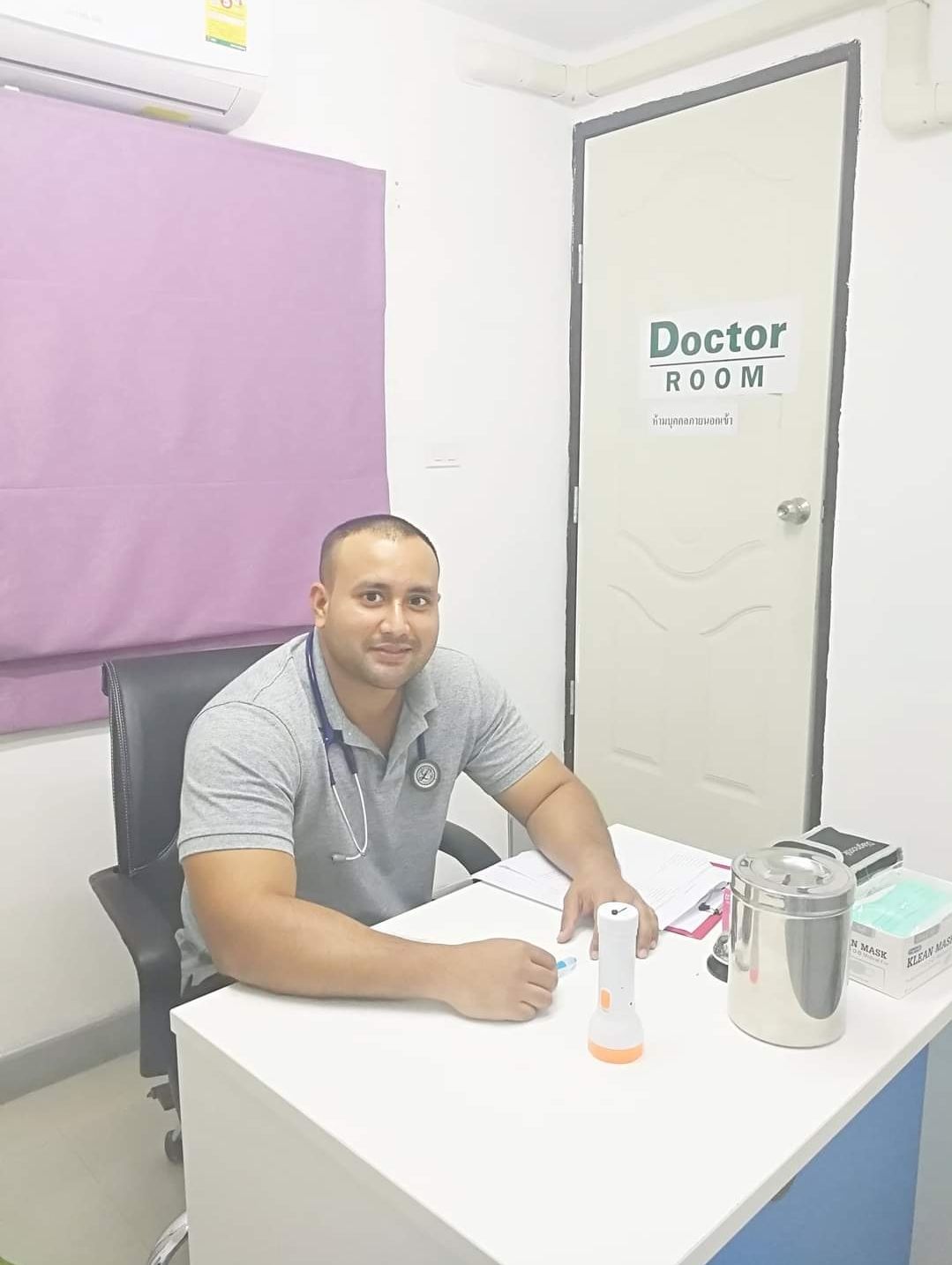
Dr. Ponlawat Pitsuwan is a physician at Doctor Bangkok, a private clinic in central Bangkok. He sees expats, residents, and medical tourists for general medicine, wellness consultations, and IV therapy. His focus is straightforward, evidence-based care delivered in plain language.