
Clinically reviewed by Dr. Ponlawat Pitsuwan, Physician, Doctor Bangkok.
Last reviewed: November 2026
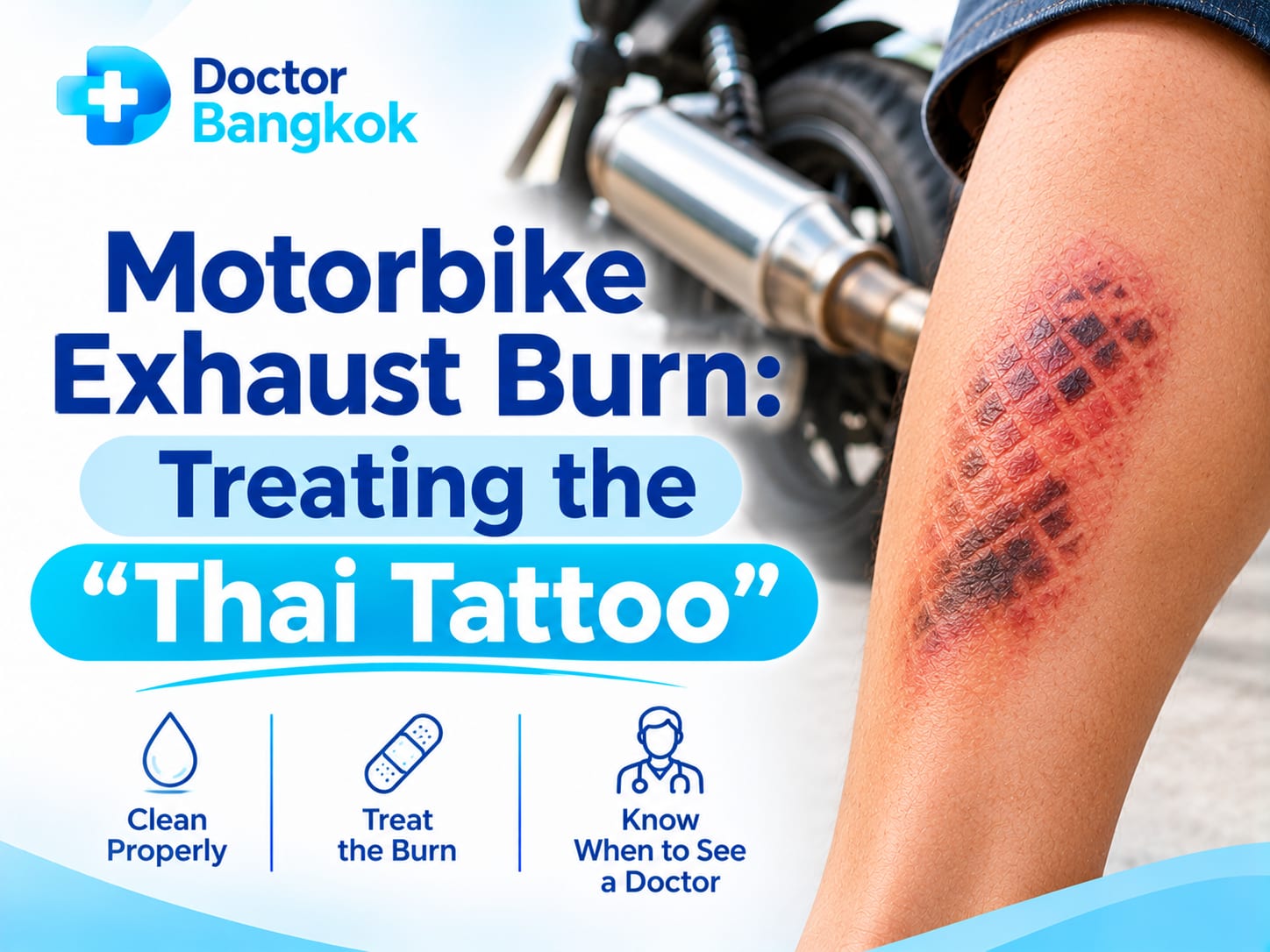
A motorbike exhaust burn, often called a "Thai tattoo," is a contact burn from touching a hot exhaust pipe, usually on the calf or ankle. Most are partial thickness burns that heal within two to three weeks with correct wound care. Bangkok’s heat and humidity raise infection risk significantly, so professional dressing and early assessment matter more here than in a temperate climate.
You stepped off a Grab moto, shifted your bag, and felt it. That instant searing contact with the exhaust pipe. It even has a name: the Thai tattoo. The blister forms fast. The question most people ask next is whether they actually need a doctor, or whether a pharmacy run will do.
The honest answer depends on how deep it went. Shallow burns with intact skin or small blisters can often be managed with the right dressing. Burns that blister heavily, look white or pale at the centre, or feel numb rather than painful almost always need professional assessment. Bangkok’s climate does the rest: intense heat and constant humidity can turn a manageable wound into an infected one faster than most people expect.

Why Motorbike Exhaust Burns Are So Common in Bangkok
Bangkok’s streets are built around motorbikes. Grab moto-taxis, food delivery riders, and privately owned scooters pack every soi. Most riders carry passengers, and passengers almost always wear flip-flops or sandals and shorts. That leaves the calf and ankle exposed at exactly the height of the exhaust pipe.
The colloquial names, Thai tattoo and Bangkok kiss, describe the same injury. You brush the pipe when dismounting, or your leg drifts while riding pillion, and the contact takes less than a second. Exhaust pipes can reach temperatures well above 200°C, and at that heat, even a brief touch causes a significant burn.
If you are new to riding pillion here, the risk is highest on your first few trips before you have learned where to hold your legs.
How Deep Is Your Exhaust Burn?
Burn depth determines how long healing takes and whether scarring is likely. Most exhaust burns fall into one of three categories.
| Depth | What You See and Feel | Typical Healing Time |
|---|---|---|
| Superficial (first degree) | Red, dry, painful, no blisters | A few days |
| Superficial partial thickness (second degree) | Blisters, wet surface, very painful, pink base | Two to three weeks |
| Deep partial thickness (second degree) | Pale or mottled, reduced pain, blisters may be broken | Often more than three weeks, likely to scar |
| Full thickness (third degree) | White or leathery, little or no pain, dry | Requires medical care, always scars |
Most exhaust burns land in the superficial partial thickness category. The blister is your body sealing off the damaged layer. That is actually useful; an intact blister is a sterile barrier. The problem is when the wound sits in Bangkok’s heat uncovered, picks up road dust or soot from the exhaust itself, and that barrier breaks down.
Deep partial thickness burns are less painful because the nerve endings in that skin layer are damaged. If your burn feels surprisingly numb rather than sharp, that is not reassuring. It usually means it went deeper.

First Aid Right After the Burn
The first twenty minutes matter most. Cool the burn immediately under running water for at least twenty minutes. This is the single most effective first-aid step.
Do not use ice. Ice constricts blood flow and can deepen the burn. Do not apply toothpaste, butter, coconut oil, or any cream not designed for burns. These trap heat in the wound and introduce bacteria into an already vulnerable surface. Cotton wool is also off the list. Its fibres stick to raw skin and are painful and difficult to remove cleanly.
After cooling, cover the burn loosely with a clean non-stick dressing or cling film if that is what you have. The goal is to keep the surface moist and clean until you can get proper care. If the burn is on your lower leg or ankle, keep it elevated where possible to reduce swelling.
Why Exhaust Burns Get Infected Easily in Bangkok
Bangkok’s street environment adds a specific layer of risk. At the moment of contact, the exhaust pipe can grind road dust, soot, and exhaust residue directly into the wound. This contamination is not visible, but it raises infection risk beyond what you would expect from a typical contact burn.
A burn wound develops dead tissue as it heals. That layer is a breeding ground for bacteria, particularly in warm, humid conditions. Bangkok’s climate keeps wound surfaces warm and moist, which is good for healing but equally good for bacterial growth.
Watch for these signs of infection: pain that increases rather than decreasing after the second day, yellow or green discharge, wound edges turning red and spreading outward, fever, foul smell, or tender lumps in your groin or armpit. That last sign means the infection is spreading into your lymphatic system. If two or more of these signs appear together, do not wait until tomorrow. See the wound care guide at Doctor Bangkok for more detail on what to watch for.
Professional Wound Dressing and What to Expect
A pharmacy dressing will cover the wound, but it will not assess depth, clean embedded debris, or apply the right treatment for the specific type of burn you have. Professional wound assessment includes checking for contamination, removing any dead tissue if needed, and applying a non-adherent dressing that supports moist wound healing without sticking to the raw surface.
Moist wound healing is the current standard for partial thickness burns. It keeps the wound bed in the right condition for new skin to form and reduces pain during dressing changes. Dry dressings that stick and tear on removal slow healing and increase scarring risk.
If you have a fresh burn and cannot easily travel, Doctor Bangkok’s doctor hotel visit service means a physician can come to your hotel or condo, assess the wound, dress it correctly, and prescribe topical treatment the same day. Dressing changes typically need to happen every two to three days, and each change is a check for early infection.
Healing time for a superficial partial thickness burn is usually two to three weeks with correct care. Deep partial thickness burns take longer and carry a higher chance of permanent scarring. Early professional wound management reduces that risk.
Before you book, check whether your travel insurer covers walk-in wound care. Doctor Bangkok works with travel insurance for cashless treatment at the clinic, which removes the paperwork step when you are dealing with a painful injury.
Avoiding Another Exhaust Burn
The simplest rule: cover your legs when riding pillion. Long trousers are the most effective protection. If you are wearing shorts, a compression sleeve or any fabric barrier between your calf and the exhaust side of the bike helps.
Mount and dismount on the left side where possible. The exhaust on most Bangkok motorbikes exits on the right. Getting off on the left keeps your legs away from the pipe entirely.
Exhaust pipes stay hot for several minutes after the engine stops, so the risk continues even after you have arrived at your destination. If you are a daily Grab moto user, this is worth making a habit.
Once a healed exhaust burn scar is fully closed, Bangkok’s high UV index matters. New scar tissue burns more easily than surrounding skin and darkens quickly. Keep the area covered or apply a high-SPF sunscreen for several months after healing, particularly during midday sun.
If you have a motorbike exhaust burn that is blistered, looks pale at the centre, or is showing signs of infection, get it assessed today. Doctor Bangkok provides professional wound dressing in Bangkok at the clinic on Sukhumvit Soi 13, open 24 hours, seven days a week, with no appointment needed. If you cannot travel, a doctor can come to your hotel or condo anywhere in Bangkok, with sterile dressings and wound treatment brought to your door. Contact Doctor Bangkok to book or walk in now.
Frequently Asked Questions
Dr. Ponlawat Pitsuwan
Physician, Doctor Bangkok
a private medical clinic in central Bangkok open 24 hours, seven days a week, with a doctor-on-call service that comes to your hotel or condo. He sees expats, residents, and medical tourists for wound care, burn assessment, infection management, and general medical consultations. His focus is straightforward, evidence-based care delivered in plain language.
References
- NHS. Burns and scalds: Treatment. NHS, 2022.
- Wasiak J, Cleland H, Campbell F, Spinks A. Dressings for superficial and partial thickness burns. Cochrane Database of Systematic Reviews. 2013, Issue 3. Art. No.: CD002106.
- Outpatient Burn Care: Prevention and Treatment. American Family Physician, April 2020.
- World Health Organization. Burns: Fact Sheet. WHO, 2018.
- British Red Cross. First aid for burns. Red Cross UK.
- Dathan NHS Trust. Pathway for Burns First Aid 2025–2028. DBTH NHS Foundation Trust, 2025.
The information in this article is for educational purposes only and does not constitute medical advice. It should not be used to self-diagnose or replace a consultation with a qualified physician. If you have concerns about your health, contact a licensed medical professional. For appointments at Doctor Bangkok, visit doctorbangkok.co.th.
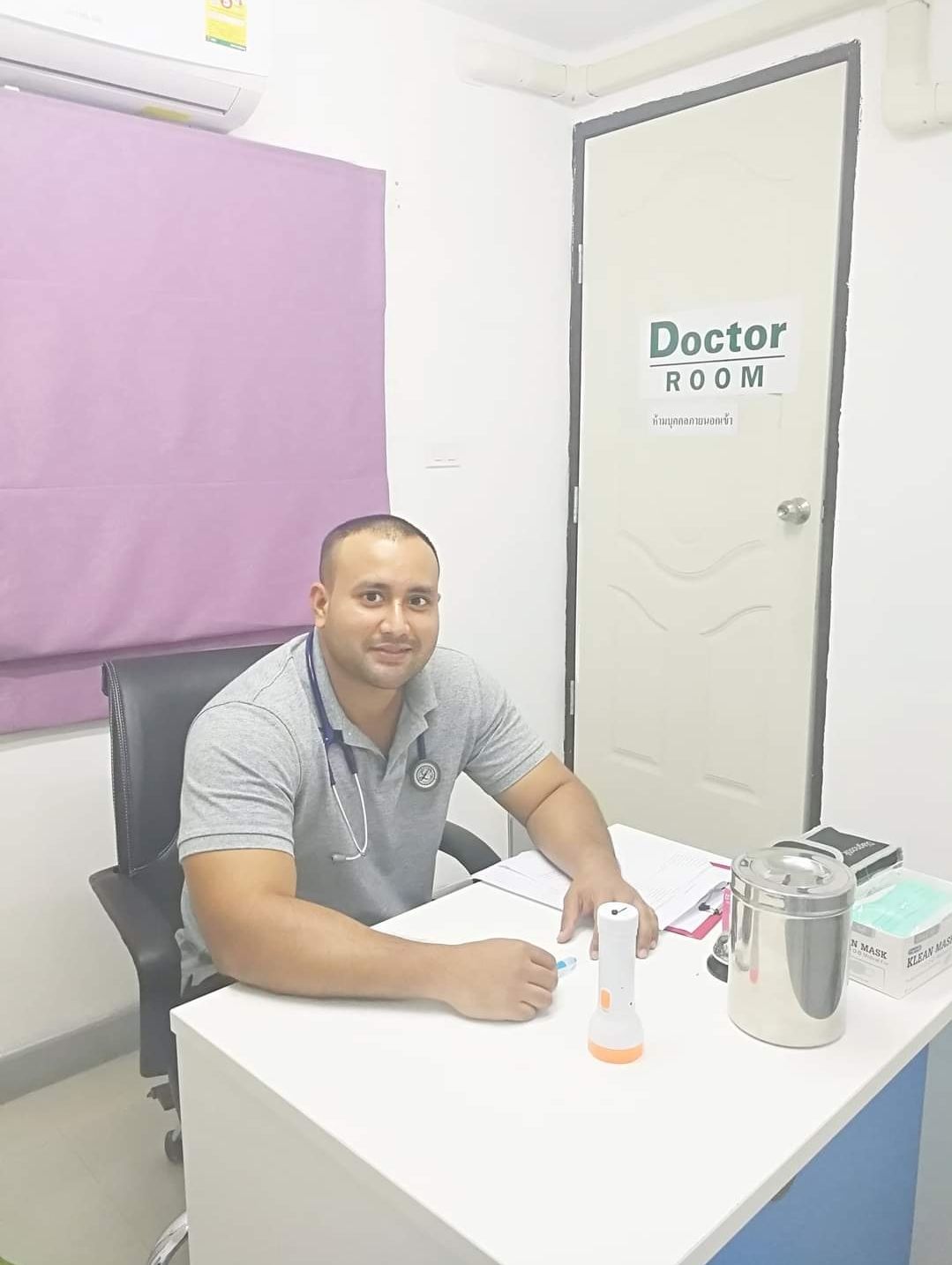
Dr. Ponlawat Pitsuwan is a physician at Doctor Bangkok, a private clinic in central Bangkok. He sees expats, residents, and medical tourists for general medicine, wellness consultations, and IV therapy. His focus is straightforward, evidence-based care delivered in plain language.