
Clinically reviewed by Dr. Ponlawat Pitsuwan, Physician, Doctor Bangkok.
Last reviewed: November 2026
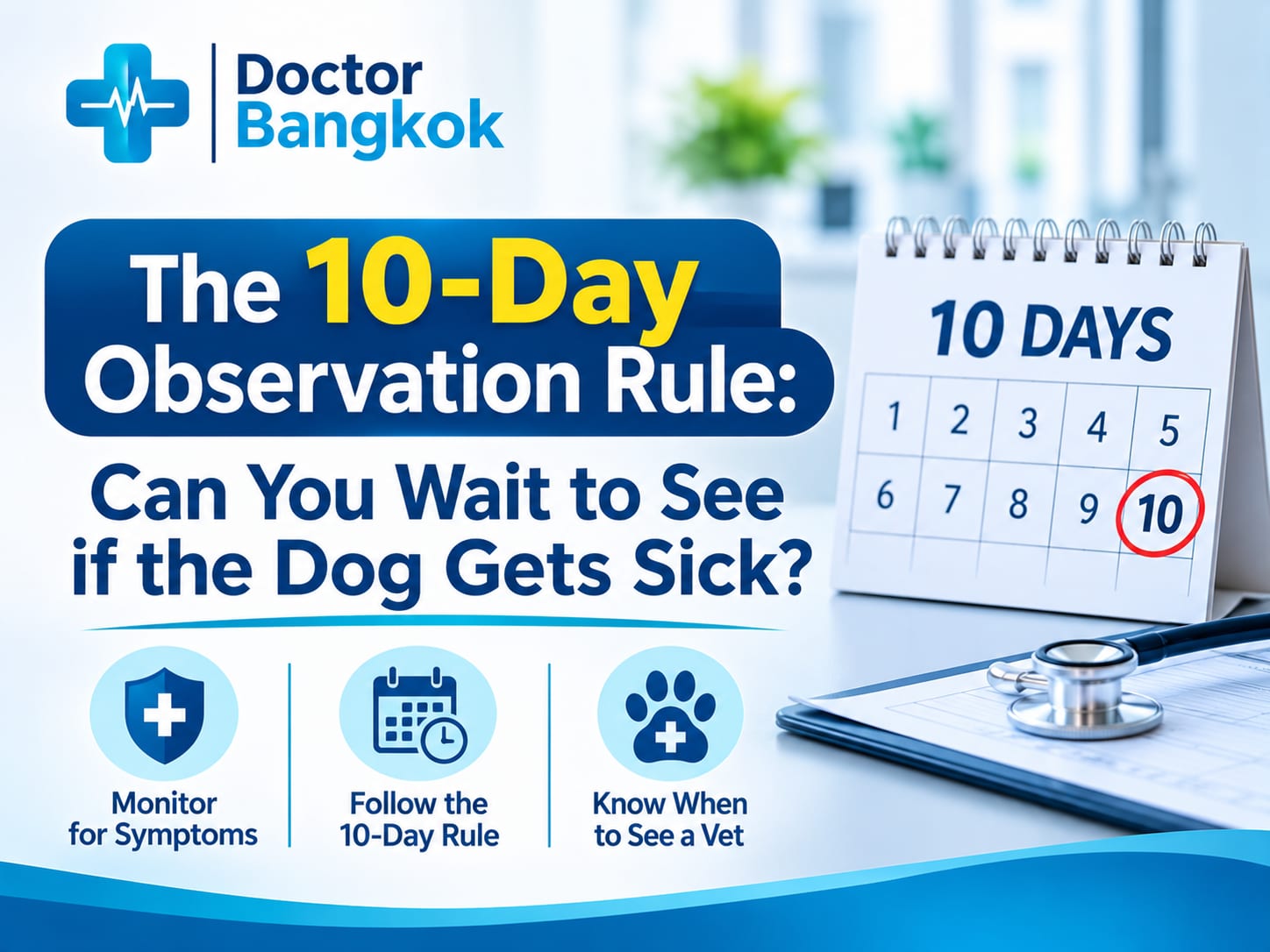
The rabies 10-day observation rule does not mean wait and see. It means start post-exposure treatment now, while simultaneously watching the animal. If the dog is confirmed healthy by a licensed vet at day 10, your doctor may advise stopping the remaining doses. If the dog cannot be found, confined, or observed, the full course must be completed.
You are back at your hotel after a dog broke skin on your ankle near Sukhumvit. You are Googling the 10-day rule, hoping the answer is "just watch the dog." It is not that simple.
The rule is real and it does matter. But it runs alongside treatment, not instead of it. Rabies is fatal once symptoms appear. Post-exposure prophylaxis, the vaccine course given after a potential exposure, only works if you start it promptly. Both things happen at the same time: you begin the vaccine, and the dog is watched.

What the Rabies 10-Day Observation Rule Actually Means
A dog can only shed live rabies virus in its saliva during the final days before it shows neurological signs of illness. If a dog bit you today and is still alive and behaving normally at day 10, it was almost certainly not infectious at the time of the bite.
This does not mean the dog is vaccinated or safe forever. It means that for this specific exposure on this specific day, the risk of transmission was very low.
The 10-day clock applies only to dogs and cats. It does not apply to bats, monkeys, or other wildlife. For those animals, WHO guidance treats every exposure as high risk regardless of the animal’s apparent condition.
The observation must be done by a licensed vet or trained animal health officer. A photo on WhatsApp from the building guard does not count. The animal must be physically confined and examined.
Why You Should Still Start Vaccination Immediately
Rabies is one of a very small number of infections where waiting for certainty is too dangerous. Once symptoms appear, it is almost universally fatal. There is no treatment at that stage.
WHO classifies animal bites by category. A bite that breaks the skin, particularly on the hands, neck, or face, is Category III. That requires both the vaccine and rabies immunoglobulin. Immunoglobulin is a passive antibody treatment that should be given on Day 0, infiltrated directly into the wound. WHO guidance states it can be given up to 7 days after the first vaccine dose if it is not available at the initial visit, but earlier is better. Delaying or omitting it for a Category III exposure is one of the documented causes of post-exposure prophylaxis failure.
If you have had pre-exposure rabies vaccination before coming to Thailand, your protocol is different. You need two vaccine doses on Days 0 and 3, and no immunoglobulin. Bring your vaccination records to the clinic.
Bangkok sits in a declared rabies-risk area under Thailand’s Department of Disease Control. Street dog density in central Bangkok is high. The combination of an unvaccinated urban dog population and high foot traffic creates real exposure risk for anyone spending time outdoors here.

When You Cannot Observe the Dog
This is the scenario most people in Bangkok actually face. The dog bit you, then disappeared into a soi. There is no owner. No one knows where it lives. You cannot confine it, and no vet can examine it.
In this situation, the 10-day rule does not apply. WHO guidance is clear: if the animal cannot be identified, confined, and monitored, it must be treated as potentially rabid. That means completing the full post-exposure course.
The same applies to any exposure involving a monkey, a bat, or an animal that behaved unusually before or during the incident. Stray animals in Bangkok are rarely vaccinated. There is no way to assess their status from memory or appearance.
Do not wait to see if you feel unwell. The incubation period for rabies can range from days to months depending on where the bite is and how deep it was. By the time symptoms appear, it is too late.
If you need to be seen tonight without travelling, Doctor Bangkok’s doctor hotel visit service reaches anywhere in Bangkok within one hour.
Can You Stop the Course Early?
You can discuss stopping the remaining doses with your doctor, but only under specific conditions. The animal must have been confined since Day 0. A licensed vet must have examined it at Day 10 and confirmed it is healthy. Your doctor must then review the full picture, including bite location, depth, and your vaccination history, before making that call.
The standard post-exposure schedule in Thailand follows WHO guidance. The intramuscular regimen gives doses on Days 0, 3, and 7, with a final dose given between Days 14 and 28. The exact day of that final dose depends on the regimen used and clinical factors. Stopping early without meeting the conditions above leaves you unprotected.
If the dog is confirmed healthy at Day 10, your doctor will advise whether stopping is appropriate for your specific exposure. This is a clinical decision, not a rule you apply yourself.
Tetanus protection is a separate consideration for any animal bite. If your tetanus vaccination is not current, that needs to be addressed at the same visit. You can check your status and get the dose through our tetanus vaccine service.
For expats wanting to reduce their risk before any exposure happens, pre-exposure prophylaxis is the most practical step. It does not eliminate the need for post-bite treatment, but it removes the need for immunoglobulin and shortens the post-bite schedule. Find out more on our travel vaccinations page.
If your wound also needs cleaning, dressing, or stitching, our wound care service handles that at the same visit.
If a dog, cat, or other animal has broken your skin in Bangkok, do not wait to see how you feel. Doctor Bangkok is open 24 hours a day, every day, with a doctor-on-call service that comes to your hotel or condo within one hour. We carry both the rabies vaccine and rabies immunoglobulin for Category III exposures and can start your post-exposure prophylaxis the same day. If you have already started a course elsewhere and need to continue or review your schedule, we can help with that too. Contact us any time.
Frequently Asked Questions
Dr. Ponlawat Pitsuwan
Physician, Doctor Bangkok
a private medical clinic in central Bangkok, open 24 hours a day, with a doctor-on-call service that comes to your hotel or condo within one hour. He sees expats, residents, and medical tourists for post-exposure rabies assessment, wound care, and travel health consultations. His focus is straightforward, evidence-based care delivered in plain language.
References
- World Health Organization. Rabies: Post-exposure prophylaxis recommendations. WHO Neglected Tropical Diseases, 2024.
- World Health Organization. WHO Expert Consultation on Rabies: Third Report. WHO Technical Report Series No. 1012. Geneva: WHO, 2018.
- Dacheux L, Bourhy H. The WHO position on rabies immunization – 2018 updates. Vaccine. 2019;37 Suppl 1:A85-A91. PMID 31753536.
- World Health Organization. Rabies fact sheet. WHO, 2023.
- Rupprecht CE, Briggs D, Brown CM, et al. Use of a Reduced (4-Dose) Vaccine Schedule for Postexposure Prophylaxis to Prevent Human Rabies. MMWR Recommendations and Reports. 2010;59(RR-2):1-9.
The information in this article is for educational purposes only and does not constitute medical advice. It should not be used to self-diagnose or replace a consultation with a qualified physician. If you have concerns about your health, contact a licensed medical professional. For appointments at Doctor Bangkok, visit doctorbangkok.co.th.

Dr. Ponlawat Pitsuwan is a physician at Doctor Bangkok, a private clinic in central Bangkok. He sees expats, residents, and medical tourists for general medicine, wellness consultations, and IV therapy. His focus is straightforward, evidence-based care delivered in plain language.