

Clinically reviewed by Dr. Ponlawat Pitsuwan, Physician, Doctor Bangkok.
Last reviewed: September 2026
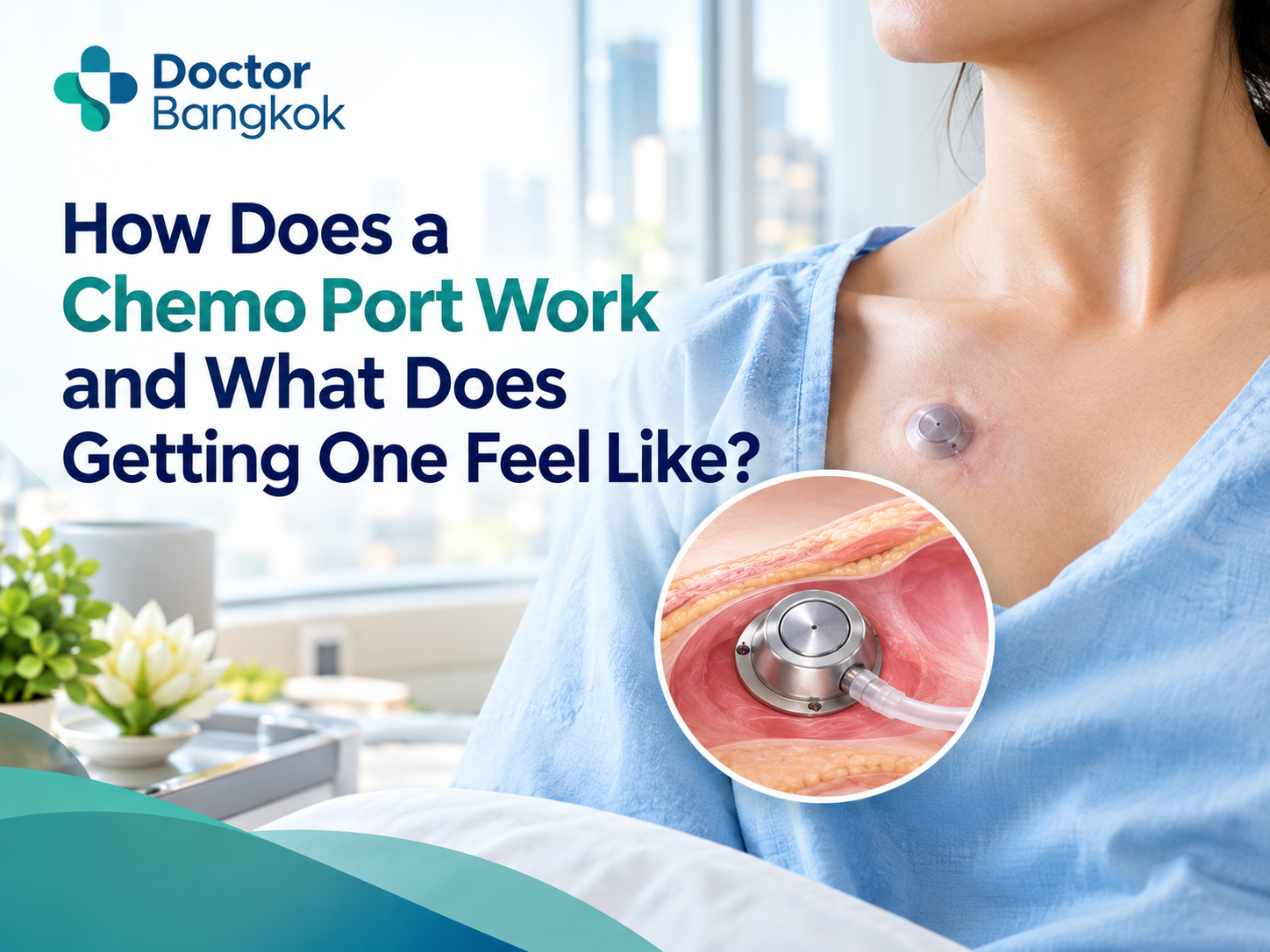
A port-a-cath is a small device placed under the skin of your chest. It connects to a large vein near your heart and lets nurses give chemotherapy, fluids, or blood products without using your arm veins repeatedly. It sits completely under the skin between appointments. A specialised needle pierces through the skin and into the port for each treatment session, then is removed when you are done.
Your oncologist has just told you that you need a port. You probably have a list of questions and not much time to get answers. What does it look like? Will it hurt? What happens between treatment cycles if you are living in Bangkok and your cancer care started somewhere else?
Those are the questions I hear most often from expats and medical tourists coming through this clinic. The short version: most patients adjust to a port faster than they expect. Getting clear information before your procedure, and knowing where to go for maintenance while you are in Bangkok, makes a real difference.

What a Port-a-Cath Actually Is and Why It Gets Used
The device has two parts. There is a small reservoir, roughly the size of a large shirt button, made of metal or hard plastic with a soft silicone centre. A thin flexible tube called a catheter runs from that reservoir into a large vein in your chest, leading directly toward your heart.
The whole thing sits under your skin. You might see a slight raised bump through a thin shirt, but nothing is sticking out. Between appointments, it is simply there, doing nothing.
The main reason doctors recommend a port is vein protection. Some chemotherapy drugs can cause serious damage if they leak into surrounding tissue. Delivering them through a large central vein dilutes them instantly and keeps your arm veins safe. It also means nurses are not hunting for a usable vein every visit, which gets harder the longer treatment continues.
Ports are also used for long-term antibiotics, nutritional support when someone cannot eat, and regular blood draws. This is not a device that is only for chemotherapy.
How Does a Port-a-Cath Work During a Treatment Session?
Each time you need treatment, a nurse uses a specialised needle called a Huber needle to pierce your skin and the silicone centre of the port. The silicone self-seals after the needle is removed, which is why the same port can be accessed hundreds of times without wearing out.
The needle connects to a line that carries fluids or drugs directly into the catheter and from there into the large vein above your heart. After your session, the nurse removes the needle and covers the site with a small dressing. You leave with nothing attached.
Between sessions, the port still needs to be flushed regularly to stay clear. More on that below.
Port Types You Might Encounter in Thai Hospitals
Most patients are fitted with a single-lumen port, which has one access point and handles one line at a time. Some patients with more complex treatment needs get a dual-lumen port, which has two separate chambers and allows two infusions at once.
You may also hear brand names like PowerPort or MediPort. They all work on the same principle. If you arrive in Bangkok with an existing port from another country, the brand matters less than knowing the port type, the insertion date, and when it was last flushed.
Carry your port ID card. If you were not given one at insertion, ask your oncologist to document this in your discharge summary before you travel.
What Does a Port-a-Cath Feel Like? Needles, Pain, and EMLA Cream
This is the question I get asked most. The honest answer: most adults find port access much less painful than they expected.
The Huber needle goes through skin and silicone, not muscle or bone. Most patients describe it as a brief sharp pressure, similar to a standard blood draw. Some feel almost nothing.
If you are anxious, or if your first few accesses were uncomfortable, ask for EMLA cream. This is a numbing cream you apply to the port site thirty to sixty minutes before your appointment. It significantly reduces what you feel when the needle goes in. You can apply it at home before you travel to the clinic. We keep it available at Doctor Bangkok for patients who need it.
Once the needle is in and secured, most patients stop noticing it within a few minutes.
Port-a-Cath vs PICC Line vs Central Line
If you are transferring your care to Bangkok mid-treatment, you may already have one of these devices and want to understand what you have.
A PICC line is a long thin tube inserted through a vein in your upper arm. It works for short to medium-term treatment but stays partially outside the body. It requires daily flushing and a waterproof dressing when you shower. A port is fully implanted and far easier to live with over months.
A Hickman or tunnelled central line is similar to a port but exits the skin. You can see and feel the tubing coming out of your chest, and it requires more careful daily hygiene.
For most patients on chemotherapy lasting more than a few months, an implanted port is the most practical option. If you arrive in Bangkok with a PICC and your treatment is running longer than planned, talk to your oncologist about whether switching to a port makes sense.
Port-a-Cath Maintenance in Bangkok Between Treatment Cycles
This is where a lot of expats get caught off guard. When your port is not being actively used, it still needs a heparin flush every four to eight weeks. Heparin is a substance that keeps the catheter clear and prevents clot formation inside the line.
A flush appointment takes under thirty minutes. A trained nurse accesses the port, flushes the line, and de-accesses it. That is it. But you need a clinic with staff trained to do this, ideally one where you can communicate clearly in English.
If you are living in Bangkok between chemotherapy cycles, or spending several weeks here during treatment, do not assume any walk-in clinic can help. Ask specifically whether the clinic has nursing staff trained in port access before you book. Doctor Bangkok has English-speaking clinical staff and can coordinate your port maintenance during your time in the city.
Warning Signs That Need Same-Day Assessment
I tell every patient with a port to learn these four warning signs. If any of them appear, do not wait for your next scheduled appointment.
Redness, warmth, or swelling at the port site may indicate infection. A fever above 38 degrees Celsius with no obvious cause could mean a bloodstream infection connected to the catheter, which needs urgent blood tests and treatment. Inability to flush the port or draw blood through it may mean the catheter is blocked or has shifted. Swelling in your face, neck, or arm on the same side as the port suggests a possible clot or catheter problem.
Any of these needs same-day medical review. Doctor Bangkok can assess these directly and refer you to interventional radiology or oncology specialists in central Bangkok when needed.
Living With a Port-a-Cath in Bangkok: Travel, Swimming, and Daily Life
When the port is not accessed and no needle is in place, you can live normally. You can shower, swim, exercise, and fly without any special precautions. The device is completely under your skin.
When a Huber needle is in place during an active treatment period, the site needs to stay dry and protected. If you are flying between Bangkok and your home country between treatment cycles, make sure your port has been de-accessed before you travel. Carry your port documentation in your carry-on.
If you are connecting through Bangkok mid-treatment, contact a clinic in advance rather than trying to arrange care on arrival.
Most ports are designed to last several years with proper maintenance. When your treatment ends, your oncologist will recommend removal. This is a minor procedure done under local anaesthesia, taking around thirty to sixty minutes, and you go home the same day.
If you are an expat or medical tourist in Bangkok with an existing port-a-cath and need flushing, maintenance, or urgent assessment, Doctor Bangkok provides English-speaking clinical support in central Bangkok, BTS accessible. We can assist with port access care, help coordinate your ongoing oncology management, and refer to specialist services when needed. Contact Doctor Bangkok to book a consultation or speak with one of our physicians about your situation.
Does it hurt when a port-a-cath is accessed with a needle?
Most adults describe it as a brief sharp pressure, similar to a standard blood draw, lasting only a second or two. If you found previous accesses uncomfortable, apply EMLA numbing cream to the port site thirty to sixty minutes before your appointment. Ask us about this when you book.
How often does a port-a-cath need to be flushed in Bangkok?
When your port is not in active use, it typically needs a heparin flush every four to eight weeks to keep the line clear. Each appointment takes under thirty minutes. If you are living or staying in Bangkok between treatment cycles, you will need a clinic with trained nursing staff who can manage this in English.
I already have a port-a-cath from my home country. Can I use it at a Bangkok clinic?
Yes. Bring your port ID card, documentation of the port type and insertion date, and records of your last flush. If your records confirm the port is clear and in the correct position, it can be accessed in Bangkok. Doctor Bangkok can help coordinate this and refer you to the right specialists if needed.
What are the warning signs that something is wrong with my port-a-cath?
Watch for redness, warmth, or swelling at the port site, fever above 38 degrees Celsius without a clear cause, inability to flush or draw blood through the port, or swelling in your face, neck, or arm on the same side as the port. Any of these needs same-day medical assessment, not a wait-and-see approach.
Can I fly, swim, or exercise normally with a port-a-cath?
When the port is not accessed and no needle is in place, yes. You can shower, swim, fly, and exercise without restriction. When a Huber needle is in place during an active treatment period, keep the site dry and protected, and get clinical guidance before flying mid-treatment.
How long does a port-a-cath last and how is it removed?
Most ports are designed to last several years with proper maintenance. When your treatment ends, your oncologist will recommend removal, which is a minor procedure done under local anaesthesia, usually taking thirty to sixty minutes. You go home the same day and recovery is straightforward for most patients.
Dr. Ponlawat Pitsuwan
Physician, Doctor Bangkok
a private medical clinic in central Bangkok. He sees expats, residents, and medical tourists for ongoing medical care, treatment coordination, and clinical support during cancer treatment in Thailand. His focus is straightforward, evidence-based care delivered in plain language.
Dr. Ponlawat Pitsuwan is a physician at Doctor Bangkok, a private clinic in central Bangkok. He sees expats, residents, and medical tourists for general medicine, wellness consultations, and IV therapy. His focus is straightforward, evidence-based care delivered in plain language.