

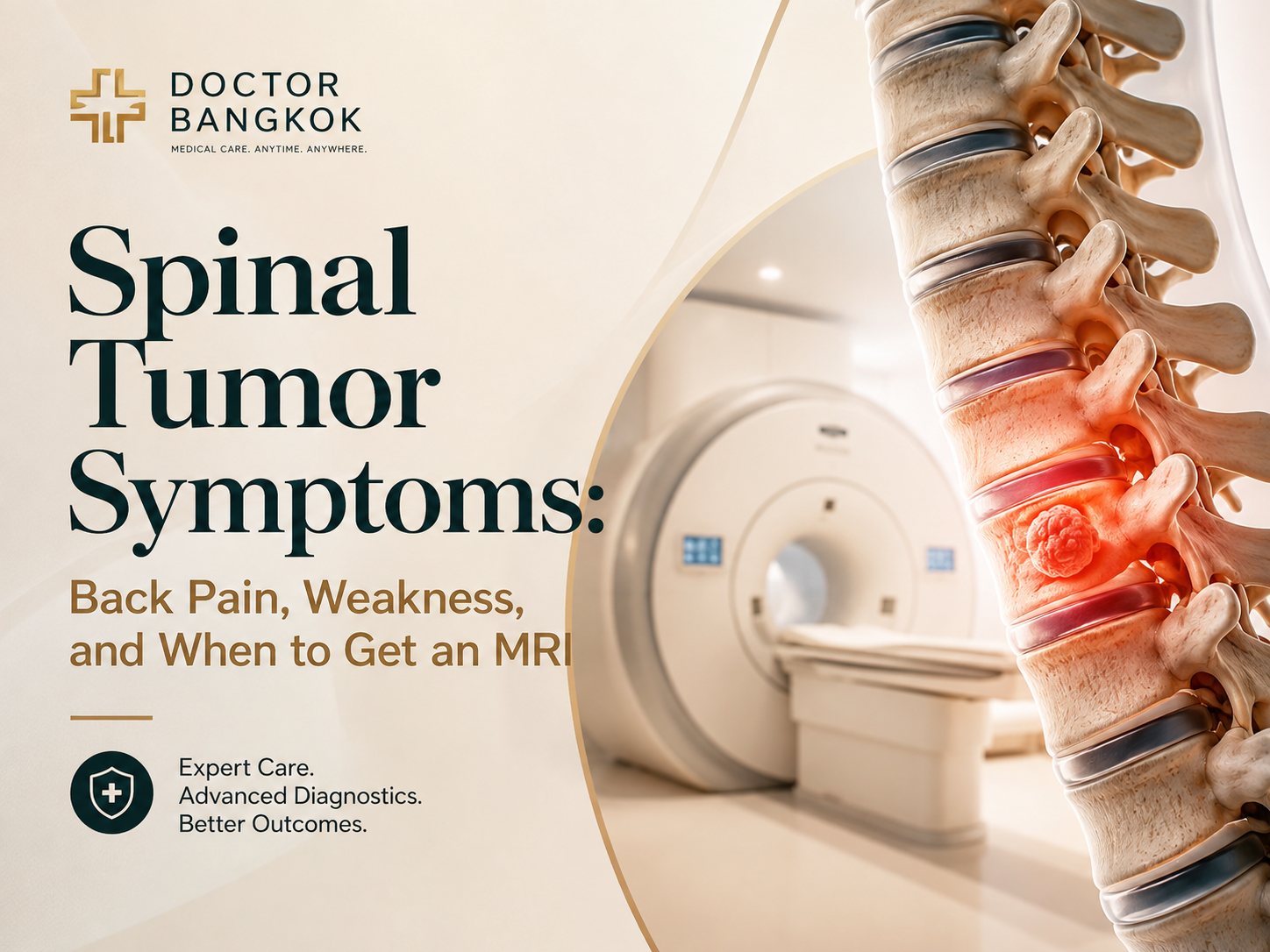
Clinically reviewed by Dr. Ponlawat Pitsuwan, Physician, Doctor Bangkok. Last reviewed: August 2026
A spinal tumor can cause back pain, leg weakness, numbness, and bladder changes. The key warning sign is pain that is worse at night, does not improve with rest, and is getting gradually worse over weeks. If you have these symptoms, you need a clinical assessment and likely an MRI of your spine. Do not assume it is just a disc problem without ruling out something more serious.
Most patients who come in worried about a spinal tumor have been sitting on their symptoms for weeks. Back pain that wakes them up at 3am. Legs that feel heavy on the BTS escalator. Tingling in the feet they wrote off as too many hours at a desk. They finally come in because something stopped adding up.
The honest answer is: most back pain is not caused by a tumor. But some of it is, and the cases we catch late are the ones that cause the most damage. When a patient’s back pain does not fit the usual pattern, we take it seriously. That means a proper clinical assessment, the right imaging, and a clear referral if something needs a neurosurgeon.

What a Spinal Tumor Actually Is
A spinal tumor is an abnormal growth inside or around the spine. It can start in the spine itself, called a primary tumor, or it can spread there from a cancer elsewhere in the body, called a metastatic tumor.
Where it sits matters. Tumors outside the spinal cord but inside the spinal canal are the most common type and are often benign. Schwannomas and meningiomas fall into this group. Tumors inside the spinal cord itself are rarer and more complex. Metastatic tumors, spreading from lung, breast, prostate, or other cancers, usually settle in the spinal bones and are the most common type overall.
Spinal Tumor Symptoms Expats Often Dismiss
The symptom pattern of a spinal tumor is easy to miss, especially if you spend long hours at a desk, travel frequently, or are used to managing aches with ibuprofen and carrying on.
The pain builds gradually over weeks or months. It often wakes you at night, which is the opposite of typical back pain that eases when you lie down. It does not improve with physiotherapy or anti-inflammatories. Over time, you may notice tingling or pins-and-needles in your arms, hands, legs, or feet. Muscles may feel weaker. Walking may feel slightly off.
These symptoms happen because the tumor is pressing on the spinal cord or the nerves branching from it. It does not happen overnight. It creeps up slowly, which is exactly why people miss it.

Red Flag Symptoms That Need a Doctor Today
Some symptoms cannot wait for a scheduled appointment next week. These need same-day assessment.
Rapidly worsening leg or arm weakness, new problems controlling your bladder or bowel, or numbness spreading into your inner thighs and groin are potential signs of cauda equina syndrome. This is compression of the nerve bundle at the base of the spine and is a surgical emergency. If you are experiencing this right now, do not wait.
Back pain in someone with a known cancer history, or back pain paired with unexplained weight loss and fever, also needs urgent attention. These do not confirm a spinal tumor, but they mean you need a doctor today.
How a Spinal Tumor Is Diagnosed
It starts with a clinical history and a neurological exam. Where exactly is the pain? When did it start? What makes it worse or better? Are your strength, reflexes, and sensation normal? That exam gives a lot of information before any scan is ordered.
If the picture points toward something that needs imaging, the main investigation is an MRI of the spine with gadolinium contrast. Gadolinium is a dye given through a vein that makes tumors and abnormal tissue show up more clearly. If bone involvement is suspected, a CT scan adds detail about the spinal vertebrae. When cancer spread from elsewhere is a concern, a bone scan or PET-CT may be arranged.
At Doctor Bangkok, we can take a full history, carry out a clinical neurological assessment, and coordinate imaging at a nearby facility. If you need to see a neurosurgeon, we prepare a referral letter in English with the full clinical picture.
Spinal Tumor vs. a Herniated Disc
This is one of the most common points of confusion I see in clinic. Both can cause back pain, leg weakness, and numbness. Both can look similar if you are not trained to tell them apart.
A herniated disc usually has a clear trigger: a heavy lift, a sudden twist, a sports injury. The pain tends to follow a specific nerve path and improves with position changes. A spinal tumor has none of that. It starts without a trigger, does not improve with rest or physiotherapy, gets worse at night, and produces neurological symptoms that are progressive rather than intermittent.
If you have been told you have sciatica but symptoms are not improving after six to eight weeks of treatment, or they are getting worse, you need a re-evaluation and likely an MRI.
Treatment Options for a Spinal Tumor
Treatment depends on the type, size, and location of the tumor, and whether it is causing neurological symptoms.
Surgery is often the first option for tumors pressing on the spinal cord or nerve roots. For tumors that cannot be fully removed, or in patients not fit for surgery, stereotactic radiosurgery delivers high-dose, precisely targeted radiation in a small number of sessions. Conventional radiation therapy and chemotherapy are used mainly for metastatic tumors or after surgery to reduce recurrence risk. Spinal instability caused by a tumor in the vertebral bone may require stabilisation surgery.
Not every tumor needs immediate treatment. Small, slow-growing benign tumors with no significant compression can sometimes be monitored with regular MRI scans. But that monitoring needs to be active and consistent, managed by a specialist, not handled on your own.
Getting Assessed for a Spinal Tumor in Bangkok
Bangkok has strong neurosurgical infrastructure. Several major hospitals here hold JCI accreditation, and Thai neurosurgeons frequently hold international certifications. The challenge for most expats is not the quality of care available. It is knowing how to access it and in what order.
Starting with a consultation at Doctor Bangkok makes that easier. We take the history, examine you, and work out what level of urgency we are dealing with. If imaging is needed, we direct you to the right facility. If a referral to a neurosurgery or neuro-oncology team is necessary, we write it in English with the full clinical picture included. You are not left to navigate a Thai-language hospital system alone with a stack of scan results you cannot interpret.
If you already have imaging from overseas or from another Bangkok facility, bring it. That helps us move faster.
Living With a Spinal Tumor Diagnosis
Getting this diagnosis while living abroad adds a layer of difficulty that is hard to prepare for. Patients often have to decide quickly whether to manage their care in Bangkok or return home, how to talk to family, and whether their insurance will cover what comes next.
Outcomes depend heavily on tumor type. Benign tumors caught before severe nerve damage has occurred often do well after surgery. Metastatic tumors require ongoing oncology input but can be managed to preserve quality of life and function. Rehabilitation after spinal surgery focuses on rebuilding strength, gait, and bladder function where these were affected.
What I tell patients in this position: get the diagnosis confirmed, understand what type of tumor you are dealing with, and then make decisions with a specialist who can give you an honest prognosis. Do not make major decisions based on fear alone.
If you have back pain that is worsening at night, progressive leg weakness, or you have been told you may have a spinal abnormality and need guidance on next steps, Doctor Bangkok can help. We offer general medical consultations and clinical assessment for neurological symptoms, and we can coordinate specialist referrals and imaging across Bangkok with full English-language support. We are centrally located and BTS accessible. Contact us to book an appointment.
Frequently Asked Questions
Dr. Ponlawat Pitsuwan
Physician, Doctor Bangkok
a private medical clinic in central Bangkok. He sees expats, residents, and medical tourists for neurological symptom assessment, general medical consultations, and complex referral coordination. His focus is straightforward, evidence-based care delivered in plain language.
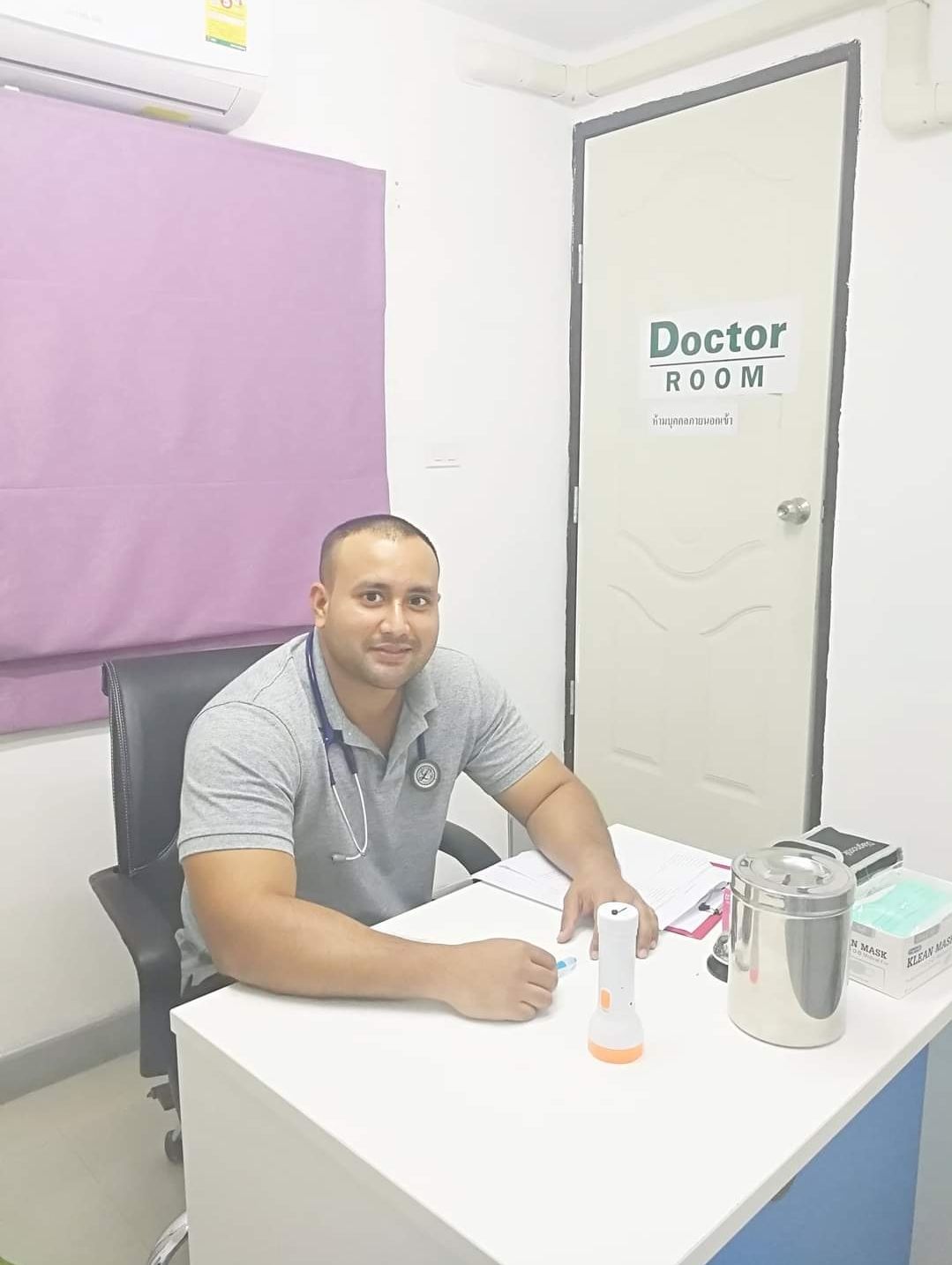
Dr. Ponlawat Pitsuwan is a physician at Doctor Bangkok, a private clinic in central Bangkok. He sees expats, residents, and medical tourists for general medicine, wellness consultations, and IV therapy. His focus is straightforward, evidence-based care delivered in plain language.