
Clinically reviewed by Dr. Ponlawat Pitsuwan, Physician, Doctor Bangkok. Last reviewed: August 2026
Upper abdominal pain after eating, also called postprandial or epigastric pain, has many causes ranging from simple indigestion to gallstones and H. pylori infection. Most cases improve once the cause is found. If your pain is severe, radiates to your back, comes with fever or jaundice, or wakes you at night, see a doctor the same day.
I see this three or four times a week. Someone sits down, describes a burning or cramping feeling just below their ribs after meals, and tells me they have been putting it off for two or three weeks. They have usually tried antacids from the pharmacy. Some have cut out Thai food entirely. Nothing has really worked.
Most upper abdominal pain after eating has a clear cause and responds well to treatment. The harder part is figuring out which cause, because gastritis, peptic ulcer, gallbladder problems, and acid reflux can all feel almost identical. This article helps you sort that out, and tells you exactly when to stop waiting and come in.

Where Is the Pain Actually Coming From?
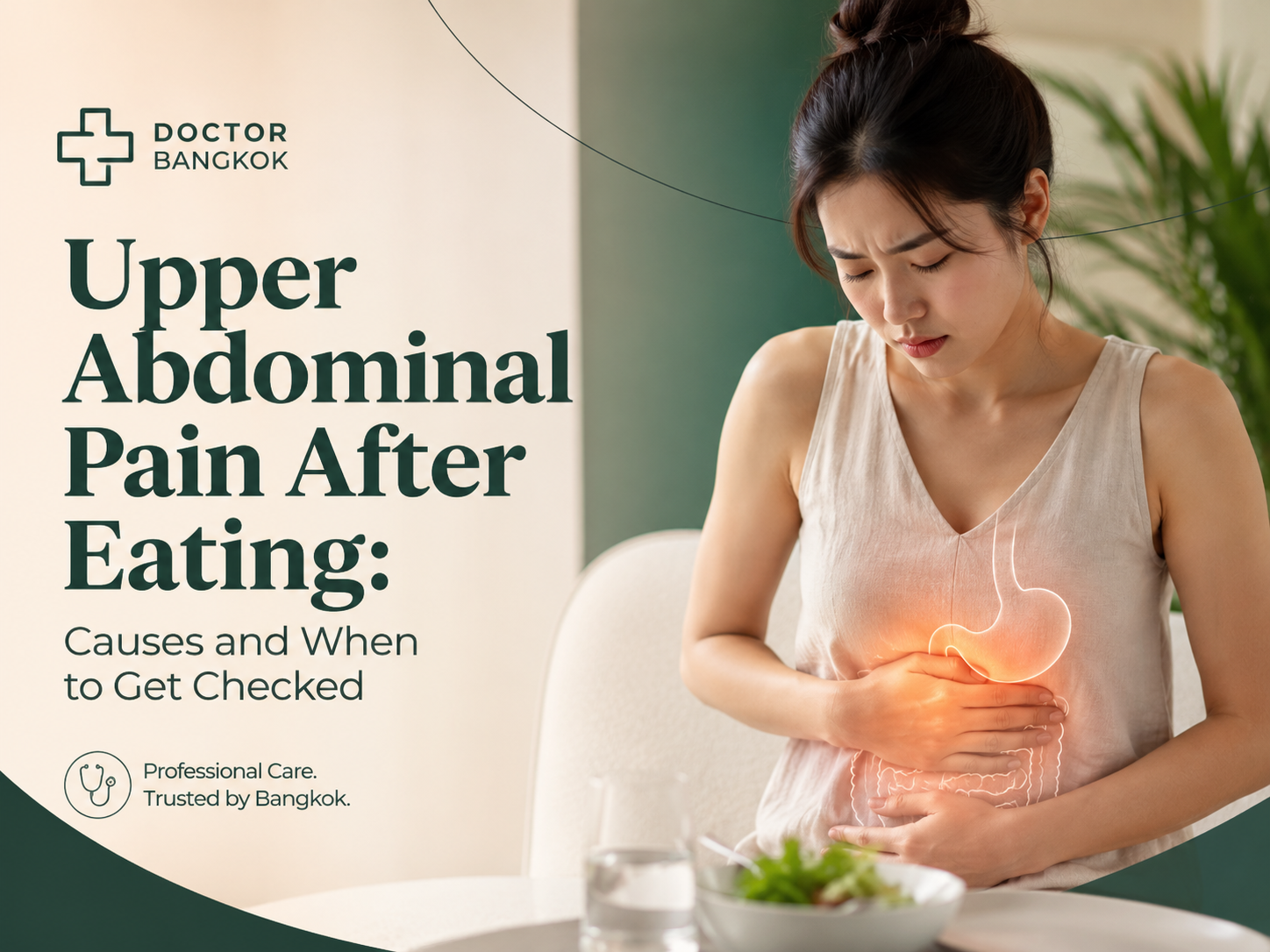
The upper abdomen sits between your breastbone and your navel. The central zone, just below where your ribs meet, is called the epigastric region. This is where most stomach and lower oesophagus pain shows up. Pain further to the upper right often points toward the liver or gallbladder. Upper left pain can involve the stomach or, less commonly, the pancreas.
Knowing roughly where your pain sits helps narrow things down before you even walk through the door.
How the Timing of Your Pain After Eating Points to the Likely Cause
This is the single most useful question I ask. When does the pain start after you eat?
Pain within 30 minutes of eating, burning or gnawing in quality, usually suggests gastritis, acid reflux, or functional dyspepsia. Functional dyspepsia means discomfort with no structural abnormality found on testing. It is more common than most people realise, especially in people under travel stress or adjusting to a new diet.
Pain that starts 30 to 90 minutes after a fatty meal, sits in the upper right, and comes in waves is more typical of biliary colic. That is the gallbladder contracting against a stone blocking its outlet.
Pain that is worse on an empty stomach and briefly improves after eating, then returns an hour or two later, points toward a peptic ulcer. That is a sore on the stomach lining or the first part of the small intestine.
Pain after heavy meals or alcohol that radiates through to your back can indicate pancreatitis. That one needs same-day assessment.

Common Causes of Upper Abdominal Pain After Eating
Gastritis and Peptic Ulcer
Gastritis is inflammation of the stomach lining. It can come from H. pylori infection, frequent NSAID use, alcohol, or stress. NSAIDs include ibuprofen and aspirin, which many expats buy over the counter here to self-manage pain. A peptic ulcer is a deeper sore in the same area, often caused by the same triggers.
NSAID-induced gastritis is something I see regularly. Ibuprofen is effective for pain, but taken often without a stomach protector, it damages the lining over time.
H. Pylori Infection
H. pylori is a bacterial infection that lives in the stomach lining. Prevalence in Southeast Asia is considerably higher than in most Western countries, and expats eating and drinking locally here are genuinely exposed to it. Symptoms include burning upper abdominal pain, bloating after meals, early fullness, and sometimes nausea.
H. pylori does not clear on its own. It needs a specific antibiotic combination plus acid suppression to treat it. Left alone, it can lead to peptic ulcers and raises the long-term risk of more serious stomach conditions.
Acid Reflux and GERD
Acid reflux, or GERD when it becomes chronic, causes a burning sensation that rises from the upper stomach into the chest or throat. Spicy food, large meals, lying down after eating, and alcohol are all common triggers. Late social dinners and regular alcohol make this one of the more frequent presentations I see in Bangkok.
Gallstones and Cholecystitis
Gallstones sitting quietly in the gallbladder often cause no symptoms at all. They become a problem when one blocks the bile duct after a fatty meal, causing biliary colic: cramping, wave-like pain in the upper right abdomen, sometimes reaching the right shoulder or back. If the gallbladder becomes infected and inflamed, that is cholecystitis. The pain becomes constant rather than wave-like, fever develops, and it needs prompt care the same day.
Functional Dyspepsia
This is discomfort or pain in the upper abdomen with no obvious structural cause. It is real, it is common, and it is often missed because tests come back normal. Stress, irregular eating, and sudden dietary change can all trigger it. Many expats who have recently arrived in Bangkok and shifted their diet significantly end up presenting with exactly this.
Bangkok-Specific Triggers Expats and Visitors Should Know About
Bangkok is not a standard Western eating environment, and that matters clinically.
Chilli and capsaicin in Thai food can irritate a stomach that is not used to it. If you have underlying gastritis or functional dyspepsia, even a moderate amount of spice can set things off. This usually settles as you adjust, but if pain persists beyond a few weeks, it is worth checking whether something else is going on underneath.
H. pylori is more prevalent here than in Northern Europe, North America, or Australia. Eating from street food stalls is part of life in Bangkok and is fine for most people, but it is one more reason to consider testing if your symptoms fit.
Alcohol is common in expat social life, and when you combine that with irregular meal timing, late dinners, and frequent ibuprofen use for hangovers or muscle pain, the stomach takes a hit it might not take back home.
Warning Signs That Mean You Should See a Doctor Today
Most upper abdominal pain after eating is not an emergency. But some of it is.
Come in the same day if your pain radiates through to your back, if you have upper right pain with a fever above 38.5 degrees Celsius, if your eyes or skin look yellow, if you are vomiting blood or anything that looks like coffee grounds, or if you are passing black or tarry stools. Severe pain that does not ease within a few hours, pain that wakes you from sleep, and unexplained weight loss are also reasons not to wait.
These can point to acute pancreatitis, cholecystitis, a bleeding ulcer, or in older patients, reduced blood flow to the gut, which is easily missed when it presents after meals. None of these should be managed at home with antacids.
What to Expect When You Come In for Upper Abdominal Pain After Eating
You do not need a referral and you do not need to wait long.
At Doctor Bangkok, a physician takes a structured history: where the pain is, when it starts after eating, what makes it worse, what medications you take including any NSAIDs, and whether you have had any of the red-flag symptoms above. That is followed by an abdominal examination.
Depending on what we find, we may order same-day blood tests including liver function, a pancreatic enzyme called lipase, and a full blood count. If gallstones or pancreatic pathology is suspected, we can arrange an abdominal ultrasound. For H. pylori, a non-invasive stool antigen test is available, with results available quickly.
If findings suggest a peptic ulcer or something that needs direct visualisation, we arrange a referral for an upper GI endoscopy, a camera examination of the stomach. For most patients who come in early, that step is not needed. Treatment for straightforward acid-related pain typically starts with a proton pump inhibitor, which reduces acid production, and for H. pylori, a course of antibiotics alongside it.
All consultations at Doctor Bangkok are with English-speaking physicians. Results are often ready the same day, and everything is explained in plain terms before you leave.
| Symptom Pattern | Likely Cause | What Helps |
|---|---|---|
| Burning pain within 30 min of eating, central | Gastritis, GERD, functional dyspepsia | PPI, dietary change, H. pylori test |
| Cramping upper right pain 30-90 min after fatty meal | Gallstones (biliary colic) | Ultrasound to confirm, dietary advice |
| Pain worse on empty stomach, briefly relieved by food | Peptic ulcer | PPI, H. pylori testing and treatment |
| Pain radiating to back after heavy meal or alcohol | Pancreatitis (acute) | Same-day assessment, blood tests |
| Bloating, nausea, burning, no clear structural cause | Functional dyspepsia | Lifestyle, stress management, low-dose acid suppression |
If upper abdominal pain after eating has not settled within a few days, or you have any of the red-flag symptoms above, come in and see us. Doctor Bangkok offers same-day consultations, blood tests, H. pylori testing, and referral for abdominal ultrasound from our clinic in central Bangkok, a short walk from the BTS. English-speaking physicians are available with no appointment required for most visits. Stop guessing and stop relying on antacids.
Frequently Asked Questions
Dr. Ponlawat Pitsuwan
Physician, Doctor Bangkok
a private medical clinic in central Bangkok. He sees expats, residents, and medical tourists for general medical consultations including gastrointestinal symptoms, fever assessment, health checks, and travel medicine. His focus is straightforward, evidence-based care delivered in plain language.
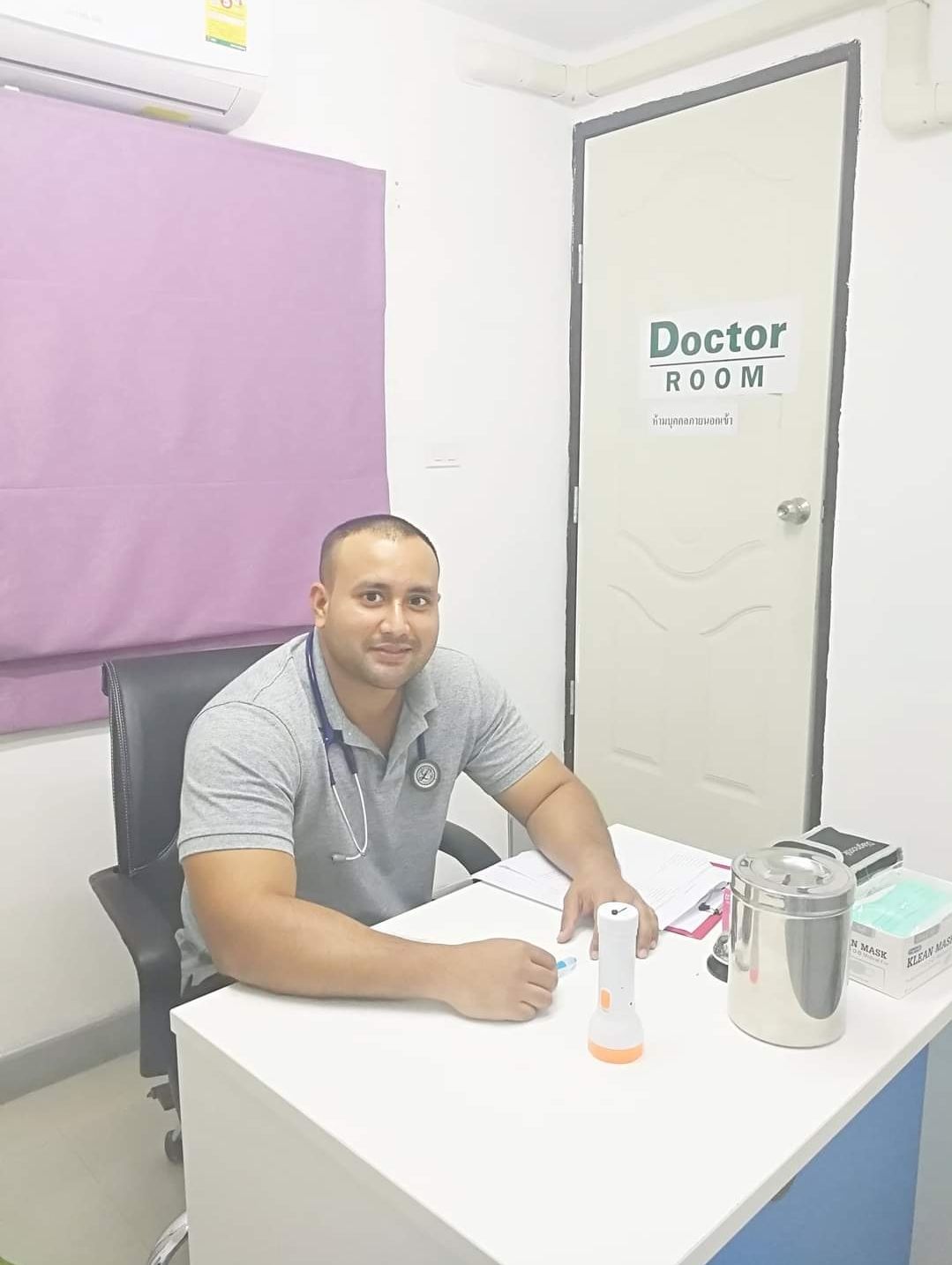
Dr. Ponlawat Pitsuwan is a physician at Doctor Bangkok, a private clinic in central Bangkok. He sees expats, residents, and medical tourists for general medicine, wellness consultations, and IV therapy. His focus is straightforward, evidence-based care delivered in plain language.