
Clinically reviewed by Dr. Ponlawat Pitsuwan, Physician, Doctor Bangkok. Last reviewed: August 2026
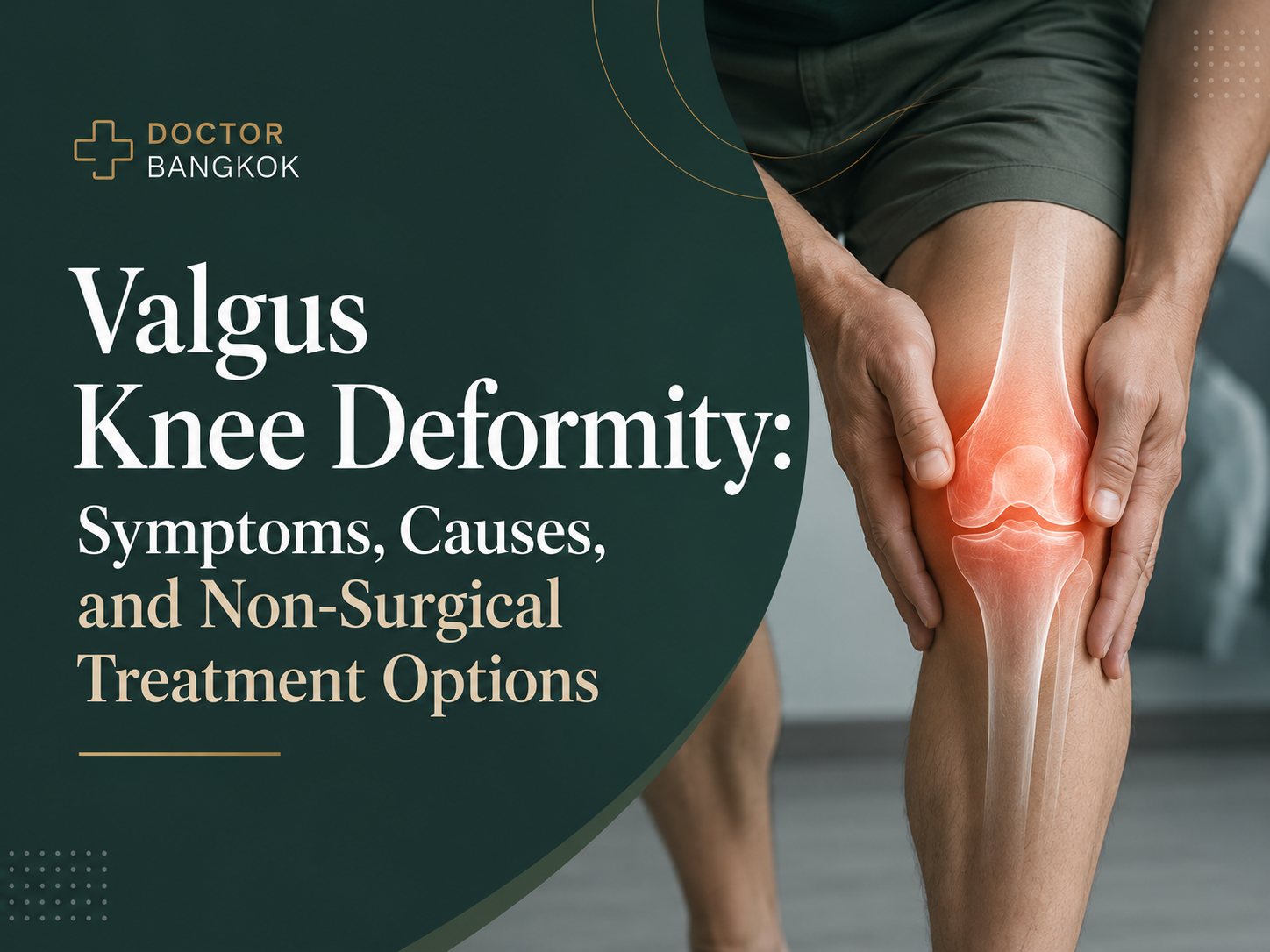
Valgus knee, commonly called knock knees, is when your knees angle inward while your ankles stay apart. In adults, it does not correct on its own. Mild cases often respond well to physiotherapy, targeted exercises, and orthotics. Severe cases may need surgical correction. A weight-bearing X-ray from hip to ankle is the essential first step to know where you stand.
A lot of expats I see at the clinic noticed their knees angling inward years ago and assumed it was just how they were built. Then the knee pain started, usually on stairs, after a long walk, or during a Muay Thai class, and suddenly it felt worth looking into. If your knees touch when you stand but your ankles stay apart, that is the classic picture of valgus knee, also called genu valgum or knock knees.
In adults, this does not self-correct. Some people have had mild valgus since childhood and it has never bothered them. Others find it slowly gets worse, especially with an active lifestyle or weight gain. The right answer depends on the degree of your alignment and what it is doing to your joints, which is why a proper assessment matters.

Is Valgus Knee Always a Problem?
Not always. A small degree of inward knee angle is actually normal in adults. The issue is when that angle becomes large enough to shift how load passes through the joint, placing more stress on the outer knee than it should handle.
There is a real difference between a mild natural angle that causes no symptoms and a larger deviation that strains ligaments and wears cartilage unevenly. Most adults with knock knees sit somewhere on that spectrum. The question I ask every patient is not just how their knees look, but whether they are painful, unstable, or getting worse.
What Causes Valgus Knee in Adults
For most adults, valgus knee started in childhood and was never fully corrected. Several things can make it worse or bring it on later in life. Obesity shifts your mechanical axis inward. A fracture through the outer part of the upper shin bone can cause post-injury valgus. Conditions like rickets, rheumatoid arthritis, and certain bone diseases alter bone shape over time.
In Bangkok, I see this more often in patients who have spent years in jobs requiring sustained awkward postures, or in very active patients whose training has exposed an underlying alignment issue they never knew was there.

Valgus Knee Symptoms and Warning Signs
The most common complaint is pain on the outer side of the knee, sometimes described as a dull ache that sharpens going downstairs. You may also notice the knee feeling unstable, especially on uneven ground or when landing from a jump.
One thing worth watching for is valgus collapse. This is when the knee dips inward during movements like squats, lunges, or walking fast. Patients often describe it as the knee giving way slightly without fully buckling. If that is happening, I want to see you sooner rather than later.
How Valgus Knee Affects the Joint Over Time
This is the part most people do not hear about until damage is already underway. Valgus alignment shifts body weight onto the outer part of the knee joint. Over time, that uneven loading wears the cartilage faster on one side and puts chronic strain on the ligament running along the inner side of your knee.
Your kneecap also tracks poorly with significant valgus. That can cause kneecap pain, grinding, and swelling separately from any deeper cartilage damage. Even relatively mild degrees of valgus are linked to an increased risk of lateral knee osteoarthritis over time. The joint can compensate for a while. It does not compensate forever.
How Valgus Knee Is Diagnosed
Assessment starts with a physical examination. I look at your standing alignment, check how you walk, and assess range of motion and joint stability. If your history and exam suggest significant valgus, I will refer you for weight-bearing X-rays from hip to ankle.
That last part matters. A standard X-ray taken lying down can miss valgus deformity entirely because gravity is not loading the joint. A standing, full-leg alignment X-ray is the standard for this condition. It lets us measure your alignment accurately and determine whether your case is mild, moderate, or surgical grade. Depending on what the X-ray shows, an MRI may follow to assess cartilage and meniscus health. At Doctor Bangkok, we arrange that referral and explain the results in plain English.
Non-Surgical Treatment Options for Valgus Knee
Most adults with mild to moderate valgus do not need surgery. What they need is a structured, consistent approach to managing load on the joint and strengthening the muscles that control alignment.
Physiotherapy and Exercise
This is the foundation of conservative management, and the evidence behind it is solid. The goal is not to change the bone angle, which exercise cannot do, but to reduce how much your knee collapses inward during movement. Strengthening the hip abductors, glutes, and the inner quad muscle that controls kneecap tracking makes a measurable difference in how your knee loads during daily activity. Doing these exercises randomly without guidance often makes things worse, not better. Work with a physiotherapist after a proper diagnosis.
Orthotics and Bracing
Custom foot orthotics can shift how load passes through the foot and lower leg, which indirectly reduces stress on the outer knee. Orthotics work better for some patients than others, and they work best combined with physiotherapy rather than used alone. Custom-fitted knee braces generally perform better than off-the-shelf options for sustained use.
Joint Injections
For patients with associated knee pain or early arthritis alongside their valgus, injections can provide meaningful symptom relief. Corticosteroid injections reduce inflammation and pain, though the effect is temporary. Hyaluronic acid injections aim to lubricate the joint and are sometimes used for mild to moderate osteoarthritis. Platelet-rich plasma injections use components from your own blood to support tissue healing, and the evidence is promising but still developing. None of these injections correct valgus alignment, but they can reduce pain enough to allow proper rehabilitation to begin.
Valgus Knee and Your Active Life in Bangkok
Bangkok is not a low-activity city. Muay Thai, cycling, weekend football, BTS station stairs multiple times a day: all of these load the knee repeatedly. For someone with untreated valgus, high-frequency stair use alone is enough to accelerate joint wear over months.
The goal of early treatment is not to stop you from being active. It is to keep you active longer. Long-haul flights, which many expats and medical tourists take regularly, compound joint stiffness and can make existing knee discomfort worse on arrival or departure. Knowing your baseline alignment is useful before that pain becomes a limiting factor.
When Surgery Becomes the Conversation
Surgery is not the first answer, and for most people reading this, it will not be the answer at all. The main surgical option for adults with significant valgus involves cutting and realigning the thigh bone to correct the mechanical axis. This is a procedure carried out by orthopedic surgeons, and Bangkok has several internationally accredited hospitals where it is performed to a high standard.
What Doctor Bangkok offers in this context is the initial assessment, the diagnostic workup, and a clear referral pathway. If surgery is needed, you walk into that conversation with proper imaging, a clear picture of your severity, and a physician who has explained your options in plain English, not just a printout from a search engine.
If your knees have been bothering you on stairs, during exercise, or just standing for long periods, a proper alignment assessment is the right starting point. Doctor Bangkok is centrally located in Bangkok, BTS accessible, and offers English-language consultations for knee pain and musculoskeletal concerns, including referral for full-leg weight-bearing X-rays where clinically indicated. We see expats, residents, and medical tourists. Book a consultation and get a clear answer about what is actually going on with your knees.
Frequently Asked Questions
Dr. Ponlawat Pitsuwan
Physician, Doctor Bangkok
a private medical clinic in central Bangkok. He sees expats, residents, and medical tourists for musculoskeletal concerns, knee pain assessment, and general medical consultations. His focus is straightforward, evidence-based care delivered in plain language.
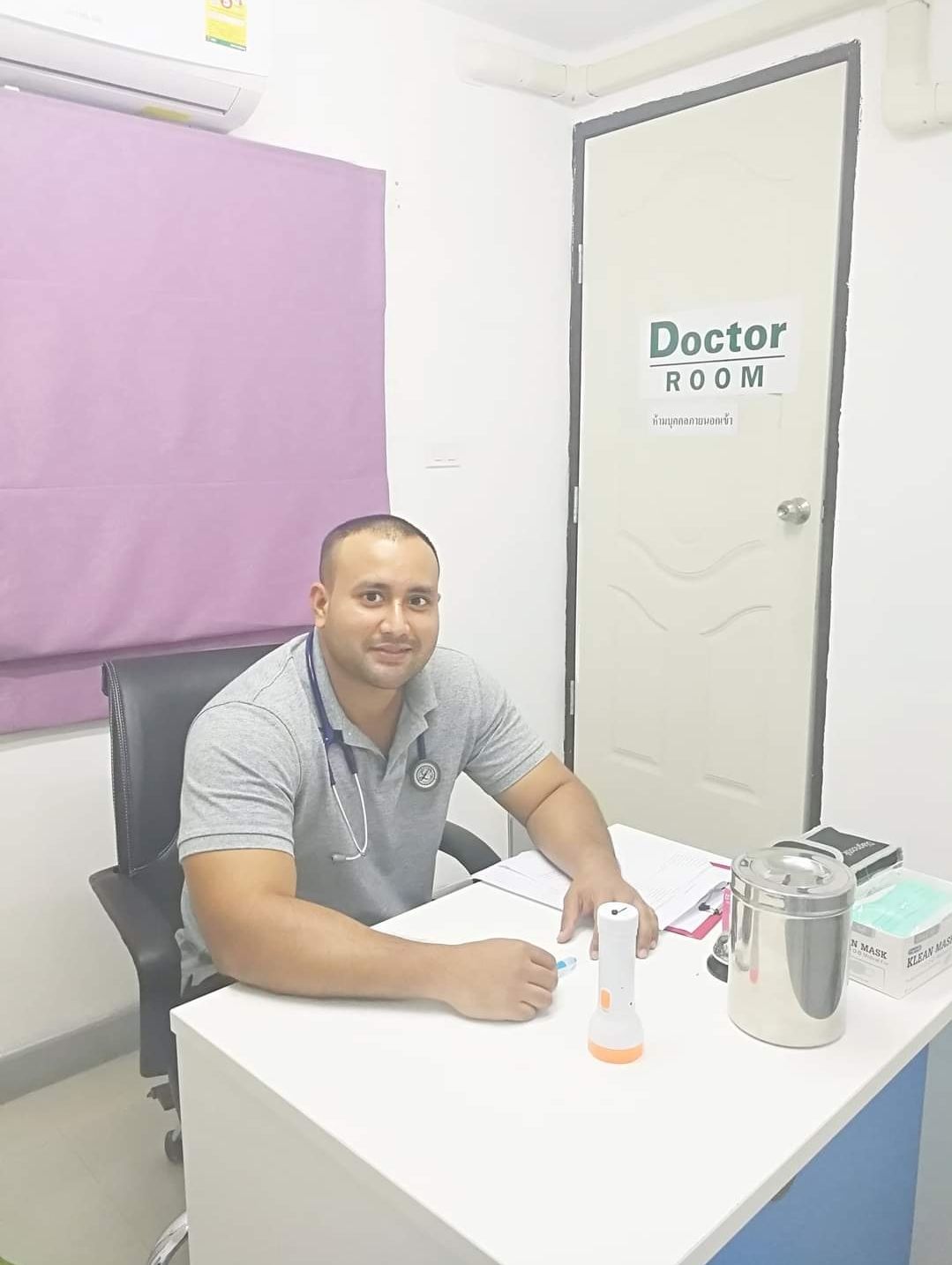
Dr. Ponlawat Pitsuwan is a physician at Doctor Bangkok, a private clinic in central Bangkok. He sees expats, residents, and medical tourists for general medicine, wellness consultations, and IV therapy. His focus is straightforward, evidence-based care delivered in plain language.